St. Marienstern Abbey: A Cistercian Nuns’ Monastery in Upper Lusatia
Site at a Glance
- Rating
- 4.7
- Popularity
- High
- Country
- Germany
- Primary era
- Medieval
- Eras represented
- Medieval, Early Modern, Modern
- Civilizations
- Electorate of Saxony, German, Holy Roman Empire, Kingdom of Bohemia, Margraviate of Brandenburg
- Site type
- Religious
- Remains
- Monastery
On this page14 sections
History
Foundation and growth
St. Marienstern Abbey is a Cistercian nuns’ abbey in Panschwitz-Kuckau, Germany, founded in 1248. The Cistercians are a Catholic monastic order whose communities follow the Rule of Saint Benedict. The abbey has continued as a religious community and as a cultural and religious center for the Catholic Sorbs, a West Slavic people native to Lusatia. Upper Sorbian is used in its worship.
The foundation followed a bequest by Bernhard II von Vesta of the Schenken von Vargula family. After his death, his sons Bernhard III von Kamenz, Bernhard IV, and Withego I established the abbey with their sisters and their mother, Mabilia, and endowed it with extensive lands. They first planned to place it on family estates near Wittichenau, but disputes within the family prevented this. The founding nuns instead lived in a hospital near Kamenz, at a settlement that later developed into Spittel. The foundation received episcopal confirmation in 1249 and had joined the Cistercian order by 1264, under the supervision of Altzella Abbey.
The nuns moved to the present monastery after 1264, probably in 1284. Major construction at the site began around 1280 under Bernhard III, then a provost and later bishop of Meissen. By 1285, the abbey was administering its lands and revenues. The margraves of Brandenburg took the community under their protection; in 1318, when King John of Bohemia acquired lordship over Upper Lusatia, he assumed that role.
Landholding and medieval conflict
The abbey’s lordship encompassed more than two dozen villages, mostly inhabited by Sorbs, as well as the small towns of Wittichenau and Bernstadt. It lasted until 1848. Its more fertile Upper Land included the areas around Panschwitz, Crostwitz, and Nebelschütz, while the less fertile Lower Land lay between Räckelwitz and Wittichenau. Much of this territory corresponds to the present-day Catholic Sorbian heartland. From the 15th century, the abbey held a seat among the estates of the Margraviate of Upper Lusatia. Its abbesses, the heads of the women’s community, appointed noble stewards to manage the lands and revenues; a steward represented the abbey at the regional diet.
On 7 October 1429, during the Hussite Wars, conflicts associated with the movement of the Bohemian religious reformer Jan Hus, troops besieging Kamenz plundered and burned the monastery after no ransom was paid. The nuns had taken refuge in fortified Bautzen.
Reformation and early modern survival
A dispute over jurisdiction arose in 1539, when the abbey’s bailiffs imprisoned two peasants from Nieder-Kießdorf for alleged disobedience. Görlitz contested the abbey’s authority over the village. A settlement in 1541 recognized its jurisdiction over the Eigenscher Kreis, a historical district in Upper Lusatia, and lifted the bailiffs’ outlawry.
The abbey survived the Reformation, the 16th-century movement that led to the formation of Protestant churches, and some parishes under its patronage remained Roman Catholic. Its abbesses disputed with Bernstadt over the city pastor’s confession for decades, until the city’s Lutheran citizens prevailed. After Altzella was secularized in 1540, responsibility for supervising Marienstern and its parishes became contested. Neuzelle’s abbots and Johann Leisentrit, dean of Bautzen Cathedral, advanced claims; later, abbots from the Bohemian monasteries of Strahov and Zbraslav carried out visitations.
During the Thirty Years’ War, the European conflict of 1618–1648, Swedish troops plundered and damaged the abbey, forcing the nuns to flee to Bledzew. They returned after the war, and repairs followed. The 1635 settlement associated with the Peace of Prague secured the Catholic institution’s continued existence under Protestant Saxon rule. The abbey’s relative isolation also helped spare it from more extensive military harm.
Baroque remodelling and the 19th century
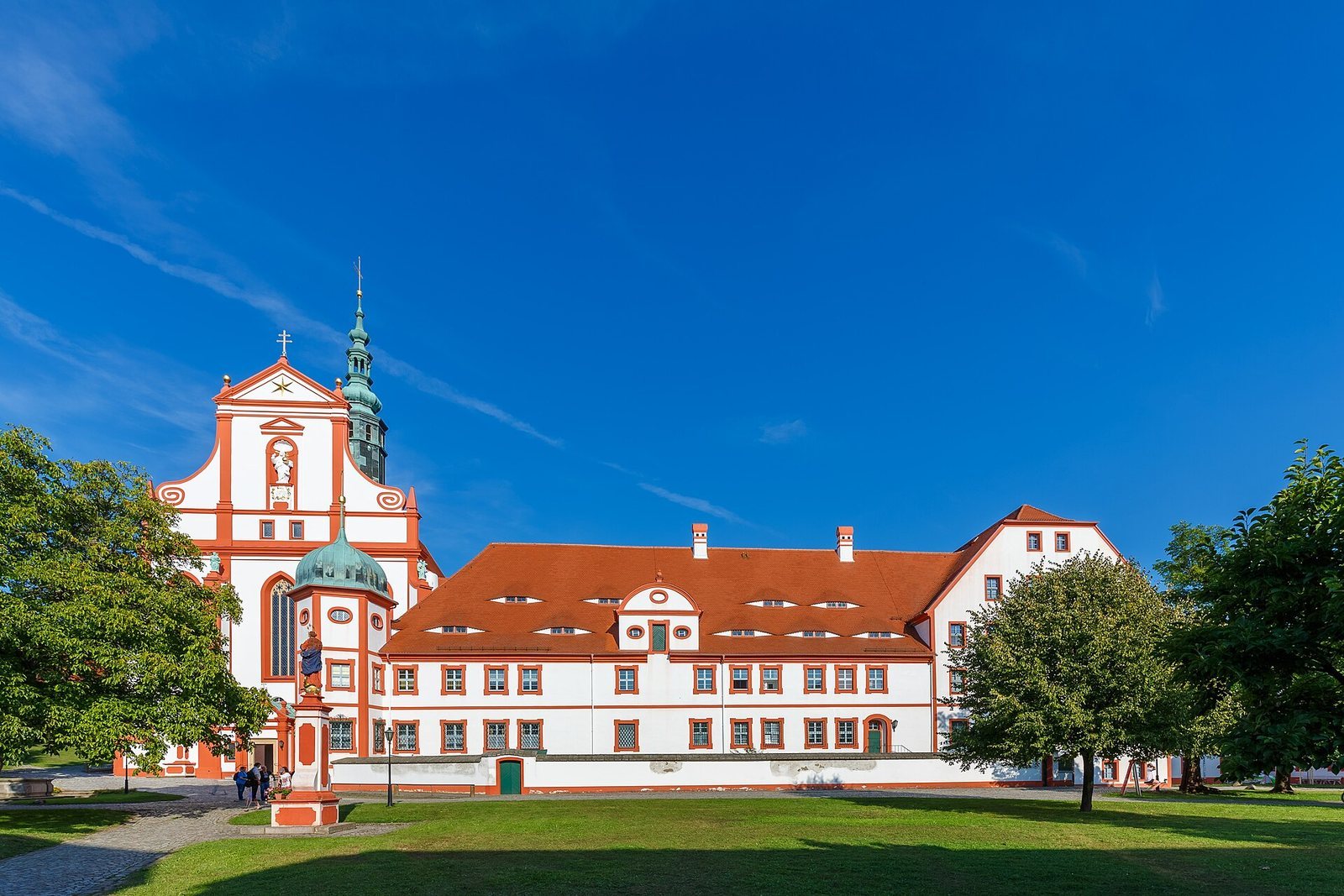
Closer ties with the Saxon ruling family developed after Elector Frederick Augustus I became Augustus II, King of Poland, and the family converted to Roman Catholicism. During the Great Northern War, a conflict in northern and eastern Europe from 1700 to 1721, the nuns again fled, this time to Leitmeritz in Bohemia. After their return, the monastery complex was remodelled in the Baroque style between 1716 and 1732. The abbey’s brewery was established in 1700.
After Neuzelle was secularized in 1817, the abbots of Osek in Bohemia supervised Marienstern. In 1826, the abbey founded the St Joseph Institute, a boarding school for girls. From 1848 to 1872, peasants in villages under the abbey’s lordship bought their release from hereditary subjection, ending their financial obligations and compulsory labor. Calls to dissolve the abbey during the Revolution of 1848 failed. Stricter rules restricting the nuns’ movement within the enclosure, the restricted area of monastic life, were introduced in 1871. The abbey remained in the Kingdom of Saxony after 1815.
The 20th century and the present community
In 1923, the abbey hosted the first diocesan synod of the re-established Diocese of Meissen, led by Bishop Christian Schreiber. The St Joseph girls’ school closed in 1933 after the Nazis came to power. During the Second World War, the monastery housed German resettlers from Bessarabia and later other refugees and displaced people. In 1945, part of the convent fled to Osek. The abbey survived the establishment of the German Democratic Republic in 1949, while its agricultural estates were incorporated into the church’s land and forestry administration.
Brewery production ended in 1973 on government order, and the beer is now made in Wittichenau. That year, the Maria-Martha home for girls and women with disabilities opened at the monastery. Extensive renovation and restoration of the complex took place from 1966 to 1998. The abbey hosted the first Saxon State Exhibition in 1998 for its 750th anniversary; the convent opened parts of its enclosure for the event. The monastery’s art collection has been viewable in its treasury since 1999.
Marienstern belonged to the Bohemian Cistercian Congregation of the Most Pure Heart of Mary, an association of monasteries within the order, whose abbot at Osek supervised it. After that congregation was dissolved in 2014, the abbey came directly under the Cistercian order’s general abbot. It joined the newly established Cistercian Congregation of Saint Gertrude the Great in 2022. The nuns continue their liturgy and pastoral work and care for, train, and provide activities for people with disabilities. The community had twelve solemnly professed nuns in 2018 and ten in 2023; Gabriela Hesse has been abbess since 2018.
Remains
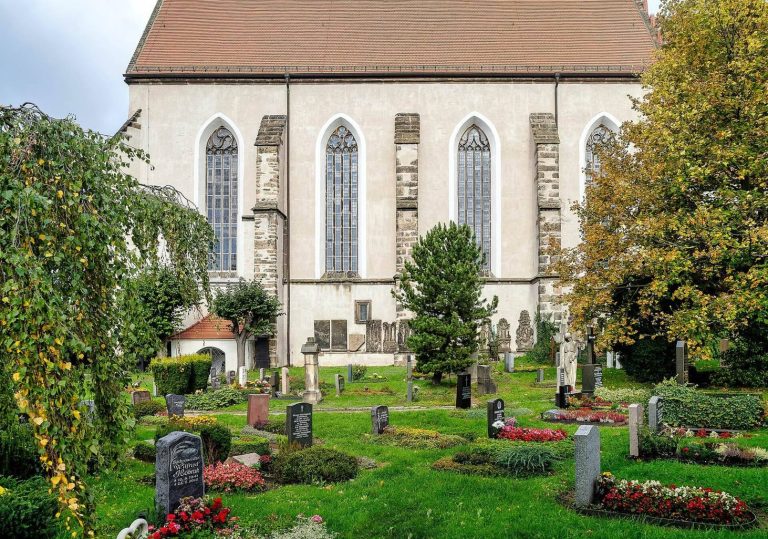
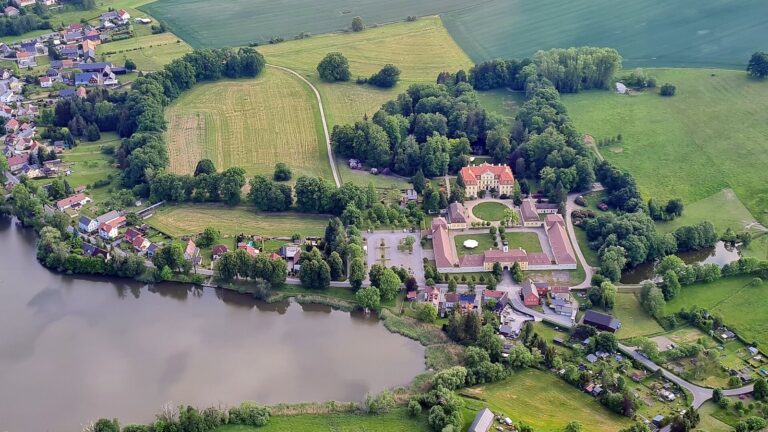
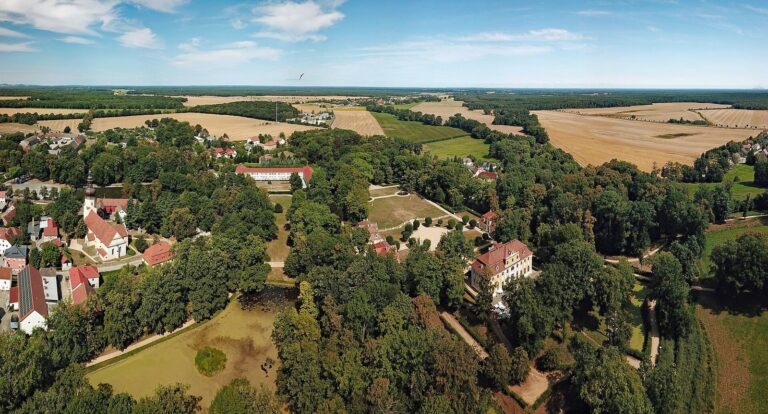
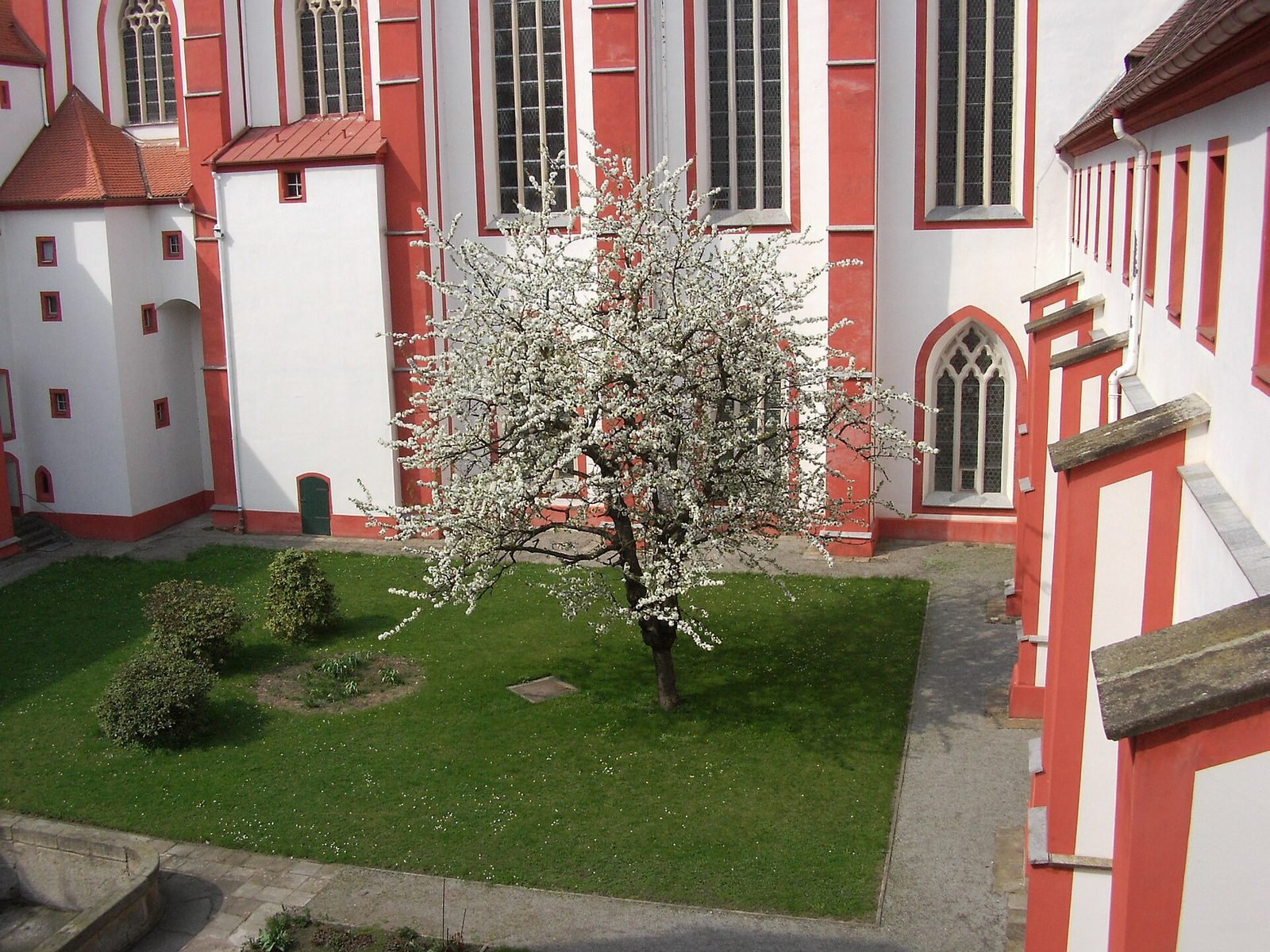
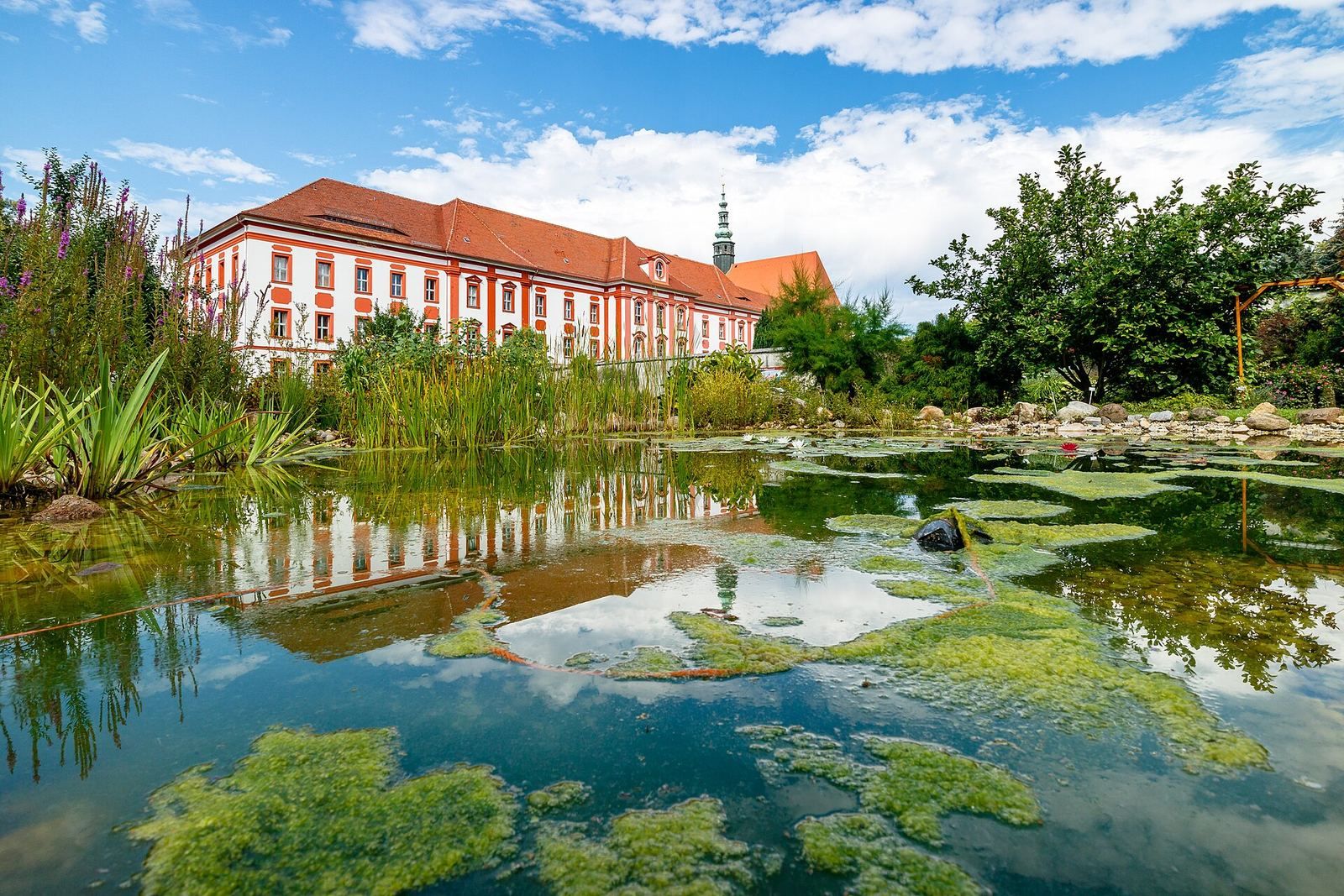
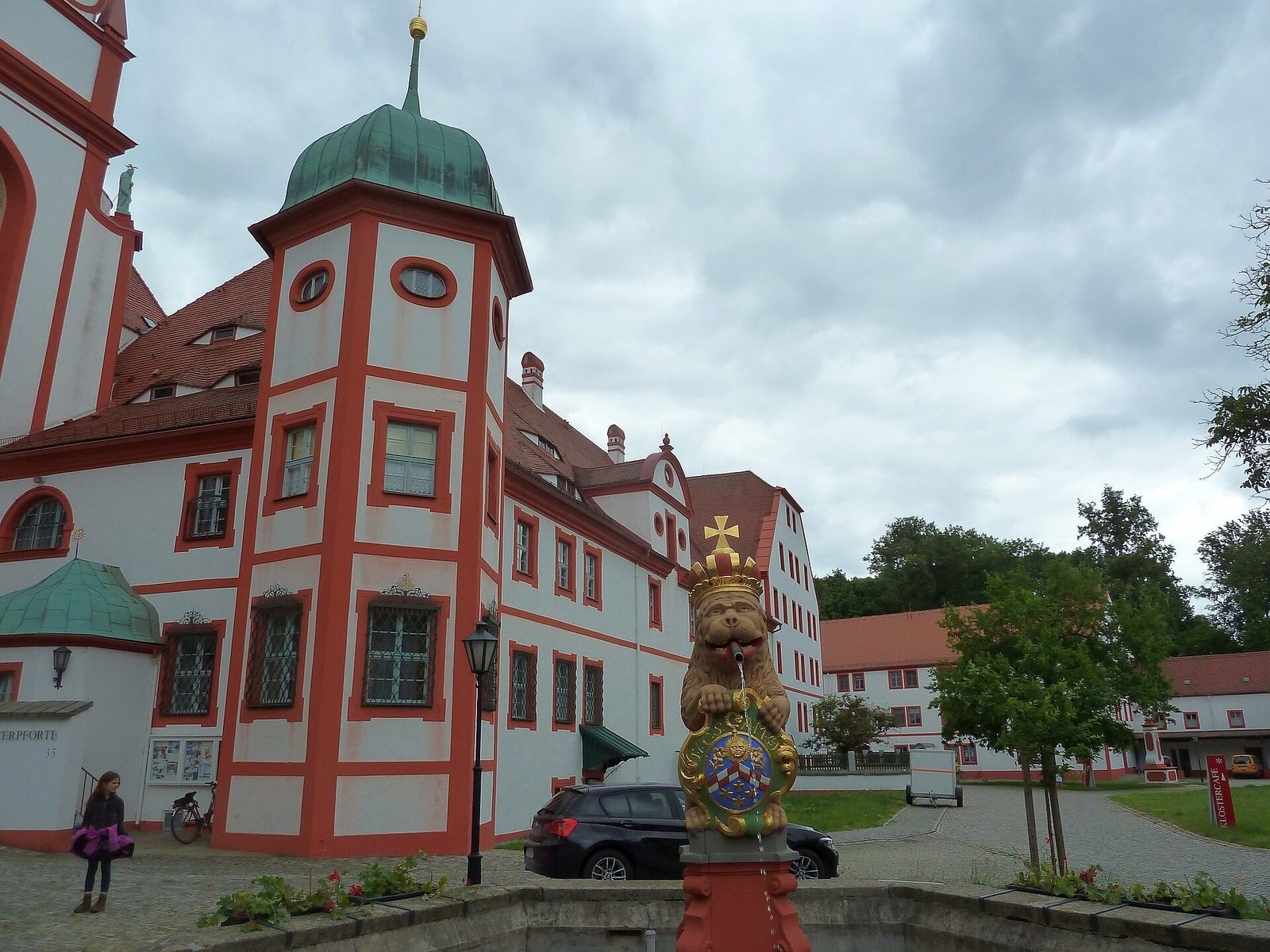
The monastery complex brings together buildings and grounds from several periods. Its abbey church, among the oldest structures, is a late Gothic hall church, with side aisles of similar height to the central space. The complex was remodelled in the Baroque style between 1716 and 1732. The church is linked to the cloister and the sisters’ living quarters, while the grounds also include a chapter house and gardens.
Abbey church
Structure and connection to the cloister
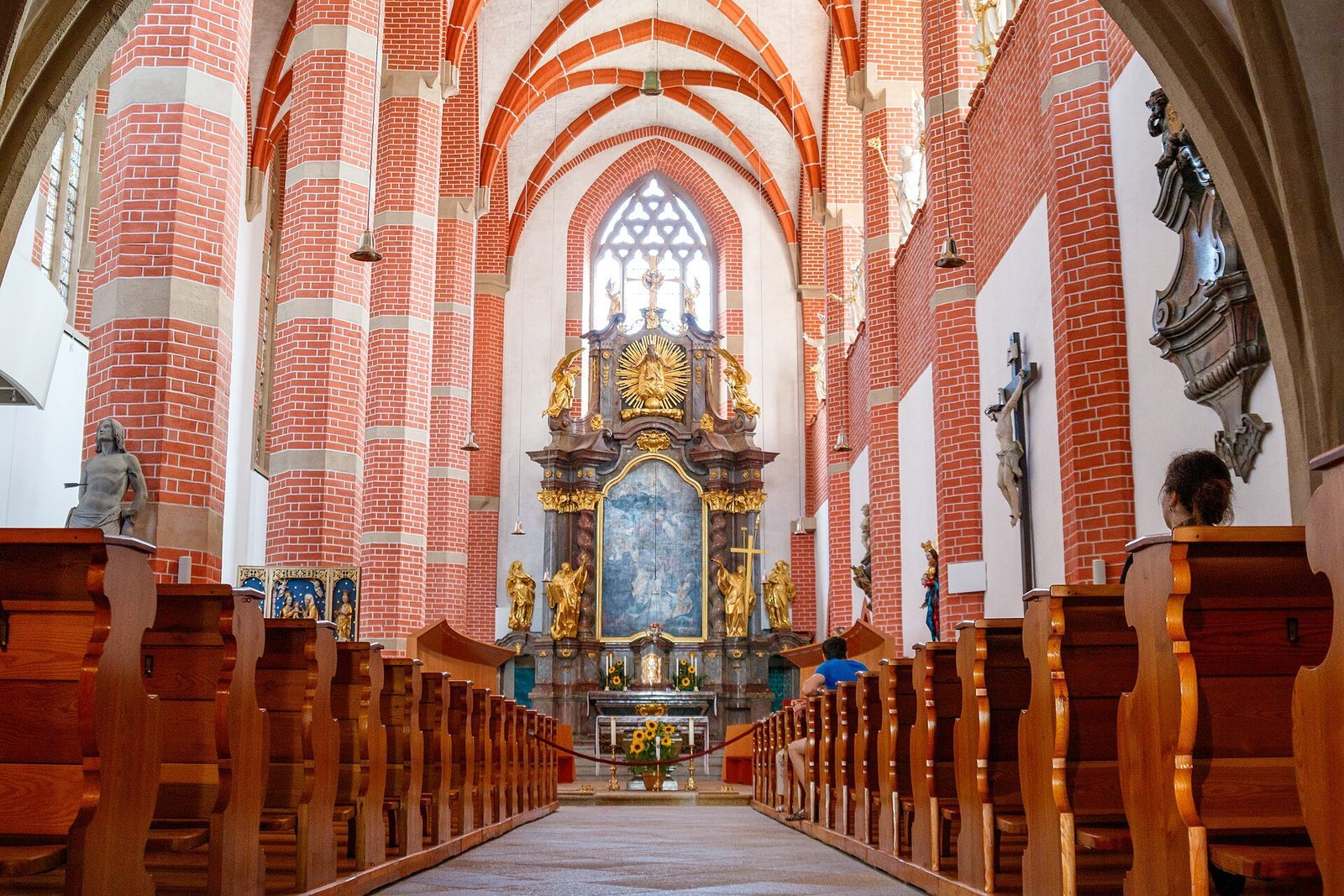
The church has three aisles divided into seven bays, or structural sections. Its ribbed vaulted ceiling rests on two rows of octagonal pillars built from alternating brick and finely dressed stone. Some of the ornamental blocks where the ribs meet are richly decorated. A wall separates the lower part of the south aisle from the church interior; this section also forms the cloister’s north wing. Above it, a passage connects the sisters’ living quarters to the nuns’ gallery, positioned above the portal at the west end of the central church space.
Altars and sculpture
The main altar combines marble architectural work by Franz Lauermann of Prague, dated 1751, with an Assumption of Mary painting by Franz Xaver Karl Palko. Four statues, representing Saints Benedict, Bernard, Catherine, and Margaret, are by Ignaz Franz Platzer and his workshop. Three side altars are dedicated to the Fourteen Holy Helpers, Saint Anne with the Virgin and Christ Child, and the Assumption of Saint Mary Magdalene; the last dates to around 1520. Twelve wooden statues of saints by Mathias Wenzel Jäckel, dated 1718 and 1720, stand in the gallery. The church also contains a 17th-century relief of the Madonna in a radiant halo.
Memorials
Tomb slabs and memorial inscriptions dated 1629 honor Bernhard III von Kamenz and Heinrich von Kamenz. A sarcophagus for Prince Anton Egon von Fürstenberg, who died in 1716, is decorated with small figures of angels and is attributed to the circle of Balthasar Permoser.
Organ
The Eule organ has 1,326 pipes, 20 stops, two keyboards, and a pedal. Built for the side gallery in 1997, it was inaugurated on 21 October that year. Before its installation, the church used a Jehmlich organ from the Dresden court church. It had been provided in gratitude for the Silbermann organ kept in the monastery cloister during the Second World War.
Treasury
The monastery preserves liturgical vessels, manuscripts, and sacred relics and their containers, some acquired through the founding family. Objects viewable in the treasury since 1999 include an 11th-century cross reliquary, a container for a sacred relic, which held a fragment of the True Cross until 1724 and was thereafter revered as a founder’s relic. The collection also includes a gilded, gem-set head reliquary of Saint James the Elder and a 13th-century reliquary with a marble bust of the teaching Christ Child, attributed to Nicola Pisano.
Gardens and associated buildings
The monastery grounds include a cross garden and an environmental and educational garden established in 1994, included in the Garden Culture Trail on both sides of the Neisse. South of the complex, across the Klosterwasser, Lippepark was laid out in the second half of the 19th century. Its name refers to the lindens planted there. The park contains a memorial to Sorbian poet and priest Jakub Bart-Ćišinski, on the Ćišinski Trail. The complex also includes a chapter house, where the monastic community meets for readings and business.