Fockenfeld Monastery: A Former Castle Estate and Oblate School
Site at a Glance
- Popularity
- Medium
- Country
- Germany
- Primary era
- Early Modern
- Eras represented
- Medieval, Early Modern, Modern
- Civilizations
- Electorate of Bavaria, German, Holy Roman Empire
- Site type
- Religious
- Remains
- Monastery
On this page6 sections
History
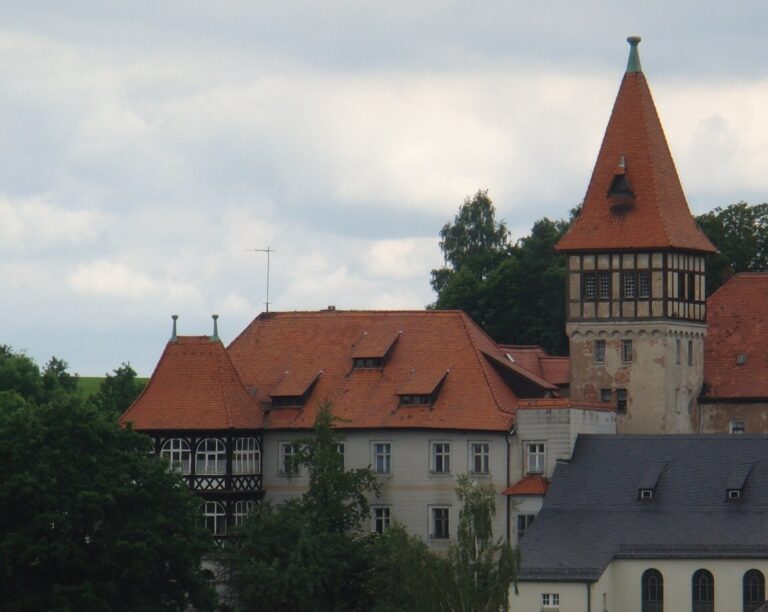
Fockenfeld Monastery is a former monastic and educational complex in Fockenfeld, a locality within Konnersreuth, Germany. The Oblates of St. Francis de Sales, a Catholic congregation inspired by Francis de Sales, established their house there in 1955, making the former estate a center for priestly training and secondary education.
Abbey estate and castle
From 1362 to 1556, the Fockenfeld estate belonged to Waldsassen Abbey, a Cistercian monastery of the Catholic order. Ottheinrich, Elector Palatine and a ruler who had adopted Protestantism, secularized the property, transferring it from church to secular control. Later sales divided the estate, and Lienhard Sölch acquired the farmstead. His family had been established in Konnersreuth since 1456.
In 1645, Swedish Protestant troops plundered and burned the buildings during the Thirty Years’ War, the European conflict fought from 1618 to 1648. Around 1680, amid the Counter-Reformation, a Catholic renewal responding to Protestant expansion, the ruined complex and uncultivated fields returned to Waldsassen Abbey.
From 1750, Abbot Alexander Vogel had the estate’s central section enlarged into a castle for use as a summer residence, while farming continued. Abbot Wigand Deltsch oversaw completion of its ballroom in 1768. After Bavaria secularized church property, the castle and estate were auctioned in 1803 and became privately owned. A fire in 1870 destroyed the castle’s Baroque furnishings, made in the ornate European style prominent in the 17th and 18th centuries.
Oblate seminary and school
The Oblates founded the St. Joseph late-vocation seminary in Eichstätt in 1946. Such a seminary prepares people who enter religious training later in life for the priesthood. The institution moved to Hirschberg Castle near Weilheim in 1948 and remained there until 1955.
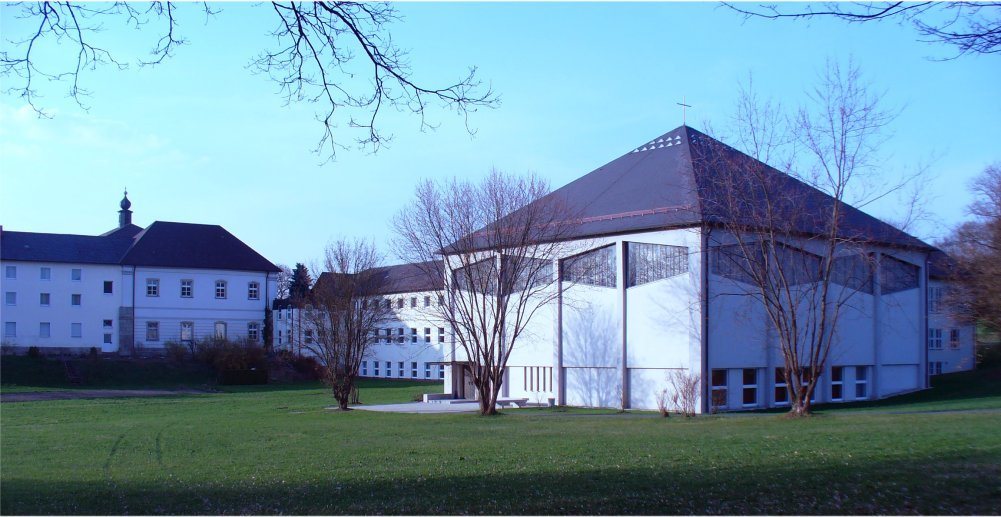
In 1951, manufacturers Karl and Louis Bahner of Oberlungwitz, Saxony, bought the castle and estate through the initiative and financial contribution of the Catholic mystic Therese Neumann. Paul Lackner, a senior regional leader of the Oblates, directed the purchase and the plans for a seminary and school at Fockenfeld. In 1955 he established a private boys’ secondary school with boarding facilities alongside the late-vocation seminary, and founded the monastery. The school followed a humanistic curriculum, emphasizing classical subjects, and received state recognition in 1966. Bishop Rudolf Graber consecrated the seminary chapel on 26 October 1968. By the school’s 60th anniversary, it had produced about 350 priestly vocations.
On 15 January 2018, the Oblates announced that school operations would end after the 2020/21 school year. The school and seminary closed in summer 2020. The Mallersdorf Franciscan Sisters, a Catholic women’s congregation, also left that year after 65 years at Fockenfeld. In March 2021, the property was sold to the municipalities of Wiesau, Waldsassen, Mitterteich and Konnersreuth. The complex is a listed architectural monument, and the area of the former castle has archaeological-monument status.
Remains
The former castle occupied the central part of the Fockenfeld complex. The wider estate also included agricultural buildings and later facilities for religious and educational use, giving the site a layout shaped by its successive roles.
Castle and ballroom
The castle’s ballroom was decorated with Elias Dollhopf’s painting of the Last Supper. Medieval and early-modern archaeological remains lie in the area of the former castle.
Estate grounds and institutional buildings
During the Oblates’ conversion of the estate, potato plots and vegetable gardens became green spaces, while stables for livestock and riding horses were adapted as living quarters. The community also added numerous ancillary buildings, including a church space. A seminary chapel formed part of the complex.