Monastery at Our Lady of the Snows: A Carmelite and Franciscan Convent in Prague
Site at a Glance
- Rating
- 5
- Popularity
- Very Low
- Country
- Czechia
- Primary era
- Early Modern
- Eras represented
- Medieval, Early Modern
- Civilizations
- Habsburg, Habsburg Austria, Holy Roman Empire, Kingdom of Bohemia
- Site type
- Religious
- Remains
- Monastery
On this page7 sections
History
The Monastery at Our Lady of the Snows is a religious complex in Prague’s New Town, Czechia, founded in 1347 by the Carmelites, a Catholic religious order. It was the first Carmelite convent in the Czech lands.
Carmelite foundation and conflict
The monastery was plundered in 1412, with the Bohemian religious reformer Jerome of Prague actively involved. It suffered further attacks during the Hussite Wars, fifteenth-century conflicts in Bohemia associated with the reform movement inspired by Jan Hus. Its religious residents were killed or forced to leave. They returned in 1435, fled again in 1484, and came back in 1496 to find the complex in ruins. They could not fully restore monastic life.
Franciscan restoration and killings
The church vault collapsed in 1566. In 1603, Rudolf II, a Habsburg ruler and king of Bohemia, gave the derelict monastery and church to the Order of Friars Minor, a Franciscan order. The friars there belonged to its Discalced branch, whose name means “barefoot.” On 14 June 1604, the Bohemian nobleman Zdeněk Vojtěch of Lobkovic laid the foundation stone for the restored convent and contributed substantially to its rebuilding. The monastic buildings were completed in 1606. Until then, the friars had lived at the Minorite monastery of St James in Prague’s Old Town; Minorites were a separate branch of the Franciscan family. The church was rebuilt from 1607 to 1610.
In 1611, after troops from Passau entered Prague and the resulting suffering stirred public anger, a mob plundered the monastery. All fourteen friars living there were killed. Religious life at the monastery resumed only after 1620. The friars were beatified in 2012, a formal step in the Catholic Church’s recognition of them as blessed. In 1627, the Carmelites received the nearby Church of St Gall as compensation and began building a new monastery there in 1671.
Twentieth-century community and expulsion
Between the First and Second World Wars, the monastery was one of Prague’s important centers of spiritual life. This period was closely associated with Jan Evangelista Urban, a Czech Franciscan priest and theologian who proposed adapting theological study for lay believers. After the Communists took power in February 1948, the Franciscans were expelled in 1950. The garden then became a public passage between Wenceslas Square and Jungmann Square.
Remains
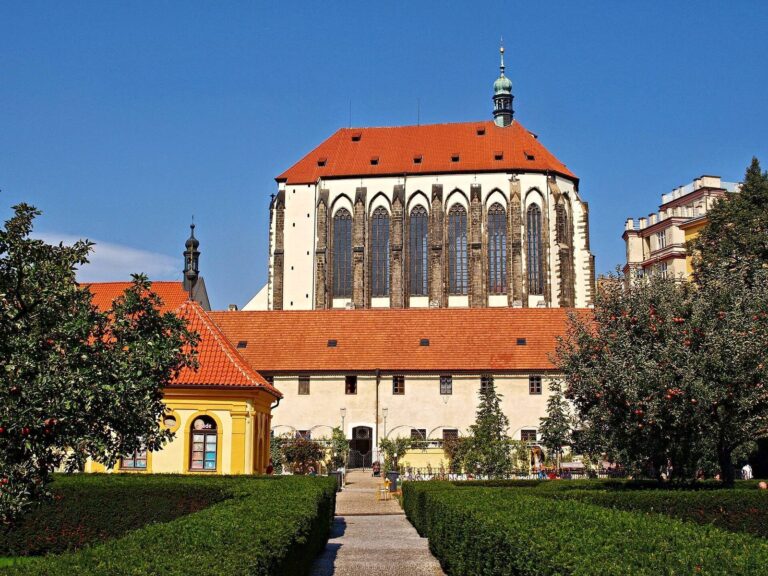
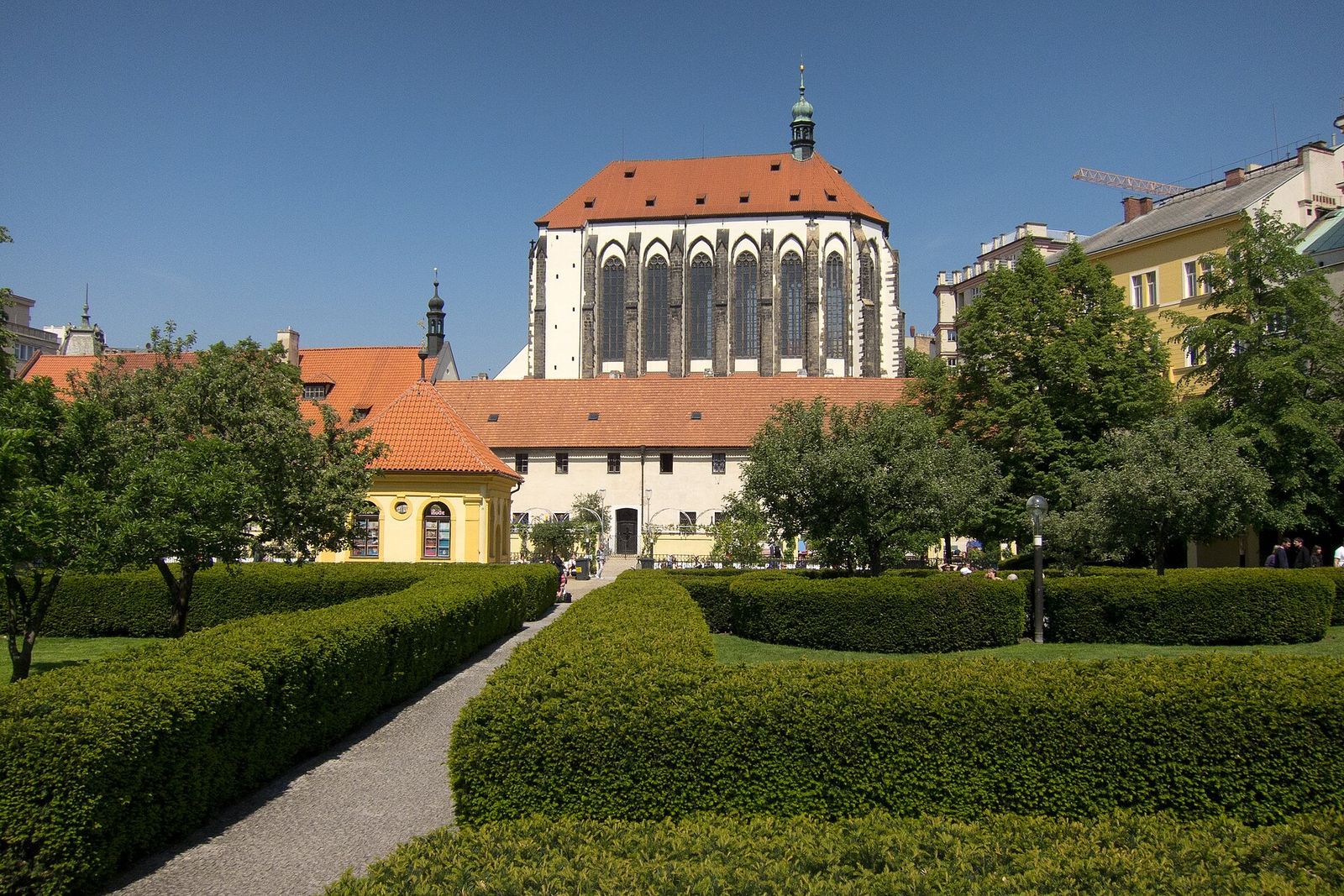
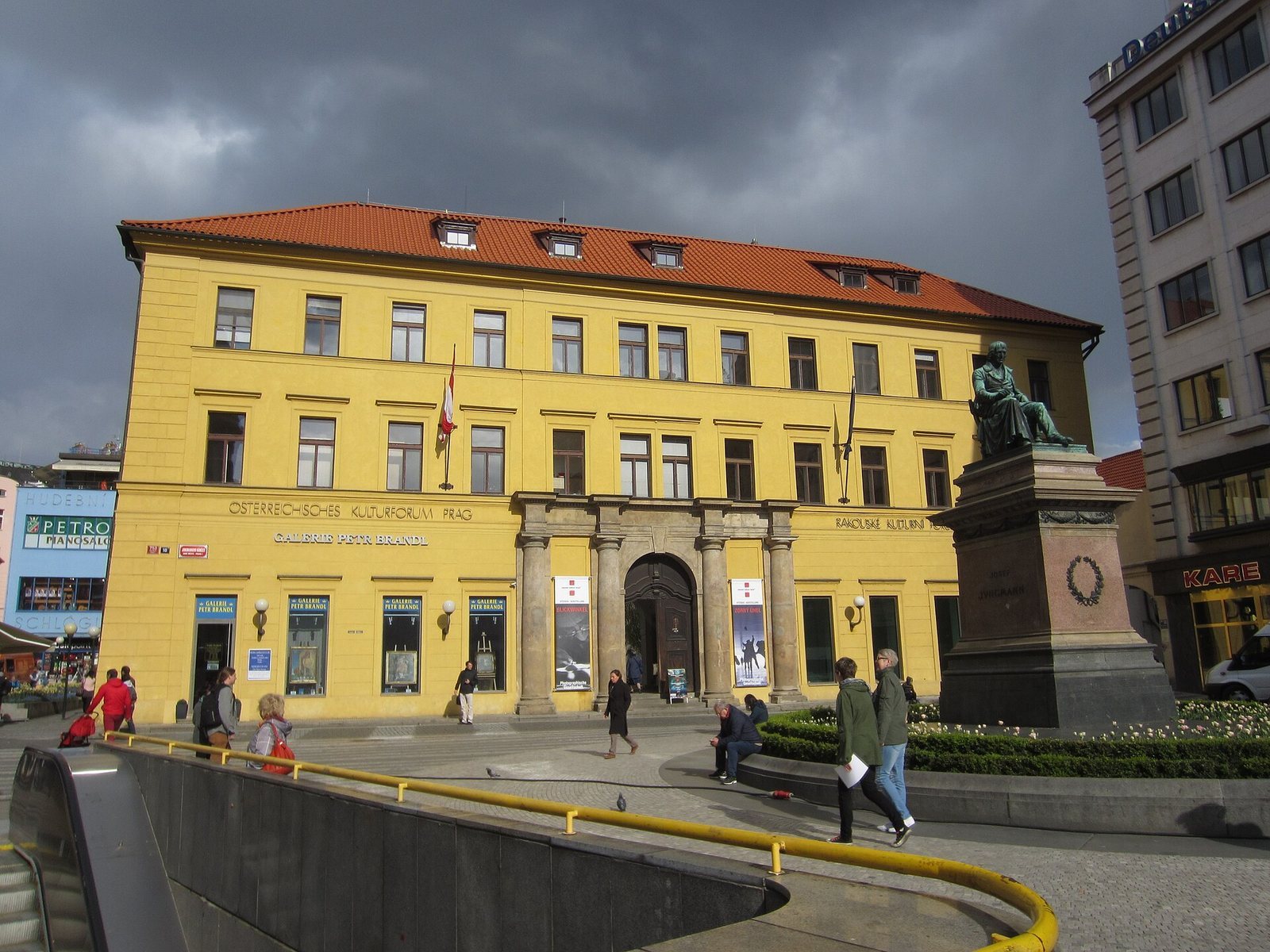
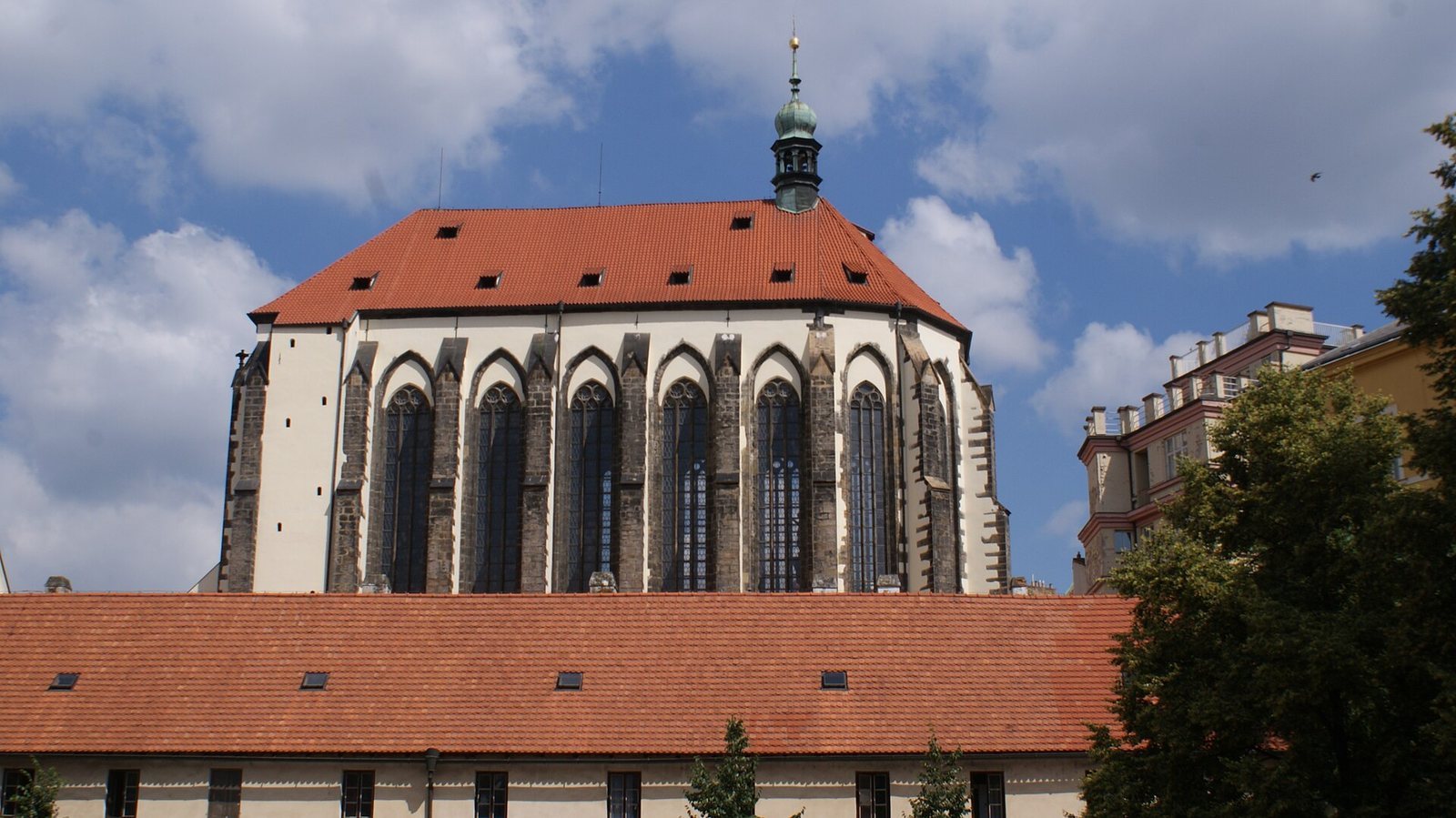
The complex lies between Wenceslas Square and Jungmann Square in Prague’s New Town, with the Franciscan Garden adjoining it. Its surviving features include the church and its altar, as well as the garden, now a landscaped park among surrounding buildings with paved paths.
Franciscan Garden
The Carmelites established the garden around 1348, during the first phase of the New Town’s development. Its original grounds were much larger and produced herbs, flowers, vegetables, and fruit. The Franciscans later cultivated spices there, laid out a Baroque garden, reshaped the terrain several times, and built a chapel within the grounds. During the Second World War, two reservoirs for firefighting water were dug in the garden; they remained until 1985.
Church and chapel
The church contains a Baroque altar, created in a European artistic style associated with the seventeenth and eighteenth centuries. Installed between 1649 and 1651, it remains the largest altar structure in Prague. A side chapel was first dedicated to the Virgin Mary and then to the Archangel Michael from 1 November 1681.