Geierswalde Church: A 15th-Century Church in Saxon Upper Lusatia
Site at a Glance
- Popularity
- Very Low
- Country
- Germany
- Primary era
- Early Modern
- Eras represented
- Medieval, Early Modern
- Civilizations
- Electorate of Saxony, Holy Roman Empire, Kingdom of Bohemia
- Site type
- Religious
- Remains
- Church
On this page8 sections
History
Geierswalde Church stands in Geierswalde, a district of Elsterheide, Germany. Built in the 15th century, it was extensively renovated in the Baroque style in 1678–1679. The church became a parish church in 1540, after the Reformation, a 16th-century movement that led to the formation of Protestant churches, and served a predominantly Sorbian-speaking community for generations.
Medieval origins and the Reformation
Until 1540, Geierswalde was a branch church subordinate to St John’s Church in Hoyerswerda. Following the Reformation, it became the principal church of its own parish. The Baroque renovation of 1678–1679 marked a major later phase in the church’s development.
Parish life and Sorbian-language worship
Laubusch belonged to the parish by 1825 at the latest and remained part of it until 1921. Scado was also included for a time. Since 1926, Tätzschwitz Church has been a branch church subordinate to Geierswalde.
Geierswalde was long predominantly Sorbian-speaking. When Sorbian folklorist Arnošt Muka visited in 1884, 388 of the village’s 395 residents were Sorbs. The congregation then included about 550 Sorbian and 150 German people who attended confession, a Christian rite involving the confession of sins and absolution. It also had ten Sorbian and three German confirmands, people preparing for confirmation.
Sorbian-language services took place every Sunday until Pastor Božidar Pjech retired in 1882. A substitute pastor appointed in 1884 preached only in German, and regular services in Sorbian ceased after 1918. Geierswalde and Tätzschwitz hosted the Sorbian Protestant Home Day in 2015.
Church administration since 1945
Until 1945, Geierswalde belonged to the Evangelical Church of the Older Provinces of Prussia. It then joined the Evangelical Church in Silesia, later renamed the Evangelical Church of Silesian Upper Lusatia, and was part of the Hoyerswerda church district. In January 2004, the latter church merged with the Evangelical Church in Berlin-Brandenburg to form the present regional church. On 1 January 2014, the Hoyerswerda and Lower Silesian Upper Lusatia church districts merged to create the Silesian Upper Lusatia church district, a regional administrative unit within the Protestant church. Geierswalde now belongs to the Geierswalde-Tätzschwitz congregation in that district. The church is protected as a monument for its local historical importance.
Remains
Exterior and tower
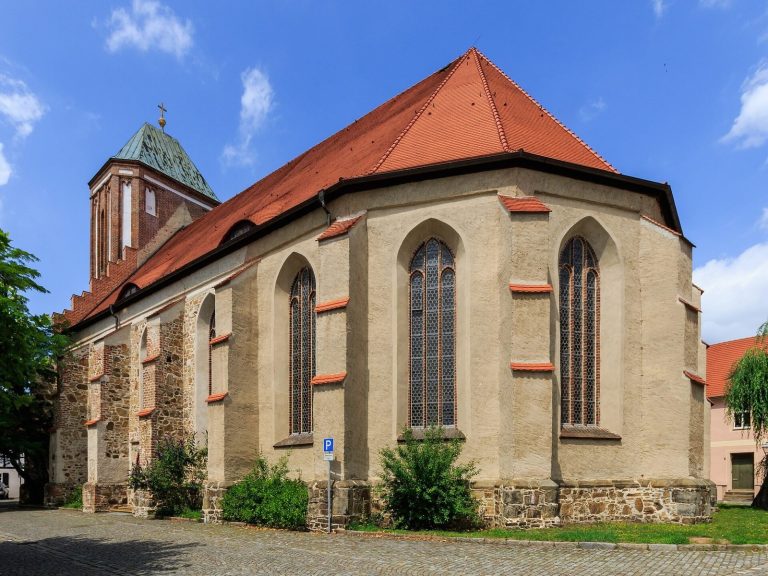
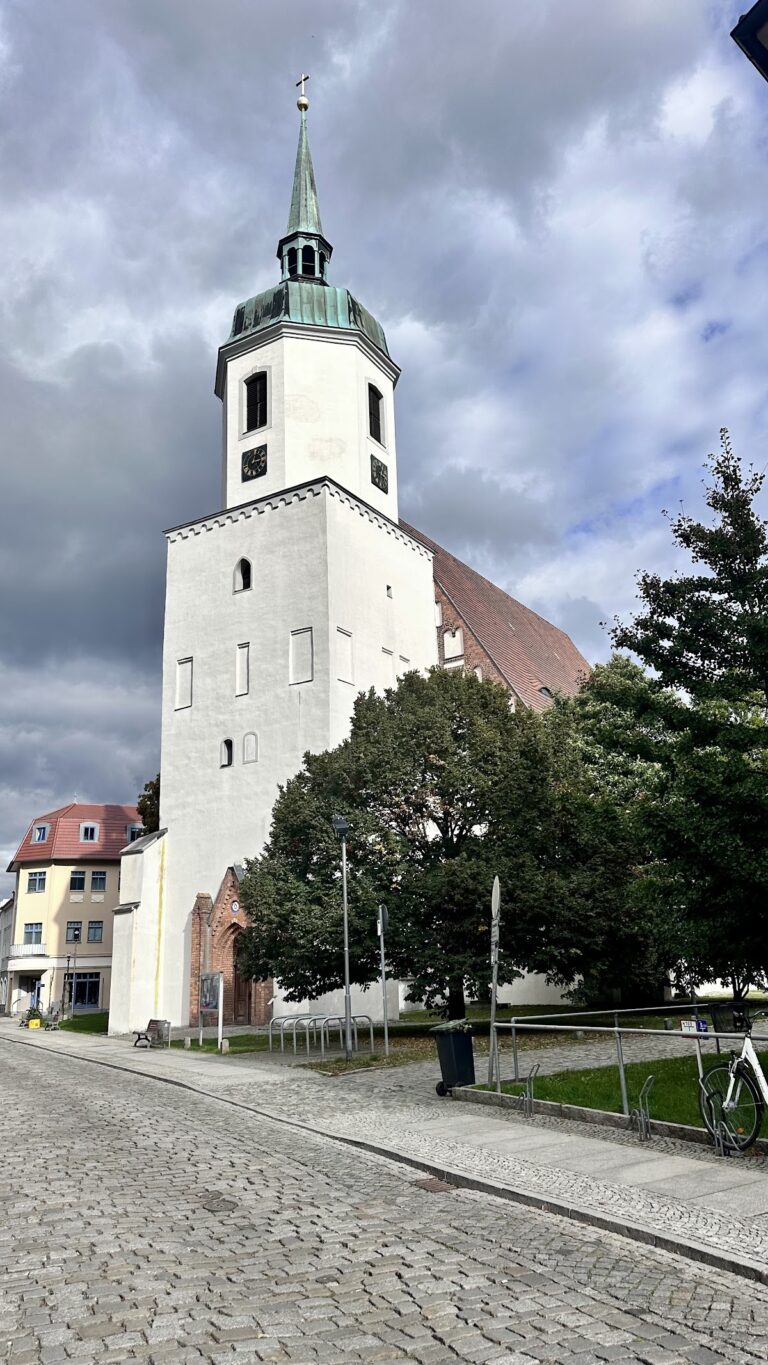
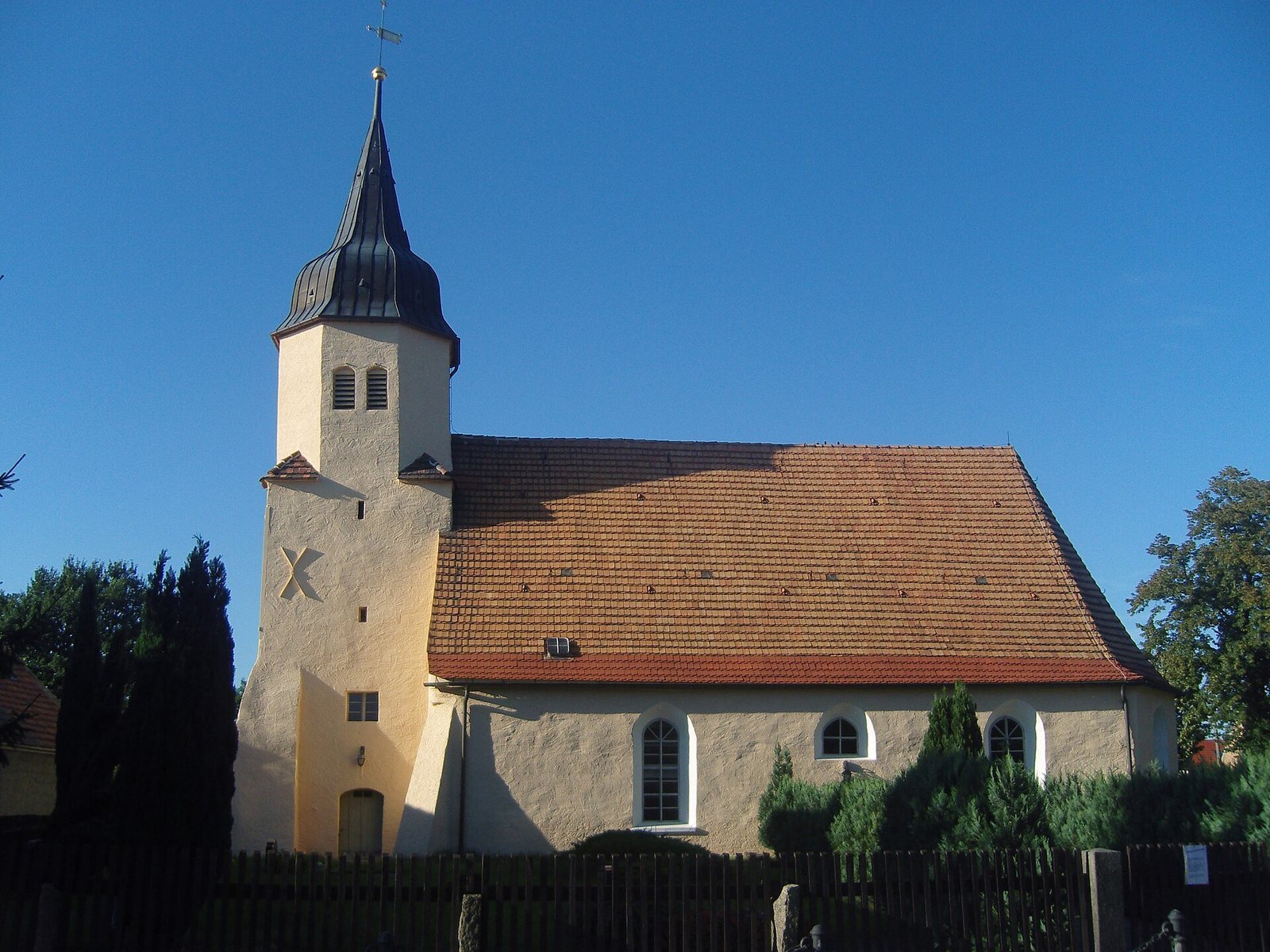
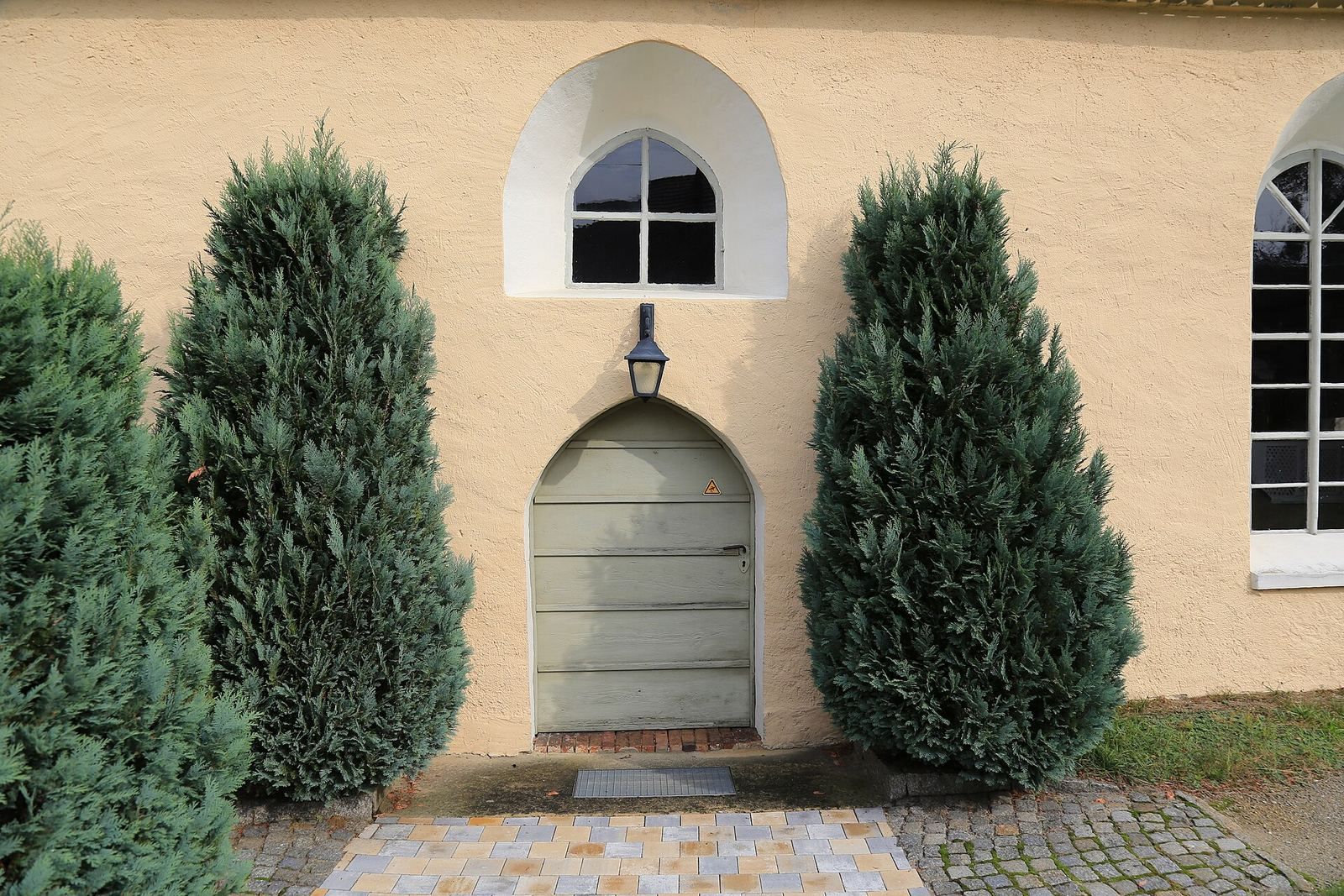
The church is a plastered fieldstone building with an altar end formed by three sides of an octagon. Its main body has slightly pointed-arch windows and a gabled roof that becomes hipped over the altar area; buttresses reinforce the western corners. The sacristy, a room for clergy vestments and service objects, and the tower’s lower section retain parts of the original Gothic building. The western tower has an eight-sided bell stage, with paired sound openings on four sides, and a curved hood that flares outward. Groundwater lowering associated with the former Koschen open-cast mine caused the tower to subside partly, and it now leans.
Interior and furnishings
The interior has a flat ceiling, and furnishings from the Baroque renovation remain in place. Painted foliage and curling scrolls decorate the ceiling, galleries, and pews. The altar structure, made by Hanns Tatzer of Laubusch in 1697, has a Last Supper scene at its base and a painting of the Crucifixion above. Twisted columns with laurel scrolls frame the painting. The eight-sided pulpit platform carries painted foliage and scrollwork, and the organ was built by Dienegott Janott.
War memorials
Three war memorials stand in front of the church. The oldest dates from 1918 and commemorates Geierswalde soldiers killed or missing in the First World War. It rests on a granite base and is topped by an Iron Cross, a German military decoration. A red-sandstone memorial made in 1921 was moved to Geierswalde in 1964 from the devastated neighboring village of Scado. An inscription plaque commemorates residents of Geierswalde and Scado who died in the Second World War.