Kingston Russell House: A Historic Manor House in Dorset
Site at a Glance
- Popularity
- Medium
- Country
- United Kingdom
- Primary era
- Early Modern
- Eras represented
- Early Modern, Modern
- Civilizations
- British, English
- Site type
- Domestic
- Remains
- Manor House
On this page9 sections
History
Kingston Russell House is a manor house near Long Bredy, west of Dorchester, in Dorset, United Kingdom. Its present form developed from a late-seventeenth-century house and later Georgian changes. The estate is associated with the Russell family’s service to successive English kings.
Medieval manor and royal service
Little Bredy, which included Kingston Russell, may have been the early medieval Saxon borough of Brydian, a fortified settlement or administrative centre. If so, it may have helped guard a gap through the downs between south-east and south-west Dorset. The Russell family received Kingston Russell manor from a king, probably John late in his reign or his son Henry III. They held it directly from the Crown by grand serjeanty, a form of land tenure requiring a personal service.
John Russell was attached to the household of Richard I, followed by John and Henry III, as a household knight by 1195 at the latest. A record from 1211 describes him serving as marshal of the king’s buttery, the department that stored and supplied drink, at Christmas and Pentecost. During Henry III’s minority, Russell’s service changed to counting and putting away the king’s chessmen after a game. He later became steward, an officer overseeing household affairs, and served as constable of Sherborne Castle and governor of Corfe Castle.
In 1220, Russell went on a diplomatic mission to recover Henry III’s infant sister Joan after Hugh X of Lusignan rejected her as a prospective bride. Russell died in 1224. His son Ralph continued to hold the manor by serjeanty, presenting the king with a cup of beer at each of the four principal feasts of the year. In 1284, Ralph’s son William gained the right to hold a Thursday market, an annual fair around the feast of St Matthew in September, and free warren, a Crown-granted right to hunt specified game on the manor’s demesne lands, those retained for the lord’s use.
The manor later passed from the Russell family to the Denyses through the marriage of the heiress Margaret Russell to Sir Gilbert Denys. The Denyses apparently did not live at Kingston Russell. A later, unverified genealogy traced Sir Theobald Russell, who lived from 1301 to 1340, as a direct ancestor of John Russell, the first Earl of Bedford.
The chapel and its later grants
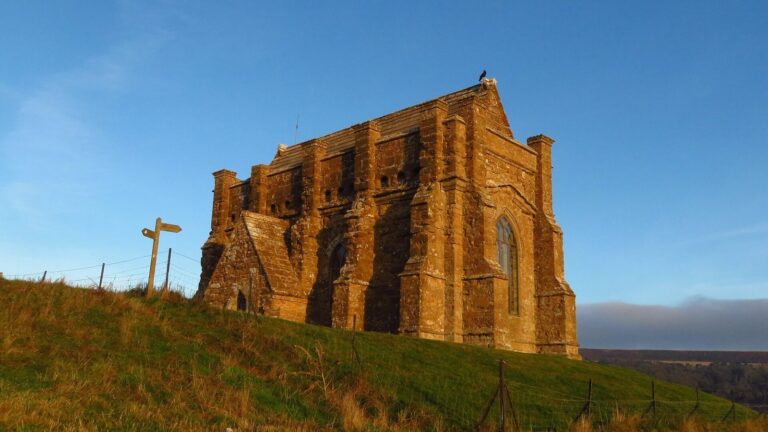
A chapel dedicated to St James stood near the manor. Tradition attributed its construction to the Russells; it was supported by tithes, church-support payments, and glebe, land assigned to support a church, at Pitcombe. Roger Bond became rector, the clergyman responsible for the chapel and its benefice, in 1531 and was its last rector. After the chapel closed, local inhabitants used Long Bredy church for burials.
After the closure, grants connected with the chapel were made for life to Edith Cole and her children John and Joan Martin in 1565, to John, Henry and William Mintern in 1585, to Fenton, a captain of the guard, in 1605, and to George Ward in 1607. The Mellers of Little Bredy later held it and sold the chapel’s tithes and part of its glebe to the Michels.
Later ownership and restoration
Around the 1640s, part of the manor, possibly including the house, may have passed to the Michel family. The family later moved to Dewlish House, and Kingston Russell was let from about the 1760s. Admiral Sir Thomas Hardy, Nelson’s flag captain, was born at Kingston Russell on 5 April 1769. His mother was the daughter of Thomas Masterman, who was associated with the place.
The Dukes of Bedford had bought Kingston Russell again before 1861. On 30 July that year, Lord John Russell, a Liberal statesman and third son of the sixth Duke of Bedford, was raised to the peerage as Earl Russell of Kingston Russell. The title later passed to the philosopher Bertrand Russell, its third holder. The relationship between the medieval Russell family and the Bedford line had previously been questioned. The American historian John Lothrop Motley died at Kingston Russell in 1877.
By the early twentieth century, the house had become dilapidated. The estate was sold to George Gribble in 1913, and the Gribble family left in the 1920s.
Remains
Buildings and surrounding landscape
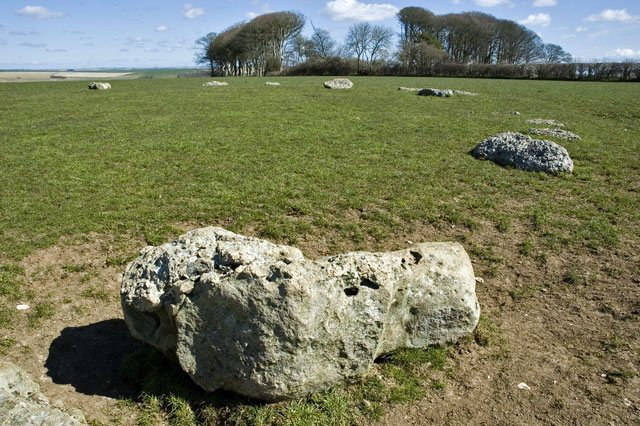
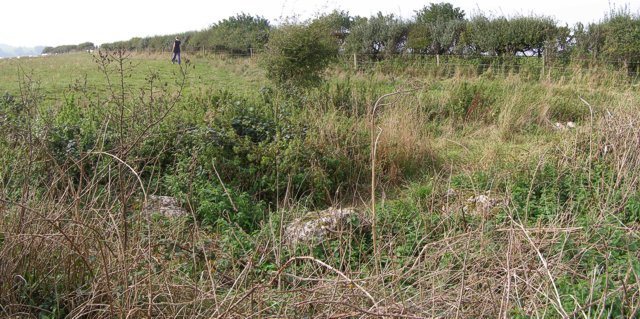
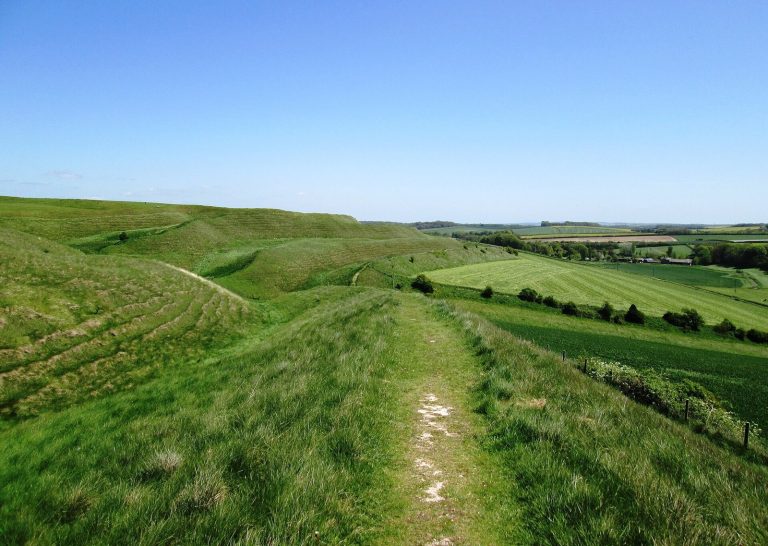
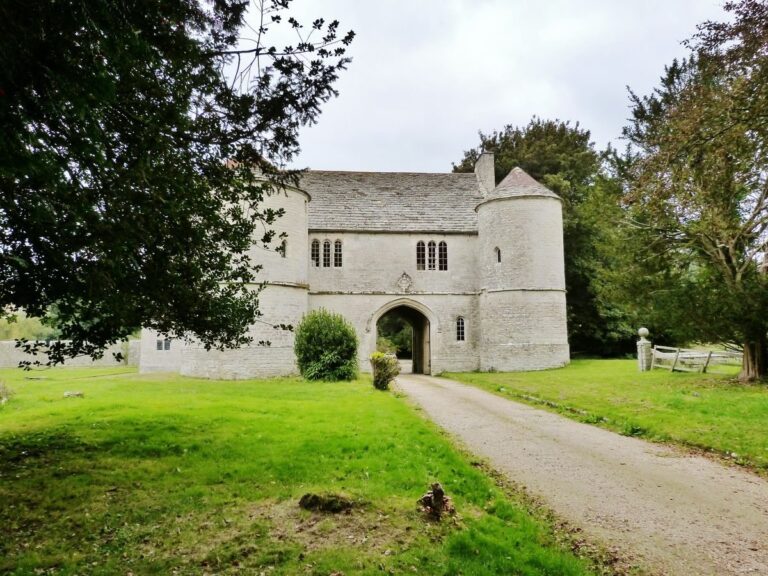
The manor lies within Long Bredy parish, adjoining Winterbourne Abbas to the east and Compton Valence to the north; the house stands beside Long Bredy. Its surviving buildings include the manor house and the remains of the nearby chapel, set in a landscape that also contains ancient burial mounds and a stone circle.
The house
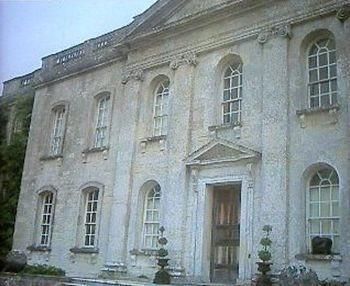
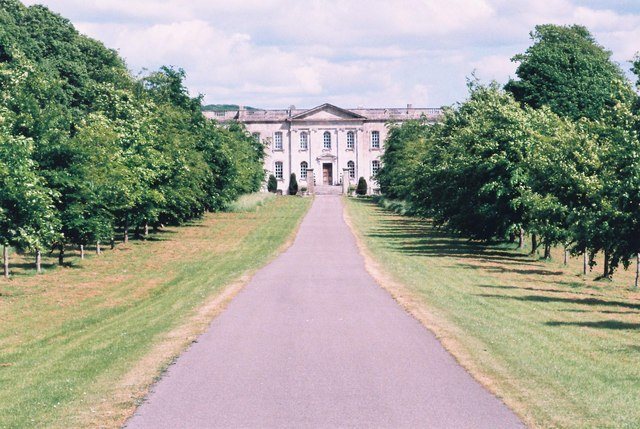
The present house dates from the late seventeenth century. The Michel family partly rebuilt it, and in 1730 its exterior was clad in white Georgian stone. The result incorporates a Georgian frontage into the earlier house.
During the restoration and alterations begun in 1913 by George Gribble, his wife Norah Royds and architect Philip Tilden, a projecting wing of an older Tudor building was demolished. The Carolean (Charles II-era) and Georgian wing was extended with two small, three-storey wings, one at each end of the original two-storey structure. Gardens were also laid out.
Chapel of St James
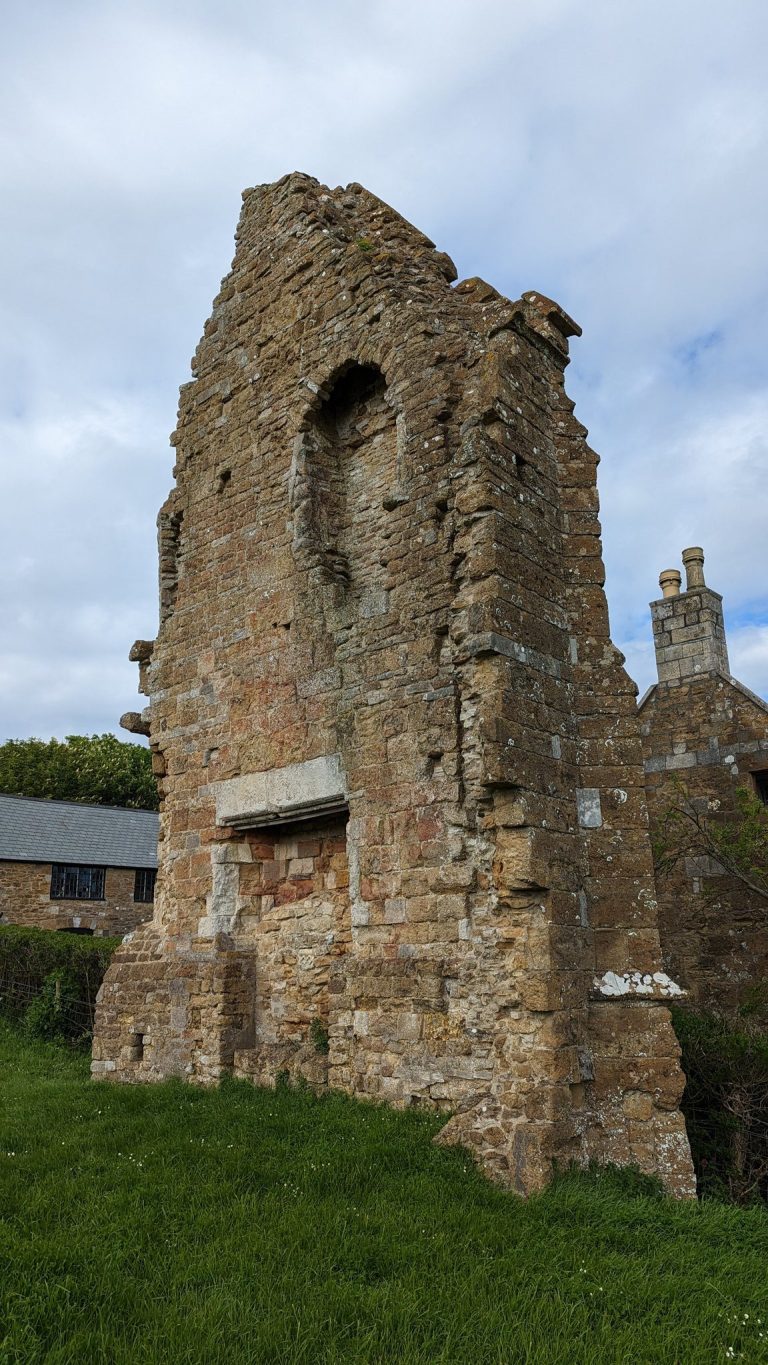
By John Hutchins’s time, the chapel stood in ruins, with only its walls remaining. During the Michels’ residence at the manor, it was reportedly occupied by poor people.
Ancient burial features
The wider landscape includes the Kingston Russell Stone Circle and groups of burial mounds. The Poor Lot barrow group forms a boundary with Little Bredy and Winterbourne Abbas.