Kinfauns Castle: A Castellated Gothic Country House in Scotland
Site at a Glance
- Popularity
- High
- Country
- United Kingdom
- Primary era
- Modern
- Eras represented
- Medieval, Modern
- Civilizations
- British, Kingdom of Scotland
- Site type
- Domestic
- Remains
- Castle
On this page8 sections
History
Medieval origins and the Charteris family
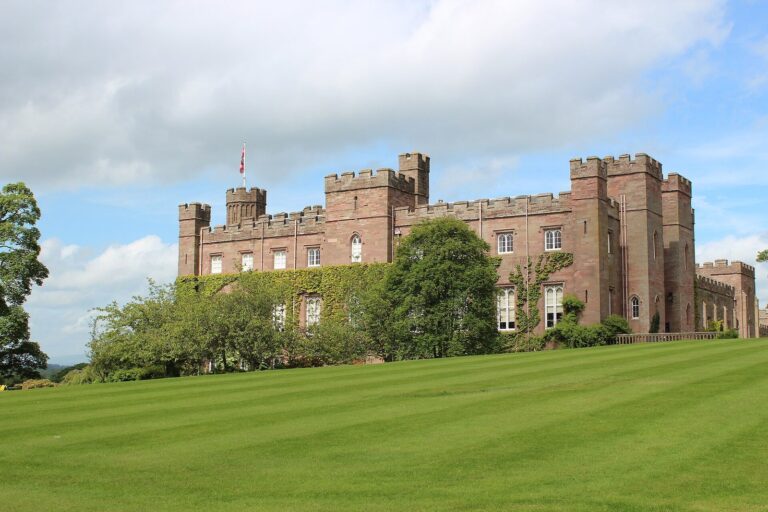
Kinfauns Castle is a castellated Gothic country house east of Perth, Scotland, United Kingdom, built on the site of a medieval stronghold. In 1313, Robert the Bruce, king of Scots, granted land east of Perth to Thomas de Longueville for his part in capturing the town. Thomas married the heiress of Charteris of Kinfauns, adopted the Charteris name, and built a castle on the granted land. Its construction date is not known.
The Charteris family’s feud with the Ruthvens of Perth led to the murder of John Charteris on Edinburgh’s High Street in 1552. The property later passed from the Charteris family to the Carnegies and then the Blairs.
Marriage and entry into the Gray family
In 1741, Margaret Blair (Carnegie), daughter of Alexander Blair (Carnegie) and Jean Carnegie of Finhaven, married the 11th Lord Gray, bringing the estate and former castle into the Gray family. Her parents’ marriage had taken place under James Carnegie’s coercion at Oathlaw Kirk. Alexander, James’s nephew and ward, was 14, while Jean, his first cousin, was 12. The match was intended to give James control of the Blair of Kinfauns estates.
Rebuilding and later ownership
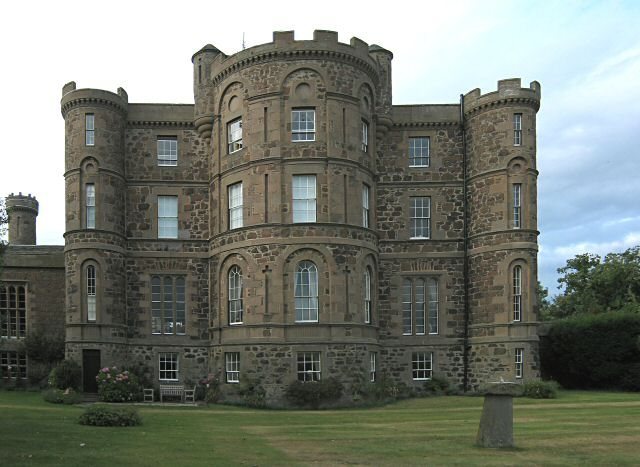
Francis Gray, the 14th Lord Gray, commissioned the present castle, built from 1822 to 1826 to designs by Sir Robert Smirke. Its Gothic, castle-like detailing and slight asymmetry reflect the Scottish Georgian style. In 1847, as the Dundee and Perth Railway prepared to open, Lord Gray allowed its line to cross his estate in return for £12,000, a substantial fee at the time.
The property passed to the Stuart Earls of Moray in 1878. A Union-Castle Line steamer named RMS Kinfauns Castle was launched in 1899. RMS, or Royal Mail Ship, designated a vessel contracted to carry mail. Morton Stuart, the 17th Earl of Moray, later commissioned improvements to the estate. After his death in 1930, it passed to Scottish Estates Ltd, which sold most of the land in separate parcels.
Kinfauns Castle became a Category A listed building in 1971, the highest level of listed-building protection in Scotland. Its grounds entered the Inventory of Gardens and Designed Landscapes in Scotland in 1987, a record of nationally important designed landscapes.
Remains
Castle and estate structures
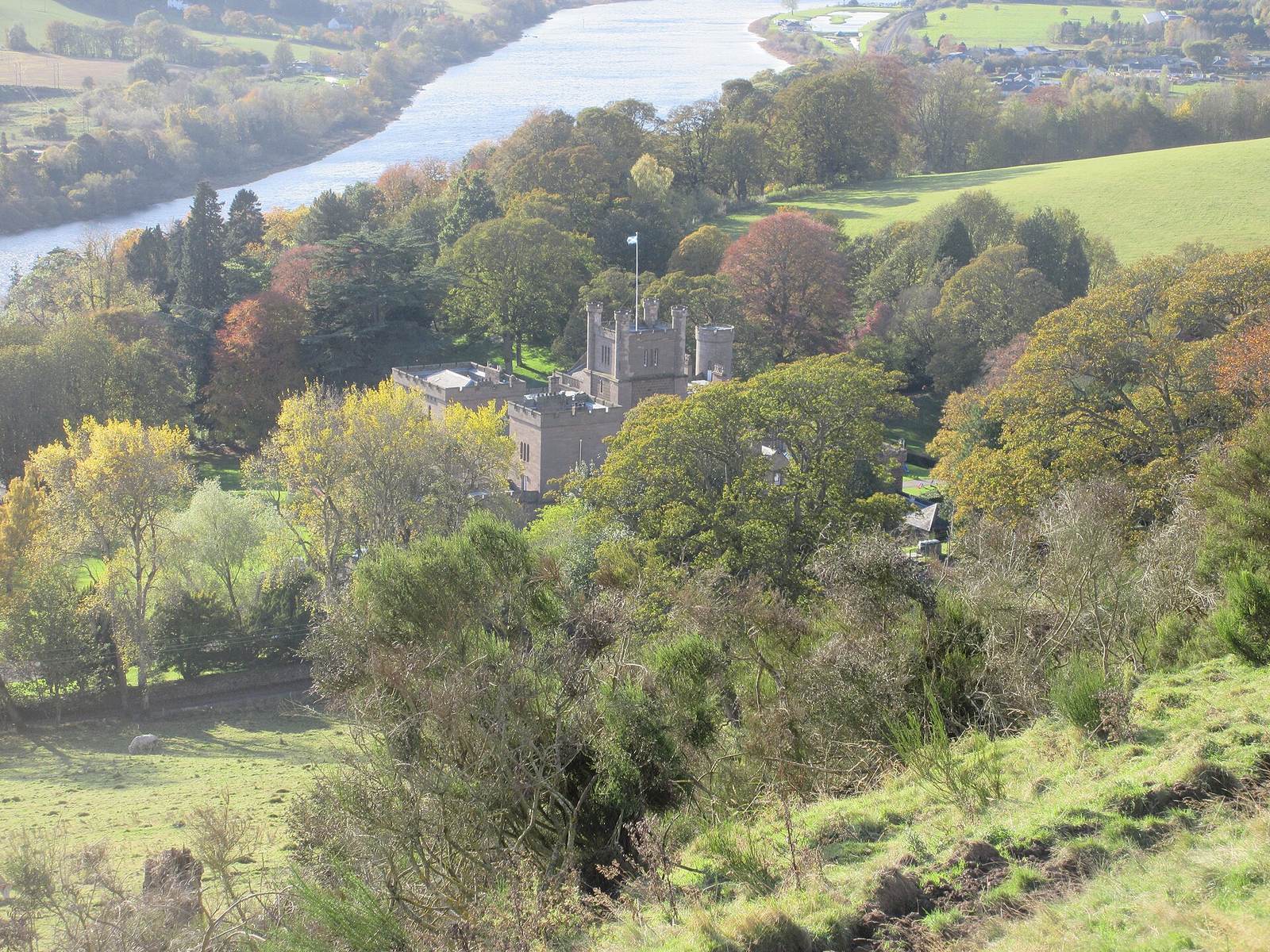
The main house stands on a raised terrace facing south over the River Tay. Its castle-like Gothic character is combined with the slight asymmetry associated with Scottish Georgian architecture.
The castle
The present house dates to 1822–1826 and was built on the site of the medieval stronghold. The sword of the Charteris family is believed to remain inside the castle.
Walled garden and gardener’s cottage
The estate’s walled garden and gardener’s cottage were designed in 1910.