Kilmahew Castle: A Sixteenth-Century Tower House in Scotland


Site at a Glance
- Rating
- 4
- Popularity
- Very Low
- Country
- United Kingdom
- Primary era
- Early Modern
- External website
- Open
- Eras represented
- Early Modern, Modern
- Civilizations
- British, Kingdom of Scotland
- Site type
- Military
- Remains
- Castle
On this page6 sections
History
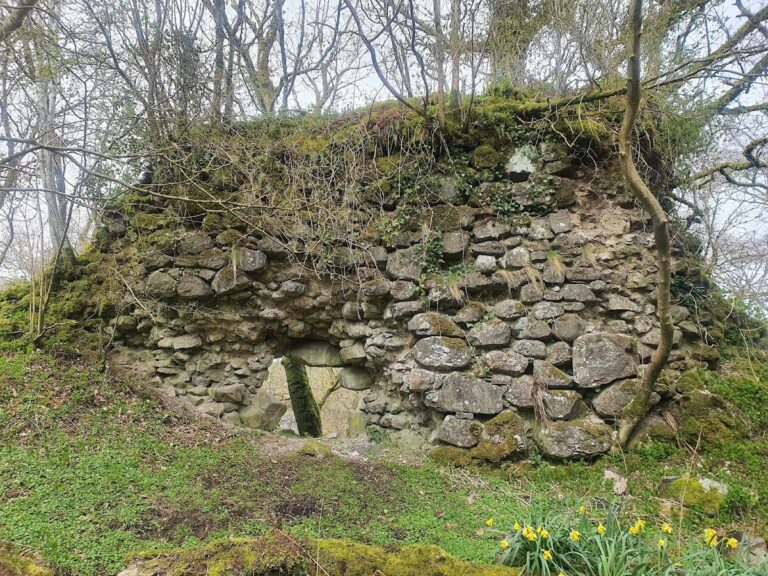
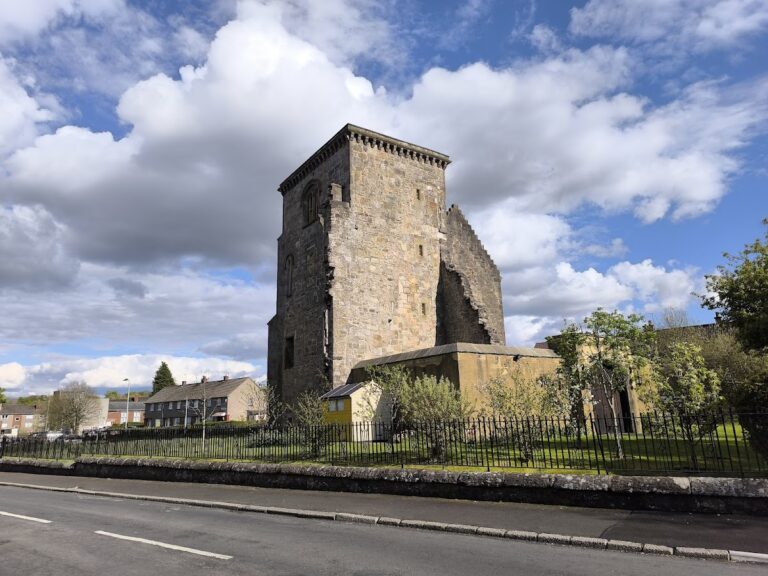
Kilmahew Castle is a ruined sixteenth-century tower house in the United Kingdom, near Cardross in Scotland. Built by an unknown member of Clan Napier, the extended Scottish kin group and landed family associated with the Napier of Kilmahew line, it stands on lands granted to the Napiers by Malcolm, Earl of Lennox, around 1290. The Napier family held the estate for 18 generations.
The Napier Estate
In 1694, George Maxwell of Newark and Tealing inherited Kilmahew and adopted the name of his maternal grandfather, John Napier of Kilmahew. After Maxwell died, the estate was claimed by his illegitimate daughter, Jean Smith, who was married to David Brydie.
The estate changed ownership again in 1820, when it was sold to Alexander Sharp in repayment of gambling debts. James Burns of Bloomhill acquired Kilmahew in 1839 and died in the castle in 1871.
Alterations and Later Ownership
The castle was altered in 1744 in work attributed to John Douglas, an architect active in eighteenth-century Scotland. Alexander Sharp later carried out additional Gothic modifications during the nineteenth century.
The Archdiocese of Glasgow acquired the ruins and surrounding estate in 1948. In 2020, The Kilmahew Education Trust acquired the castle as part of the 140-acre, or 57-hectare, Kilmahew Estate. The estate also includes St. Peter’s Seminary and John Fleming’s Walled Gardens. Kilmahew Castle is protected as a scheduled monument, a legally protected archaeological or historic site, and as a Category B listed building, a Scottish designation for a building of regional importance. Its scheduled-monument designation dates from 1992.
Name and Religious Association
The name Kilmahew derives from Mochta, also known as Mahew, a Christian saint regarded in local tradition as the site’s patron saint.
Remains
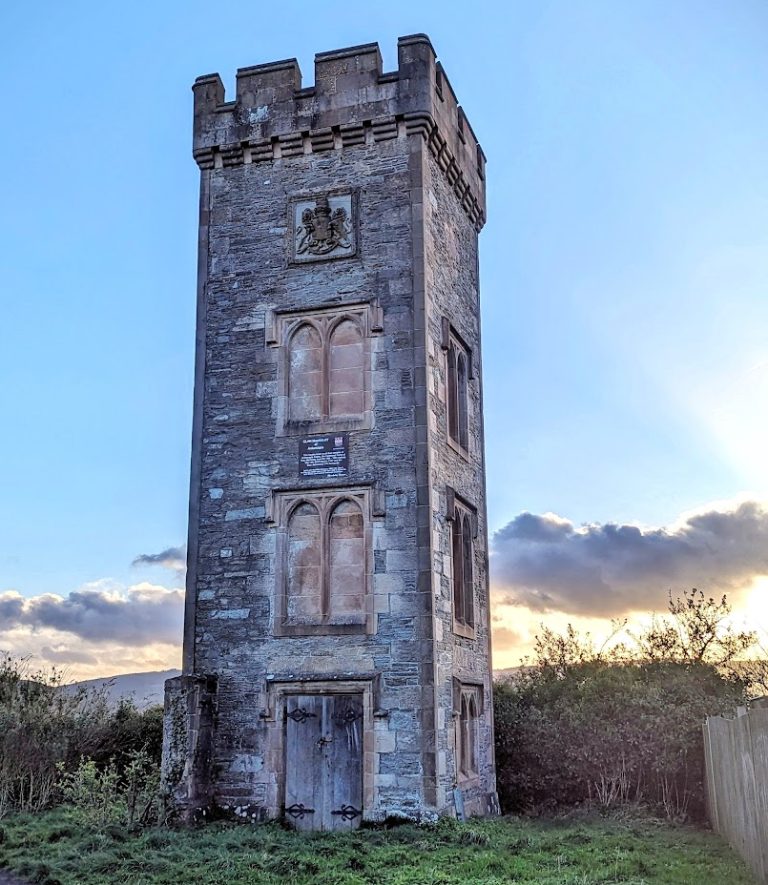
Kilmahew Castle survives as a ruined, rectangular, four-storey tower house built of stone. A tower house was a fortified residential building that combined domestic accommodation with defensive features. The surviving structure dates from the sixteenth century, while its later form reflects the 1744 alterations and the Gothic work undertaken during the nineteenth century.
The Tower House and Setting
The castle stands just north of Cardross in Argyll and Bute, close to the ruins of St. Peter’s Seminary and Kilmahew Burn. Its rectangular stone construction and four-storey form express the compact character of the tower house, while the surviving ruins preserve evidence of the building’s successive alterations. The castle forms part of the wider Kilmahew Estate, which covers 140 acres, or 57 hectares, and includes the seminary and John Fleming’s Walled Gardens.
Nearby sites