Kildonan Castle: A Thirteenth-Century Defensive Stronghold on Arran
Site at a Glance
- Rating
- 3.8
- Popularity
- Medium
- Country
- United Kingdom
- Primary era
- Medieval
- Eras represented
- Medieval
- Civilizations
- Kingdom of Scotland
- Site type
- Military
- Remains
- Castle
On this page5 sections
History
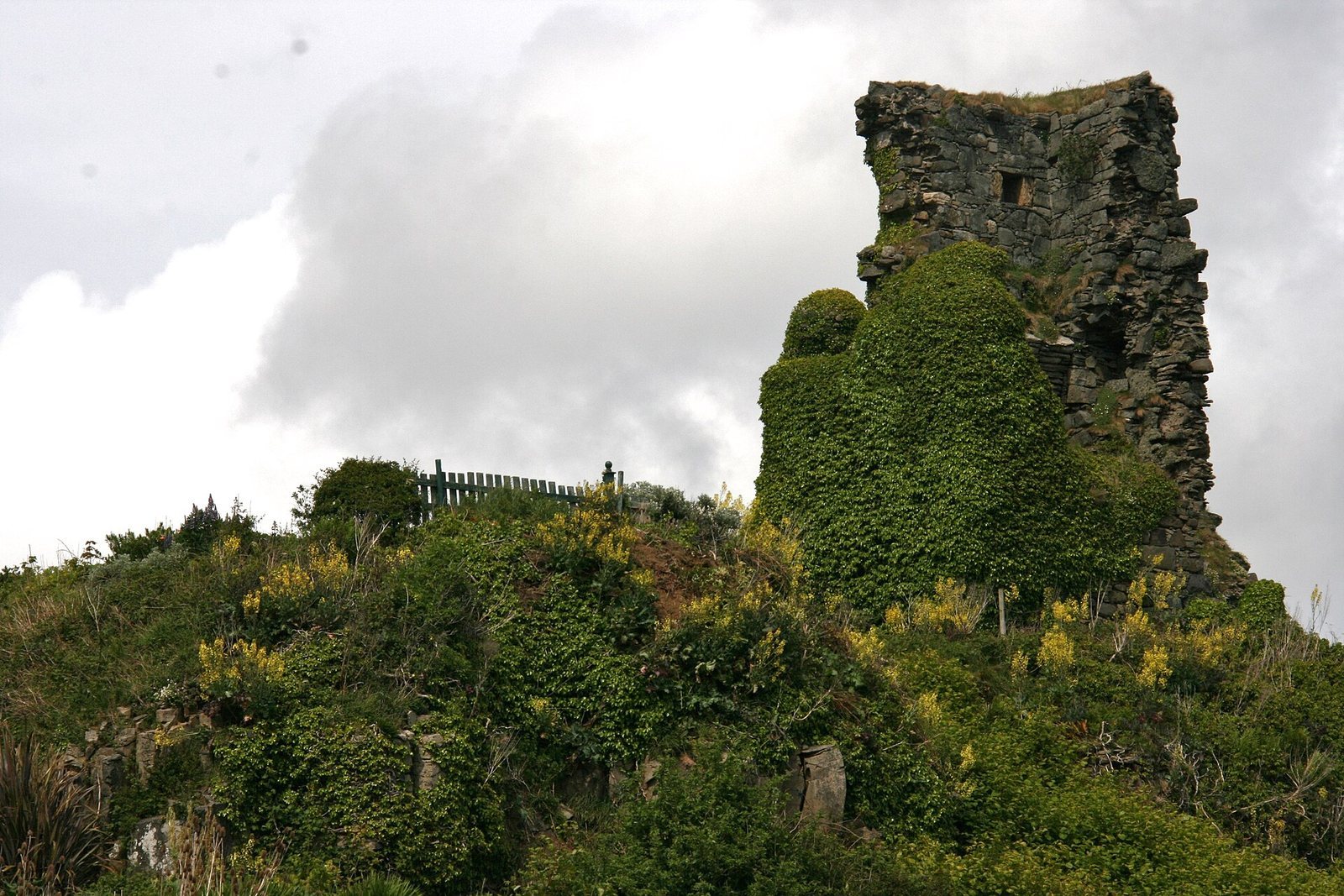
Kildonan Castle is a ruined castle on cliffs above the southern coast of the Isle of Arran, Scotland, in the United Kingdom. The MacDonalds, leaders of the Lords of the Isles, a lordship that held power across parts of the western Scottish islands and mainland, built it in the thirteenth century to defend against attacks entering through the Firth of Clyde.
When Arran belonged to the Scottish Crown, Scottish kings used the castle as a hunting lodge. Robert III, King of Scots from 1390 to 1406, was among them. In 1544, the castle became the property of the Earls of Arran.
The castle and nearby village take their name from Saint Donan, an early medieval Christian saint associated with Scotland. He is said to have lived on the island and to be buried there. Historic Scotland, the Scottish government agency responsible for the historic environment, listed the castle as a Scheduled Monument, a legally protected archaeological or historic site.
Remains
Surviving layout
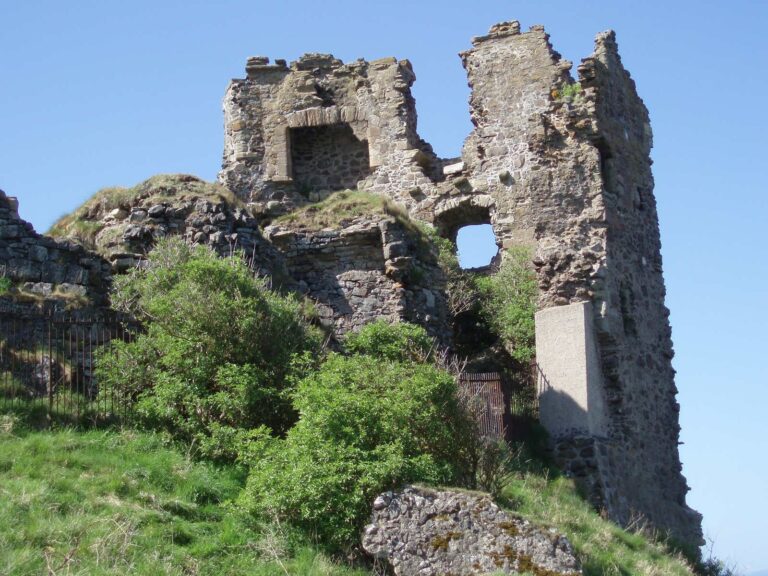
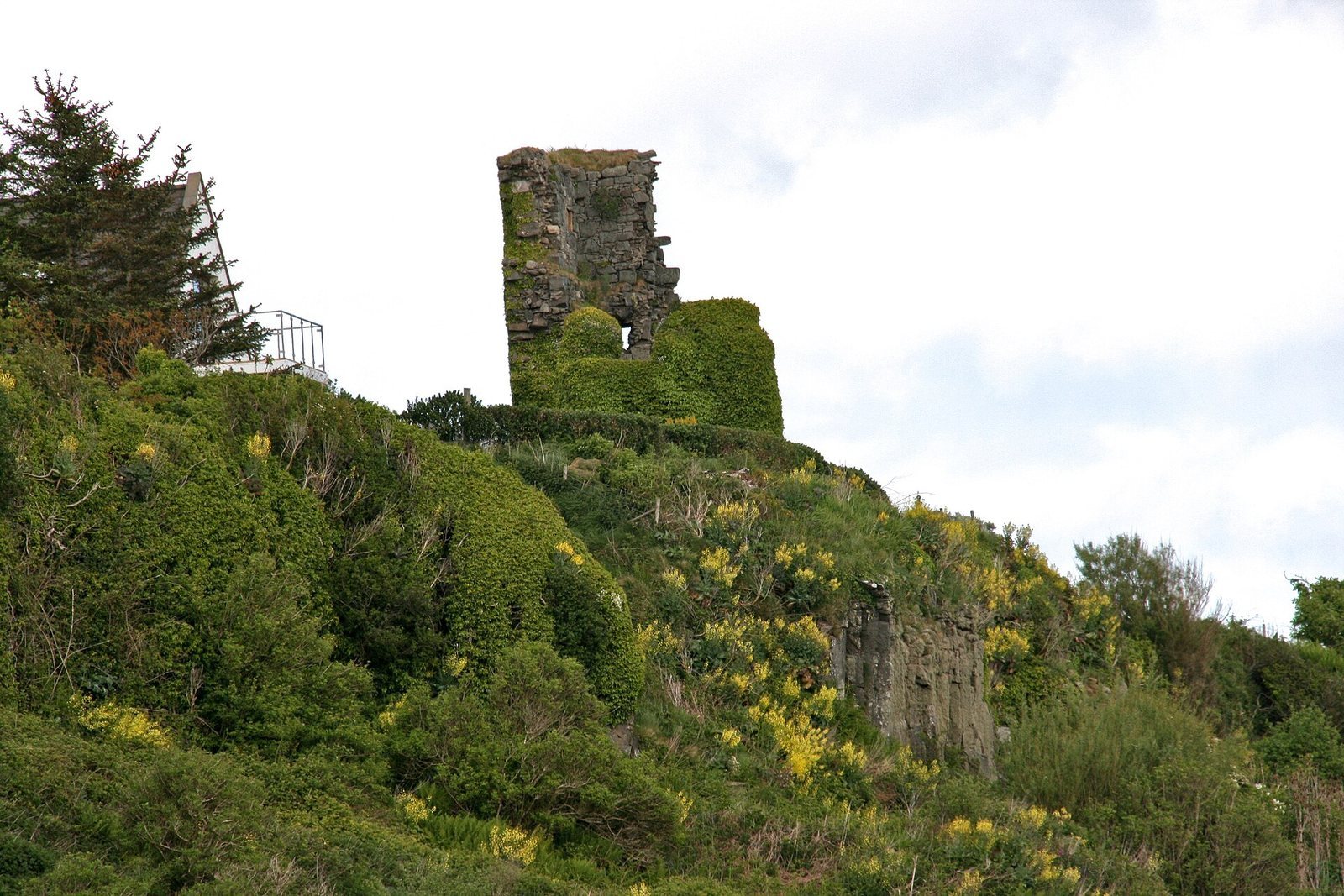
Kildonan is a spur castle, positioned on a projecting ridge of higher ground. Its remains stand on cliffs overlooking Pladda and the entrance to the Firth of Clyde. The surviving features include a rectangular tower and a rock-cut ditch.
Tower
The rectangular tower measures 6.7 by 8.7 metres. Rubble at its northwest corner reaches 11–12 metres in height. The tower originally had three storeys. A timber floor divided the ground storey; the ground and first upper storeys had vaulted ceilings, while the upper storeys had timber ceilings.
Rock-cut ditch
A ditch cut into the rock lies 3–4 metres east of the tower. It probably continued to the north and west, where those sections are now filled in.