Church of Eikenduinen: A Medieval Parish Church and Pilgrimage Site in the Netherlands
Site at a Glance
- Popularity
- Medium
- Country
- Netherlands
- Primary era
- Medieval
- Eras represented
- Medieval
- Civilizations
- Holy Roman Empire
- Site type
- Religious
- Remains
- Church
On this page7 sections
History
Chapel and Parish Church
The Church of Eikenduinen is a medieval church site between Loosduinen and The Hague in the Netherlands. Count William II of Holland probably had its chapel built between 1247 and 1255 to commemorate his father, Count Floris IV, who had been killed in a tournament at Corbie. A hamlet later grew around the chapel.
In 1326, William III gave the chapel to the abbot, the head of a monastery, and the convent of St Mary at Middelburg so that it could become a parish church, serving its own local church community separately from the mother church at Monster. The change was intended to end the chapel’s priest’s customary midday meals with the count or countess at the Binnenhof, a government seat in The Hague. The parish was to be served by a canon, a cleric attached to a church institution, appointed by the abbot and without the right to dine there. In 1331, Jan van Diest, bishop of Utrecht, authorized the conversion.
Devotion and Pilgrimage
The chapel’s original dedication is uncertain, though it may have been to the Virgin Mary. An image of Mary was venerated there, and devotion to Our Lady of the Seven Sorrows, focused on Mary’s suffering, developed during the fifteenth century. The church also drew pilgrims from the County of Holland and nearby lands because it held a Holy Cross relic, an object believed to be a splinter from the cross on which Jesus was crucified. A Guild of the Holy Cross operated in the parish.
Demolition and Later Devotion
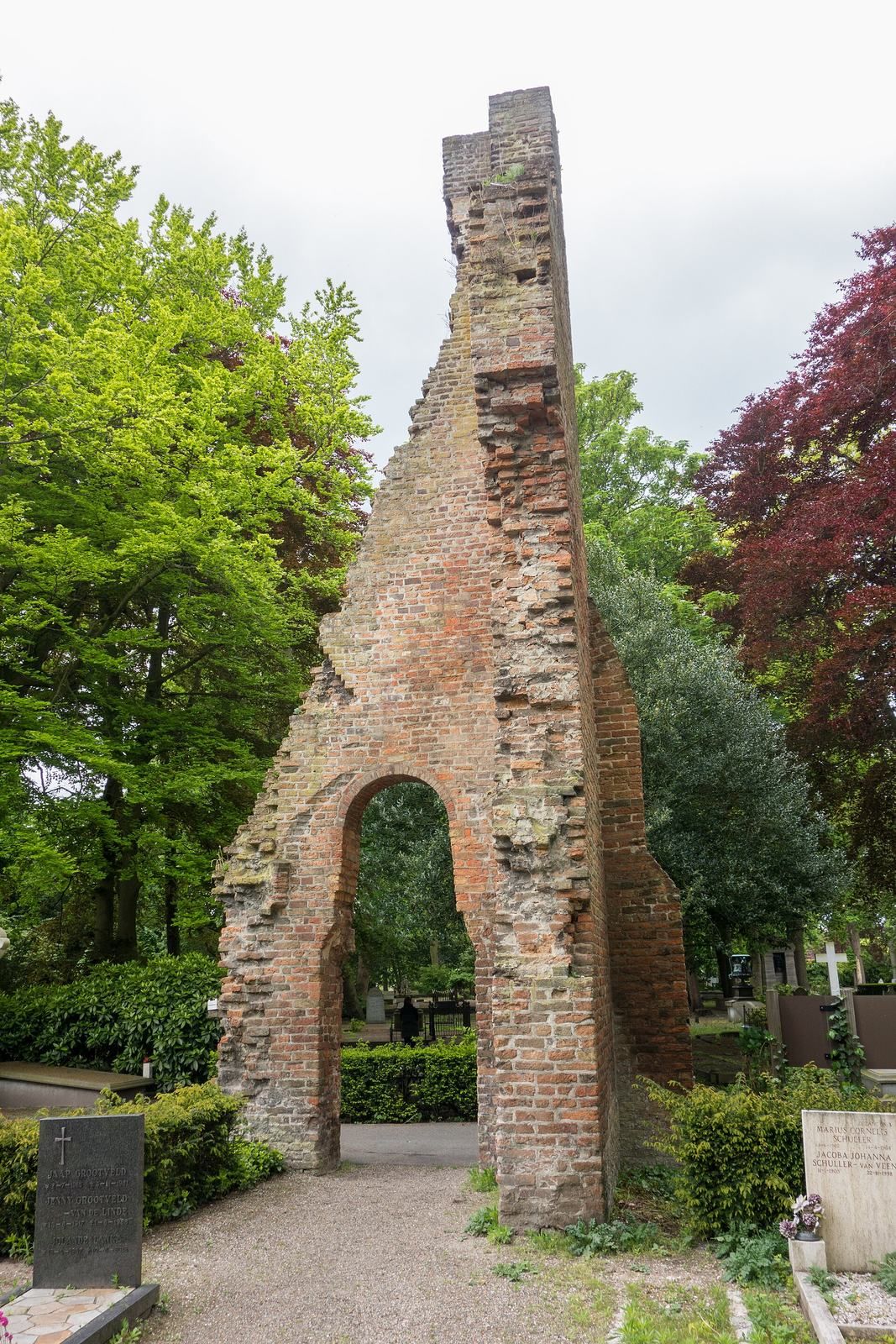
The population of Eikenduinen declined sharply during the fifteenth and sixteenth centuries. People may have moved to Delft or The Hague, or an epidemic such as plague may have contributed. With about 100 inhabitants remaining around 1580, the States of Holland, the province’s governing assembly, decided to demolish the church. Residents protested, but the demolition proceeded; the tower and part of the façade were spared.
Worship at Eikenduinen continued after the demolition. On Good Friday in 1762, hundreds attended a subdued pilgrimage. Participants neither sang nor venerated crosses or images, and the authorities probably tolerated the gathering because of its restrained form. In the nineteenth century, believers from Westland brought sick children to Eikenduinen in the hope that they would recover.
In 1988, during a year dedicated to devotion to Mary, Pastor Hofstede of St James the Greater parish in The Hague revived the pilgrimage. Since then, pilgrims have walked from Parkstraat to the ruin early on Ascension Day, which commemorates Jesus’ ascension into heaven. Carrying the Holy Cross relic, they pray the rosary, a Catholic devotion made up of repeated prayers, and make three circuits around the tower ruin in keeping with a medieval custom. The gathering concludes with a blessing using the relic and a Mass. The ruin is a Dutch national monument and was restored in 1990.
Remains
Church Plan and Ruins
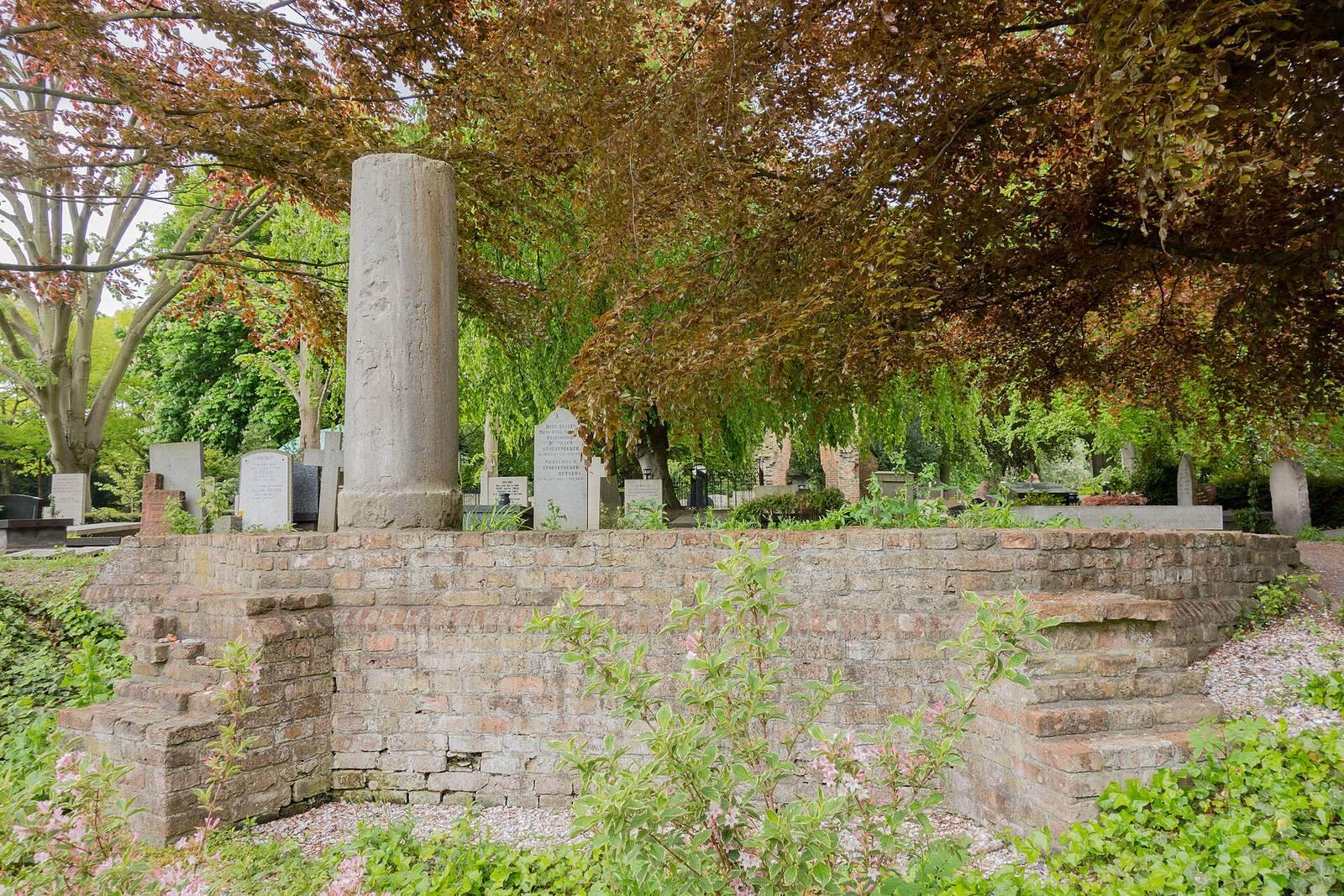
The church stood among the old dunes between Loosduinen and The Hague. Its nave, the main body of the church, measured 35 metres long by 12 metres wide. A transept, the crosswise section of the building, and a deep choir, the area near the altar traditionally used by clergy, completed its plan. Other church remains survive, and sections of the foundations can be seen.
Cemetery
Oud Eik en Duinen cemetery developed around the church ruin over the centuries. It remains in use and is among the largest cemeteries in the Netherlands.