Kavlås Castle: A Swedish Manor House and Estate
Site at a Glance
- Popularity
- High
- Country
- Sweden
- Primary era
- Early Modern
- Eras represented
- Early Modern
- Civilizations
- Swedish
- Site type
- Domestic
- Remains
- Manor House
On this page8 sections
History
Estate and manor house
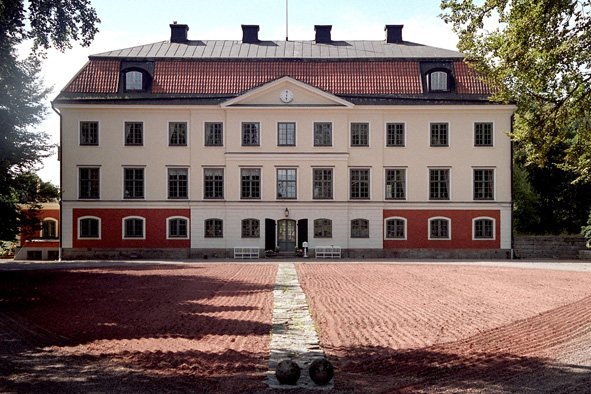
Kavlås Castle is a manor house in Hömb parish, Tidaholm Municipality, Västra Götaland County, Sweden, about 10 kilometres northwest of Tidaholm. Built between 1750 and 1775 in a combination of Rococo and Gustavian styles, it became the centre of one of Skaraborg’s largest estates. Kavlås was mentioned as early as the late 14th century. The von Essen family acquired the estate through purchases in 1723, and Fredric Ulric von Essen (1721–1781), a Swedish nobleman, commissioned the manor house.
Industry and transport
Alum production began at Kavlås in 1746. By the early 19th century, the mill employed about 40 people and made roughly 650 barrels of alum a year. Production ended in 1855 as newer, less costly methods became available. Alum-shale extraction also expanded to the Övertorp limeworks in the early 19th century. Västergötlands Förenade Kalkindustrier, or Västergötland United Lime Industries, was formed in 1918 and soon acquired the province’s largest limeworks, including Övertorp. The industry faltered in the 1920s as fertilizer imports resumed after the First World War and demand for lime declined. Övertorp continued operating on a reduced scale until 1954.
A steam dairy operated on the estate from 1850 to 1961. Fredrik von Essen of Kavlås helped drive the construction of the Hjo–Stenstorp Railway, and Kavlås had a station on its branch toward Tidaholm.
Protection
Since 1978, the manor has been protected as a Swedish listed historic building. It remains privately owned.
Remains
Manor and industrial site
Main house
The manor’s main building rises three storeys and combines Rococo ornament with Gustavian elements influenced by classical forms. Some 18th-century furnishings remain inside, alongside a collection of royal and family portraits.
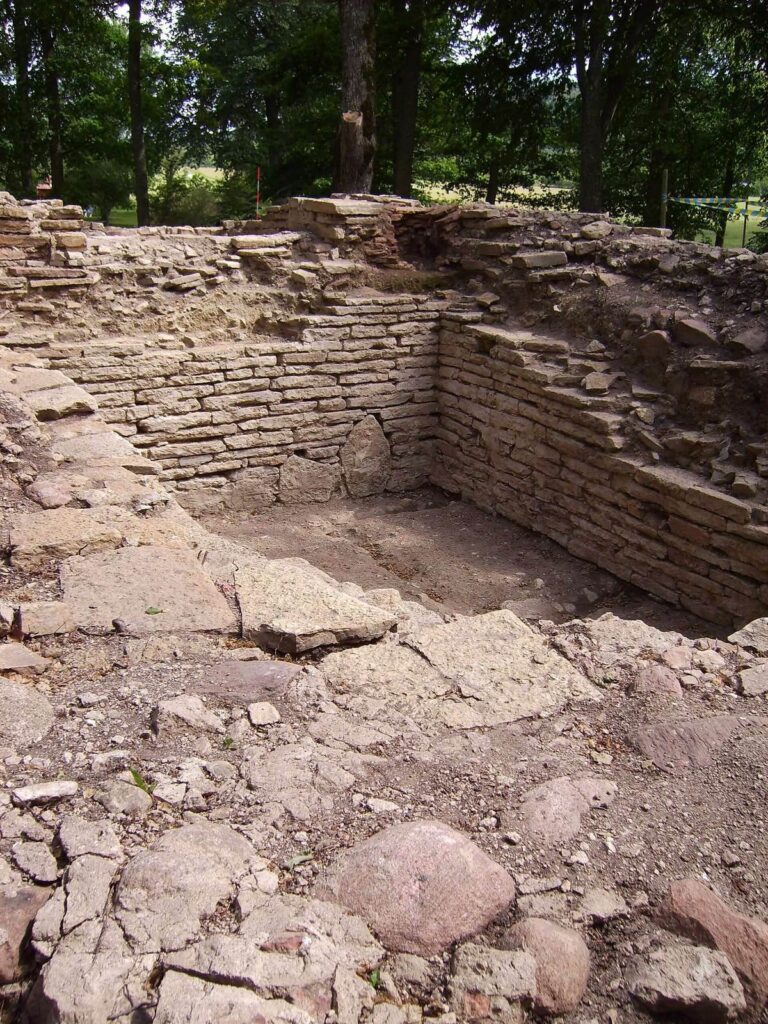
Former alum-production site
The former alum-production site lay beside Bruksdammen Lake, at the edge of what is now Ekedalen.