Karyoupolis: A Byzantine Town and Stronghold in Mani
Site at a Glance
- Popularity
- Low
- Country
- Greece
- Primary era
- Medieval
- Eras represented
- Classical, Medieval, Early Modern, Modern
- Civilizations
- Byzantine, Ottoman, Roman
- Site type
- City
On this page10 sections
History
Karyoupolis was a town of the Byzantine Empire, the eastern continuation of the Roman Empire centered on Constantinople, in Mani, Laconia, Greece. Its name first appears in writing in the eighth century, although the settlement was already in existence and its earlier history is unknown. In later centuries it served as a defensive stronghold and religious center.
Early town and Palaiologan rule
In 821, Nikitas, a monk from the Byzantine imperial family, spent a year in Karyoupolis and wrote The Life of Saint Philaretos. Philaretos of Amnia was Nikitas’s grandfather and also the grandfather of his cousin Maria. Maria’s marriage to Emperor Constantine VI led the family to settle in Constantinople.
After Frankish rule, Karyoupolis gained importance as Mystras grew. The Palaiologoi, the Byzantine Empire’s last ruling dynasty, used the town as an important center. Constantine Palaiologos maintained a garrison there under his trusted commander, George (Solianos) Sophianos. Karyoupolis also served as a stronghold of Greek resistance to incursions by land and sea and as an outpost of the castle of Maini. Italian traveler Cyriac of Ancona visited in 1447 and was hosted in the city. Karyoupolis may have occupied the site of ancient Pyrrhichus, whose location remains uncertain. Cyriac wrote that the city was under the authority of ancient Asine.
The bishopric and movement east
The first written reference to the bishopric of Karyoupolis, a diocese governed by a bishop, dates to 1618. The town remained a religious center until the end of the seventeenth century. Bishop Paisios took part in the Orlov Revolt, an eighteenth-century uprising against Ottoman rule associated with Russian intervention. In 1664, Bishop Parthenios led a Maniot settlement in Cargèse, Corsica. Professor Daskalakis proposed that the name Cargèse might derive from a Latinized form of Karyoupolis. Tradition holds that Parthenios’s elderly predecessor, Bishop Joasaph, could not travel with the settlers and died by suicide.
During the eighteenth century, people gradually moved east to more fertile land. The settlement of Maniakova, also called Miniakova, was established mainly by members of the Fokas and Kavalierakis families from Karyoupolis, including descendants of the Byzantine Fokas family. The expected growth of nearby Gythio, founded in 1740 as Marathonisi, also encouraged the move. The bishop’s seat was transferred to Maniakova, probably during Bishop Ananias Lambardis’s tenure from 1741 to 1747. The settlement then took the name Karyoupolis, while the former town became known as Old Karyoupolis. The relocation unfolded over the second half of the century, as most residents and activities moved east. These changes, along with the settlement in Corsica, contributed to the old town’s gradual depopulation.
Bishop Kyrillos Germos held office during the Greek Revolution of 1821, the uprising that began the Greek War of Independence. In 1833, the bishopric was renamed the bishopric of Gythio and its seat established in that city. The title remains in use among Orthodox Old Calendarist communities, which retained the older church calendar after calendar reforms. Fires in the area later revealed the extent of the ruins.
Remains
Old Karyoupolis
Hilltop settlement
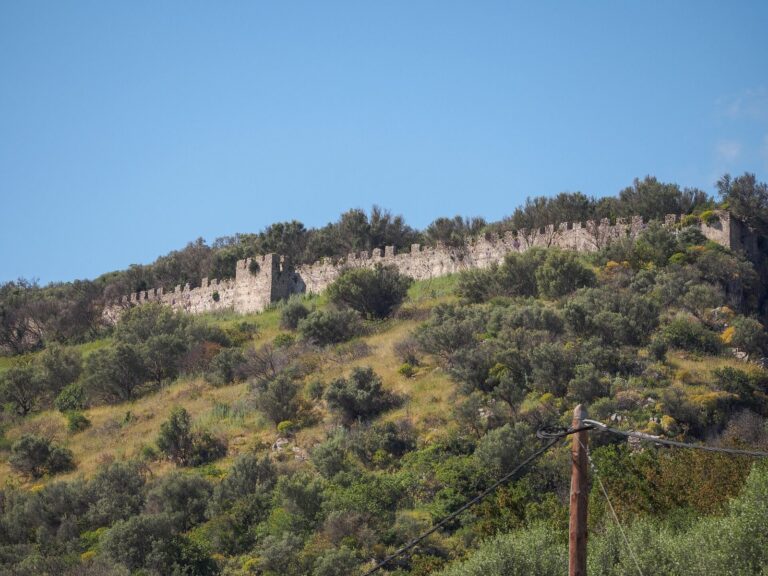
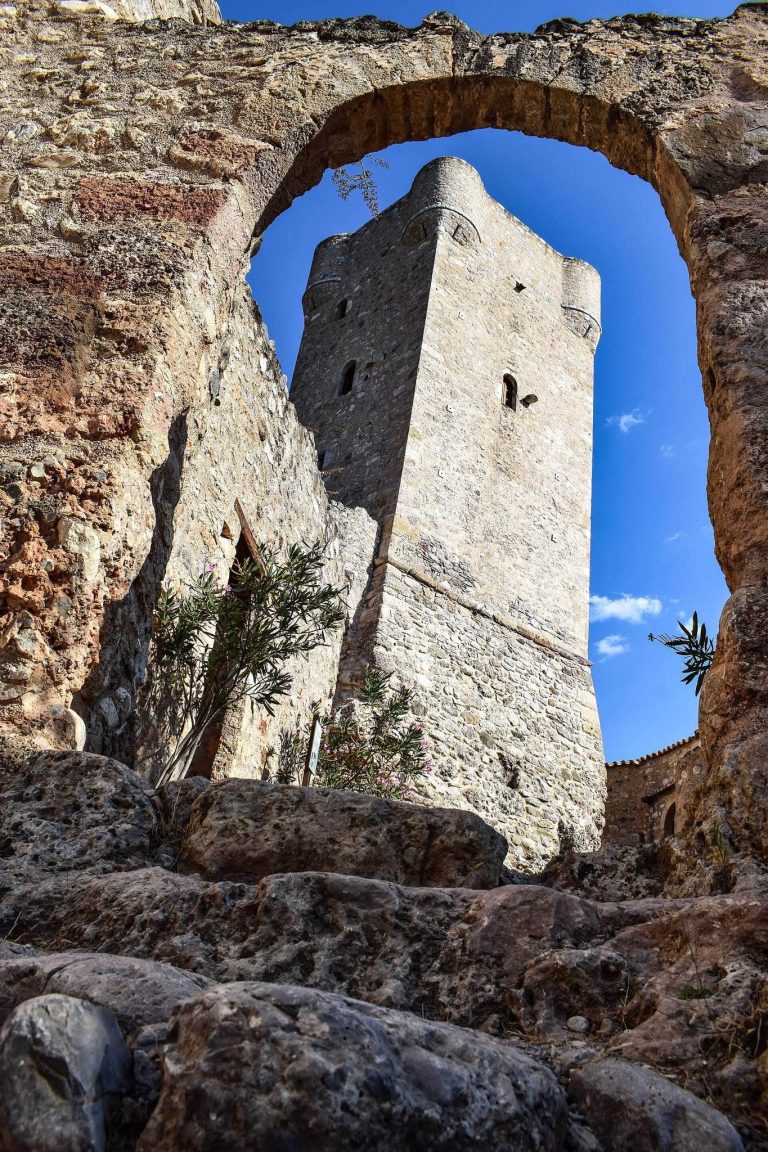
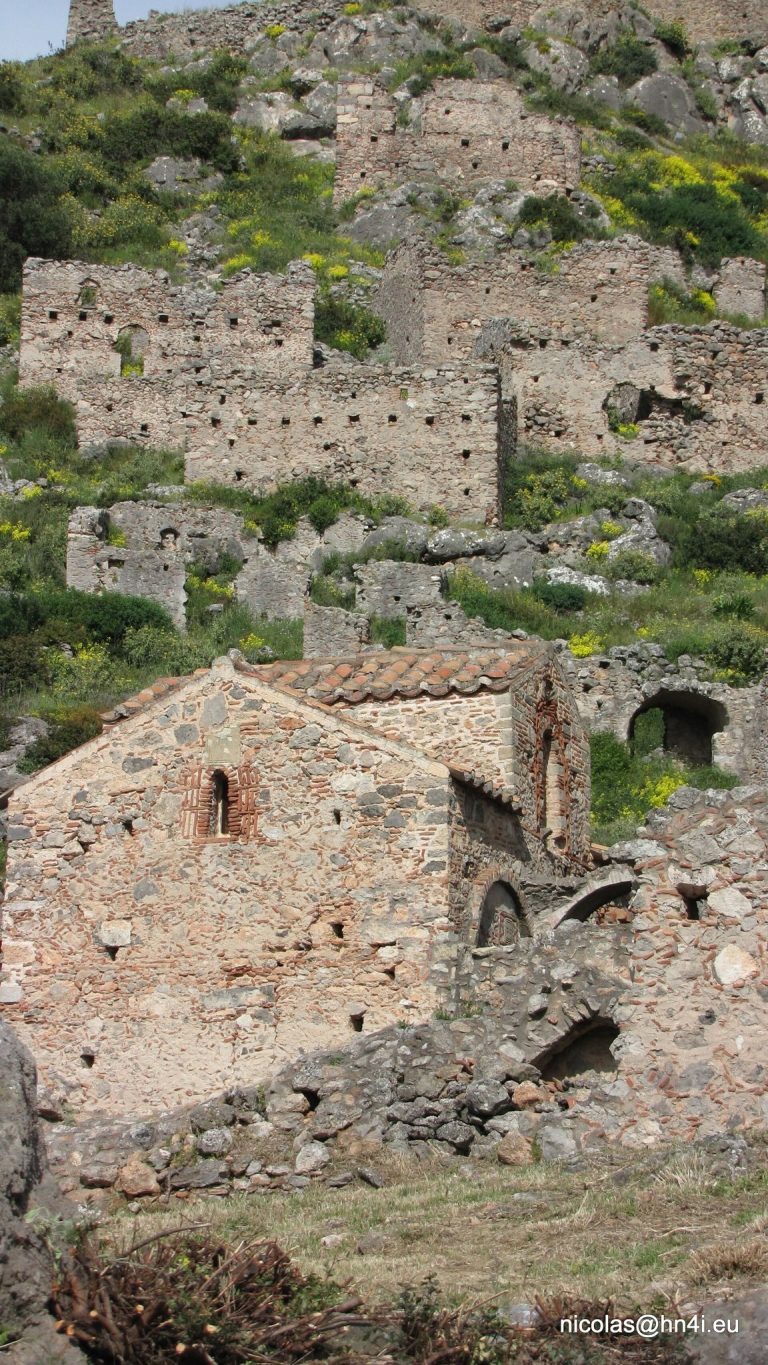
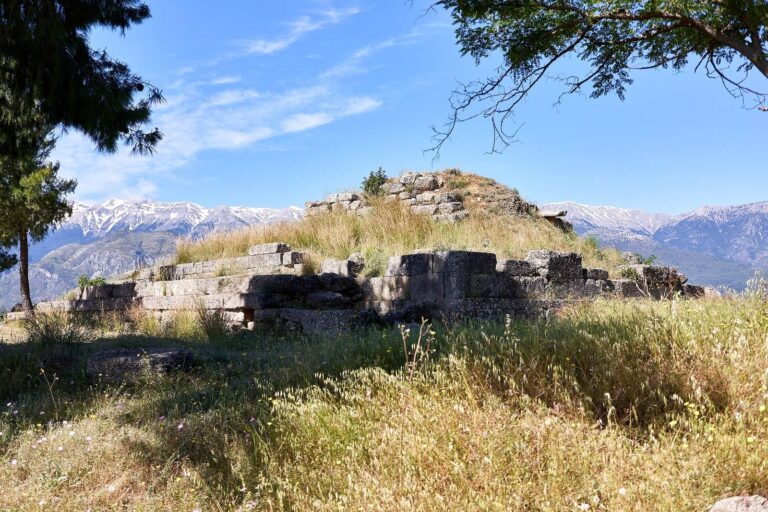
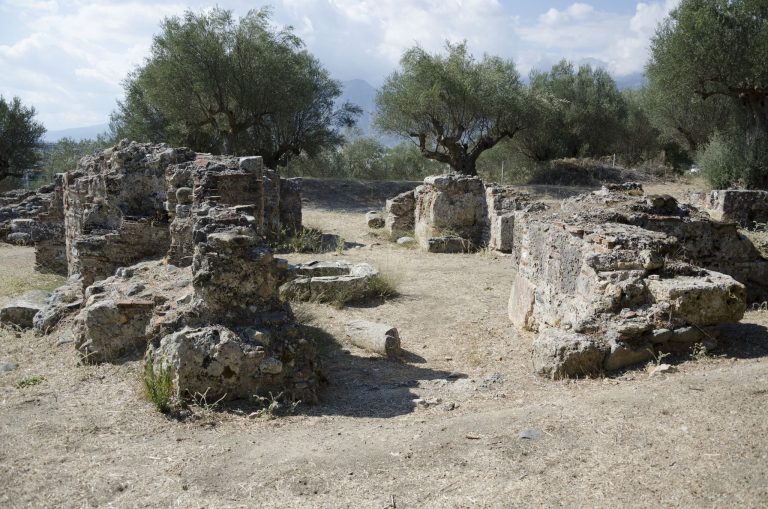
The ruins occupy the summit and slopes of a strategically positioned hill midway between the Laconian and Messenian gulfs. During Venetian rule in the sixteenth century, the hill lay on the boundary between the Tainarian and Laconian regions. Drosopigi lies to its east, while Panagitsa is on its northern slope. The remains include dozens of houses and other buildings, fortified towers, and structures from the Roman period. Sections of a built road that led to the town survive alongside a windmill and water cisterns.
Churches
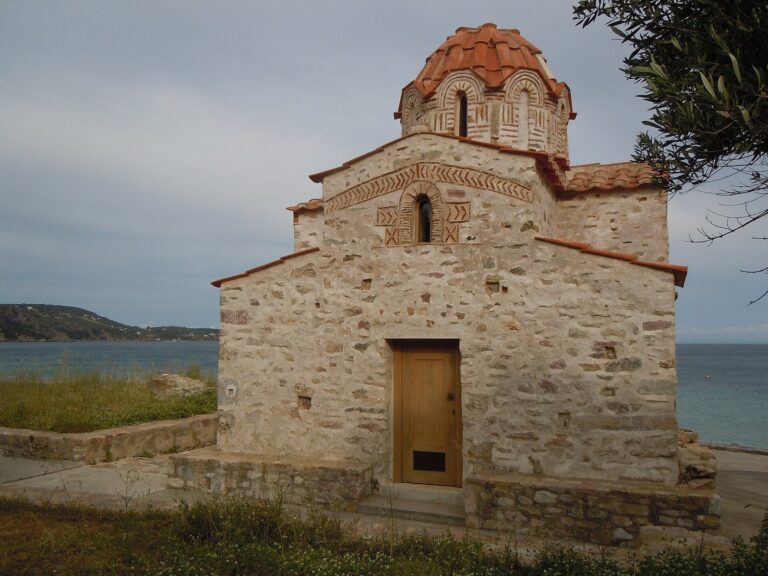
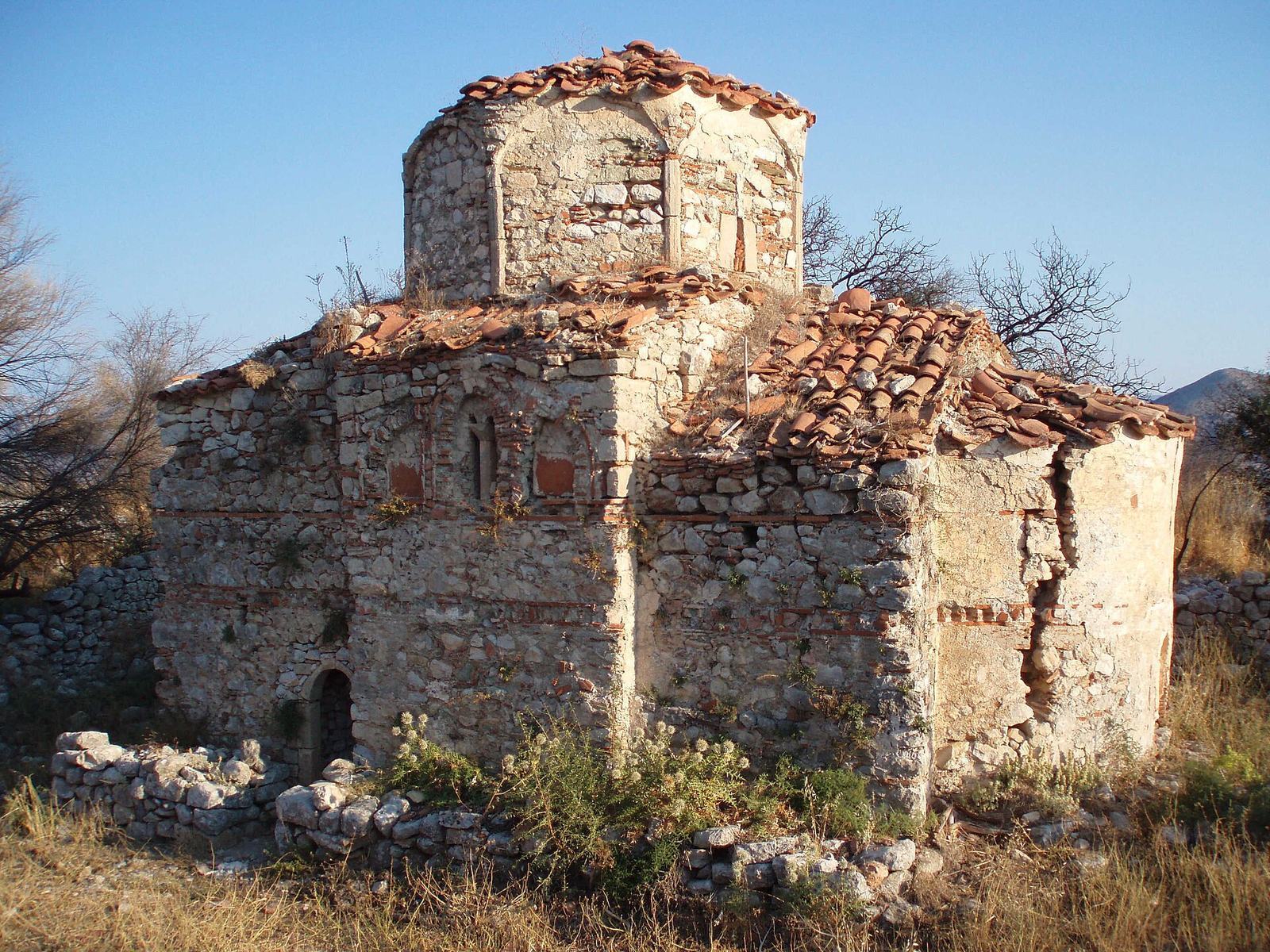
More than ten churches, dating to early and late Byzantine periods, stand among the ruins. Three late Byzantine examples, St Nicholas, St George, and St Demetrios, date to the thirteenth and fourteenth centuries. Each has a single-room layout beneath a dome.
Later Karyoupolis
Fortified family complex
In the later settlement of Karyoupolis, a fortified complex associated with the Kavalierakis and Fokas families occupies a fortified rise. It consists of two main groups of buildings, with arched gates, an enclosure, and loopholes, narrow openings for weapons, some arranged in pairs. The complex was designed to obstruct passage into Mani. A carved stone inscription dated 1749 records the construction of a Kavalierakis family house.
Nearby church and tower
St Peter’s Church stands west of the fortified complex. To its east, Kosonakos Tower, built during the Greek Revolution of 1821, stands beside the Church of the Entry of the Mother of God. The latter dates to 1749 and contains wall paintings from the nineteenth century.