Kapelle Negenborn: A Historic Chapel in Wedemark
Site at a Glance
- Popularity
- Very Low
- Country
- Germany
- Primary era
- Early Modern
- Eras represented
- Early Modern, Modern
- Civilizations
- Duchy of Brunswick, German, Holy Roman Empire, Kingdom of Hanover, Kingdom of Prussia
- Site type
- Religious
- Remains
- Chapel
On this page7 sections
History
Kapelle Negenborn is a timber-framed chapel in Wedemark, Germany, rebuilt between 1689 and 1693. Its local and settlement history, as well as its influence on the townscape, are among the reasons it is protected as a monument.
From First Record to Rebuilding
The chapel is first mentioned in 1534, as the Reformation, the sixteenth-century movement that established Protestant churches in parts of Europe, was reaching the Wedemark. The first Protestant pastor of the church at Brelingen also served the Negenborn chapel.
During the Thirty Years’ War, a European conflict fought from 1618 to 1648, Negenborn was plundered repeatedly, and the chapel fell into ruins. Residents made repairs sufficient to resume services in 1668, while donations helped restore its finances. At first, services took place twice a year; after residents pressed for more, a third annual service was added. A new chapel replaced the makeshift-repaired building between 1689 and 1693, though it had developed several building defects by 1734.
Church Life and Local Duties
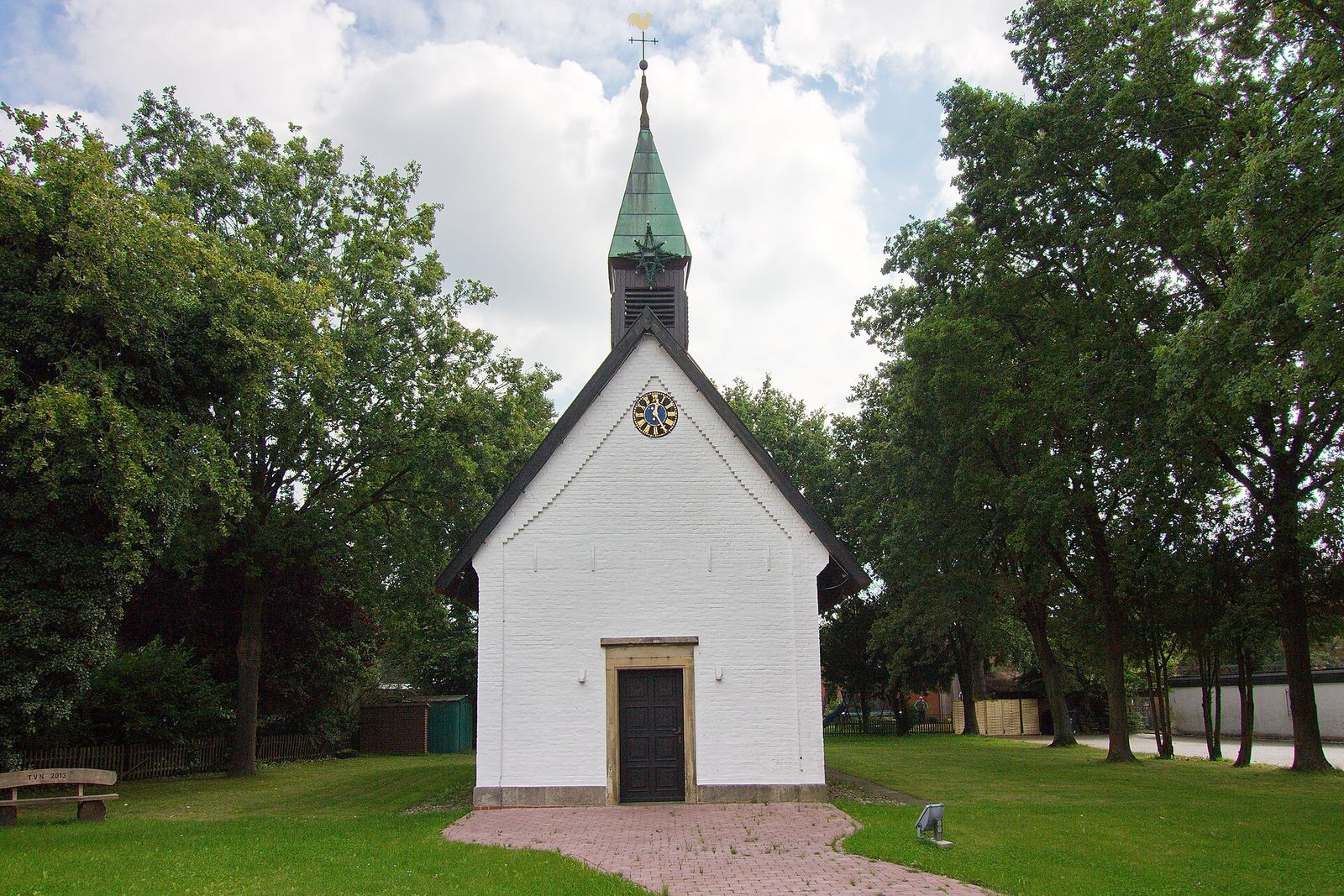
A tower clock was ordered on 26 July 1881 to encourage attendance at services. With no public clock at the railway station or post office, residents were said to arrive very late. The schoolteacher took responsibility for winding and cleaning the clock for an additional annual payment of 10 marks. A new harmonium, a reed-powered keyboard instrument, was acquired in 1887.
Until 1919, the teacher also served as sexton, responsible for the chapel’s practical care and services, and led about 35 reading services each year. The work included leading and accompanying hymns on the harmonium, ringing the prayer bell, cleaning the chapel, caring for altar cloths and utensils, maintaining the clock, preparing baptism slips, recording details of the deceased, and opening and closing the building.
Congregational Change
After the Second World War, new arrivals in the area brought the congregation to about 675 members. During a 1957 visitation, church life was described as remaining relatively active. The Hanover regional church office dissolved the Negenborn chapel congregation effective 1 January 2012. The chapel then became part of the Evangelical Lutheran St. Martini parish of Brelingen. It now holds a service once a month, usually led by a pastor from Brelingen and accompanied by an organist on the harmonium.
The chapel’s donated bell also rang for funerals at a cemetery outside Negenborn, which had a funeral chapel but no bell. In 2025, that cemetery received its own bell tower and a bronze bell made by the Rincker foundry, originally for Ulm Minster, a major church in Ulm.
Remains
Chapel Building
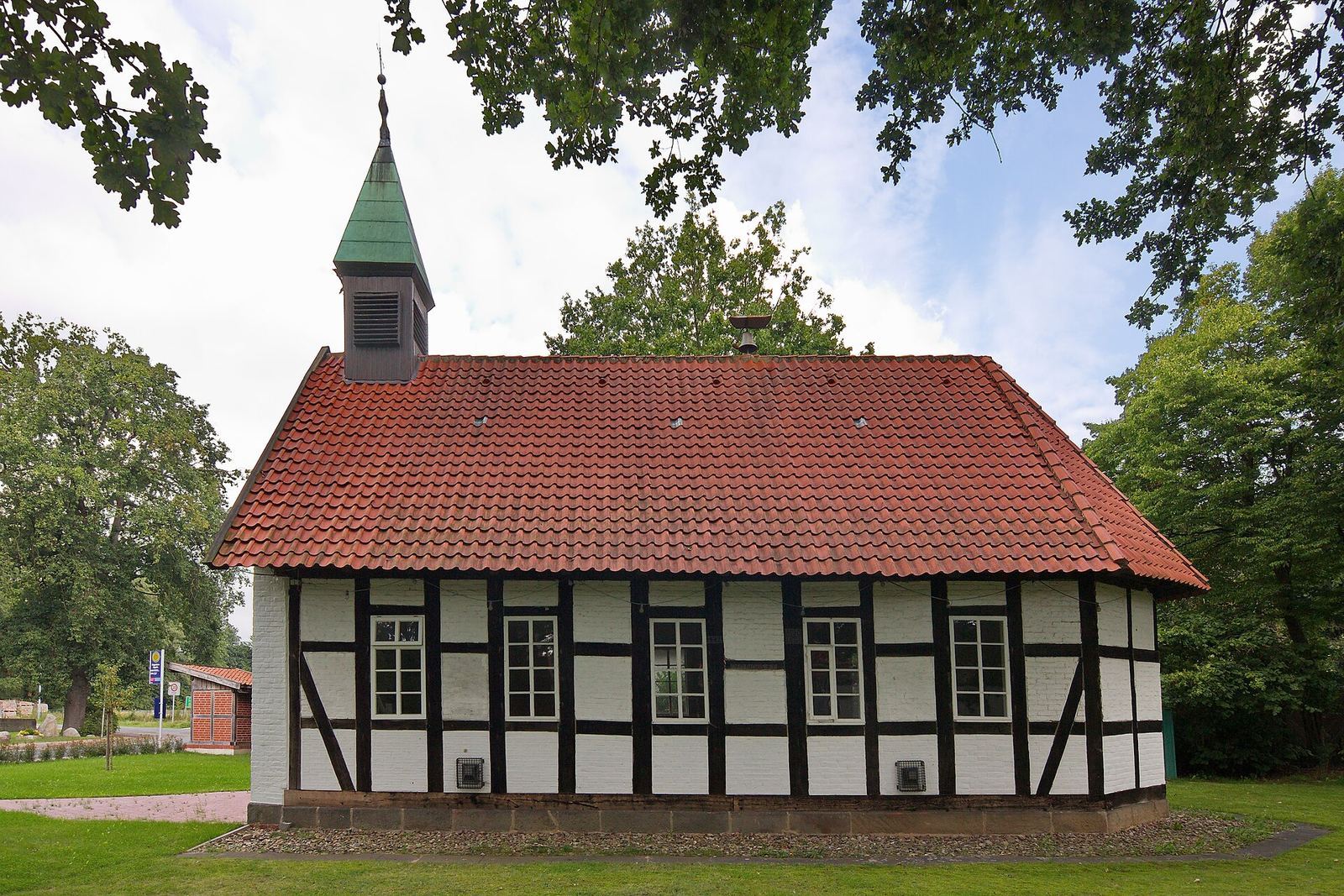
The plain chapel has a timber frame with clay walls and a hall covered by a flat ceiling. One end follows three sides of an octagon. Its gabled roof is hipped at the east end, while a roof turret at the west end carries a pointed, pyramid-shaped roof. An inscription on a beam commemorates the year of completion. Weather had badly damaged the north, west, and south sides, so the sill beams were replaced in 1861. The chapel’s bronze bell weighs 58 kilograms and was donated in 1858.
Chapel Grounds
The area in front of the chapel was made barrier-free in 2013. Three old oaks at the chapel were felled in February 2018 after moisture penetration had caused decay. A work of art was installed in front of the building in 2019 as part of Wedemark’s Street of Children’s Rights project, which received recognition from UNICEF.