Kamenný pastýř: A Menhir near Klobuky, Czechia
Site at a Glance
- Popularity
- Medium
- Country
- Czechia
- Primary era
- Iron Age
- Eras represented
- Iron Age, Modern
- Civilizations
- Unclassified
- Site type
- Civic
- Remains
- Megalithic Monument
On this page9 sections
History
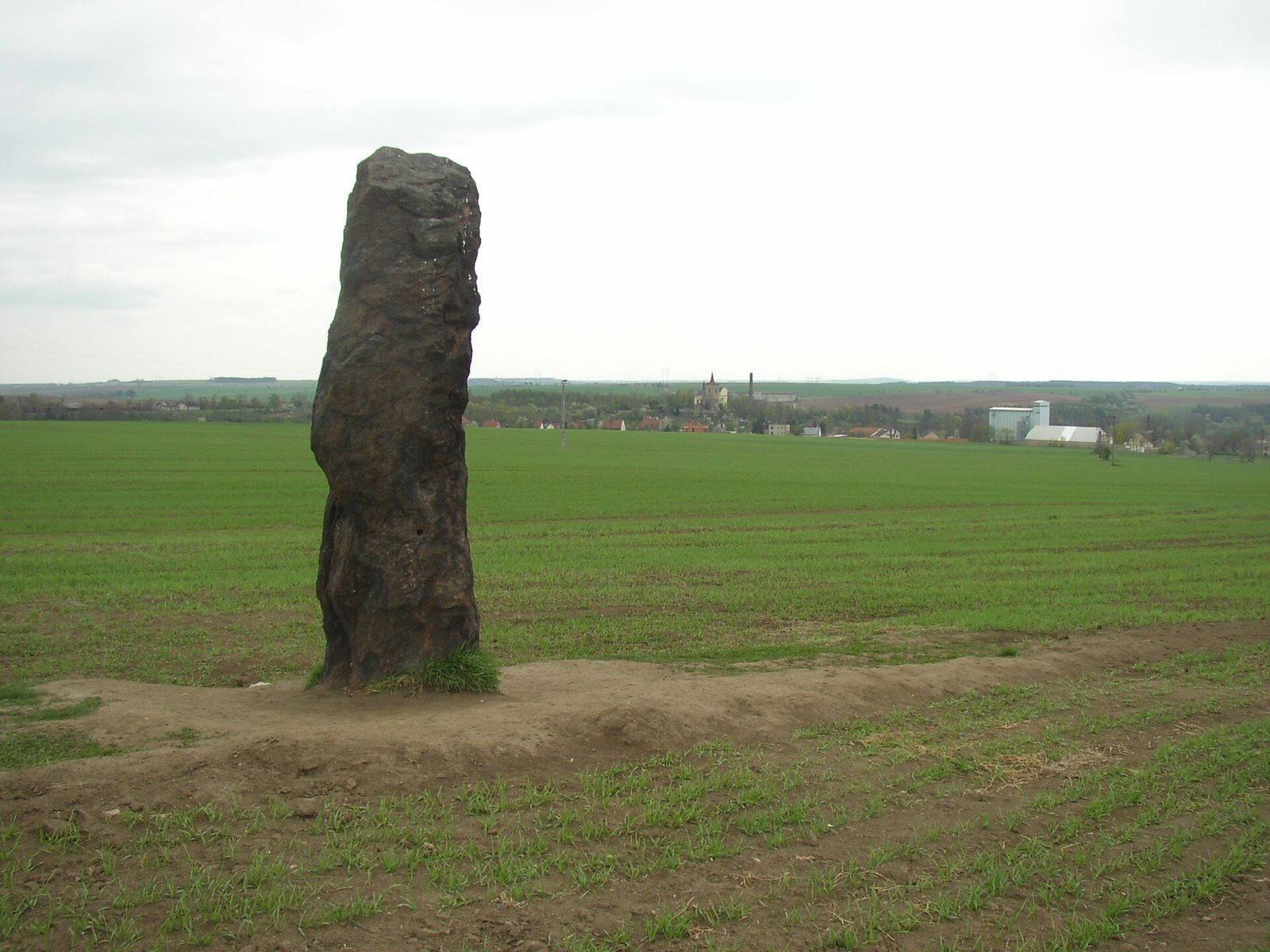
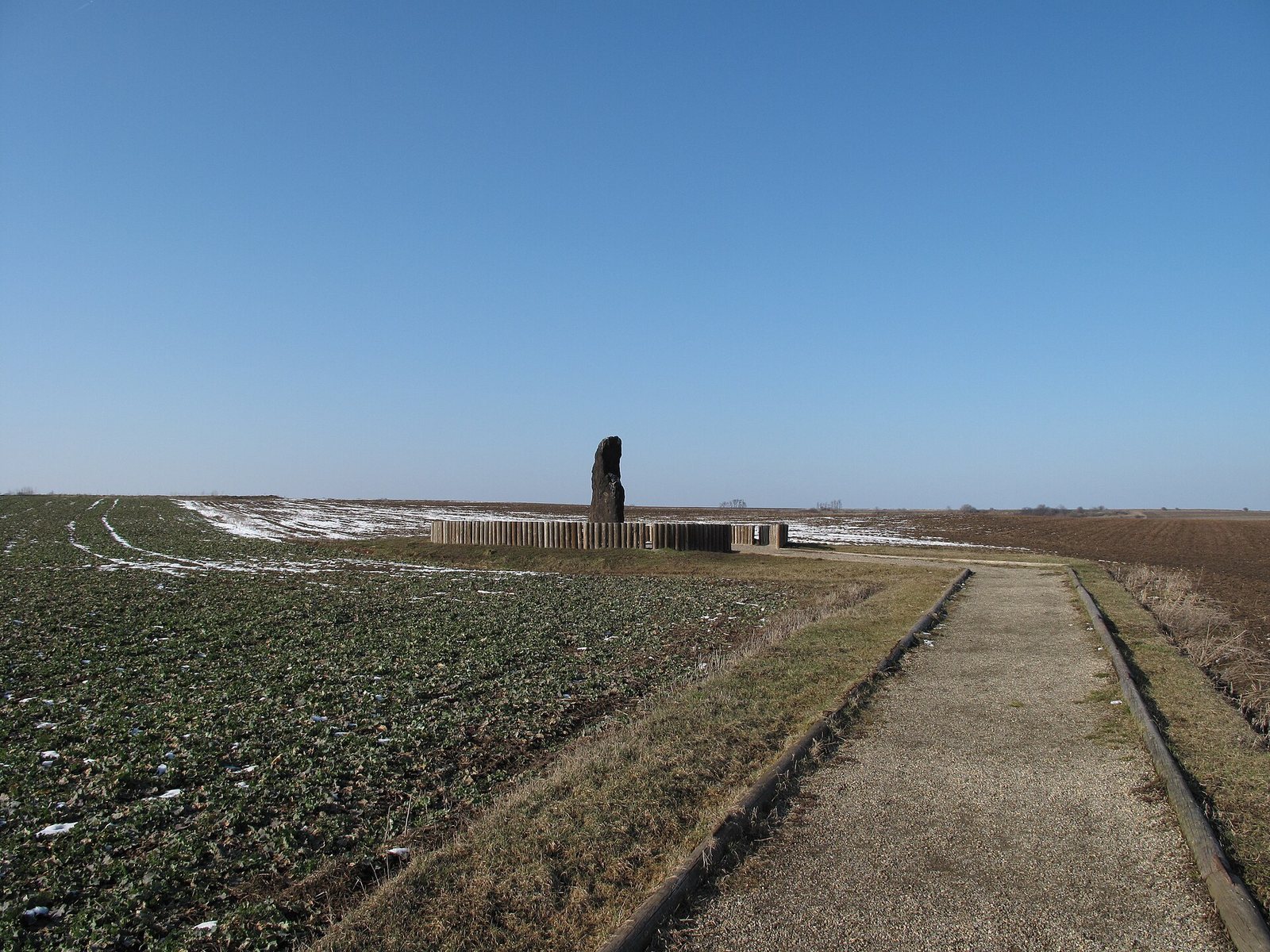
Kamenný pastýř is a solitary menhir, or large upright stone, in a field about one kilometre northwest of Klobuky, Czechia. Its prehistoric date has not been established, though its erection is commonly linked to a period associated with the Boii, a Celtic people of central Europe.
Early records and nineteenth-century debate
The earliest known record of the stone is a map from 1841. A storm toppled it in February 1852, but local residents regarded it as an old monument, and Klobuky’s municipal council arranged to raise it again. A local miller undertook the difficult work, which lasted several hours. The re-erection was celebrated with musicians and young women.
Interest in the stone grew over the following decades. Amateur archaeologist Karel Frost reported it to the Prague Archaeological Board in 1861; Vojtěch Krupka wrote about it in 1864, and naturalist Antonín Frič published an article in 1877. In the nineteenth century, geologist J. N. Woldřich argued that it was a natural remnant of a dense, weather-resistant core of Permian sandstone. Archaeologist J. L. Píč disputed that explanation and excavated beside the stone in 1898.
Modern investigations and use
Two magnetometry surveys, which measure variations in magnetic fields, were made in 1994, one on the eve of the solstice and another at sunrise. A change in the magnetic reading near the stone seemed to indicate movement, but a repeat survey in 1998 found no such change. Geophysicist Roman Křivánek suggested that the first result might reflect natural conditions, differences in how the surveys were conducted, or nearby disturbances. Fire pits lit at the solstice by people following Celtic traditions can also affect magnetic readings.
People who follow Celtic traditions continue to hold ceremonies at the stone on festival days. They hang objects on it, place coins in its cracks, and light ritual fires. These activities have displeased both the landowner and scientists. Changes made to the surrounding area in 2007 also drew criticism from some people, who felt they had diminished its distinctive character, which they associated with romantic ideas of prehistoric builders performing pagan rites.
Local traditions
Local tradition says that six to twelve smaller stones once stood around the menhir, perhaps forming a circle, and were removed to make room for ploughing. One story explains the stone as a shepherd who waited so long for lost sheep that he turned to stone. Another says it moves a grain of sand toward the church in Klobuky each time its bells ring. If it reaches the church, the world will end; bells from Telce are said to make it retreat.
Remains
The stone and its setting
The standing stone
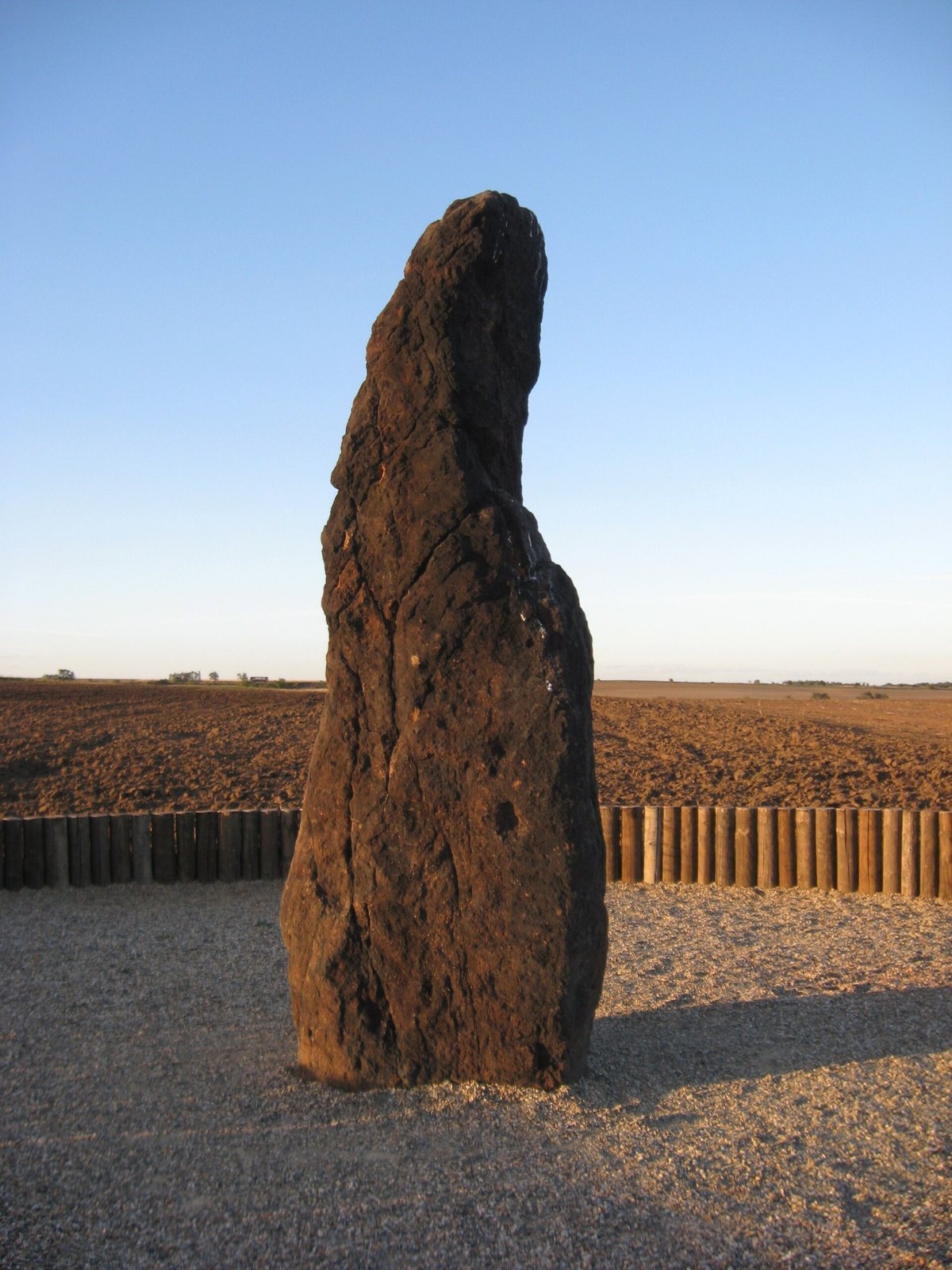
The unworked, column-shaped boulder stands alone. It is about 3.4 to 3.5 metres high, with roughly 70 centimetres below ground, reaches up to about one metre across, and weighs approximately five tonnes. Its dark, rust-brown stone is medium-grained sandstone bound with iron and described as Cretaceous in age. It has been called the tallest menhir in the Czech Republic and one of the few stones there regarded as a genuine prehistoric menhir, although its own prehistoric date remains unproved.
Excavated setting and nearby stones
Píč’s 1898 excavation indicated that the boulder had been deliberately placed in a sandy layer above the underlying bedrock. A record from 1901 describes two stones of similar material ploughed up 200 to 300 metres north of the menhir, as well as a larger stone found about 28 paces away toward Telce.
Path, seating, and sunrise alignment
Improvements made in 2007 included paving around the stone and a footpath leading to the road. A low wooden barrier close by provides a place to sit. At sunrise on April 30 and August 13, associated with the Celtic seasonal festivals Beltain and Lughnasadh, the sun is visible rising directly above Říp, a hill in central Bohemia.