Kalbsburg: A Former Knightly Estate and Landwehr Site in Germany


Site at a Glance
- Rating
- 4.4
- Popularity
- Very Low
- Country
- Germany
- Primary era
- Modern
- External website
- Open
- Eras represented
- Modern
- Civilizations
- German
- Site type
- Domestic
- Remains
- Manor House
On this page9 sections
History
Kalbsburg is a former knightly estate in Germany, located in Borken in northern Hesse. Its history developed from the earlier settlement of Bunebach, also known as Bonebach, rather than from a separately recorded foundation under the name Kalbsburg. The site later became part of the Hessian border defenses and an estate, while its present villa was built in 1911–1913.
Medieval origins and territorial change
Bunebach was first mentioned in 1197, when Pope Celestine III confirmed revenues from the settlement to Spieskappel Monastery. In 1320, the collegiate foundation at Fritzlar granted the monastery further fiefs there. By 1386, at least some of these holdings belonged to Haina Monastery. A fief was property or a related right granted by a superior to a dependent holder in return for service or allegiance.
Kalbsburg’s later development was shaped by the Mainz–Hesse War of 1427, a conflict between the Archbishopric of Mainz and the Landgraviate of Hesse that altered territorial control in northern Hesse. After Landgrave Ludwig I of Hesse defeated Archbishop Konrad III of Mainz, including in battles at Großenenglis on 23 July and Fulda on 10 August, Mainz and its northern Hessian vassals lost substantial possessions to Hesse. The Gut Hohenenglis was among the affected estates.
The border watchtower
In 1431, Ludwig I built a watchtower near the present Kalbsburg on the Hessian border facing Mainz-controlled Fritzlar. He incorporated it into the landwehr of the Borken office. A landwehr was a territorial defensive system of watchtowers, boundaries, and controlled passages used to monitor and protect a jurisdiction. The tower was initially called the Tower on Bonebach after the nearby settlement. The name Kalbsburg came into use only from the middle of the sixteenth century.
In 1448, Ludwig II granted the watchtower to Philipp von Borken. After Philipp’s death, it passed in 1457 to Henne II von Wehren. Landgrave Wilhelm I granted the landwehr tower as a male-line fief to his Borken official Philipp von Wildungen in 1497. A male-line fief was restricted to succession through the male line. Philipp’s successors expanded the holding with surrounding woods and fields.
From noble fief to agricultural estate
The von Wildungen family developed the property into an estate and retained it until 1596. In that year, Burkhard von Wildungen pledged Kalbsburg to his brother-in-law Melchior von Hanstein, and later to Melchior’s son Kaspar. Kaspar’s heavy debts led him to transfer the estate to Landgrave Moritz of Hesse-Kassel in 1616. In 1626, Moritz gave it to his son Friedrich of the Rotenburg line.
A privy councillor named von Pohlheim received Kalbsburg as a fief in 1644, followed by his cousin Wilhelm Pohlheim in 1657. Wilhelm later sold the estate to Jost Philipp von Meysenbug, after which ownership changed repeatedly among estate holders. Agriculture continued there until 1956. The family of Otto von Porbeck, later a government director in Kassel, held Kalbsburg for an extended period from 1778 to 1885. The family entered imperial nobility in 1779.
In 1956, Kalbsburg passed to Hessische Heimat, a Hessian housing and property organization. In the years that followed, the villa, agricultural buildings, and former manor house were sold to private owners. The former watchtower had already been demolished after 1757.
Remains
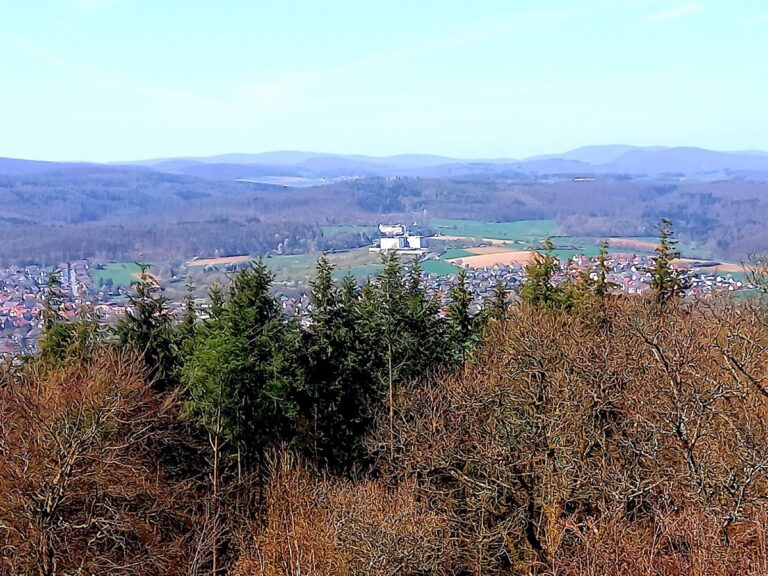
Kalbsburg lies about 4 kilometres south of Fritzlar, at the northern edge of the Großenenglis Plateau above the Eder plain. At approximately 230 metres above sea level, the site occupies a valley slope. Its surviving estate complex includes a villa, agricultural buildings, and a former manor house, while the earlier defensive tower stood immediately near the present property.
The estate buildings
Villa
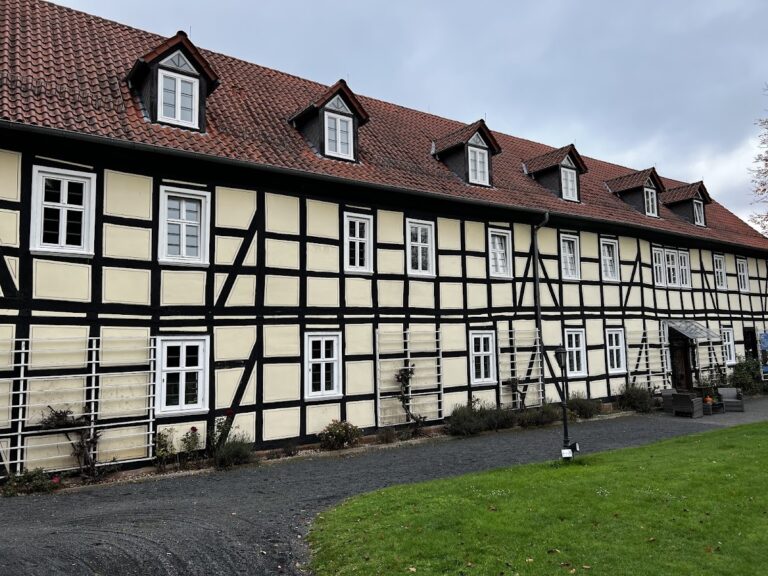
The present manor house is a villa constructed in 1911–1913. It forms the principal surviving residential building of the later estate and belongs to the period when Kalbsburg functioned as an agricultural property rather than as a medieval border post.
Agricultural buildings and former manor house
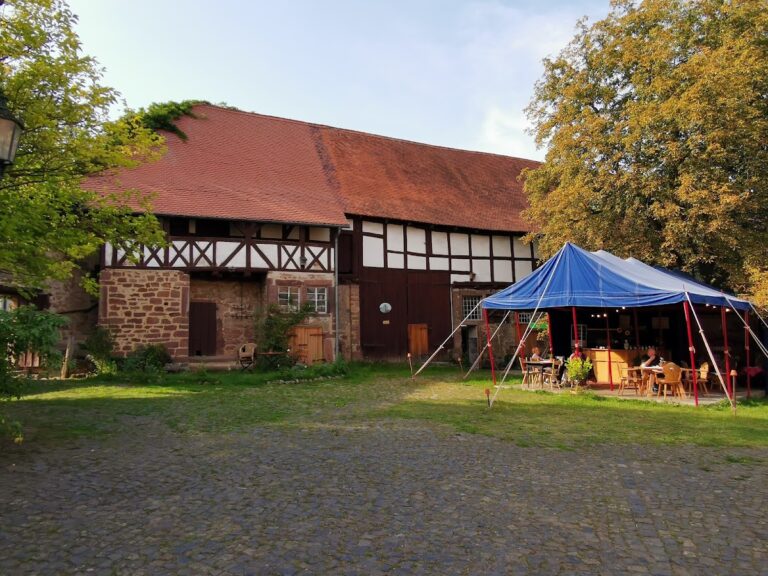
The estate also comprised agricultural buildings and a former manor house. These components, together with the villa, passed into private ownership after Kalbsburg was transferred to Hessische Heimat in 1956.
Former landwehr tower
The landwehr watchtower stood immediately near the present Kalbsburg. Built in 1431 as part of the defensive system of the Borken office, it monitored the Hessian border facing Fritzlar, then under Mainz control. The tower later gave its name to the estate, but it was demolished after 1757 and no longer forms part of the surviving structures.