Jhansi Fort: A Maratha and British-Era Stronghold in India
Site at a Glance
- Rating
- 4.4
- Popularity
- Very High
- Country
- India
- Primary era
- Early Modern
- Eras represented
- Medieval, Early Modern, Modern
- Civilizations
- British
- Site type
- Military
- Remains
- Castle
On this page12 sections
History
Jhansi Fort is a hilltop fortification in Jhansi, India, associated with the Karhade Brahmin rulers of Balwant Nagar, the former name of Jhansi, from the eleventh through the seventeenth century. Its construction is attributed to the Karhade Brahmin ruling clan, and its position on Bangira hill reflects a North Indian tradition of building major forts on elevated inland sites.
From Balwant Nagar to Peshwa rule
In 1728, Peshwa Bajirao helped Maharaja Chattrasal defeat the Mughal forces commanded by Mohammed Khan Bangash. Chattrasal then ceded part of his state, including Jhansi, to Bajirao. The Peshwa was the principal minister of the Maratha Empire and later its effective ruler, while a subedar served as a regional administrator under the Peshwa system.
Naroshanker became subedar of Jhansi in 1742 and enlarged the fort during his fifteen-year tenure. The extension was known as Shankergarh. After Naroshanker was recalled in 1757, Madhav Govind Kakirde and then Babulal Kanahai held the office. Vishwas Rao Laxman served from 1766 to 1769, followed by Raghunath Rao II Newalkar.
Raghunath Rao II increased state revenue and commissioned the MahaLakshmi Temple and Raghunath Temple. After Shiv Rao died, his grandson Ramchandra Rao became subedar, but his administration ended with his death in 1835. Raghunath Rao III succeeded him and died in 1838. The British then recognized Gangadhar Rao as Raja of Jhansi.
The Newalkar rulers and annexation
Gangadhar Rao improved the administration of Jhansi. He married Manikarnika Tambe in 1842, and she later became known as Lakshmibai. Their son was born in December 1851 but died in March or April 1852. Shortly before Gangadhar Rao’s death in November 1853, he adopted Anand Rao, the son of his cousin, and renamed him Damodar Rao.
After Gangadhar Rao’s death, the British East India Company rejected Damodar Rao’s succession and annexed Jhansi under the Doctrine of Lapse. This policy was used to absorb states whose rulers died without an accepted natural male heir. It was closely associated with Lord Dalhousie, Governor-General of India from 1848 to 1856. In March 1854, Lakshmibai received an annual pension of 60,000 rupees and was ordered to leave the palace and fort.
The uprising of 1857 and later transfers
When the uprising against British rule began in June 1857, Lakshmibai took control of Jhansi Fort and led Jhansi’s forces against the British East India Company. Company troops commanded by General Hugh Rose besieged the fort in March and April 1858. They captured it on 4 April, after which the city was pillaged. Lakshmibai escaped from the fort on horseback during the fighting.
In 1861, the British Government transferred Jhansi Fort and the city of Jhansi to Jayajirao Scindia, the Maharaja of Gwalior, in exchange for Gwalior Fort. The British recovered Jhansi from Gwalior State in 1886. The fort therefore came to embody successive phases of Maratha administration, Newalkar rule, Scindia authority, and British control.
A separate British fortress, Star Fort, stood south of the main fort in Jhansi Cantonment. It was constructed under an 1804 treaty with the Newalkar Maharaja, which made Jhansi subordinate to the British. Bengal infantry stormed Star Fort in June 1857. Jhansi Fort is now owned by the Government of India and is described as being in good condition.
Remains
Hilltop defenses
Walls, moat, and bastions
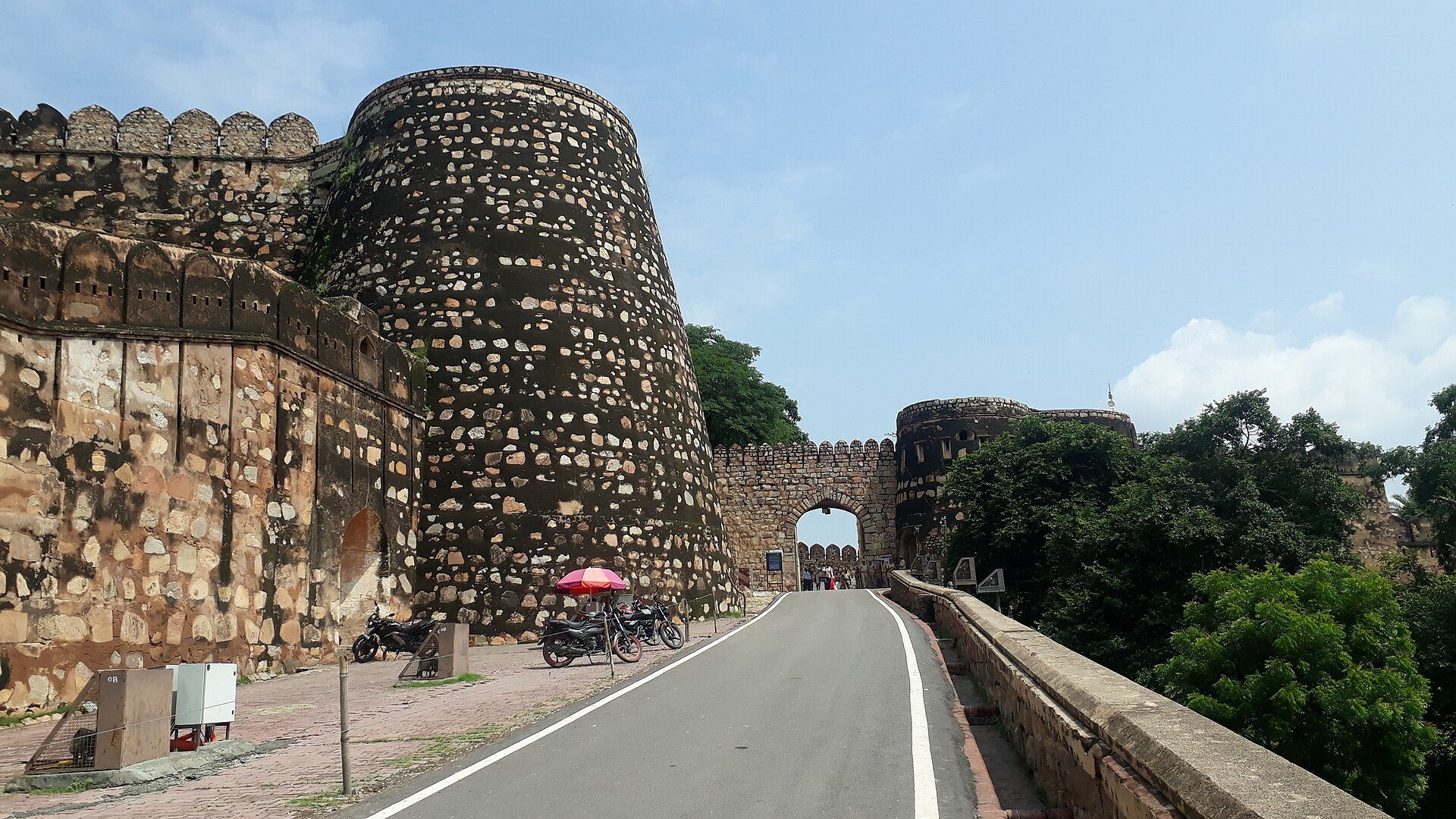
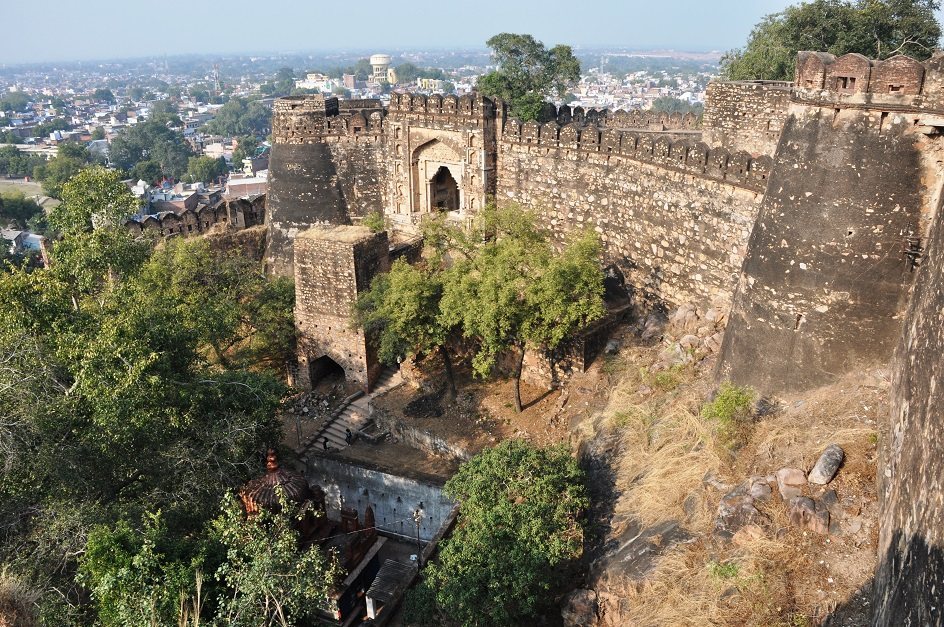
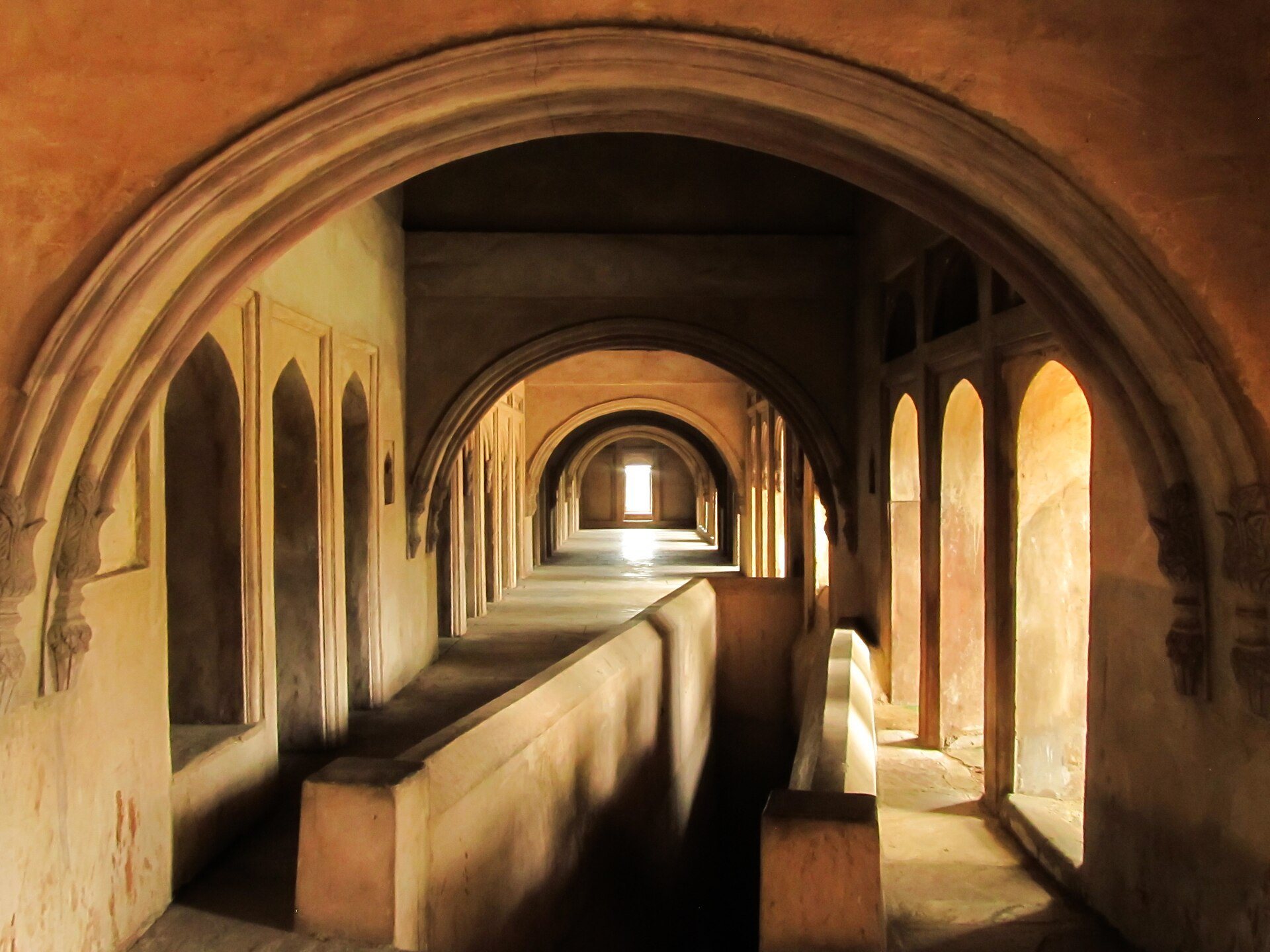
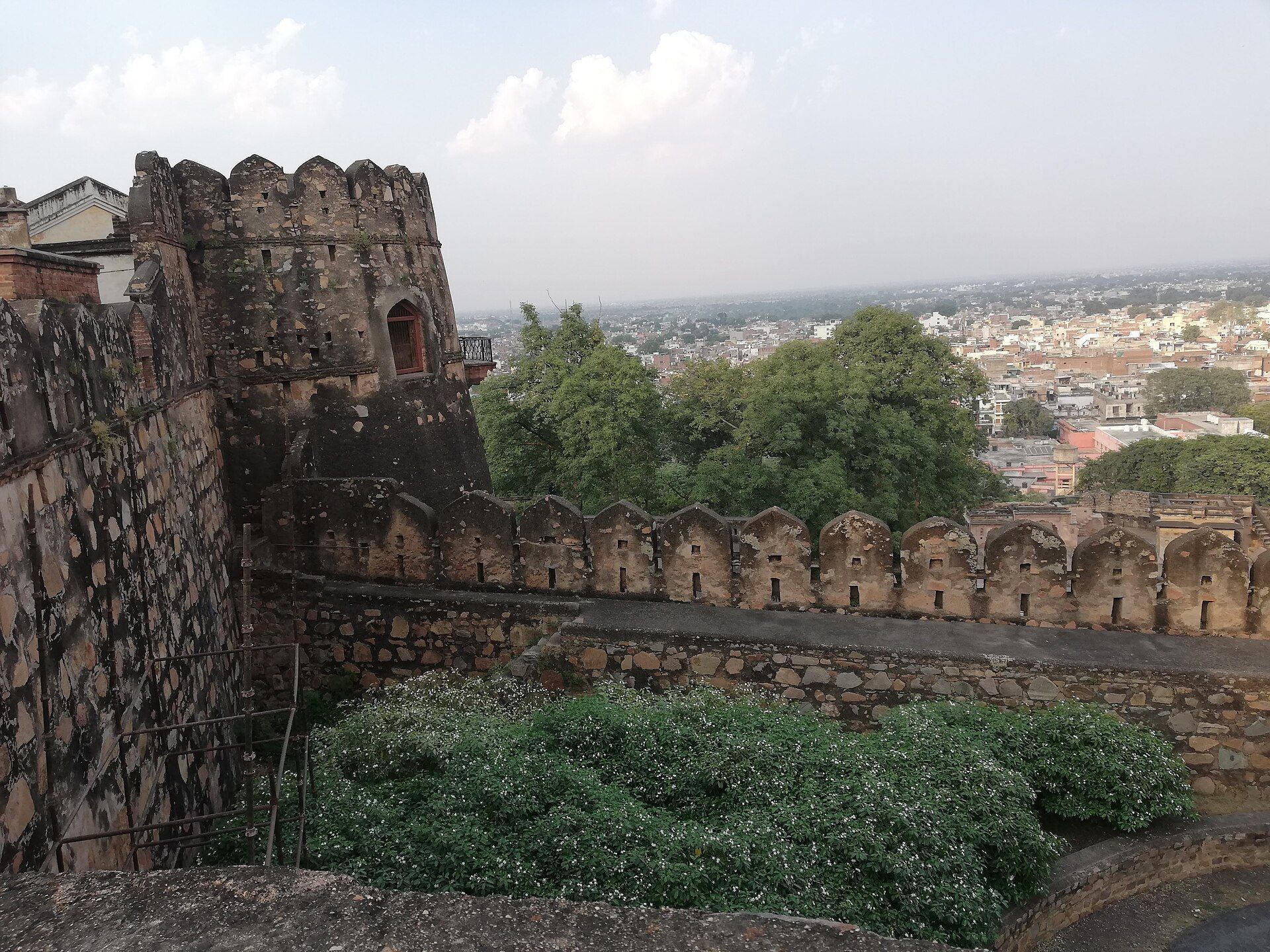
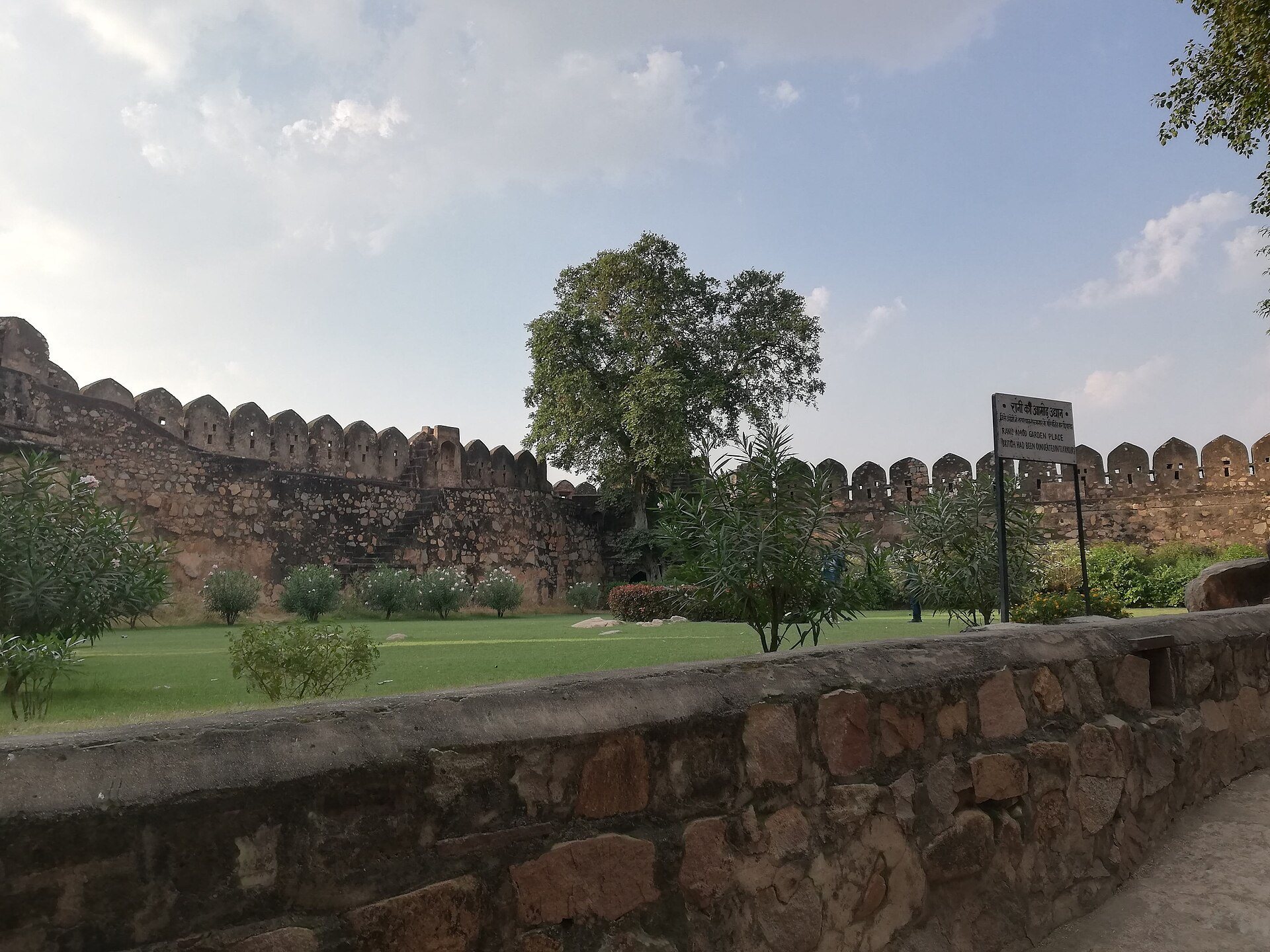
The fort occupies approximately 15 acres on the summit of Bangira hill in the middle of Jhansi. It measures about 312 metres from end to end and 225 metres across, and its stated height is 285 metres. Stone, lime, and lead form the main construction materials. Granite walls between 16 and 20 feet thick enclose the stronghold. On the southern side, the fort walls meet the city walls, while the south face rises almost perpendicularly.
A moat, or defensive ditch, surrounds the fort on two sides. Twenty-two bastions, which are projecting fortifications that strengthen a defensive wall, and a large reinforcing wall form part of the defensive system. The eastern bastion was shattered during the fort’s later history and rebuilt by the British. They also added a floor to Panch Mahal.
Gates and the Bhanderi entrance
Ten gates give access to the fort: Khanderao Gate, Datia Gate, Bhanderi Gate, Unnao Gate, BadaGaon Gate, Laxmi Gate, Sagar Gate, Orchha Gate, Saiyar Gate, and Chand Gate. Their distribution provides the principal points of entry through the fortified enclosure.
Bhanderi Gate is associated with Lakshmibai’s escape during the fighting of 1858. She rode out on horseback while the fort was under attack. A memorial board at the gate commemorates the feat of jumping from the fort on horseback.
Temples and military features
Entrance temples
A Shiva temple and a Ganesh temple stand at the entrance to the fort. Their presence forms part of the religious architecture within the military complex.
Kadak Bijli cannon
Kadak Bijli, a cannon used during the uprising of 1857, is among the fort’s notable surviving features. It links the material remains of the stronghold with its role in the fighting against the British East India Company.
Rani Mahal
Rani Mahal stands near the fort and was built during the latter half of the nineteenth century. The building now houses an archaeological museum, giving it a continuing role in preserving and presenting the history associated with Jhansi.