Sanctuary of Santa Maria infra Saxa: A Benedictine Cave Shrine in Genga, Italy
Site at a Glance
- Popularity
- High
- Country
- Italy
- Primary era
- Medieval
- Eras represented
- Medieval, Modern
- Civilizations
- Papal States
- Site type
- Religious
- Remains
- Sanctuary
On this page10 sections
History
The Sanctuary of Santa Maria infra Saxa is an ancient Catholic cave shrine in Genga, Italy, whose early medieval history is linked to a Benedictine women’s monastery. It is associated with the Diocese of Fabriano-Matelica and the Roman rite, the Catholic Church’s Latin liturgical tradition.
Early cave use and monastic life
The surrounding caves have been used since prehistoric times for shelter and habitation, as well as worship and burial. They are also believed to have offered refuge during attacks by invaders. Hermits associated with the area include Saint Romuald, an Italian monk linked to the Camaldolese order, and Saint Sylvester, whose identity is uncertain.
Records from 1029 refer to a cloistered Benedictine monastery for women. Benedictine monks are credited with building the chapel, which nuns used as an oratory, or small place of prayer, in the early medieval period.
The Madonna di Frasassi shrine and later events
In the late 1810s, Cardinal Annibale della Genga, a native of Genga, set plans in motion for the nearby Madonna di Frasassi shrine, also called the Valadier Temple. He became Pope Leo XII in 1823; the temple was completed and inaugurated in 1828, during his papacy. Although it was long credited to architect Giuseppe Valadier, a 2016 archival study by Maria Cristina Cavola established that he had no role in its design. The project instead took shape through successive work by local architects and builders, including Tommaso Zappati, Pietro Ghinelli, and Carlo Donati, drawing on regional models.
A fire in the 1940s destroyed the wooden Madonna image formerly venerated at the monastery and damaged part of the convent.
Remains
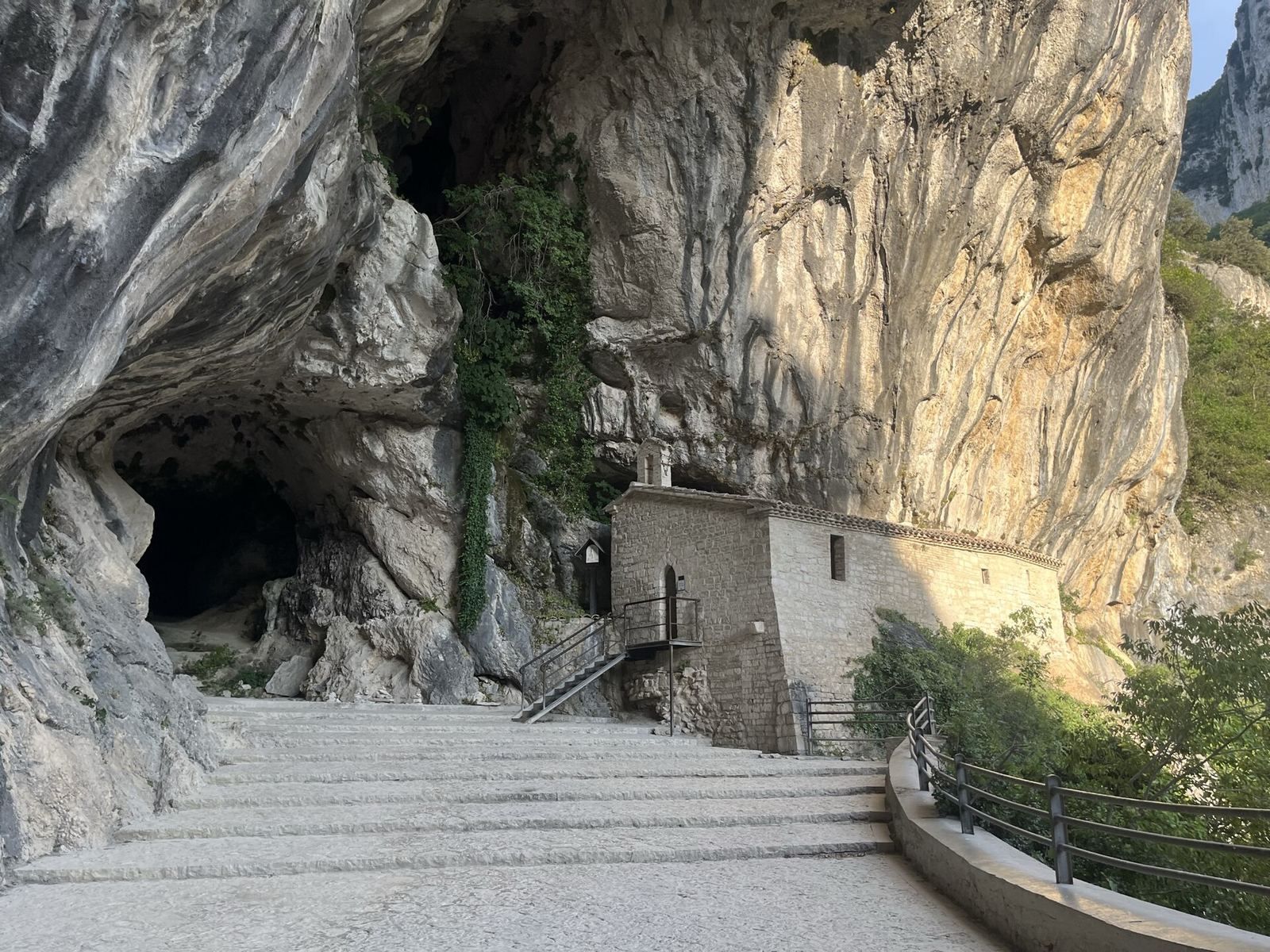
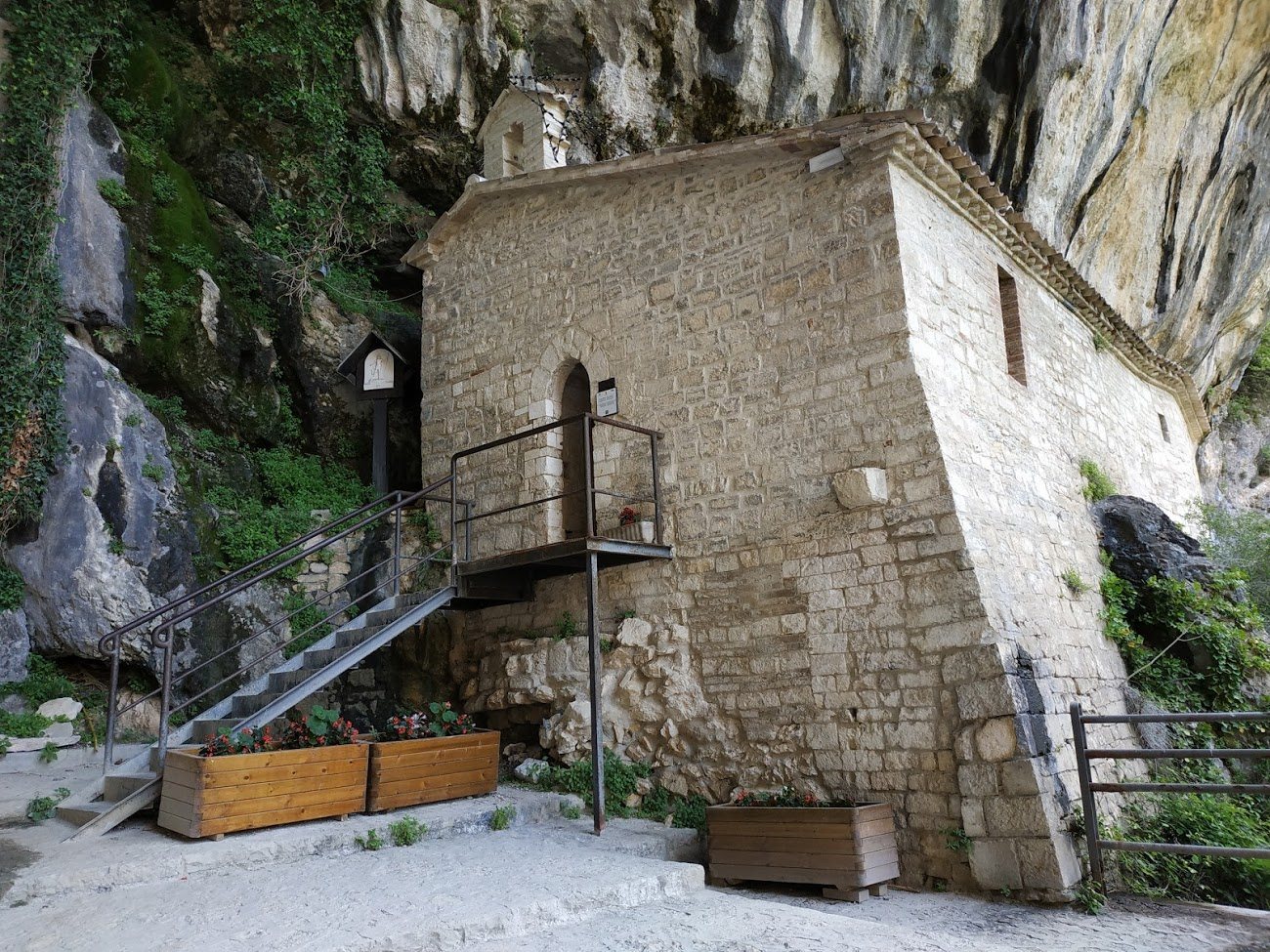
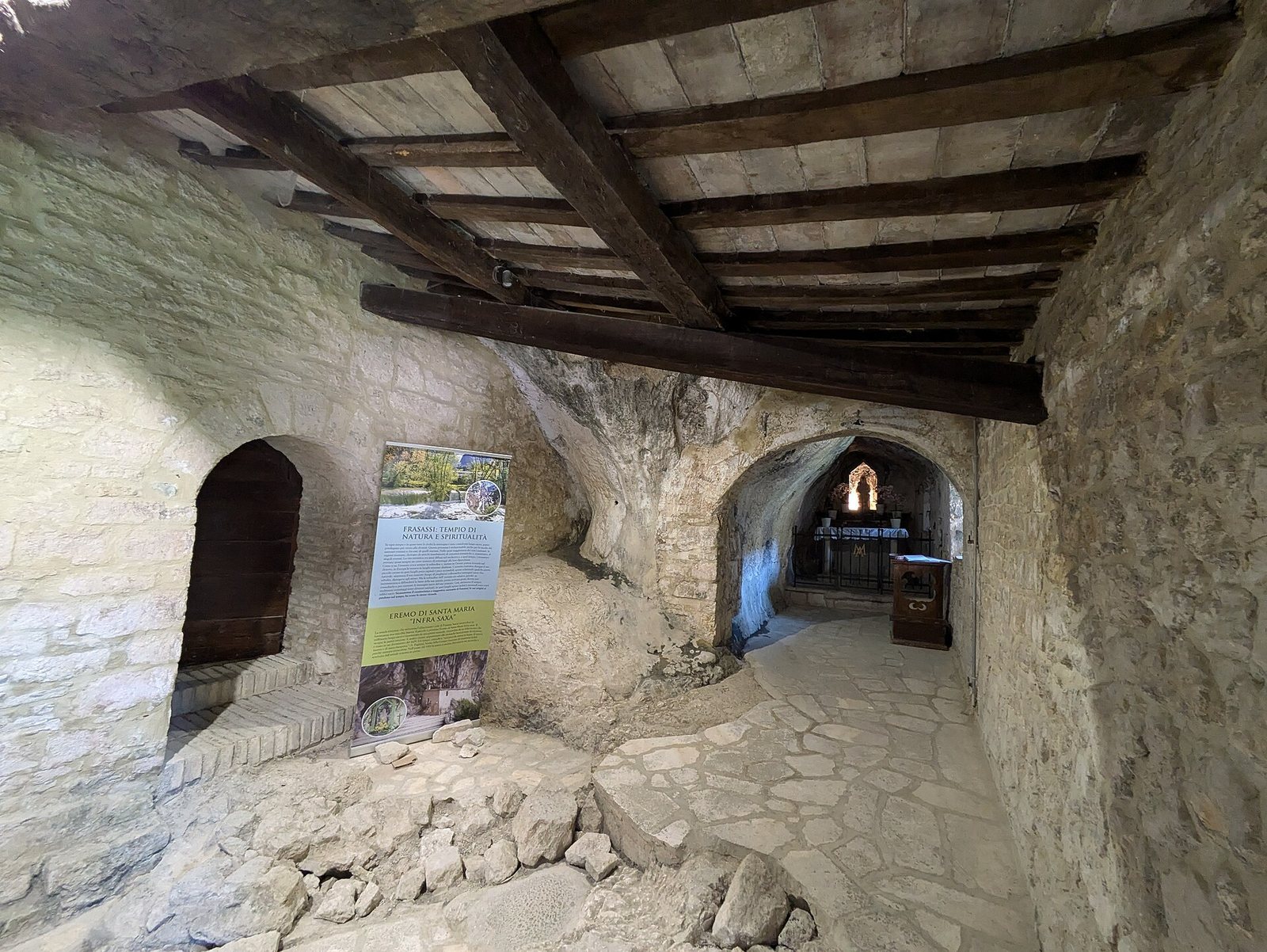
Santa Maria infra Saxa and the Madonna di Frasassi temple occupy the same cave, near the entrance to the Frasassi cave system. They stand close together on a ledge: the older chapel is set into one side of the cave, while the octagonal temple stands within it.
Built structures and sacred images
Santa Maria infra Saxa
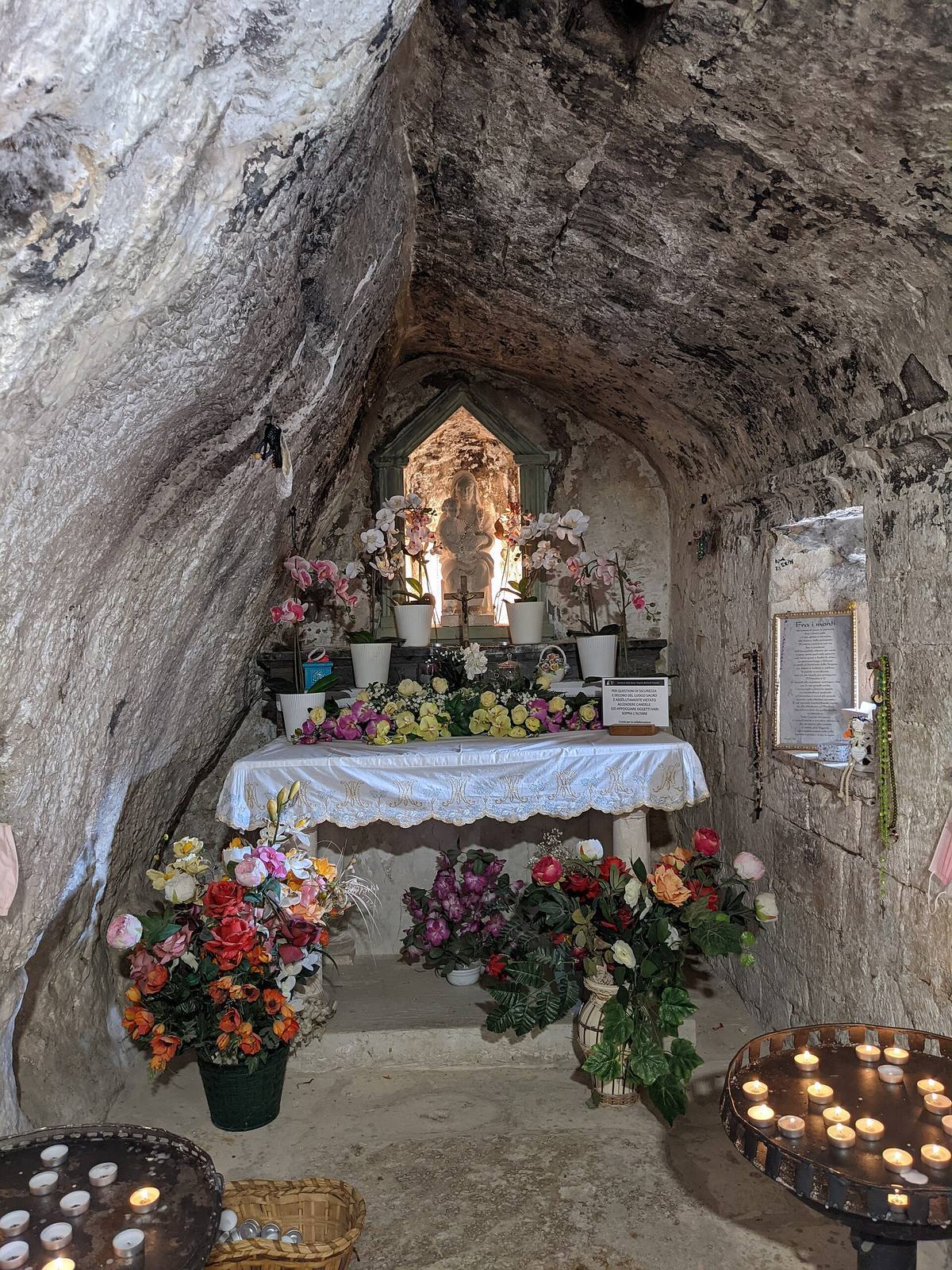
The hermitage is a simple stone structure among the rocks, partly cut into the cave wall. A stone Madonna replaces the wooden image formerly kept there.
Madonna di Frasassi temple
The temple is octagonal and neoclassical, built of local travertine, a form of limestone, with a lead covering. Its altar is made of local alabaster. The altar once held a white Carrara-marble Madonna and Child attributed to the workshop of Antonio Canova, a leading Italian Neoclassical sculptor. The original is now in the Genga museum, and a copy is kept in the temple.
Archaeological finds
Finds from construction
Work on the temple uncovered cooking pits, coins, and human bones. Human skeletal remains were also found at the cave opening.
The Venus of Frasassi
Discovered in the cave in 2007, the Venus of Frasassi is a small figurine from the Paleolithic, or Old Stone Age, dating to about 20,000 years ago. It is 8.7 centimetres high, weighs about 66 grams, and is made from a stalactite, a mineral formation hanging from a cave ceiling. The female figure has full-bodied proportions, bent forearms, and joined hands, a pose interpreted as a prayer or offering gesture. Her abdomen has been taken to indicate pregnancy. The term Venus is used for a category of prehistoric female figurines and does not identify a particular goddess or ritual.