Jarmo: A Neolithic Agricultural Settlement in Iraq
Site at a Glance
- Popularity
- Very High
- Country
- Iraq
- Primary era
- Stone Age
- Eras represented
- Stone Age
- Civilizations
- Unclassified
- Site type
- Settlement
- Remains
- Village
On this page8 sections
History
Neolithic occupation
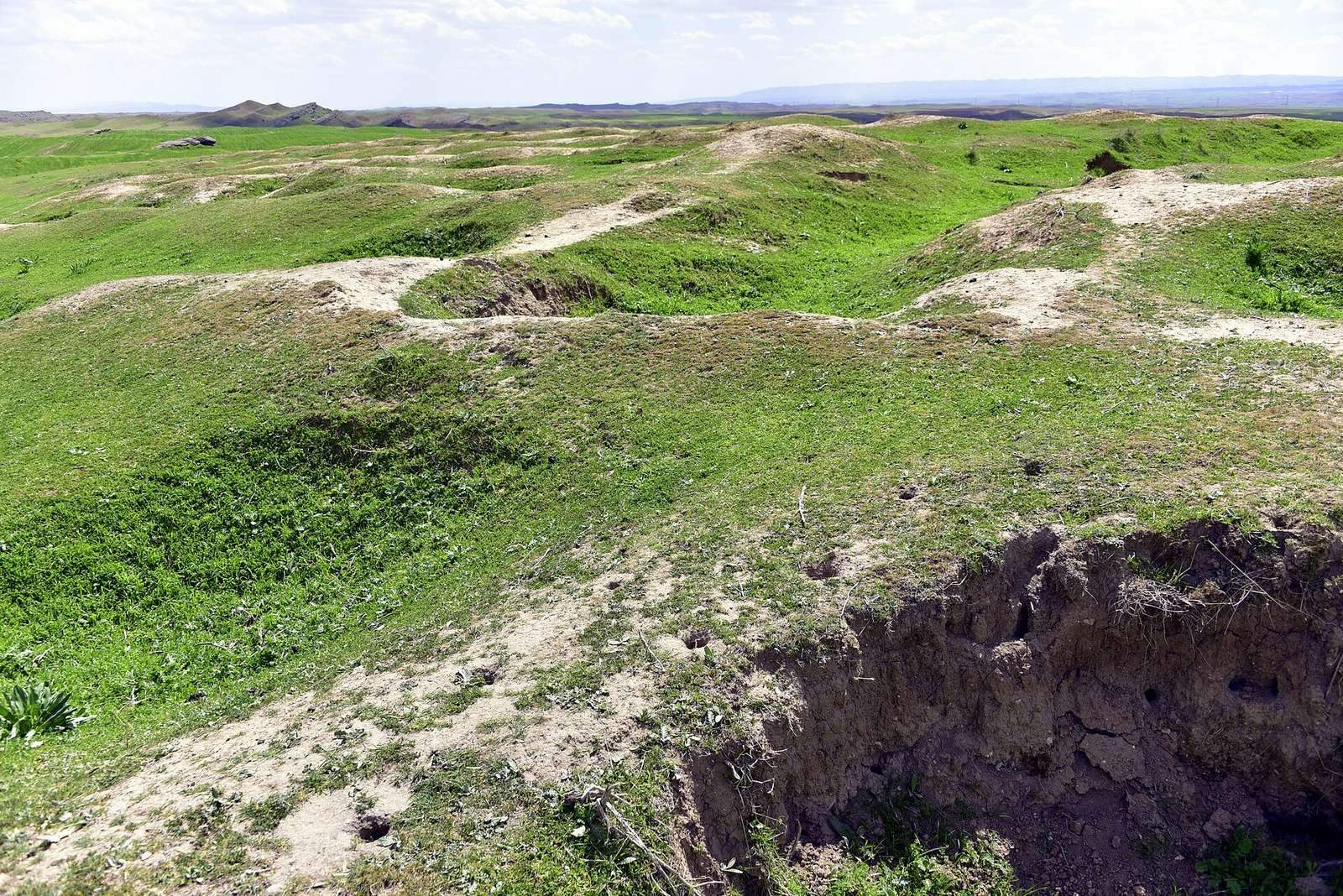
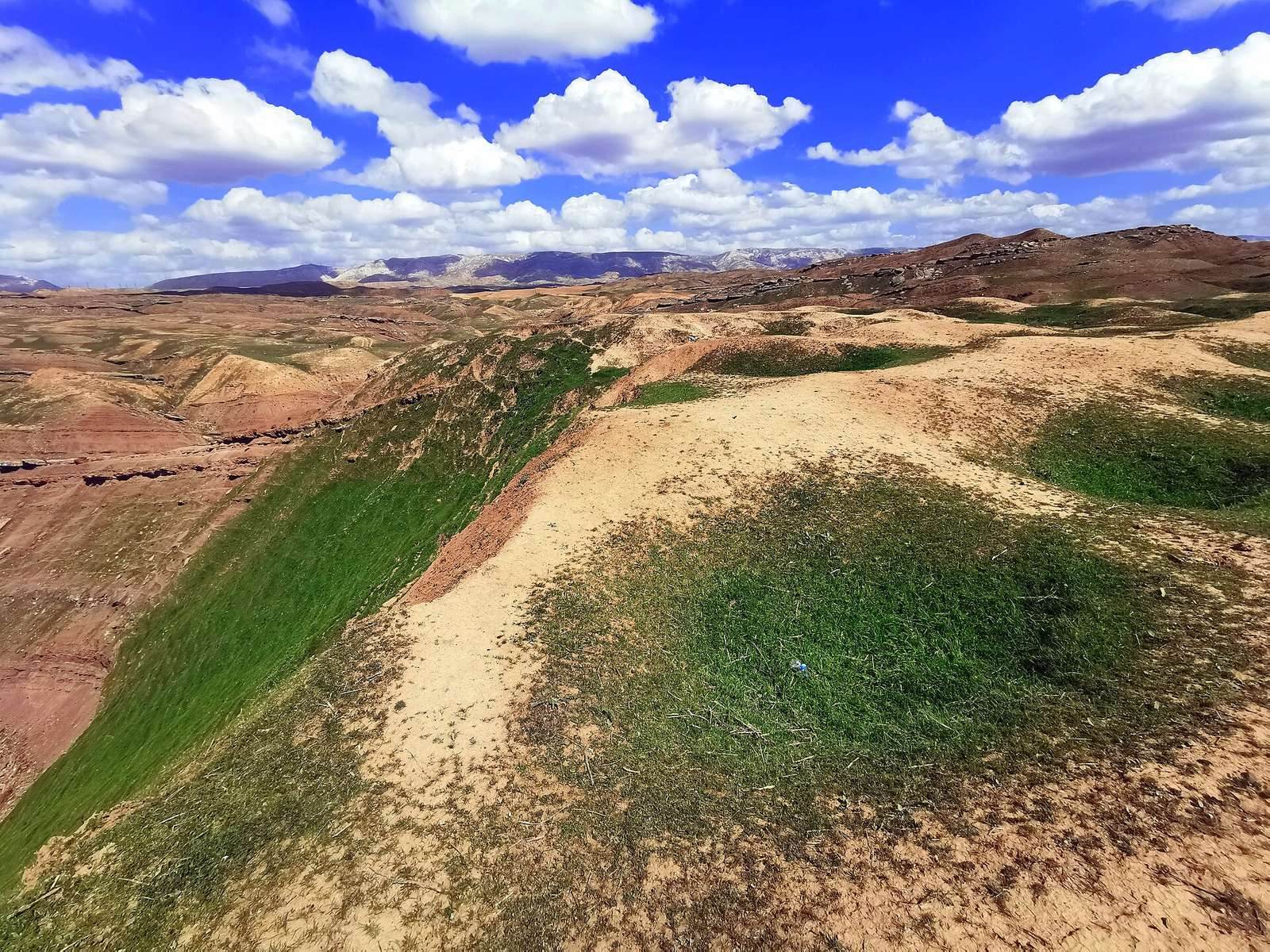
Jarmo was a Neolithic agricultural settlement in Iraq, occupied from about 7090 to about 4950 BC. Its occupation likely peaked between 6200 and 5800 BC. The site appears to represent two early permanent Neolithic settlements and was broadly contemporary with Jericho and the Neolithic phase at Shanidar.
About 150 people lived in the village. Its inhabitants repeatedly repaired or rebuilt their homes as they cultivated emmer and einkorn wheat, an early form of barley, and lentils. They kept goats, sheep, and dogs; pig remains occur in higher levels. Wild peas, acorns, carob seeds, pistachios, and wild wheat also provided food for people and livestock.
Obsidian, a naturally occurring volcanic glass, came from the Lake Van region, about 200 miles away. Ornamental shells from the Persian Gulf provide further evidence of exchange, suggesting that some form of organized trade existed.
Excavation and research
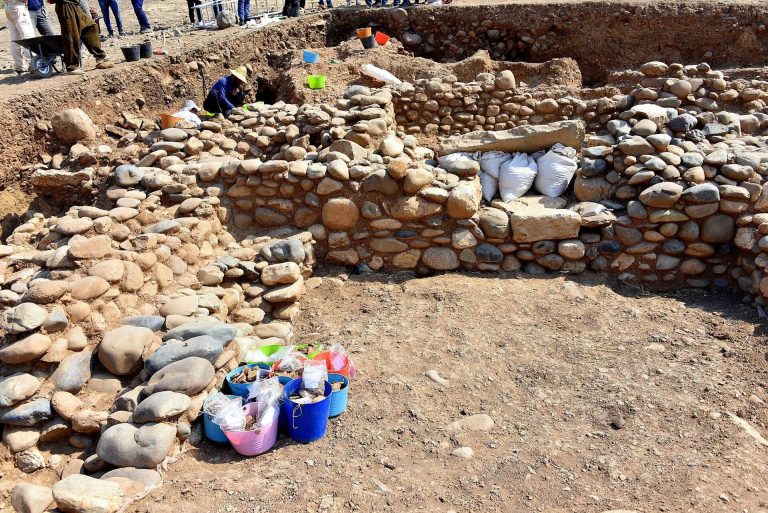
The Iraqi Directorate of Antiquities discovered Jarmo in 1940. Robert Braidwood of the University of Chicago’s Oriental Institute later investigated the settlement as part of research into the Neolithic Revolution, the transition toward farming and the domestication of plants and animals. He excavated there in 1948, 1950–1951, and 1954–1955.
During the 1954–1955 work, Braidwood brought together archaeologists and specialists in geology, ancient plant remains, pottery, radiocarbon dating, and zoology. Radiocarbon dating estimates the age of archaeological material by measuring radioactive carbon. This multidisciplinary approach was subsequently adopted in archaeological fieldwork. A planned campaign in 1958–1959 was cancelled after the 14 July Revolution, the Iraqi revolution of 1958. A later Japanese team excavated areas previously explored by the Oriental Institute.
Remains
Site layout and houses
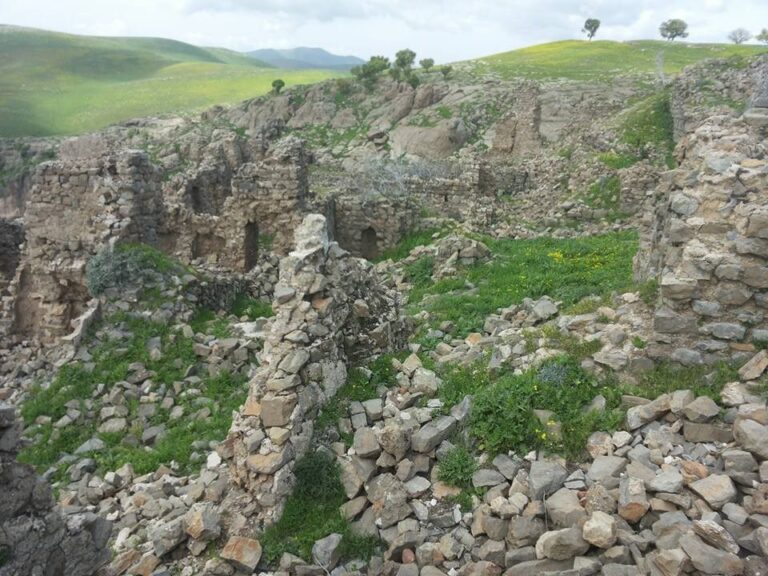
Jarmo lies in the foothills of the Zagros Mountains, about 800 metres above sea level, amid oak and pistachio woodland in the Adhaim River watershed. The site covers approximately 12,000–16,000 square metres and contains twelve archaeological levels. About twenty-five houses had simple plans set partly into the ground. Stone foundations supported adobe walls, made from sun-dried earth bricks, and roofs of sun-dried mud.
Tools and storage
Early levels yielded stone, flint, and obsidian objects, including flint pieces in older styles. The oldest level also contained baskets waterproofed with locally available pitch, a sticky, tar-like sealant. Finds related to harvesting, preparing, and storing food include stone sickles, cutters, bowls, and engraved marble containers. Higher levels produced bone implements, particularly piercing tools, as well as buttons and spoons. Snail shells were abundant.
Pottery and vessels
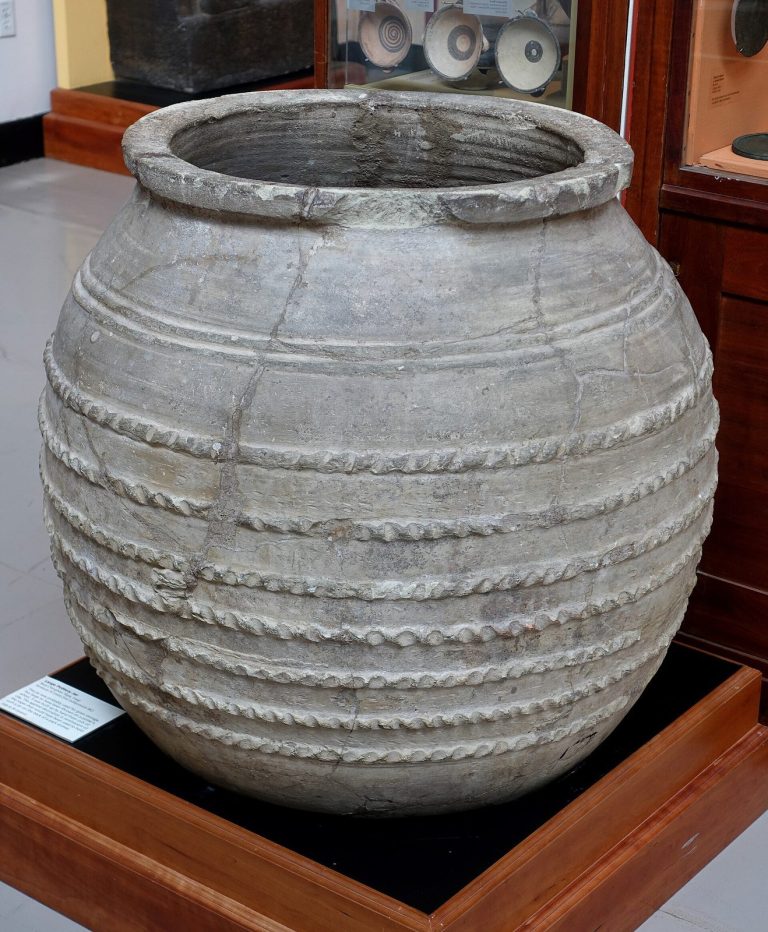
Pottery appears in higher levels and dates to the seventh millennium BC. Jarmo is among the oldest sites where pottery has been found. Its handmade vessels have thick sides, simple designs, and a treatment using a plant-derived solvent. A pottery bowl from Jarmo is dated to 7100–5800 BC. A fragment of an alabaster jar, a fine-grained stone vessel, is dated to around 7500 BC and is now in the Louvre. Its date precedes the appearance of pottery in the region, placed around 7000 BC.
Clay figures
Clay figures from Jarmo take animal and human forms. Pregnant-woman figures have been interpreted as fertility goddesses and compared with the Mother Goddess of later Neolithic cultures in the region. They have also been described as marking the beginnings of Mesopotamian art.