Tamdoult: A Historic Caravan and Mining Town in Morocco
Site at a Glance
- Rating
- 4.5
- Popularity
- Very Low
- Country
- Morocco
- Primary era
- Medieval
- Eras represented
- Classical, Medieval
- Civilizations
- Amazigh
- Site type
- City
On this page7 sections
History
Tamdoult is a historic town site in Tizounine, Morocco, on the banks of the Draa River about 13 kilometres southeast of Akka in Tata Province. Its foundation is uncertain: one tradition attributes its origin to Berber Shilha communities in the second century BC, while another places its establishment in the ninth century under the Idrisids, the first major Islamic dynasty to rule parts of Morocco. The later account may describe the rebuilding of an older settlement. From approximately the ninth to eleventh centuries, Tamdoult developed as both a trans-Saharan caravan station and a centre for mining and metalworking.
Caravan trade and early development
Tamdoult stood on a commercial route connecting Sijilmasa, Nul, Massa, Nfis, and Awdaghust with the lands of Sudan and West Africa. Trans-Saharan trade linked North African towns and mining regions with West African markets through long-distance caravan travel. Tamdoult’s position between Iglim and Awdaghust helped it serve as an important commercial and economic centre.
The town’s wealth came especially from minerals extracted in the surrounding mountains and processed locally. A fertile plain also supported agriculture, and cultivation continued in the area after the settlement declined. Medieval geographers connected the region with the production and export of metals, reinforcing Tamdoult’s role within the wider caravan economy.
Mining, metalworking, and regional prosperity
Mining and processing involved zinc, copper, silver, and silver-bearing lead, known locally as “tazoult” or “kohl.” Ore was brought down from the mountains to Tamdoult, where it could be smelted and worked. Traditional mining continued among the inhabitants of Tizou-nin and neighbouring mountain communities after the town itself had fallen into ruin.
Mining also supported a monetary economy involving gold, silver, and copper. Investigations around the town identified signs of medieval dirham production associated with the Almoravid period, when a Berber Muslim dynasty ruled much of Morocco and the western Maghreb. Silver currency was locally known by names translated as “riyals” or “qararits.”
Destruction and dispersal
The date and causes of Tamdoult’s destruction remain unresolved. Explanations include conflicts between regional alliances in the fourteenth century, the arrival of the Banu Maqil from the early thirteenth century, declining trade, changing currency patterns after Sudanese gold became more important, redirected caravan routes, and insecurity that made mining harder to maintain.
Oral traditions attribute one attack to Muhammad or Ali Amnsaq, probably during the Marinid period. The Marinids were a medieval Moroccan dynasty that controlled much of Morocco from the thirteenth to the fifteenth centuries. In this tradition, a dispute involving the wealthy local man Abd al-Wahid ibn Ali ibn Isa and the mistreatment of his seven daughters led to the assault. The attackers allegedly approached through a mountain passage rather than the watched routes and took the town by surprise.
Other traditions describe more than one destructive episode, including an earlier Idrisid-period event and another in the late sixteenth century. These differing accounts leave the sequence and causes uncertain. The inhabitants dispersed toward Akka and other settlements in the Draa and Sous regions, including Jewish and mining communities, while Akka later gained greater regional importance. Tamdoult subsequently became an abandoned or largely ruined settlement, remembered in Amazigh poetry and later historical writing for its prosperity, mining, and destruction.
Remains
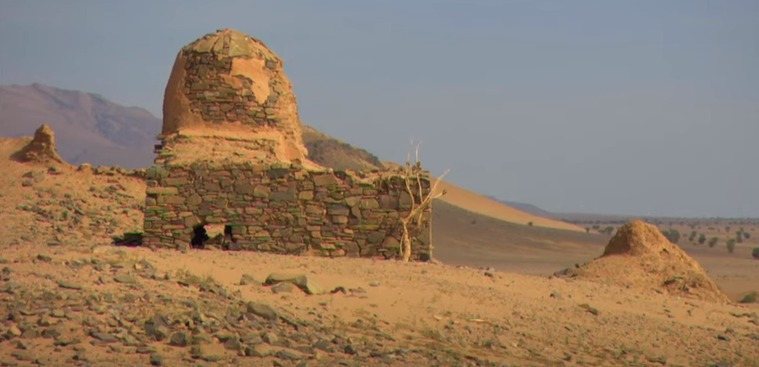
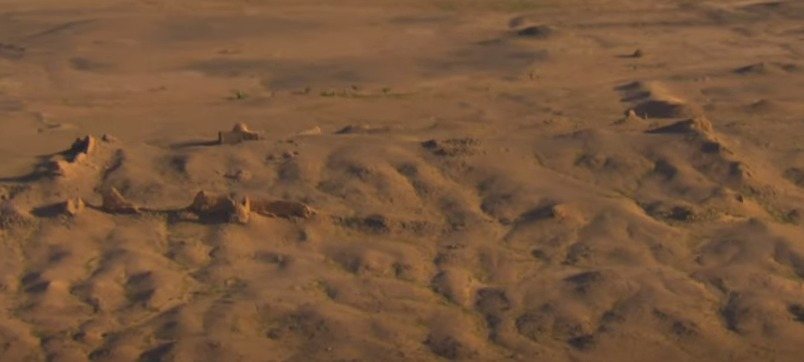
The site consists mainly of scattered medieval ruins, limited standing structures, and thick surviving wall sections built with substantial mass. Stones and partially standing remains are exposed to rain and sunlight, while the surrounding mountains preserve evidence of the mining landscape that supplied the town’s workshops and furnaces.
Town and religious remains
The former settlement is associated with four gates, two bathhouses, a busy market, water mills, and numerous workshops or other installations. Most of this urban fabric is no longer preserved above ground, but ovens and coloured and uncoloured pottery fragments point to ceramic and other craft production within the town.
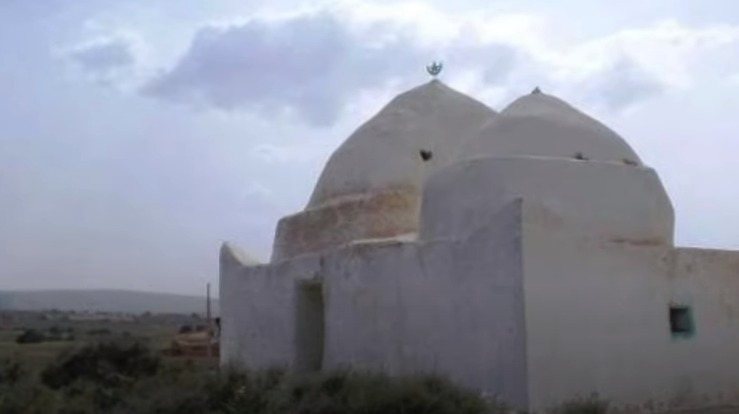
A shrine or tomb complex stands among the ruins. Local traditions identify it either with the saint Sidi Muhammad ibn Abdallah or with a Jewish prophet named Samuel Shanawil, also called Sidi Shanawil. Its dome is made from stone and earth, and an elongated tomb measuring about 6 metres once occupied its centre. The tomb remained in place until about 2006, when it was subjected to unidentified looting or excavation.
Mining and metalworking landscape
The mountains around Tamdoult contain mineral-bearing areas and ancient mining works. Black deposits at the site are identified as slag or other residues left by smelted ore. Such stony or glassy waste formed when ore was heated to extract metal, linking the remains directly to the town’s metallurgical activity.
The principal materials connected with the mines were zinc, copper, silver, and silver-bearing lead. Ore travelled from the mountains to Tamdoult for smelting and processing, and the surrounding area also contains evidence associated with medieval dirham production. A mountain passage traditionally identified as the route used by Muhammad or Ali Amnsaq’s forces during the attack is said to retain visible traces, although its connection with that event belongs to local historical tradition.