Incoronata: An Indigenous Settlement in Basilicata, Italy
Site at a Glance
- Popularity
- Low
- Country
- Italy
- Primary era
- Iron Age
- Eras represented
- Iron Age
- Civilizations
- Unclassified
- Site type
- City
On this page19 sections
History
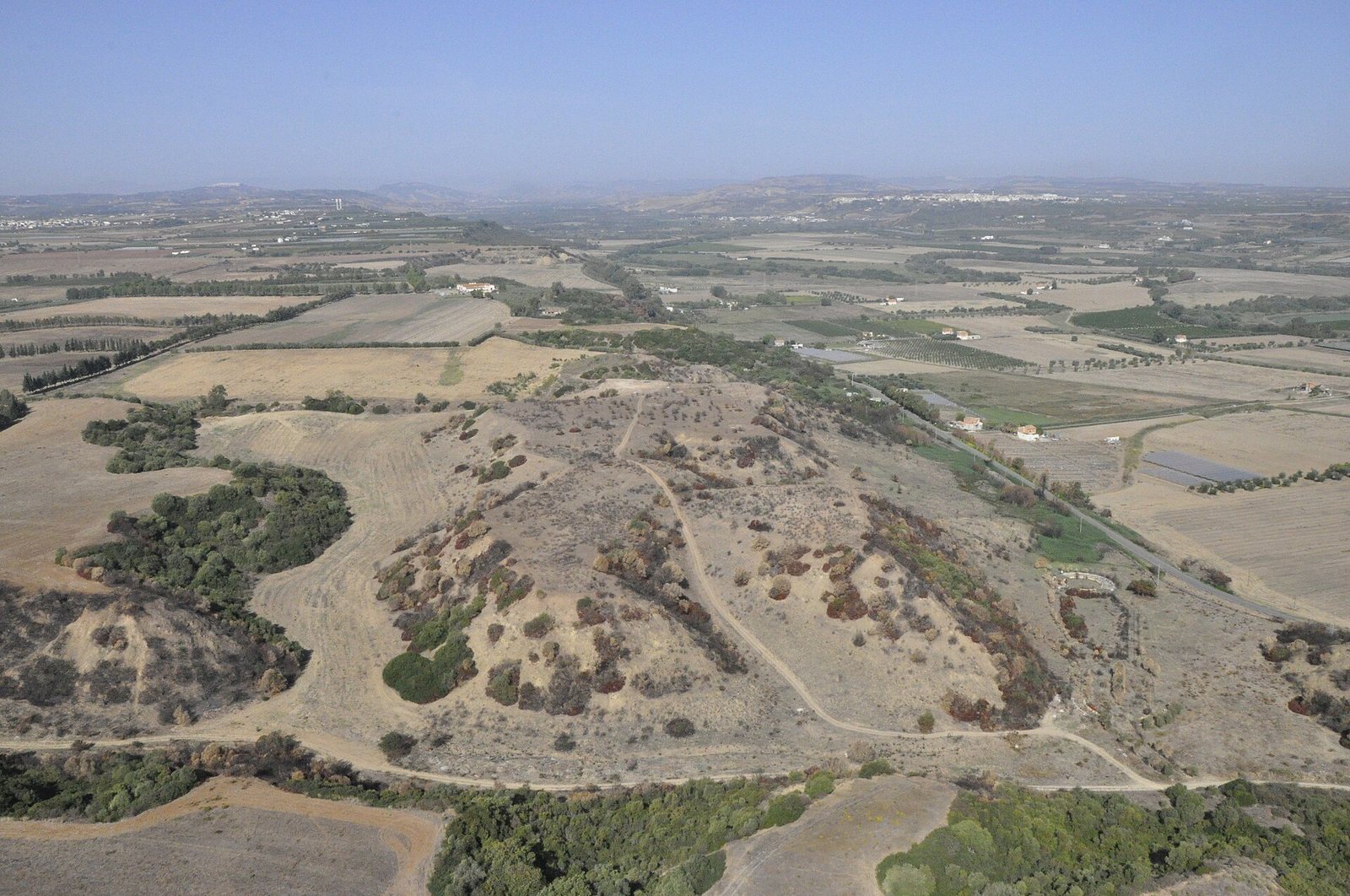
Incoronata is an archaeological settlement on a group of plateaus in Pisticci, Basilicata, Italy, occupied chiefly from the ninth to the sixth century BCE. Its earliest community was indigenous, although the suggestion that its inhabitants were Oenotrians, an ancient population associated with southern Italy, remains uncertain. The site’s Iron Age history, a period associated with the widespread use of iron tools and weapons, is marked by sustained local occupation and growing contact with Greek communities.
Indigenous settlement and Greek contact
From the eighth century into the early seventh century BCE, imported Greek objects, especially pottery, became more common. This increase reflects expanding contact between local communities and Greek explorers along the southern Ionian coast. Evidence also points to pottery production at Incoronata in the eighth century. In the first half of the seventh century BCE, local pottery-making drew on both indigenous and Greek traditions, and finds from the plateau conventionally called Incoronata indigena, together with a burial group from around mid-century, indicate continued activity. The plateau names indigena and greca are archaeological labels, not proof that either area belonged exclusively to one people.
Changing interpretations of the seventh-century settlement
An earlier interpretation proposed that an indigenous village on the plateau now often called Incoronata greca was replaced by a Greek emporium, a settlement or trading centre. The supposed Greek houses and storerooms were described as oikoi, or household units, and this proposed centre was thought to have been destroyed violently in the third quarter of the seventh century BCE. Indigenous pottery found among those features led archaeologists Marina Castoldi and Claudia Lambrugo to suggest that Greek and indigenous people may have lived together, perhaps in households that included an indigenous wife.
More recent interpretations emphasize continuity in the indigenous community rather than a straightforward change from an indigenous settlement to a Greek one. They suggest that Greek potters joined the community from the beginning of the seventh century BCE, with cooperation between Greek and indigenous craftspeople clearest in pottery production. Some features previously identified as Greek houses and storerooms have also been reinterpreted.
Abandonment, sanctuary, and later occupation
On the plateau associated with the earlier Greek interpretation, production structures appear to have been levelled and abandoned sometime between the later seventh and the beginning of the sixth century BCE. Objects were placed in pits, some of which may have had ritual uses, but the circumstances and precise timing of this change are uncertain. During the sixth century BCE, part of the plateau was occupied again by a small rural sanctuary associated with Metapontum, a Greek colonial city in southern Italy. The sanctuary may have been enlarged into a more monumental form and may have remained in use as late as the third century BCE. The establishment of Metapontum appears to have coincided with the disappearance of Incoronata’s indigenous cultural character.
Excavations in 2004 revealed traces of medieval occupation at the northwestern tip of the hill. The name Incoronata may refer to the Virgin Mary as Queen of Heaven and Earth.
Discovery and archaeological investigation
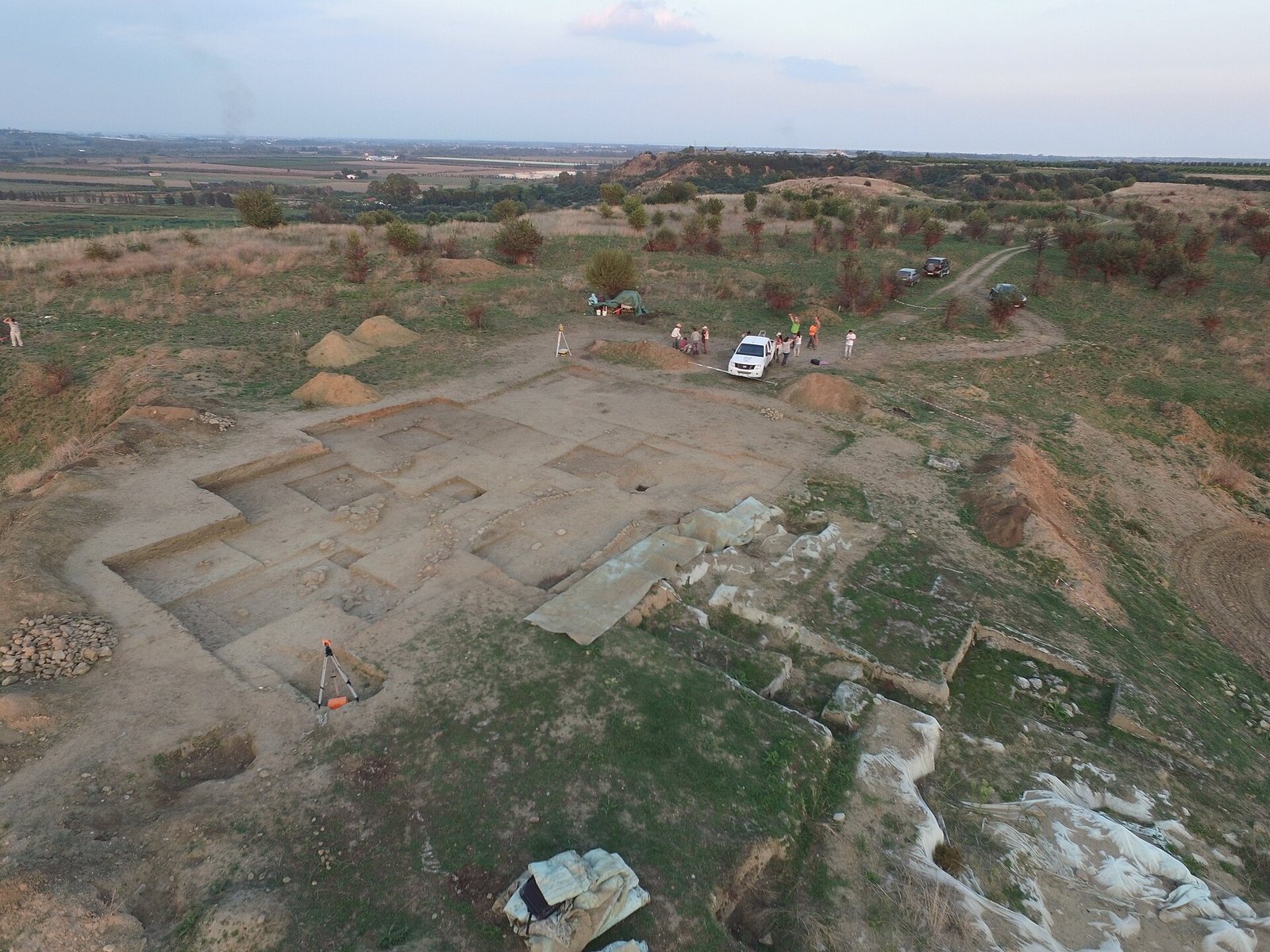
Dinu Adamesteanu, Basilicata’s first superintendent of antiquities, identified the site in 1970 and carried out preliminary investigations in 1971 and 1972. Excavations of cemeteries at Incoronata and nearby San Teodoro continued from 1970 to 1987. From 1974, a University of Milan team led by Piero Orlandini excavated the plateau known as Incoronata greca in campaigns that continued almost annually until 1996; excavation areas were identified by letters from A to X.
At Adamesteanu’s invitation, a University of Texas at Austin team led by Joseph Coleman Carter worked on the southeastern spur in 1977 and 1978. Its interpretation emphasized comparatively peaceful coexistence between Greek and indigenous inhabitants and identified a small Greek sanctuary. Investigations resumed in 2002 under Mario Denti of the University of Rennes 2. Geophysical and archaeomagnetic surveys, alongside test excavations, examined how features related to the plateau’s terrain. Work in the southwest revealed previously unrecognized monumental structures of the eighth century BCE and pottery-production areas of the seventh.
Remains
Hilltop setting and settlement
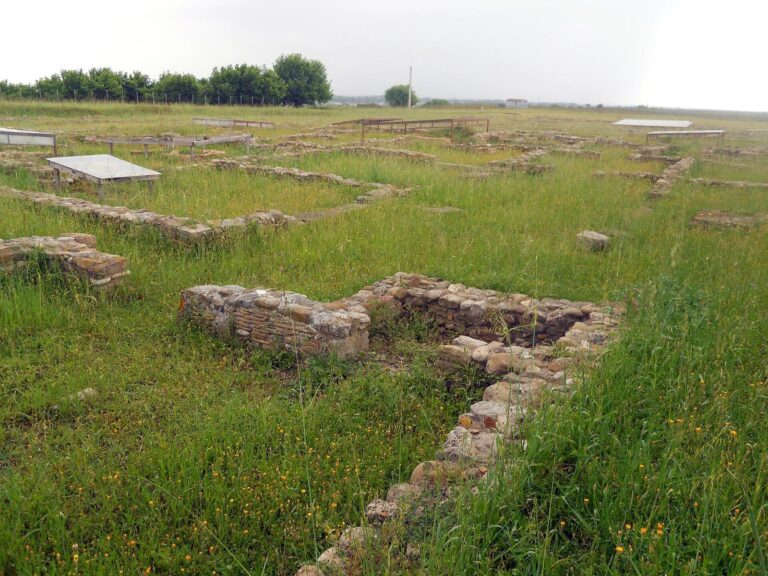
Incoronata occupies low plateaus above the plain and lower course of the Basento River, on its right bank and about seven kilometres from the present Ionian coast. The river may still have been navigable in the early first millennium BCE. Marine clay underlies the site, alongside sand and gravel deposits associated with changing sea levels. The principal Iron Age dwelling remains lie on the plateau called Incoronata indigena; houses made from earth and timber survive mainly as traces in the ground.
Dwellings
Postholes mark the outlines of houses, while semi-subterranean structures have circular or oval plans, with at least one rectangular example. A route through the settlement appears to have separated domestic areas from burial grounds.
Cemeteries
Hundreds of graves were found on the Incoronata and San Teodoro hills, in cemeteries separate from the contemporary settlement. Most date from the early ninth to the middle of the eighth century BCE. Usually rectangular or semi-elliptical pits, they were edged or reinforced with stones and pebbles. The dead were buried in the earth or in wooden coffins, laid on their sides in a crouched position. Some graves had stone-slab covers and stone heaps above them. Grave goods included pottery, weapons, tools, and ornaments of bronze, iron, and amber. The concentration of goods in some burials may reflect increasing social differences.
Monumental and production areas
Eighth-century structures in Sector 1
On the western side of the plateau formerly called Incoronata greca, disturbed arrangements of stone, earth, and ceramic remains extend along the southern edge of Sector 1. These eighth-century BCE features may have reinforced or shaped an approach to the hill while forming a visible monument in the surrounding landscape. It remains uncertain whether part of the hill had a defensive wall; remains farther south in the sector may instead belong to a residence associated with local power.
Pottery workshop
A seventh-century BCE workshop in Sector 1 is represented by remains probably belonging to two-chamber kilns. Only kiln bases and a few pieces of clay remain in place. Other traces include discarded kiln parts, misfired vessels, and pottery mixed with ash, likely from cleaning the kilns. Some deposits contain locally made indigenous and Greek vessels from the first half of the seventh century BCE. Circular and rectangular pits may also have served, or been reused, for settling or working clay.
Sector 4 pottery deposit
A quadrangular feature in Sector 4 contained abundant pottery, stone, and earth. Interpreted as a structured, possibly ritual deposit rather than simply a household or storage unit, it held a largely Greek set of vessels for drinking and serving, some of which could be reconstructed in full. Fine wares had been placed beneath amphorae and larger containers, which covered and protected them. Magnetic analysis of fired clay showed that bricks once thought to have been fired in a destructive blaze had instead been deliberately fired under controlled conditions.
Ceramic evidence
Indigenous pottery
Indigenous pottery includes hand-modelled vessels made from relatively coarse clay, known as impasto. Their surfaces could be smoothed or polished to a red or black sheen, and some bore incised or raised decoration. Certain forms were suited to cooking, with inclusions in the clay helping them withstand rapid temperature changes. Other vessels used fine, well-prepared clay, either left undecorated or made thin-walled and painted on the outside. Designs could use one colour, from dark red to black, or two colours, often combining red shades. Geometric patterns included bands, triangles, lozenges, and panels; birds appear in the less common figurative designs, while human figures are rarer. Some non-funerary deposits preserve complete or nearly complete vessels, including painted examples.
Greek pottery
Greek ceramics at Incoronata include imported fine wares, especially Corinthian vessels, and transport amphorae from Corinth, Attica, and eastern Greece, used for products such as oil and wine. Locally made Greek pottery consists largely of wheel-thrown vessels for serving and drinking liquids. These include band-decorated cups and small Achaean-style drinking cups, as well as less common jars, large mixing vessels, and other elaborately decorated serving forms. Greek pottery is concentrated chiefly on the plateau known as Incoronata greca.
Cult remains and ritual objects
Sixth-century sanctuary
On the southeastern part of the hill, concentrations of roof tiles, fired-clay architectural decorations, and votive pottery point to a small cult building of the sixth century BCE. Its precise position and form remain uncertain.
Perirrhanterion of Incoronata
The Perirrhanterion of Incoronata, a locally made ritual purification basin on a stand, dates to the seventh century BCE. Moulds for its relief decoration were found at Incoronata; the basin itself is now held at the National Archaeological Museum of Metapontum. Its imagery presents mythological and Homeric episodes and has been interpreted as offering lessons in strength, resourcefulness, and courage for the education of a young person of high rank.