Huis Doddendaal: A Castle in Ewijk, the Netherlands


Site at a Glance
- Rating
- 4.4
- Popularity
- Low
- Country
- Netherlands
- Primary era
- Medieval
- External website
- Open
- Eras represented
- Medieval
- Civilizations
- Holy Roman Empire
- Site type
- Military
- Remains
- Castle
On this page10 sections
History
Huis Doddendaal is a castle in Ewijk, the Netherlands, probably built during the 1330s. Its name first appears in 1379 and may refer to the cattails that grew in the marshy landscape around it. The estate later became associated with the Appeltern, Van Buren, Van Culemborg, Van Stepraedt, Van Doornick, and Von Nagel von Vornholz families, and its history reflects the political and religious conflicts of Gelderland.
Medieval origins and noble ownership
In 1332, Robert van Appeltern held the land in lease, linking the early estate to the Appeltern family. By around 1474, Jasper van Culemborg held Doddendaal as a fief, meaning land granted under feudal tenure. It was then described as a castle, house, and court at Ewijk. In 1489, Godert van Stepraedt purchased it for 4,000 gold guilders.
Fortress and destruction in the sixteenth century
In 1526, Doddendaal was sold to Charles of Guelders, the duke who ruled the Duchy of Guelders in the early sixteenth century. Charles used the castle as a fortress while trying to preserve the independence of the area around Doddendaal against pressure from the Burgundians and Habsburgs, rival powers seeking influence in the region.
Forces from Nijmegen, led by Arnt Pieck and Gerrit de Wijze, raided and burned the castle. In 1528, Dirck van Stepraedt bought it back in a condition described as burned and defenseless, and he is generally regarded as having begun its restoration.
Doddendaal was drawn into the opening phase of the Dutch Revolt, the long conflict in which the Dutch provinces rebelled against Habsburg rule, between 1580 and 1590. State forces initially held the castle, but Spanish troops occupied it in 1585 under Boel, a captain who supported the Spanish cause. In 1590, Prince Maurice of Nassau recaptured Doddendaal during the Siege of Nijmegen. He ordered the castle burned and had Captain Boel beheaded for treason. The destruction left only the heavy structural walls standing.
Restoration and Catholic refuge
Ownership was disputed within the Van Stepraedt family after the 1590 destruction. A legal process awarded the castle to Johan van Stepraedt in 1604. He began restoring it and lived there with his wife, Maria van Dordt, and their five children. After Johan died, Maria remained at Doddendaal with two daughters. She lived there until her death in 1638.
Reyner van Stepraedt then inherited the estate but placed its management in the hands of his brother Derck, who undertook further rebuilding. After 1655, Doddendaal ceased to be the Van Stepraedt family’s principal residence. The family protected Roman Catholics in the Land of Maas and Waal and made the cellar available as a clandestine church, or hidden Catholic place of worship maintained discreetly when public worship was restricted. Priests lived at the castle and received support from the family; later, they also managed the estate.
Changing owners and modern restoration
In 1743, the marriage of the heiress Maria Agnes van Stepraedt to Willem Caspar van Doornick transferred Doddendaal to the Van Doornick family. They did not live at the castle, choosing instead to lease the property. More than twenty-five years later, inheritance through the female line brought Doddendaal to the Von Nagel von Vornholz family. They remained at Vornholz in Westphalia, while estate managers occupied the castle.
Financial difficulties caused the property to deteriorate, and the problems worsened in 1794 when farmers could no longer pay their rents. In 1825, the estate manager Van Koolwijk moved into the castle and began cautious repairs. Further restoration campaigns followed over the succeeding years.
After the Second World War, Doddendaal was confiscated as German property and temporarily assigned to the estate manager. In 1956, it was returned to Freiherr von Nagel-Doornick-Vornholz, while most of the surrounding land passed to the state forestry service. The artists Huub and Adelheid Kortekaas lived and worked at Doddendaal with their two children from 1965 to 1974.
Van Vliet bought the castle in 1972, after which it was acquired by Mr. Braam. Braam gave the building a catering function and carried out a thorough restoration. Since 1977, Doddendaal has operated as a restaurant for parties. From April 2012, its operation and real estate were taken over by Braam’s daughter, Fabienne Braam, and her husband, Jan Willem ’t Hooft. The castle is a Dutch national monument and forms part of complex no. 520283; the castle itself carries monument number 520284.
Remains
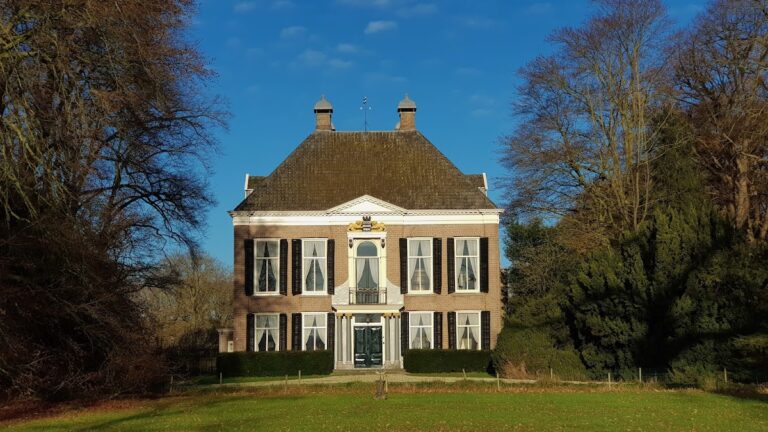
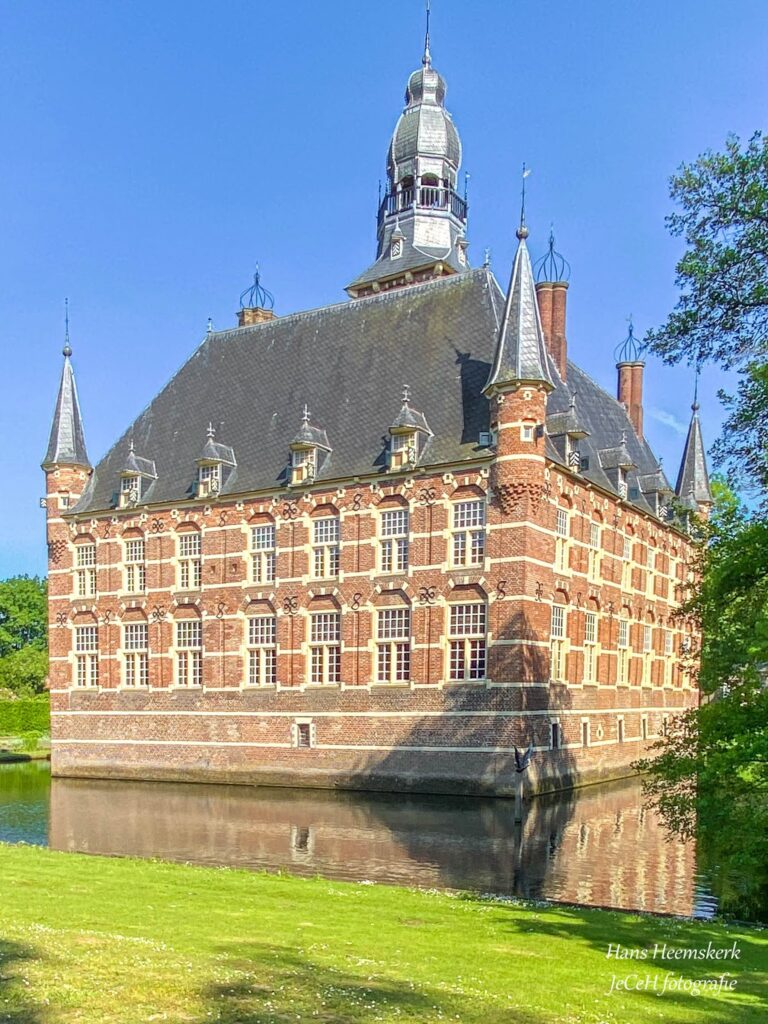
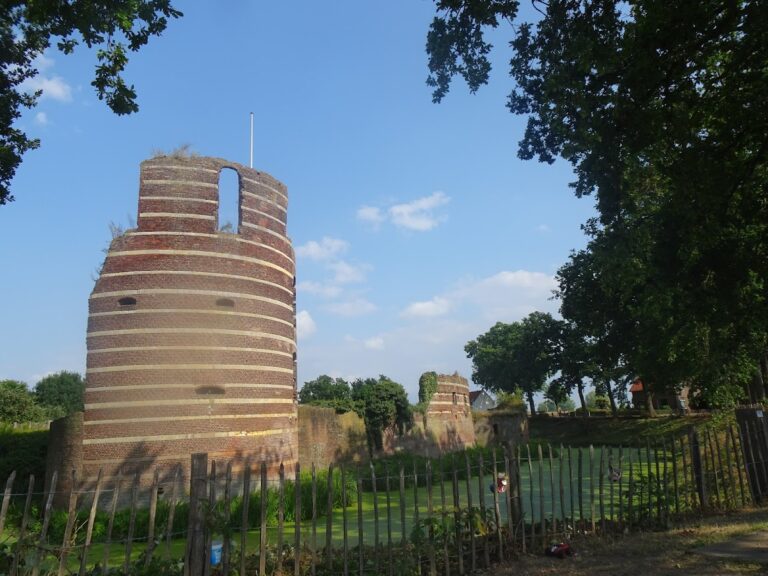
Partly concealed among woodland, the surviving complex is centered on a rectangular main building with a front extension and a tower. Much of the principal building is covered in white plaster. A surrounding wall was constructed in the fifteenth century, while the moat between the house and the wall was filled in during the same period. These elements preserve the outline of a fortified residence that was repeatedly altered after the sixteenth-century destruction.
Evidence of the fortified estate
A 1526 inventory gives an impression of Doddendaal’s equipment and domestic resources before its later upheavals. It lists a horse mill, a bridge, household goods, provisions, artillery, gunpowder, and two swans with seven cygnets. The surviving walls and later building fabric therefore belong to a complex that combined residential, agricultural, and defensive functions.
Records from Derck van Stepraedt’s rebuilding specify quantities of IJssel brick, floorboards, lime, and glass used in the work. These materials relate the present fabric to the restoration and reconstruction carried out after the castle’s repeated damage. Abraham de Haen’s drawing of 1731 provides a visual record of the building during the period when it remained under the administration of absentee owners and estate managers.
Interior remains and family memory
The former hidden church
The cellar contains the area used as the former clandestine church. At the first wine niche, positioned where a staircase once stood, a holy-water stoup remains. Traces of a painted ceiling arranged in a star pattern can also be seen, preserving physical evidence of the discreet Catholic worship associated with the castle after the Van Stepraedt family stopped using it as their main residence.
The knights’ hall portraits
The knights’ hall, the principal ceremonial and reception room of the castle, retains portraits of Johan van Stepraedt’s family painted in 1619. Two further paintings depict his sisters, Agnes van Stepraedt and Walravina van Stepraedt. Walravina married Caspar van Merwyck tot Kessel in 1609 and died in 1616, giving the portraits a direct connection with the family that restored and occupied Doddendaal after its destruction.
Nearby sites