Hovgården: A Viking-Age Royal Estate and Medieval Palace Site
Site at a Glance
- Popularity
- Medium
- Country
- Sweden
- Primary era
- Medieval
- Eras represented
- Medieval
- Civilizations
- Swedish
- Site type
- Civic
- Remains
- Palace
On this page19 sections
History
Hovgården is an early medieval royal estate on Adelsö in Lake Mälaren, Sweden, and a center of regional authority from about the mid-eighth century. Its exact foundation date is uncertain, but it is generally placed around 750, in connection with the establishment of Birka on nearby Björkö. Together, the royal estate and trading town formed a regional center whose rulers exercised authority over Birka.
Royal estate and Birka
Hovgården is thought to have served as the seat of kings or chieftains who governed the surrounding area. The reach of their power is unclear: it may have been local rather than extending across all Sweden. Björn II probably ruled from Hovgården while his brother Anund II of Uppsala was based at Gamla Uppsala. Their political tensions may reflect the fact that the rulers of Birka and the Svear aristocracy belonged to different groups or dynasties.
During a succession struggle with Björn, Anund sought support from Denmark and reportedly offered Birka in return. A Danish force of 21 ships joined Anund’s 11, but Björn was away from the town. Hergeir negotiated a settlement, offering Anund 100 pounds of silver from Birka’s townspeople. Anund then appealed to the Danes to spare the town and let a lot determine the gods’ decision. The lot favored sparing Birka, and the fleet attacked a Slavic town instead.
In the ninth century, Birka had its own assembly, or thing, for public decisions and legal matters, as well as an official distinct from the king’s authority at Hovgården. Its special law, called the Björkö or Bjarkey law, protected free men whatever their origin. That provision suited a trading town where people met from several provinces. The law may have influenced later Scandinavian market-town laws and the development of Swedish town privileges.
Birka declined sharply around 970, although people probably continued living there into the eleventh century. Hovgården remained a royal estate after the town’s decline. A document from 1200 identifies it as royal, continuing evidence of its status in the region.
Church and medieval palace
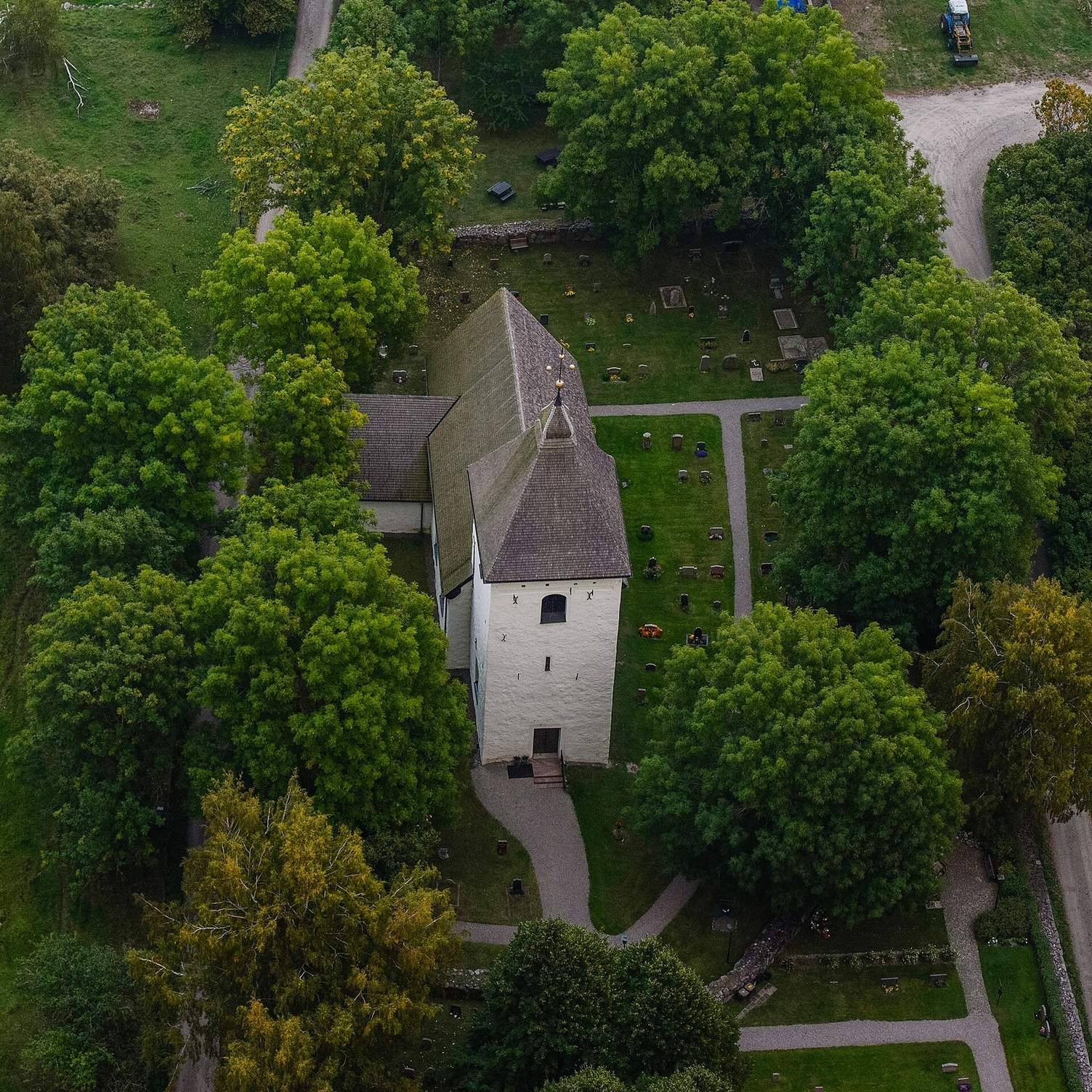
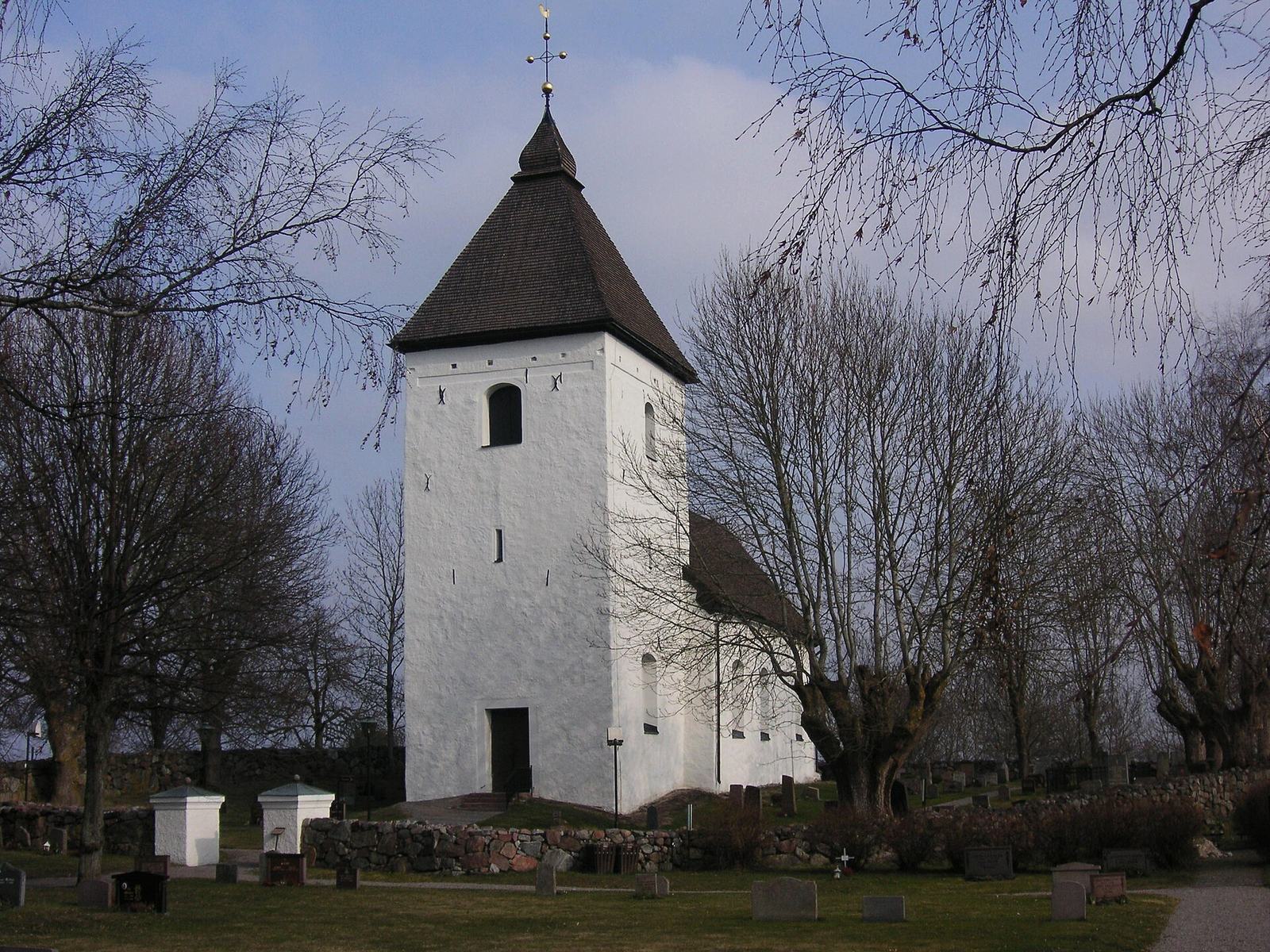
Adelsö Church was built beside the estate in the twelfth century. An earlier church may have stood there, possibly one of Sweden’s first and built of wood, but this remains uncertain.
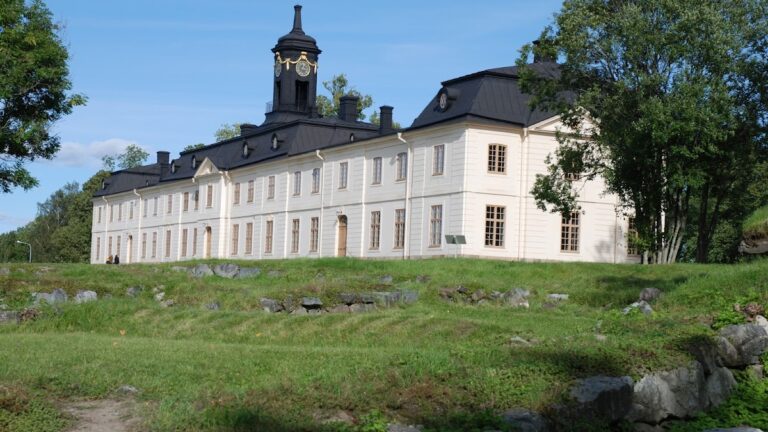
In the 1270s, King Magnus Ladulås commissioned Alsnö hus, a brick palace that replaced an older castle on the site. It probably served as a royal summer residence, since surviving documents signed there date to summer. A meeting held at the palace in 1279 or 1280 produced the Ordinance of Alsnö, a formal decree that laid the foundations for the Swedish nobility and knightly estate.
Alsnö hus was destroyed during the fourteenth century, possibly in a fire during attacks by the Vitalian Brotherhood, a group of privateers and pirates active in the Baltic. Hovgården subsequently lost importance.
Archaeology and heritage
Excavations from 1916 to 1920, led by Bengt Thordeman, investigated the palace and uncovered evidence of a Viking-period settlement; Hanna Rydh studied the graves. Holger Arbman searched for the Viking-period building in 1966, and investigations in the 1990s located remains from that period and identified Viking and medieval harbor areas.
Hovgården and Birka were inscribed together on the UNESCO World Heritage List in 1993. The recognition reflects the historical and archaeological landscape formed by the royal estate and the nearby trading settlement.
Remains
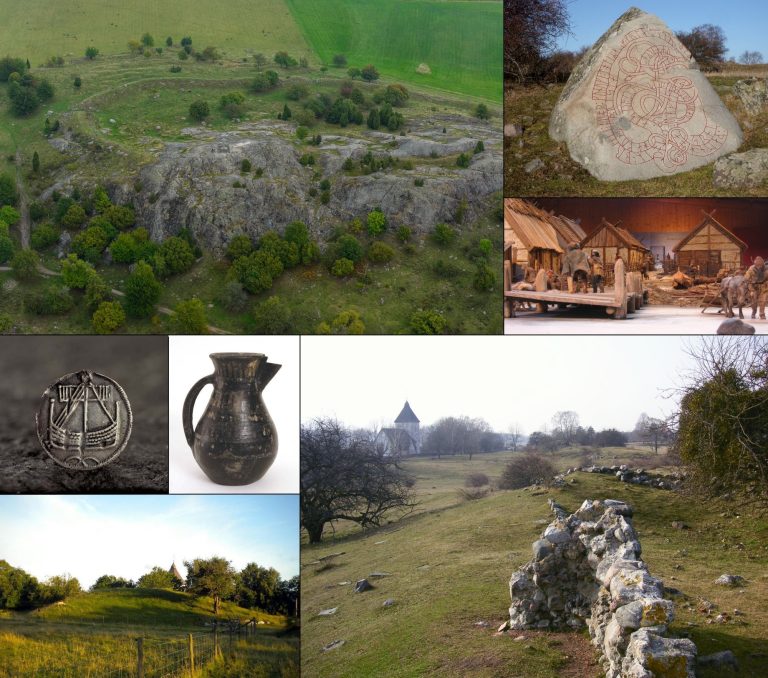
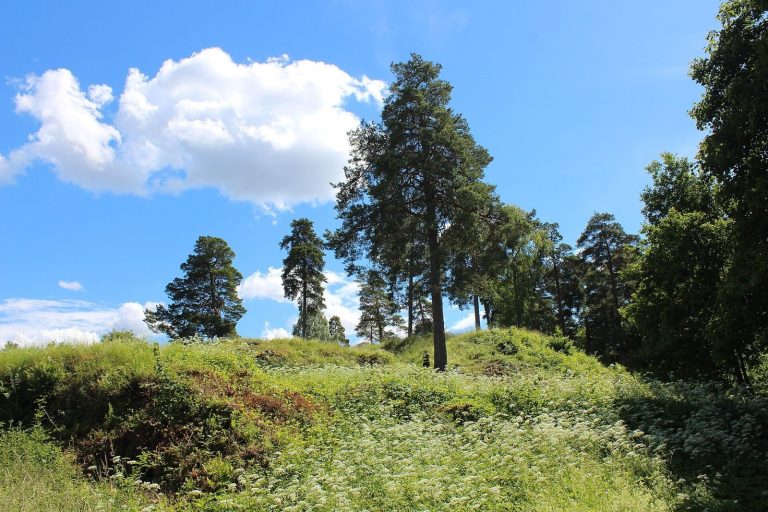
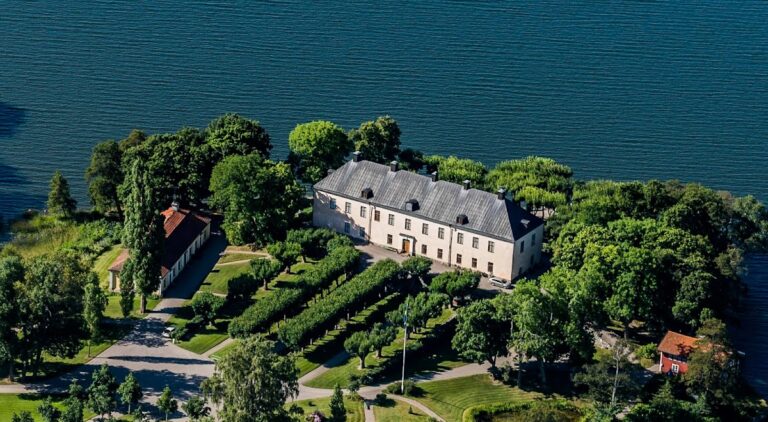
The remains occupy relatively level ground on a headland in eastern Adelsö, about 30 km west of Stockholm. Adelsö Church, built in the Romanesque style, a medieval style characterized by rounded arches, stands to the southeast. The surrounding landscape includes a narrow rift valley extending north towards forested moraine. Meadows cultivated in the nineteenth century have changed little since, and eighteenth-century farmyards also survive. The archaeological landscape brings together buildings, harbor remains, burial places, the church, and inscribed stones.
Estate, palace, and harbors
Viking-period buildings
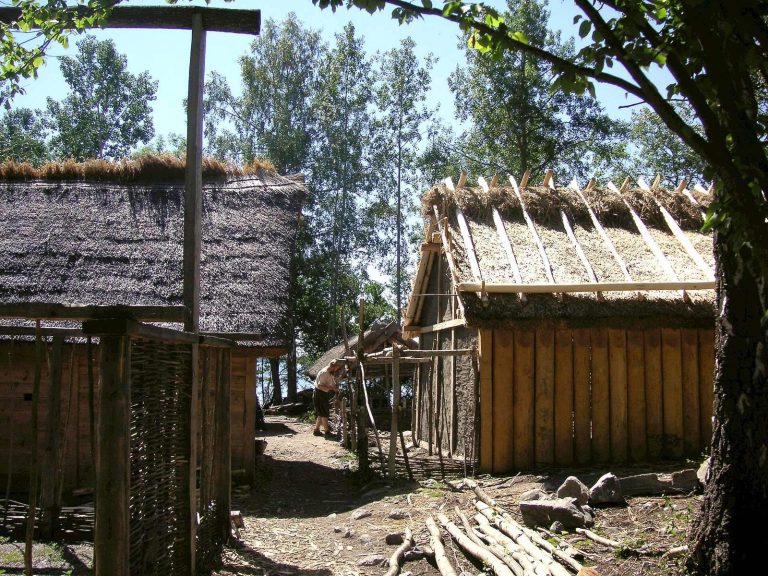
The Viking-period estate included buildings supported by upright posts and houses whose timber walls rested on sill stones, the blocks beneath their bases. A terraced, timber-framed building was intended for formal representation. The remains of a large hall lie just east of the church, west of the Håkan stone, and partly beneath the palace ruins. It stood on a small rise above a bay, with a direct view across the water to Birka. The hall has strong similarities to the large hall in Birka’s garrison.
During the Viking Age, conventionally dated in Scandinavia from the late eighth to the eleventh century, the lake stood about 5 m higher than today. Hovgården then formed the southern tip of Adelsö. Its position is thought to have influenced the choice of Birka’s location across the water.
Viking harbor
A depression between the church and Alsnö hus marks a bay that existed in the Viking Age. Excavation identified a harbor there, including a stone quay, or landing structure, about 30 to 40 m long. A nearby building may have been a workshop, perhaps used by a goldsmith. Wooden stakes driven into the water formed a barrier about 200 m long that protected the harbor.
Medieval harbor
The remains of a medieval harbor lie just downstream of the Viking harbor and still form a bay.
Alsnö hus
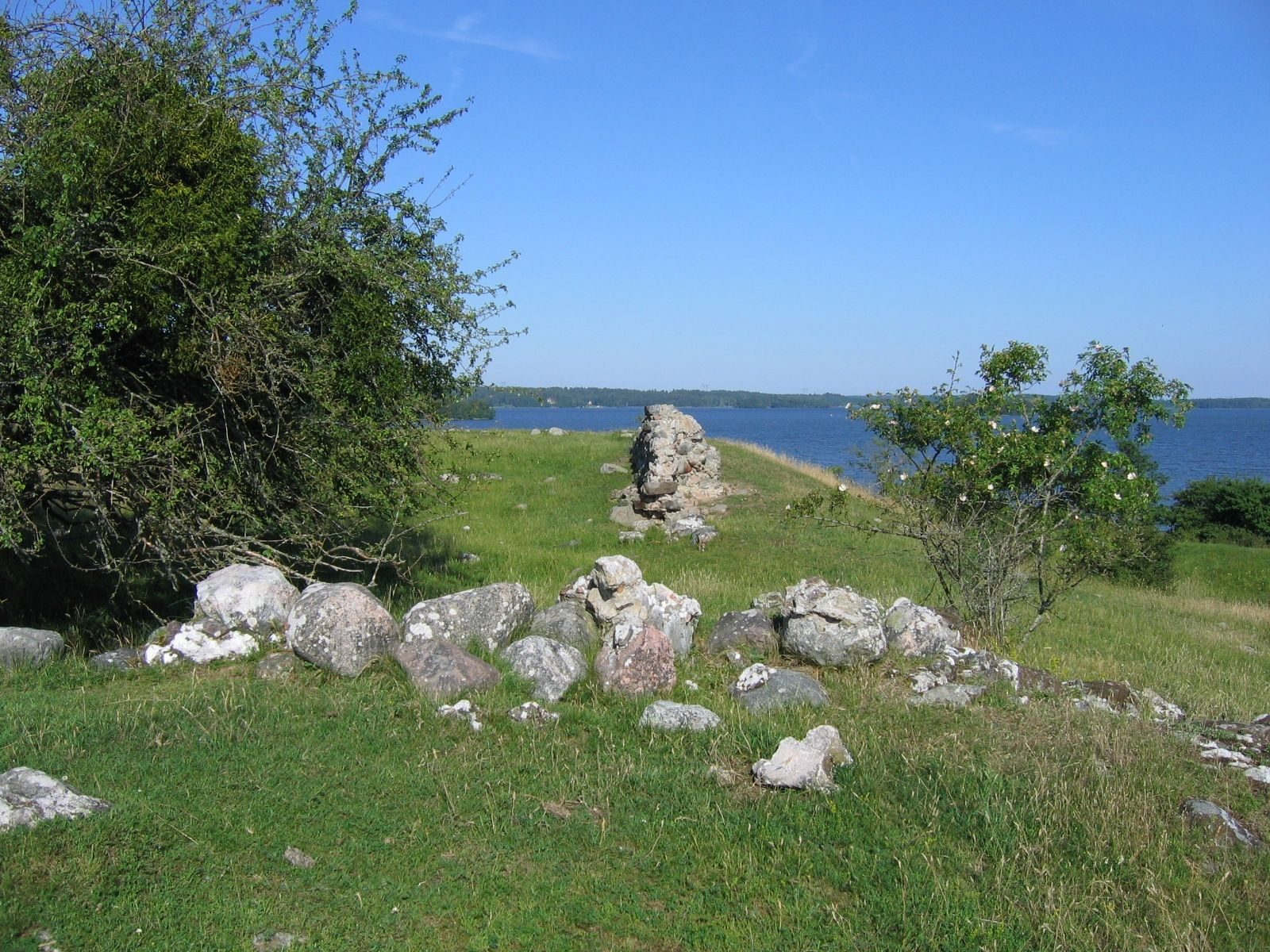
The palace was a rectangular brick building about 30 m long and 14 to 15 m wide. Its lower level was partly below ground and built of stone, with brickwork above. The palace foundations survive on the crest of an earth mound within a larger level area, about 230 m northeast of the church.
The complex also included a projecting gate tower, three timber buildings on stone foundations, two boat berths, a dry moat, and a wooden defensive fence. The lower floor of the palace held two rooms and a cellar; the upper floor appears to have contained a large hall with finely made architectural details. Two nearby building traces have also been identified: one was probably contemporary with the palace, while the other was somewhat earlier.
Burial grounds and mounds
Royal mounds and assembly mound
Seven burial mounds lie north of the church and west of Alsnö hus. Three in a row nearest the church are traditionally called the royal mounds and identified as the graves of kings Björn, Olof, and Erik. Their occupants and dates remain unknown. The largest mound is 45 m in diameter and nearly 6 m high; the other two measure 20 to 25 m across and stand about 3.5 m high.
Across the road, 75 m west of the royal mounds, is the assembly mound, or Tingshögen. It measures about 25 m across and 1.5 m high and may have served as a meeting place.
Skopintull
Skopintull lies just under 100 m northwest of the royal mounds. Excavated in 1917, it is about 21 m across and 2.5 m high and dates to the early tenth century. Its boat burial held the cremated remains of a man and a woman, probably over 50 and somewhat younger respectively. At least seven dogs and three horses were also buried there. Finds included small crosses made from plaited gold wire, gold sheets, fragments of silver jewelry, Islamic silver coins, a bronze pendant, decorated bronze fittings, horse harness pieces, casket key plates, comb fragments, parts of iron cooking pots, glass beads, gaming pieces, and a lock of human hair inside an almost intact bronze vessel. The grave goods point to exceptional wealth and high social standing.
Hovgårdsberg burial ground
About 700 m northwest of Hovgården, the Hovgårdsberg burial ground contains 124 archaeological features: 13 burial mounds, 110 stone arrangements, and one uncertain ship-shaped arrangement. Finds from the grave field date from the eighth century onward. Its mounds reach 13 m across and 1.4 m high. Most of the stone arrangements are circular, though rectangular and square examples also occur, along with two triangular arrangements. The larger triangle has sides 15 m long, and the faint ship-shaped arrangement measures 7 m. A separate cemetery northwest of Hovgården was used from about 600 to 1100. More broadly, burial evidence at Hovgården ranges from the late Roman Iron Age to the early Middle Ages.
Runestones and Närkällan
Håkan stone
The Hovgården runestone, also called the Håkan stone, stands near the shore below the ruins of Alsnö hus. Designated U 11, it was raised before 1080, probably around 1070. The stone is made of fine-grained gray granite and measures 2.75 m wide, 1.4 m deep, and up to 1.4 m high; its runes are 7 to 8 cm tall. The inscription names Tolir, a steward in Roden, as the carver and says that he and his wife Gyla had the memorial made for the king, at Håkon’s order. Håkon is often identified with Håkan Röde, who is thought to have shared rule with Inge the Elder late in the eleventh century.
Runestones at Adelsö Church
Two other runestones are built into or placed against the north wall of the church sacristy, a room for storing vestments and sacred objects. U 1, measuring 1.8 by 1 m, is set upside down into the wall, and its 8 cm runes are badly worn. The surviving text says that Eskil raised the stone in memory of his father, described as a good farmer; his father’s name is not preserved. U 2, which measures 0.8 by 0.4 m, leans against the same wall.
Närkällan
Närkällan, traditionally regarded as an offering spring, lies between Hovgården and the Hovgårdsberg burial ground. It is a shallow depression about 2 m across and 10 cm deep, now covered with lush grass.
Recovered finds
About 3,000 archaeological finds have been recovered at Hovgården. Most are held at the Swedish History Museum in Stockholm.