Højelse Church: A Medieval Parish Church in Denmark
Site at a Glance
- Popularity
- Very Low
- Country
- Denmark
- Primary era
- Medieval
- Eras represented
- Medieval, Early Modern, Modern
- Civilizations
- Danish
- Site type
- Religious
- Remains
- Church
On this page17 sections
History
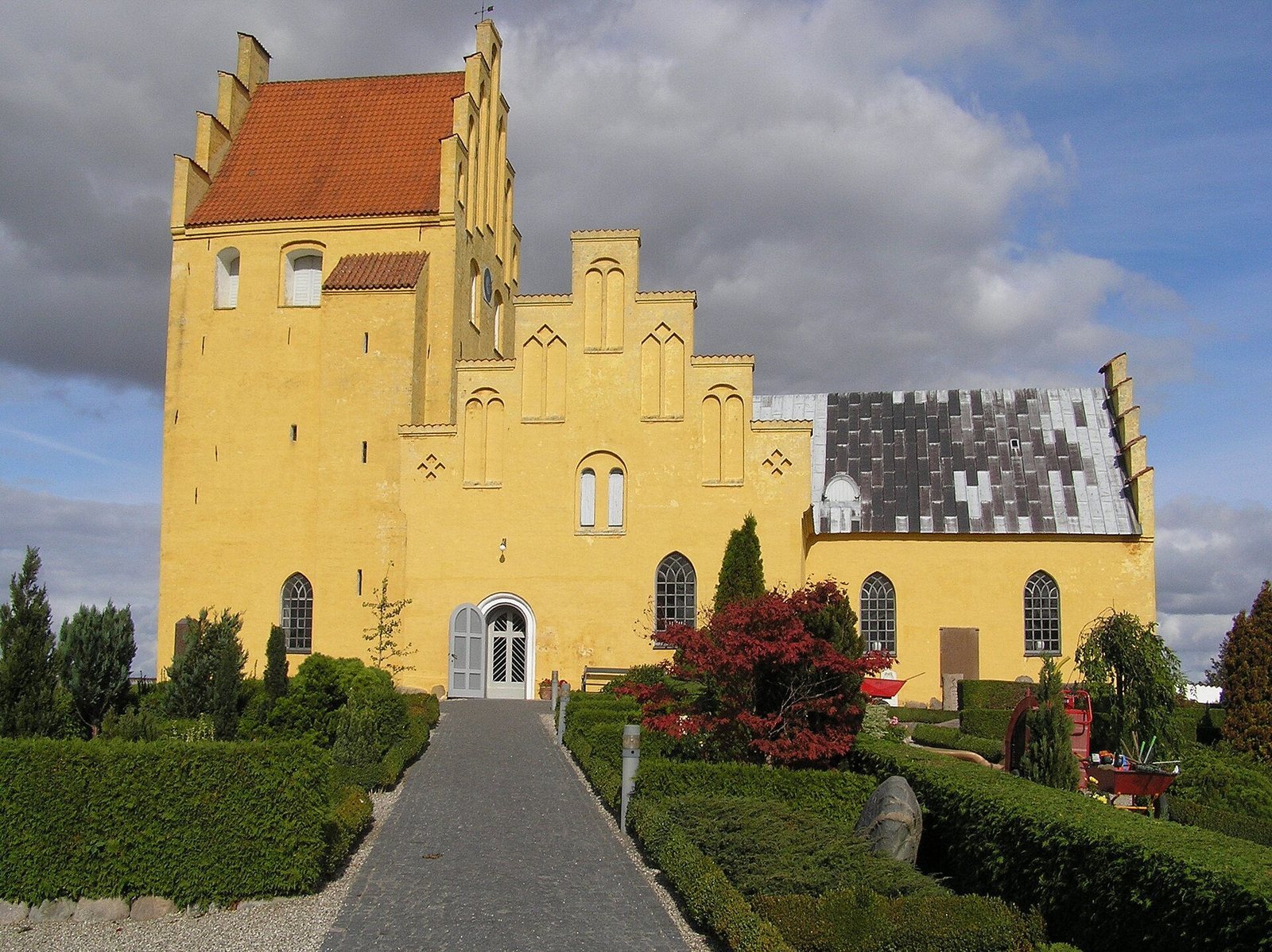
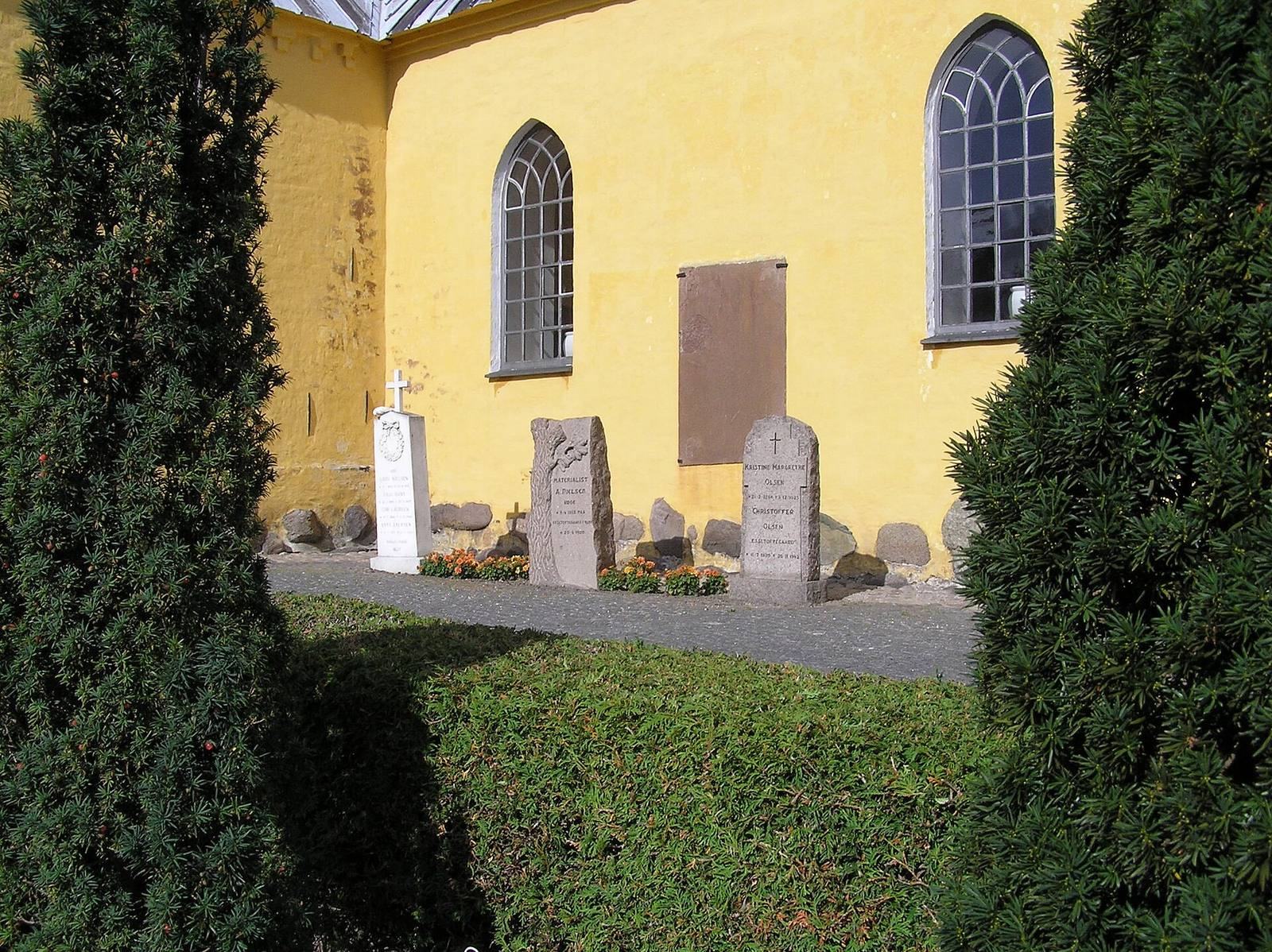
Højelse Church is a medieval church south of Lille Skensved, near Køge on the island of Zealand in Denmark. Its earliest phase is uncertain, though a surviving remnant is associated with a church on the site by the middle of the 12th century.
Medieval development
The church was expanded and altered over several centuries. In the early 14th century, two cross vaults, ceilings formed by intersecting barrel vaults, were added to the nave, the main body of the church. The tower’s first stage dates to around 1350.
Around 1450, the nave was extended and the original chancel, the area around the altar, was replaced by the present longhouse chancel, which extends the church’s main body lengthwise. A sacristy, a room for clergy and liturgical objects, and a south extension were built at the same time. Around 1500, the tower’s upper part was rebuilt and raised to its current height.
Restoration and church life
Extensive restoration took place between 1878 and 1881. Wall paintings came to light during the 1870s and were restored by the Danish painter and antiquarian Jacob Kornerup. They underwent further restoration in 1931.
The church is dedicated to St Michael, the Christian archangel traditionally associated with the defeat of evil. It belongs to Højelse Parish and the Højelse-Lellinge Pastorate, within Køge Deanery and Roskilde Diocese.
Remains
The church’s layout comprises a tower, nave, longhouse chancel, sacristy and south extension. Its original walls were built from carefully cut blocks of chalk stone, of which only the nave’s side walls survive. The building has seating for 225.
Medieval fabric and vaults
Building layout
The surviving side walls of the nave belong to the earliest church fabric. The tower, chancel and adjoining spaces reflect the building’s later development, while retaining the overall arrangement of a church with a central nave and an extended chancel.
Nave vaults
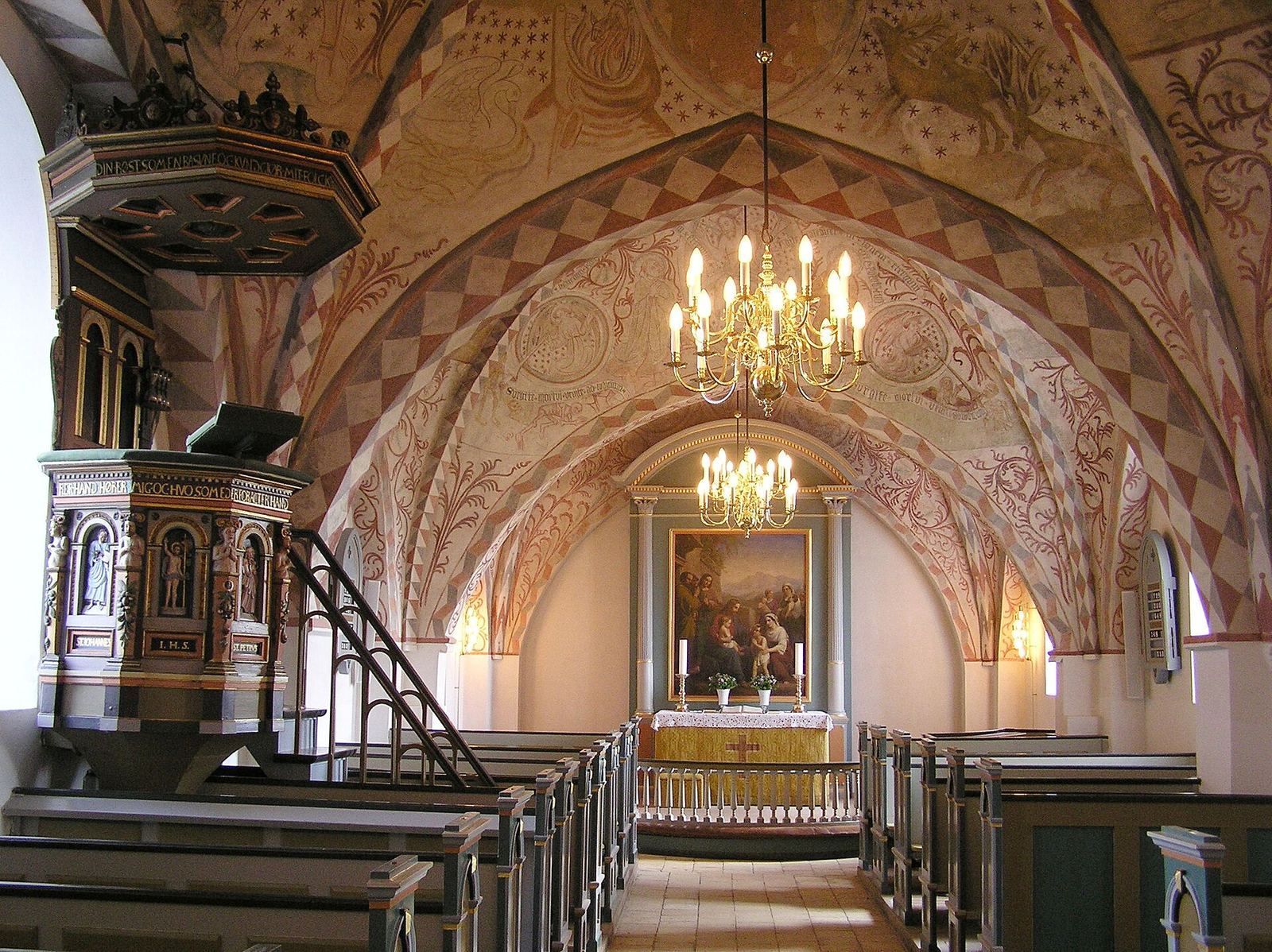
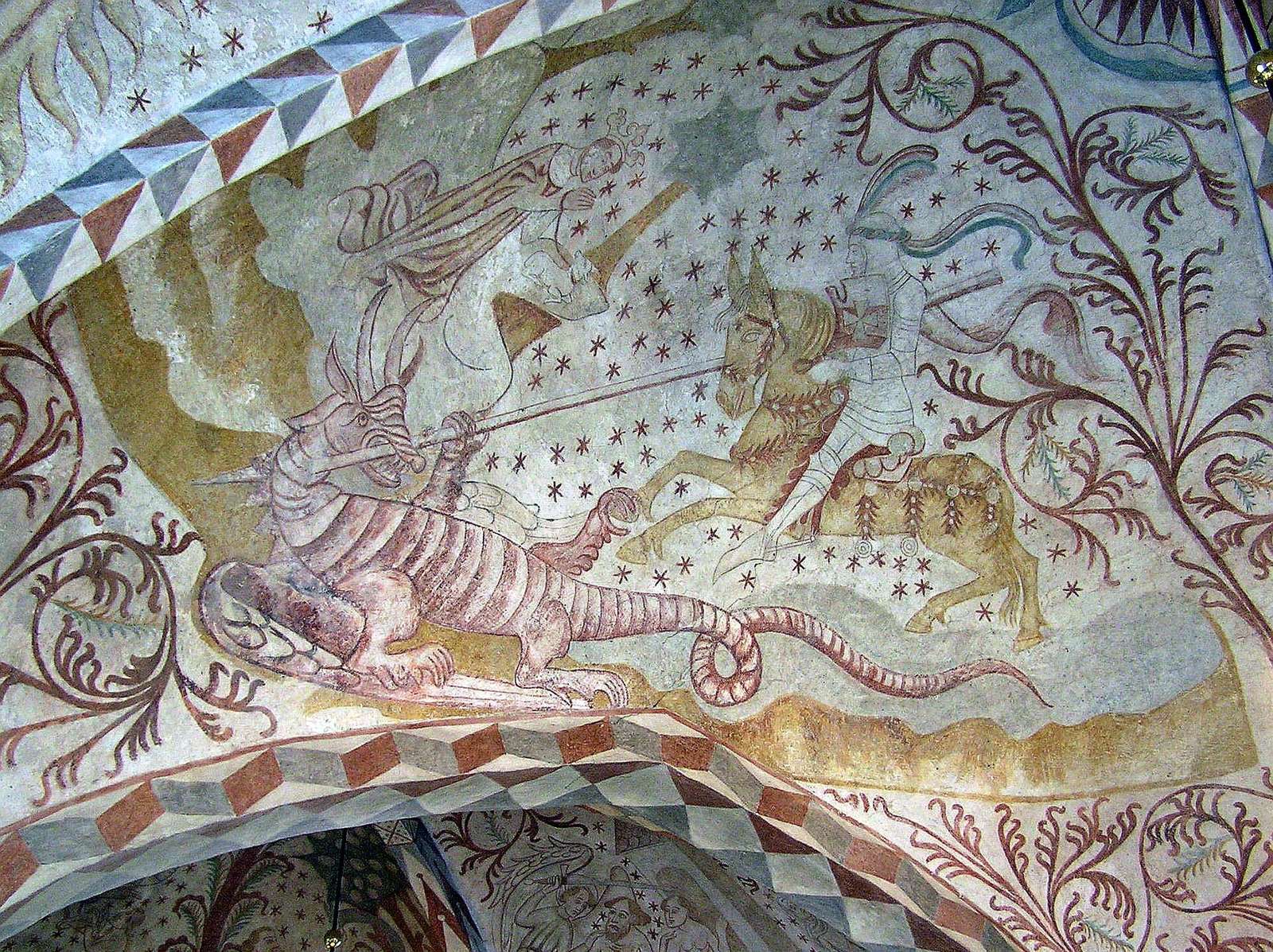
The nave’s two cross vaults rest on projecting supports called consoles, shaped as human heads. These vaults carry painted scenes attributed to the Højelse workshop, an art-historical name for a group whose work is also found in Tybjerg and Holtug churches.
Painted vaults
Chancel vault
The paintings, dating to around 1450, include a range of biblical and Christian subjects. In the eastern bay, a Throne of Mercy, an image of the Trinity, appears with medallions containing the four Gospel writers’ symbolic emblems. This arrangement is usually associated with a Majestas, a depiction of Christ in majesty. Samson pulling open a lion’s jaws appears in the south bay. The west bay shows David and Solomon the Wise, while the north bay depicts Antonius, a Franciscan friar from a religious order founded by Francis of Assisi, with two crutches and a rosary.
First nave bay
The eastern section presents the Last Judgment. Christ holds a sword and lily and displays his wounds, with Mary and John the Baptist kneeling beside him. Angels blow trumpets from corner medallions, their instruments extending beyond the frames. The rising dead are shown with skin stretched over their bones. Inscriptions address both the saved and the condemned, with John calling attention to the people and the trumpets summoning the dead to judgment.
The southern section shows a smoky Hellmouth crowded with souls. A devil carries two of the damned in a basket, and a woman flies with a devil on her back. In the west, St George fights a dragon while Princess Kleodolinde stands to the right. George wears armor of the period and carries a small shield pierced for a lance, a type intended for tournaments rather than battle. The dragon engages with the lance, while the north section shows Peter leading the naked saved into the Castle of Heaven.
Second nave bay
The eastern section depicts Creation. God sits on a rainbow with the earth on his lap, with the sun and moon beside him. Lucifer falls at the left, while a swan, a fish and land animals, including a furry animal, occupy the space below. The southern section shows Adam being created and led into the Garden of Eden, where the Tree of Knowledge stands within a woven wattle fence.
The west section shows the creation of Eve and the Fall. In the north, Adam and Eve are expelled from a city, with Gabriel gripping Adam’s shoulder. A further scene shows Adam digging in a field as Eve spins, steadying her spinning wheel with her foot.
Furnishings
Altarpiece
The altarpiece dates to 1795. Its painting was made by Frederik Storch in 1863; an earlier painting by Hans Hansen is displayed in the south chapel.
Baptismal font
The font in the church is a modern copy of a Romanesque granite font, a baptismal font in a medieval western European architectural style. The older font is now at Grøndalskirken in Copenhagen.
Pulpit and hourglass
The pulpit dates to 1595. Relief figures of Jesus and the apostles Paul, John, Peter and James decorate its front, and an hourglass from the 18th century is mounted on it.
Votive ship
Ane, a model given to the church as a devotional offering, was built by a sailor in 1940. Aage Jensen, who grew up in Højelse Parish, donated the ship and named it for his foster mother.
Organ
The church’s Bruno Christensen organ dates to 1972 and has 11 stops, controls that select sets of pipes or particular tones.