Hof van Kamerijk: A Fifteenth-Century Palace in Mechelen
Site at a Glance
- Popularity
- Medium
- Country
- Belgium
- Primary era
- Medieval
- Eras represented
- Medieval
- Civilizations
- Unclassified
- Site type
- Domestic
- Remains
- Palace
On this page5 sections
History
Hof van Kamerijk is a fifteenth-century palace in Mechelen, Belgium, later known as the Keizershof, or Emperor’s Court, after princes and princesses lived there, including the future Emperor Charles V. Its history is closely connected with Margaret of York and the upbringing of Habsburg children.
The palace under Margaret of York
After her husband, Charles the Bold, Duke of Burgundy, died in 1477, Margaret of York settled in Mechelen, the wealthiest city among the lands assigned to her as a widow. That year, the city bought a patrician house on Keizerstraat from John VI of Burgundy, the bishop of Cambrai. It also acquired eight other houses on the street for the planned expansion, and those houses were demolished. The purchase was entered in the city’s civic record book on 14 November.
Margaret substantially enlarged the bishop’s house, with the building work overseen by Antoon I Keldermans, Mechelen’s senior municipal mason. After Mary of Burgundy, Margaret’s stepdaughter, died in 1482, Margaret planned to sell the palace to support her nephew, John de la Pole, Earl of Lincoln, a Yorkist claimant to the English throne. Instead, the city bought the property and gave it to Emperor Maximilian I and his son Philip the Handsome.
A residence for royal children
Philip grew up at the palace, where other royal and noble children also received their education. He stayed there briefly after marrying Joanna of Castile. After Margaret of York died in 1503, the court moved to Leuven, to an old fortress on Keizersberg. In 1505, when Philip and Joanna sailed from Middelburg to Spain, their children were permitted to return to the Mechelen palace. The couple chose it as a home for Eleanor, Charles, Isabella, and Mary, in part because Mechelen was quieter than Bruges and Ghent and farther from the political activity in Brussels.
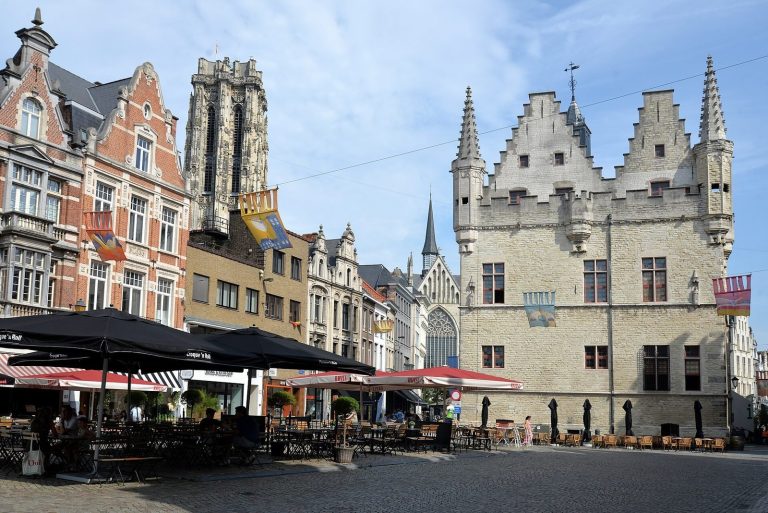
The children’s household initially numbered about forty people, including wet nurses and attendants who cared for them in their cradles. Books for their education and musical instruments were purchased, and Charles maintained a lifelong connection with Barbara Servels, one of his caregivers. After Margaret of York’s death, Margaret of Austria took charge of the children and brought them to city events such as fairs, processions, Maypole plantings, and shooting-guild contests. In August 1510, they watched a deer hunt on the Grote Markt from an inn window.
The household later grew to about ninety people. Hunting parties and court balls took place at the palace, while music and singing accompanied religious occasions; magicians and puppeteers also entertained the household. In winter, the children rode through nearby snowfields in a sleigh decorated like a ship with coats of arms, banners, and pennants. Charles learned the local Dutch vernacular at Mechelen, a skill that helped him win popularity among his subjects in the Low Countries.
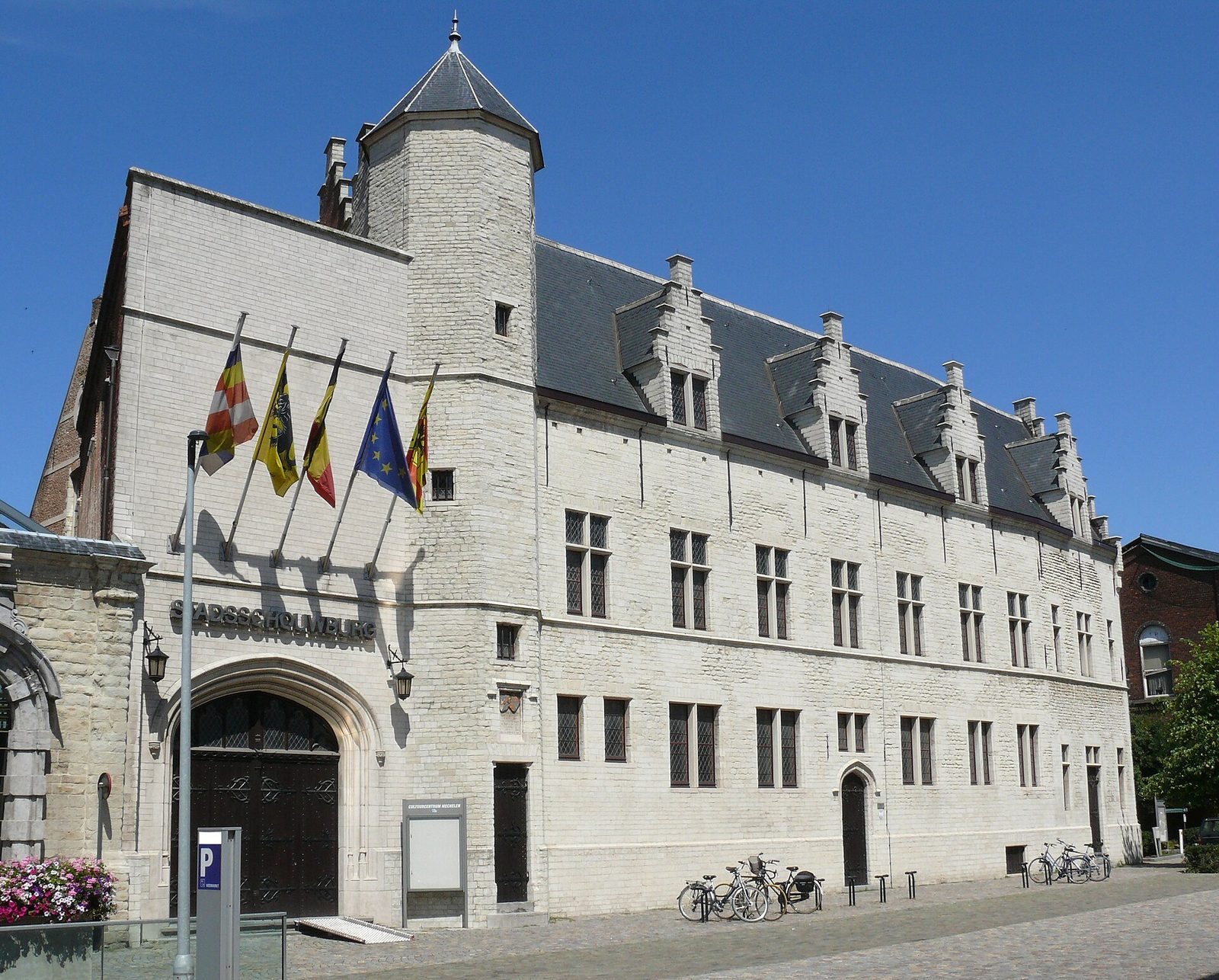
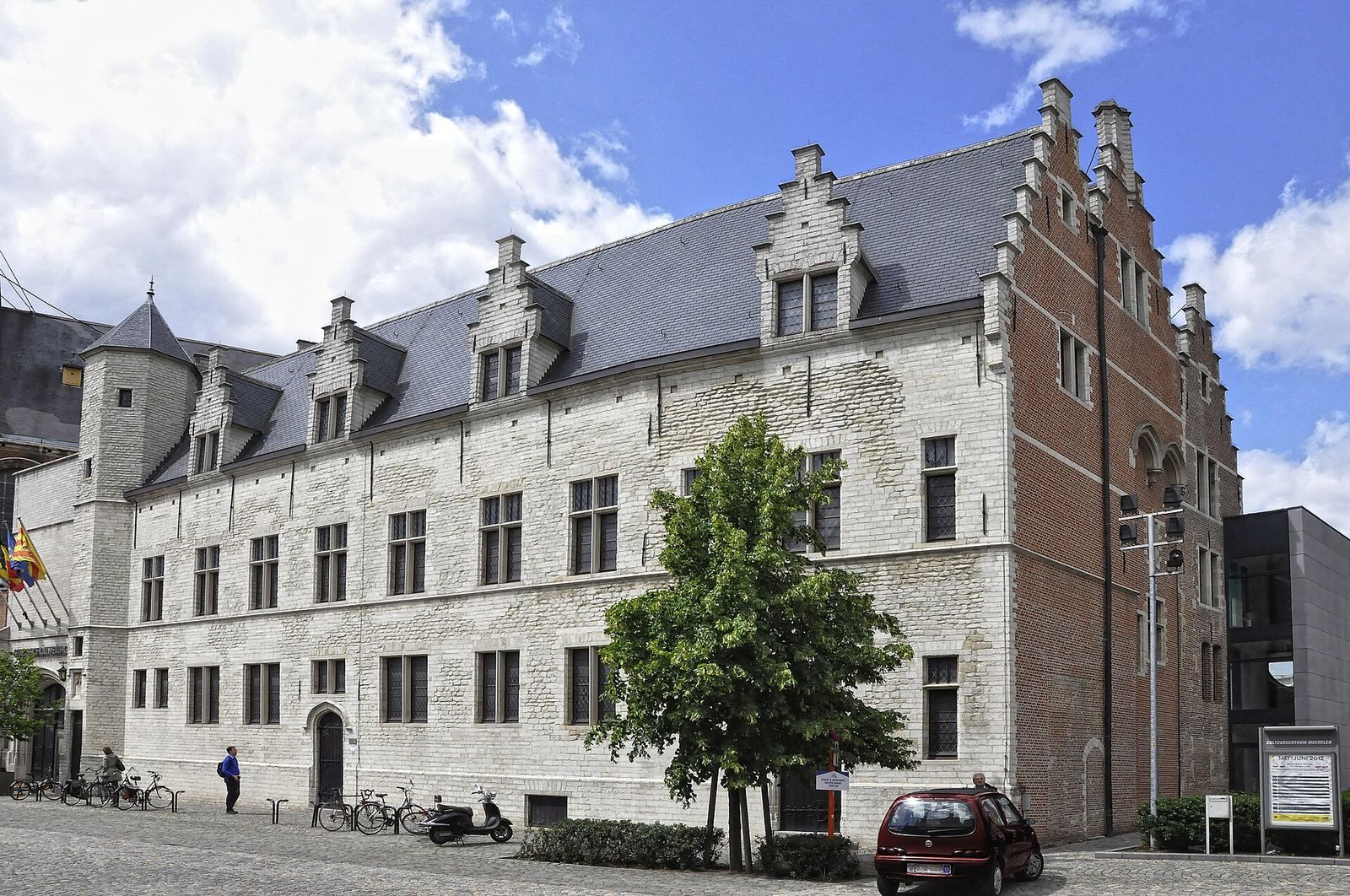
The palace was protected as a monument in 1985. By 2016, it housed Mechelen’s city theatre.
Remains
Palace layout and facade
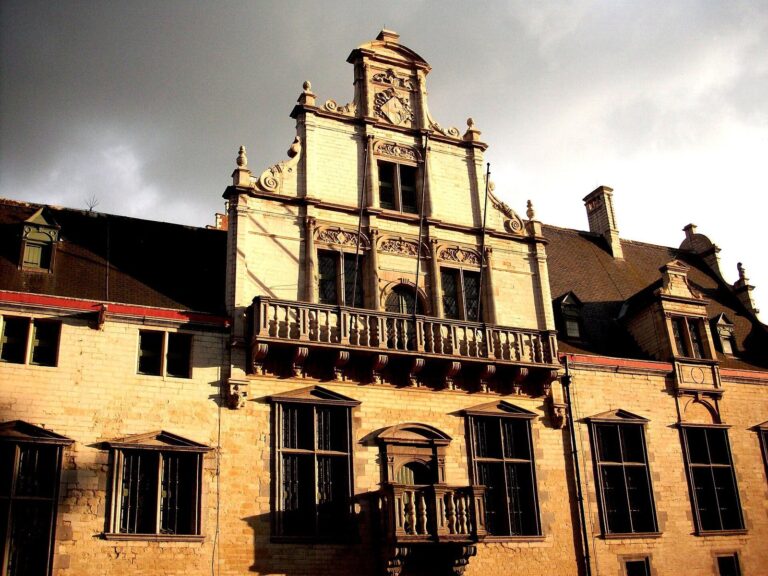
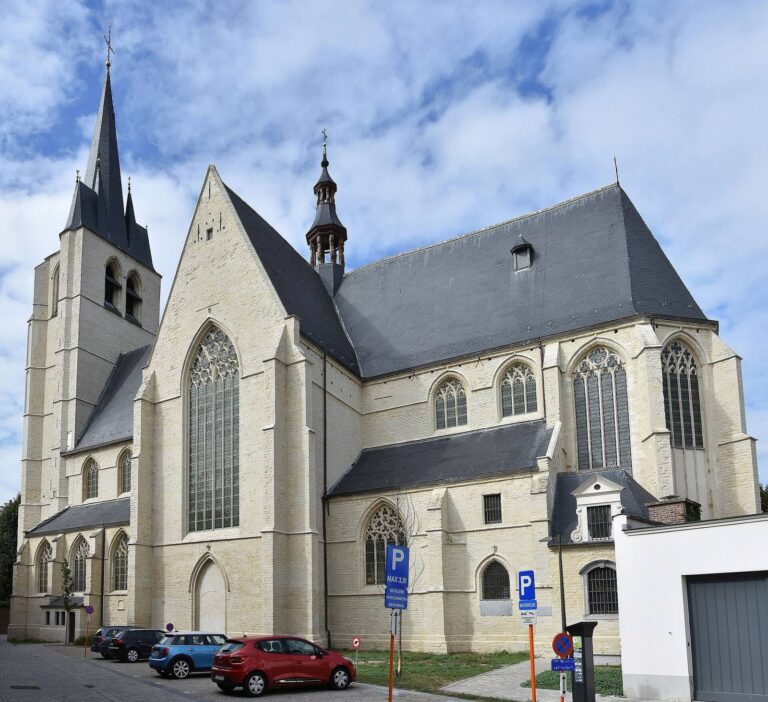
The palace stood beside the Church of St Peter and St Paul, opposite the Hof van Savoye, Margaret of Austria’s residence. Its grounds included a formal courtyard, a garden, stables, a ball court, a shooting range, and a bathing facility. Margaret also had a council chamber built parallel to Keizerstraat. The facade in its present form reflects a major restoration carried out in 1893, which broadly reinstated the palace’s appearance as shown in a drawing by seventeenth-century Flemish historian Antonius Sanderus.