Heilgeisthospital Stralsund: A Municipal Hospital and Charitable Complex
Site at a Glance
- Rating
- 4.6
- Popularity
- Low
- Country
- Germany
- Primary era
- Medieval
- Eras represented
- Medieval, Early Modern, Modern
- Civilizations
- Holy Roman Empire, Swedish
- Site type
- Civic
- Remains
- Hospital
On this page10 sections
History
Foundation and relocation
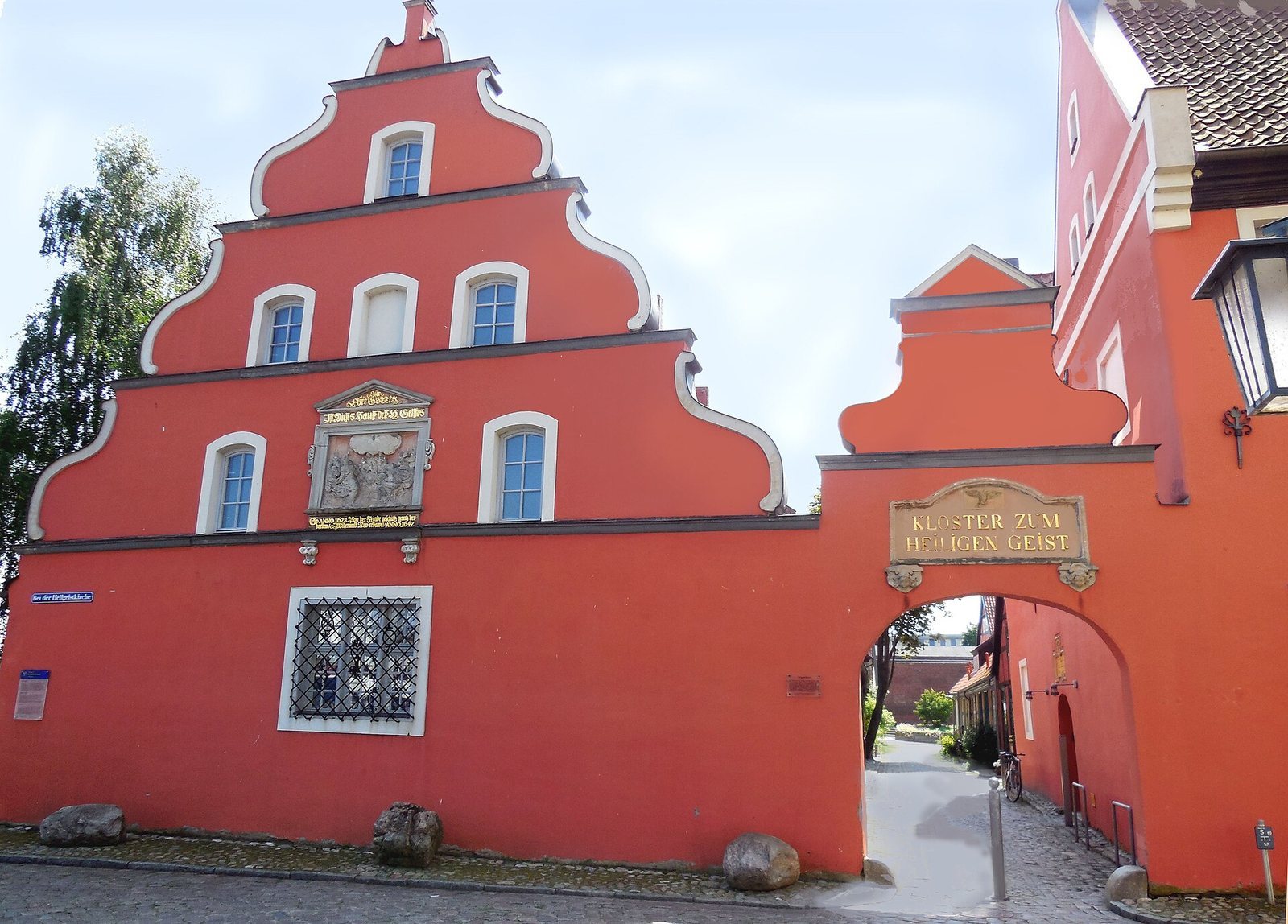
Heilgeisthospital Stralsund is Stralsund’s oldest hospital, a municipal institution in Germany first recorded in 1256. It cared for sick and needy people from the city as well as travelers, and became Stralsund’s largest charitable institution. Although also known as Heilgeistkloster or Kloster zum Heiligen Geist, it never operated as a monastery and remained city property.
At its foundation, the hospital stood within the city walls, where the fortifications offered protection. The nearby street took the name Heilgeiststraße from the hospital’s dedication to the Holy Spirit. In the late 1320s, the institution moved to the city’s outer edge, and its former buildings were abandoned. The new site, by what is now the Langenkanal quay, was exposed to sieges, cannon fire, looting, and destruction. Building and rebuilding nevertheless continued there.
Growth and changing uses
Donations expanded the hospital’s holdings. In 1285, Hinricus Albus gave it land on Rügen, and in 1304 it acquired the village of Behnckenhagen. Ummanz and Hiddensee became hospital property in 1340, alongside other villages. In 1392, councilman Wilhelm von Struncken donated one bedsheet for each bed. From the 17th century, the institution also acquired houses in Stralsund.
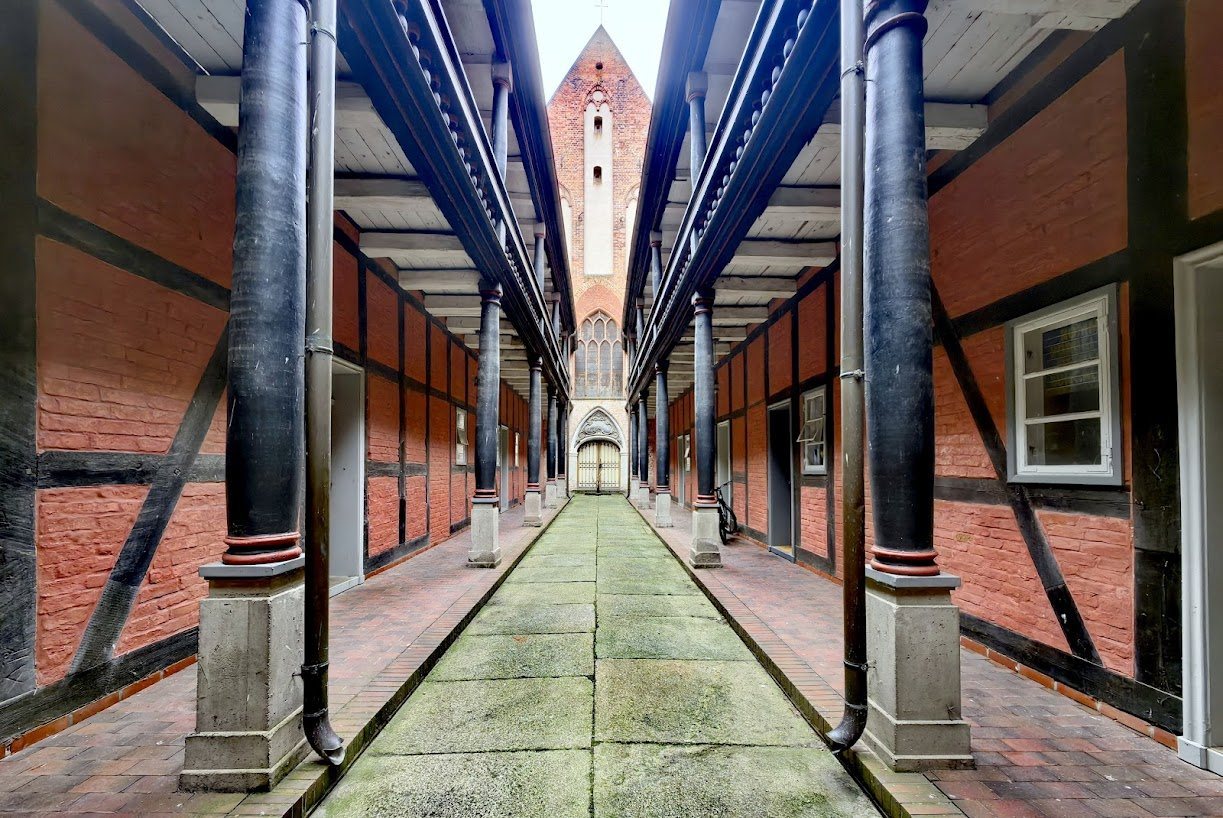
The Heilgeistkirche was built toward the end of the 14th century. A lodging house for strangers, the Elendenhaus, was added in 1641. The hospital also provided older people with a place in one of its cells in return for a small payment. In the 18th century, the church passage was rebuilt after its destruction; its design later served as a model for the courtyard gallery at Stralsund’s town hall.
Decline, restoration, and heritage status
The hospital complex and Stralsund’s old town deteriorated during the period of East Germany, the German Democratic Republic that existed from 1949 to 1990. Plans to reconstruct the church passage were drawn up in the mid-1980s, but specialist workers were redirected to housing construction in Berlin. The complex continued to decay and narrowly avoided demolition. Restoration across the site took place in the 1990s, including work on the church passage’s roof and half-timbered frame. Restoration of the Elendenhaus was completed by 1997. Since 2002, the complex has formed part of the UNESCO World Heritage property Historic Centres of Stralsund and Wismar, an international designation recognizing cultural or natural value.
Remains
Buildings and layout
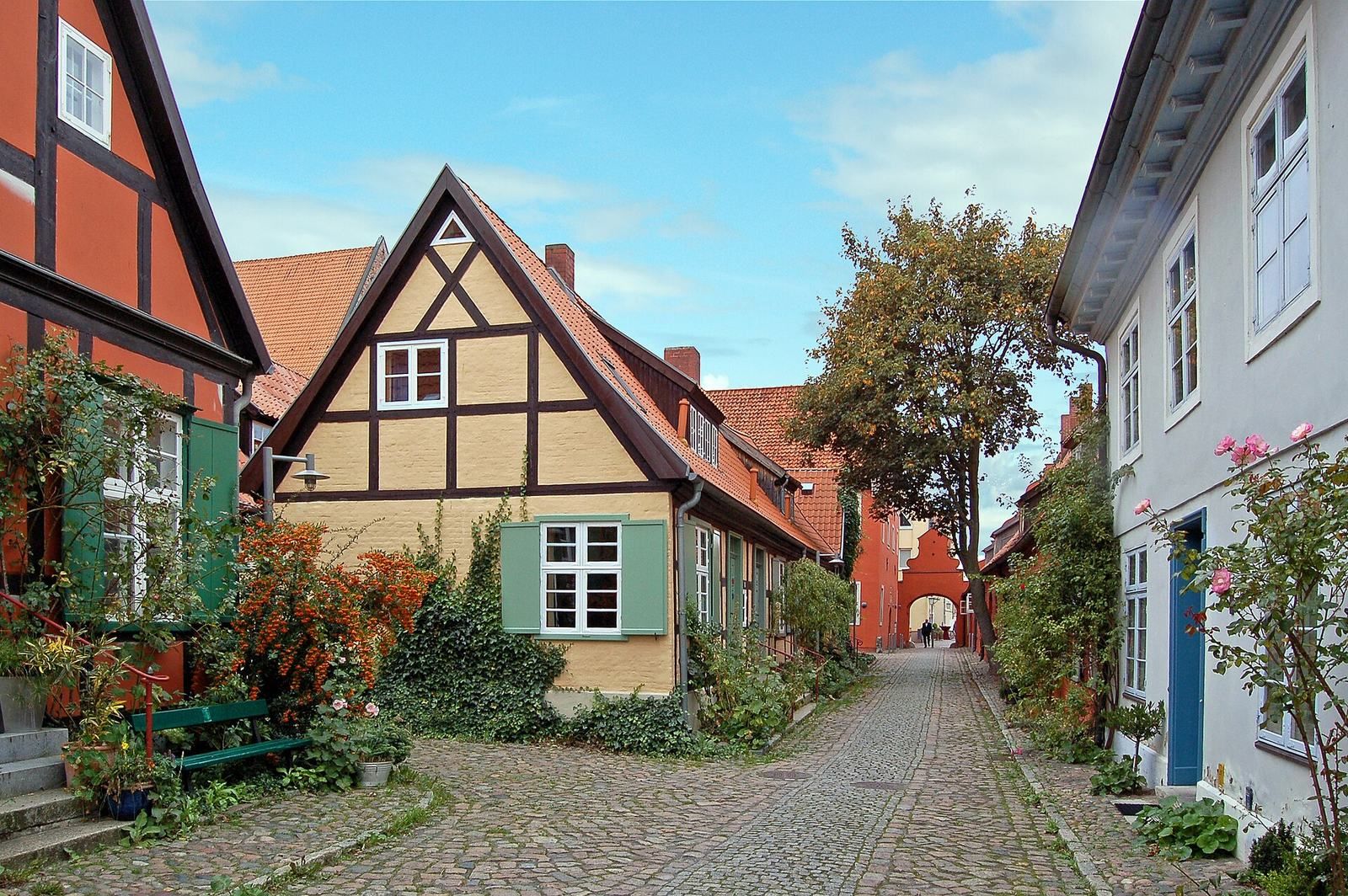
Heilgeisthospital is a self-contained group of buildings with a range of uses. It stands on Am Langenwall, a street associated with the harbor. On the side facing Stralsund’s old town, the complex is bounded by Bei der Heilgeistkirche, Wasserstraße and Frankendamm, and Klosterstraße. Its components include the church, hospital, lodging house, church passage and gallery, and half-timbered houses dating from the 18th and 19th centuries.
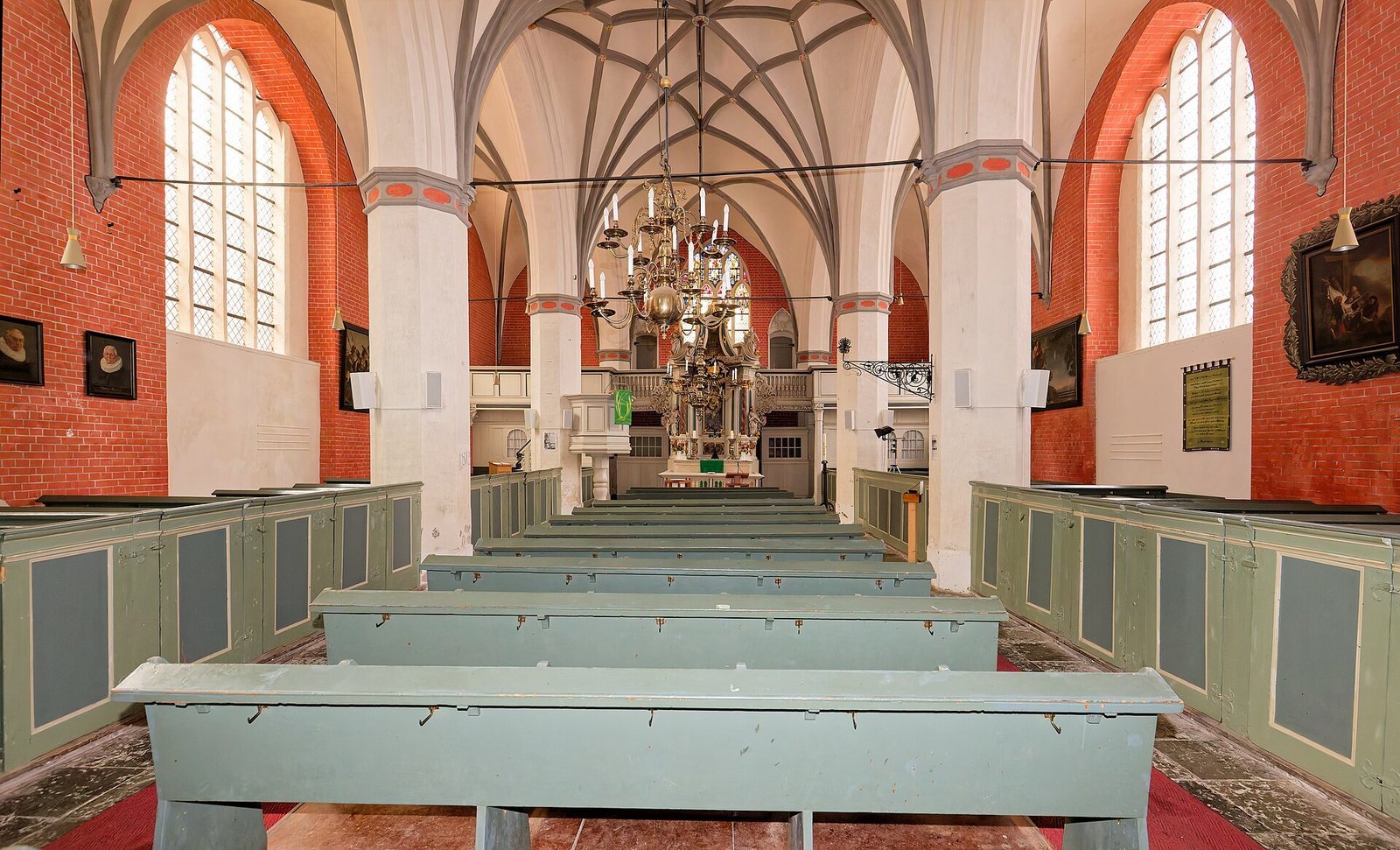
Church and hospital
The Heilgeistkirche and hospital are among the principal buildings in the complex. Together with the other structures, they form a group that has served different purposes over time. Houses and apartments within the complex are now rented and occupied by individuals and families.
Church passage and gallery
The church passage includes a gallery. Rebuilt in the 18th century, it was restored in the 1990s, when its roof and half-timbered framework were repaired. Its design also influenced the courtyard gallery at the town hall.
Elendenhaus
Built in 1641 to lodge strangers, the Elendenhaus was restored, with the work completed by 1997.
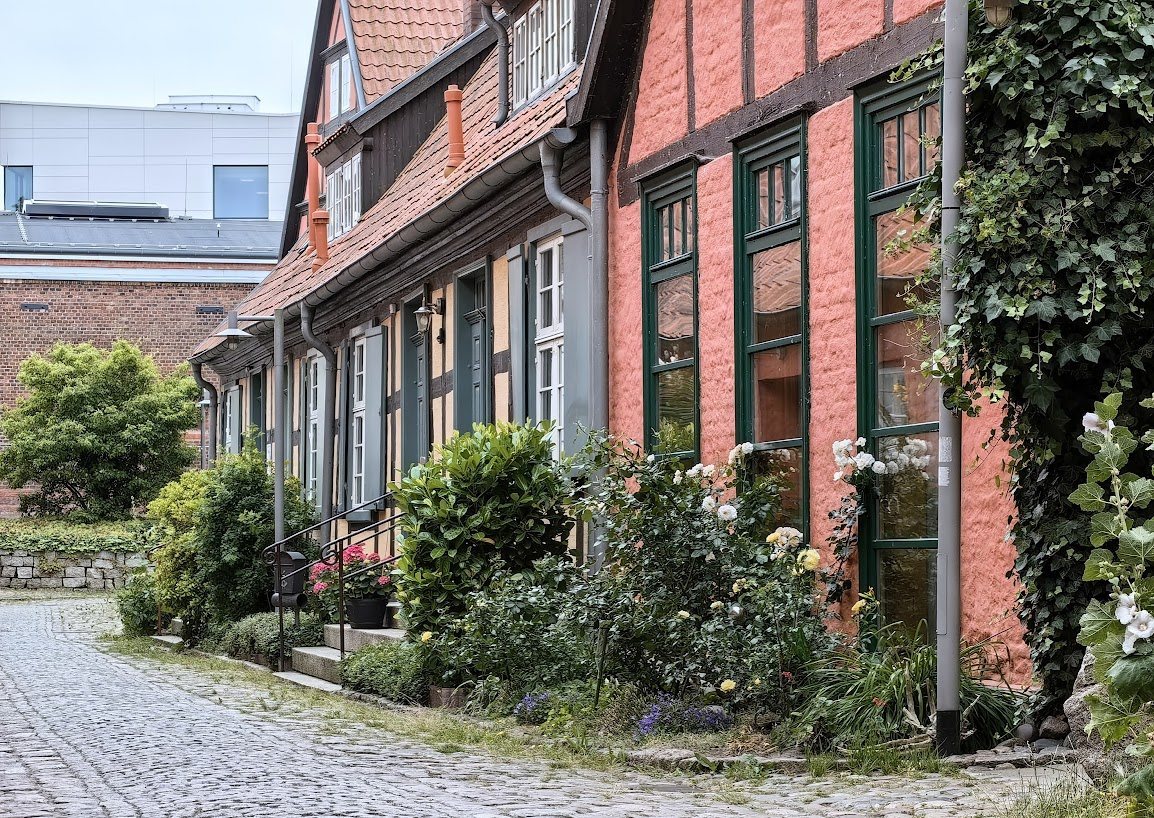
Half-timbered houses
Several half-timbered houses from the 18th and 19th centuries form part of the complex. Half-timbering uses a visible timber frame on the exterior, with other materials filling the spaces between the timbers.