Haus Laer: A Water Castle and Aristocratic Estate in Bochum
Site at a Glance
- Popularity
- Medium
- Country
- Germany
- Primary era
- Medieval
- Eras represented
- Medieval, Early Modern
- Civilizations
- Brandenburg-Prussia, Duchy of Cleves, Holy Roman Empire
- Site type
- Domestic
- Remains
- Castle
On this page9 sections
History
Early records and the aristocratic estate
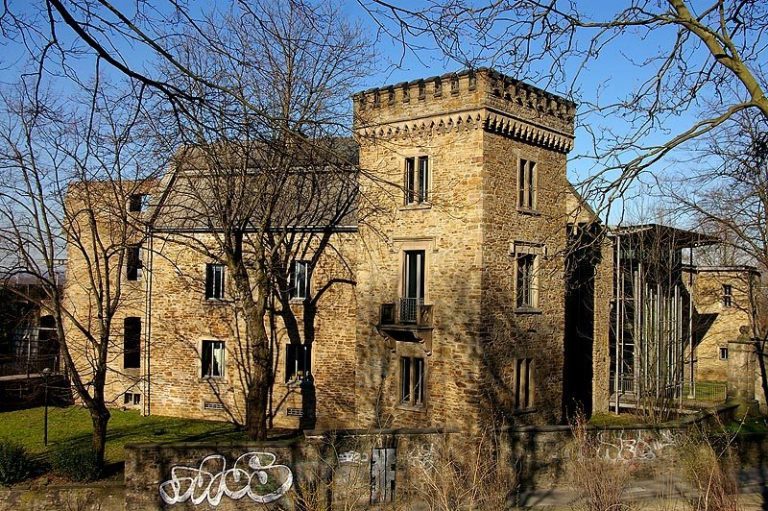
Haus Laer is a water castle, a fortified residence associated with water defenses, in southeast Bochum, Germany. A place at Laer appears in 890 in the records of Werden Abbey, probably as a hamlet or manorial farm. In 1243, the estate was named as domus Lare, or house of Laer, when Adolf I, Count of Mark, granted it as a fief, an estate held in return for service or loyalty, to Heinrich von Vittinghoven. Heinrich was the count’s retainer, a follower serving his lord. A castle house stood there by 1374.
The estate passed to the von Leithen family in 1480. Toward the end of the 15th century, Dietrich von Leithe shaped it into its present form. Haus Laer is among the Ruhr region’s oldest aristocratic seats, and its name was later given to Bochum’s Laer district. In 1895, inheritance transferred the property to the Frielinghaus family.
Burial rights and the private cemetery
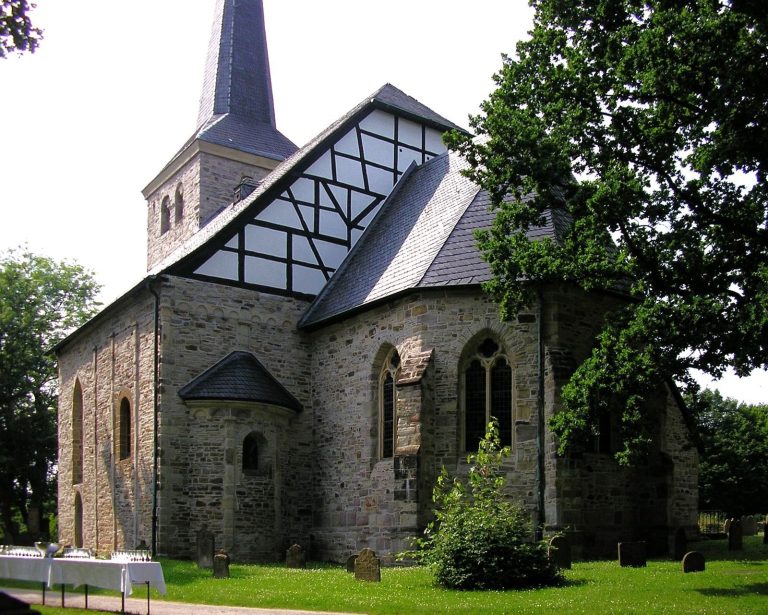
The lords of Haus Laer held burial rights at the old church in Ümmingen. When burial there was prohibited, they obtained permission to establish a private cemetery. Its first burial took place in 1871.
The Ruhr-region archive
Haus Laer houses a substantial documentary collection known as its Ruhr-region archive. Its holdings include papers concerning the von der Leithen and Frielinghaus families, the von Vittinghoff-Schell zu Schellenberg und Rechen and von Düngelen families, the counts of Moers, and many other noble and civic families. The collection also covers Haus Laer, Haus Leithe, Haus Marten in Dortmund, Haus Schadeburg, Haus Steinkuhl, and Haus Siepen in Bochum. Its holdings for Haus Steinkuhl and Haus Siepen are partial, and it contains material on other knightly estates belonging to families represented in the archive.
The records range across financial affairs, landholding and estate management, legal disputes, military matters, music, medicine, education, church affairs, mining, salt, and folklore. They include material from religious institutions at Elsey, Fröndenberg, Gevelsberg, and Klarenberg, as well as several hundred government decrees issued by authorities in Mark and Cleves, the Prussian king, and others. Conscription reviews, levies, official orders, and regulations of the War and Domains Chamber, a Prussian body overseeing military and state property matters, are also represented.
The archive once held 97 seal charters, legal documents authenticated by seals, dating from 1426 onward; 46 were lost during the Second World War. Other notable items include an imperial charter issued by Ferdinand I in 1559 and 16 commissions for Dutch officers belonging to the von der Leithen family, dating from 1704 onward. The collection also contains material from the central Ruhr region, the area around Gerresheim Abbey, and the Gummersbach area. Its books date back to the 16th century and cover subjects including law, religion, agriculture, biology, history, military affairs, and literature, alongside reference works and newspapers.
Remains
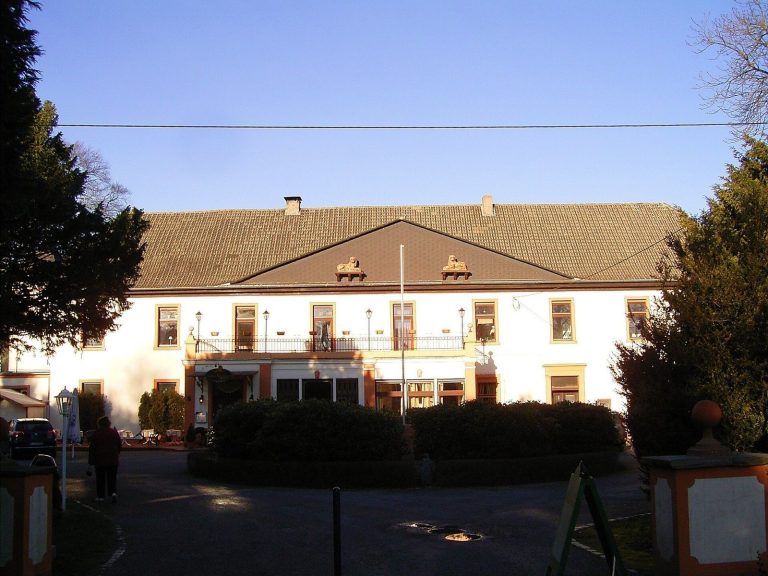
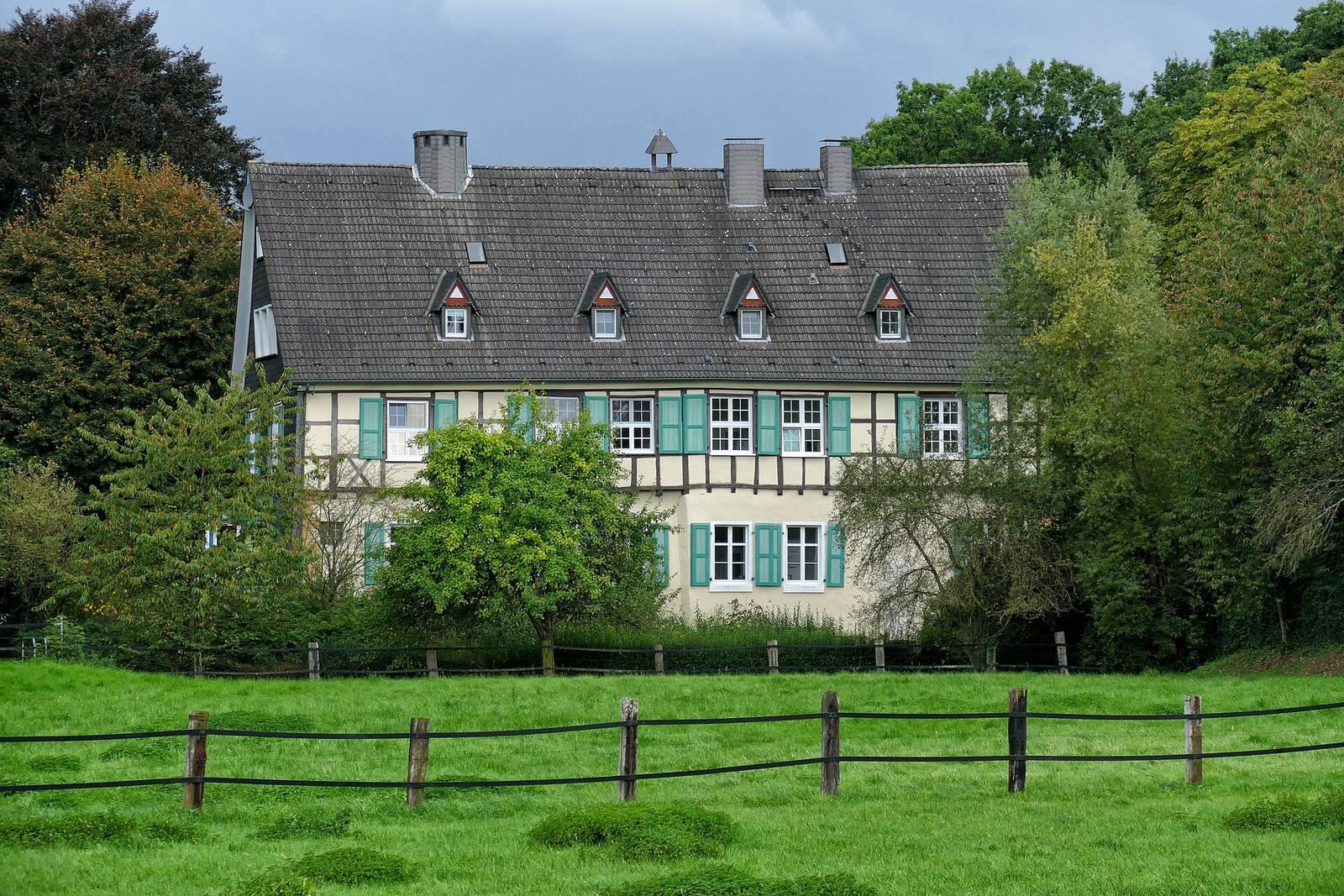
In the Schattbach valley, the surviving complex includes a half-timbered main house, part of the moat that once enclosed the main castle, an outer court to the north, and a private cemetery.
Buildings, water defenses, and cemetery
Main house and moat
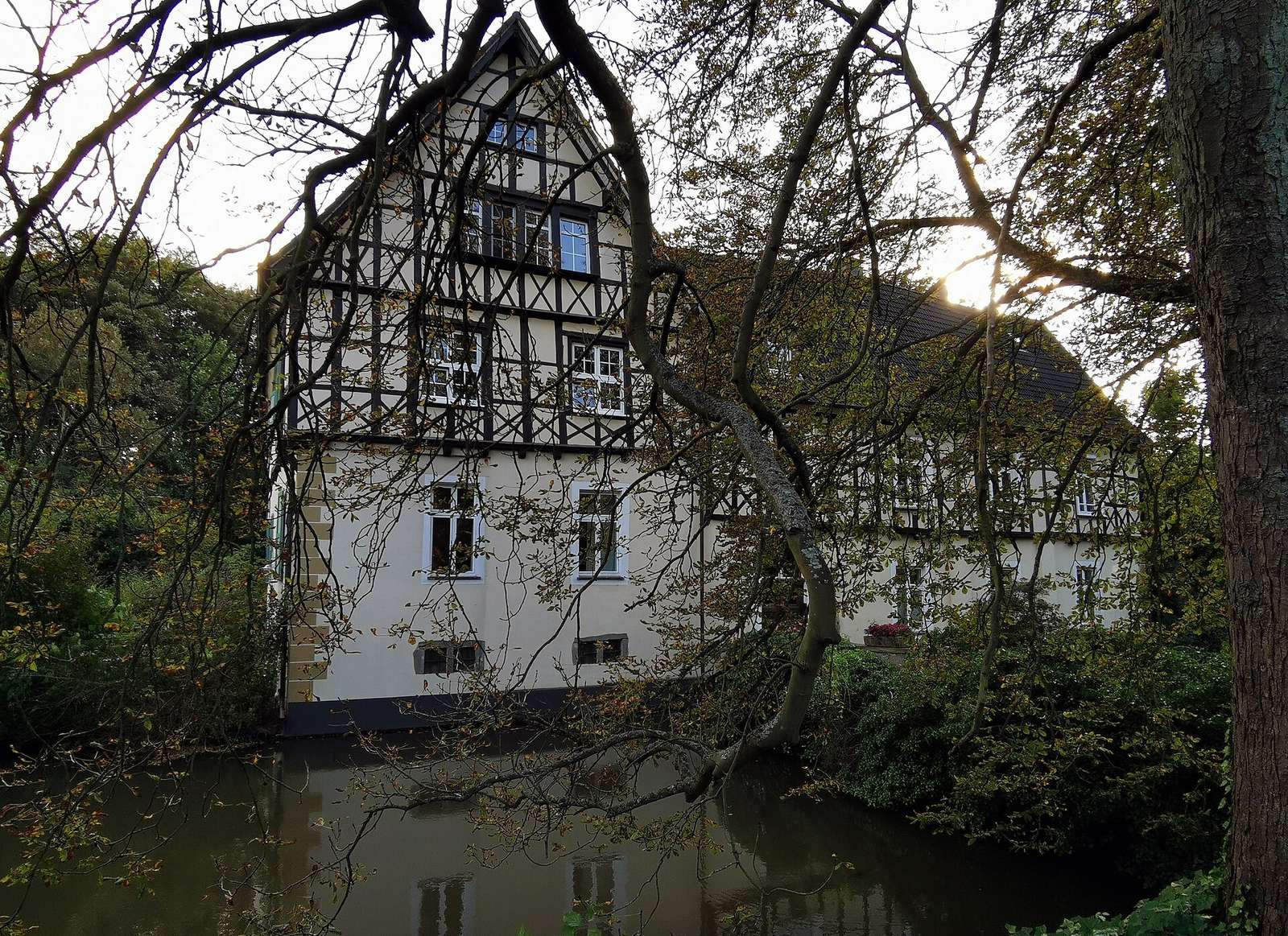
The main house has half-timbered walls and rests on an oak-pile foundation dated to about 940. This foundation is the oldest surviving part of a secular building in Bochum. Part of the moat remains; it formerly surrounded the entire main castle. Its water comes from a drainage adit, a horizontal passage used to drain a mine, from the Isabella mine. The passage runs beneath the neighboring former Opel Werk I site.
Bailey
The bailey, an enclosed outer area of a castle, lies north of the moat. Its surviving form dates substantially to the 18th century.
Private cemetery
After the old church in Ümmingen was demolished, eight historic grave slabs were moved to the private cemetery. Stones taken from the church were also used to build the cemetery’s boundary wall.