Haus Horst in Hilden: A Moated Castle and Knightly Estate
Site at a Glance
- Popularity
- Medium
- Country
- Germany
- Primary era
- Medieval
- Eras represented
- Medieval
- Civilizations
- Unclassified
- Site type
- Military
- Remains
- Castle
On this page12 sections
History
Origins and medieval lordship
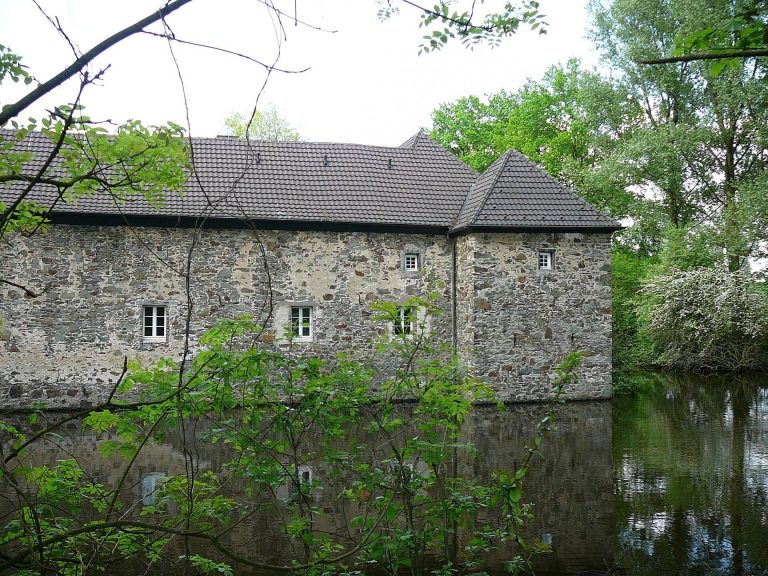
Haus Horst in Hilden is a former moated castle estate in Germany, established around 1250 as a knightly holding. It lay in the Itter floodplain between Hilden and Benrath, close to the old Cologne road. The Counts, later Dukes, of Berg and the Archbishops of Cologne both claimed authority in the area. Their rivalry focused mainly on Hilden and Haan, but also affected the estate, whose inhabitants could owe taxes and services to both powers.
The von Horst family appears in records from 1224, when Theodericus de Horst witnessed a document issued by Archbishop Engelbert I of Cologne. Later family members held local offices, including roles as Berg’s steward, an administrator of Hilden parish, and a forest official. Haus Horst and the Hilden-Haan manorial fief were separate holdings until 1372, when Archbishop Friedrich III granted the parishes of Hilden and Haan to Gerhard Kraft von Elverfeldt.
After Gerhard Kraft’s death, the Archbishopric of Cologne granted Haus Horst and the Hilden-Haan fief to Konrad IV von der Horst in 1404. Konrad was married to Gerhard Kraft’s daughter Ida, and the two holdings remained under one family until 1690, although they continued to be treated as separate fiefs. A fief was land or rights held from a superior in return for obligations. The grant required Konrad to make Haus Horst an “open house,” meaning the archbishop could occupy it for military purposes, except during a conflict with the Duke of Berg. This arrangement placed the estate firmly under the archbishop’s authority rather than leaving it as an independent knightly holding.
Inheritance and the Horst fief dispute
Following Konrad IV’s death in 1501, the holdings passed through his daughter Adriane, who had married Bertram von Plettenberg. With no sons from their marriage, their daughter Elisabeth inherited and married Wilhelm von Quade zu Wickrath. Succession through women was possible when there were no male heirs, subject to the necessary approval. Agnes Quade the Elder married Otto Schenk von Nideggen zu Vorst in 1555, and Otto held the fiefs from 1562 to 1600.
In 1589 Otto arranged for rights to Haus Horst and Hilden-Haan to pass to the children of his second marriage, prompting descendants of his daughters from his first marriage to contest the arrangement from 1592. The dispute turned on whether women could inherit the fiefs without special permission. It continued until 1796 and placed severe strain on the estate. After Otto’s death, the Hilden-Haan holdings passed through his younger son Johann Heinrich and grandson Otto Wilhelm, who died without heirs in 1679. The Catholic Schenk-Heyer branch, descended from Otto’s son Roland, also received grants of the Hilden-Haan fiefs from the Archbishopric.
Brandenburg troops briefly occupied Haus Horst in 1651 during the conflict known as the Düsseldorf Cow War. In 1682, the Imperial Chamber Court, a high court of the Holy Roman Empire, issued an interim ruling in favor of the Reformed Protestant branch represented by the Bottlenberg-Kessel family. In the 1690 division, that family transferred Haus Horst and its associated rights to the von der Reven family, while retaining properties linked chiefly to the former Hilden-Haan fief. This ended the union of the holdings begun in 1404. The Archbishopric challenged the ruling and continued granting Hilden and Haan to the Catholic Schenk-Heyer line. After Theodor Felix Schenk-Heyer died in 1748, the Archbishopric declared those fiefs returned to its control.
Ownership, sale, and rebuilding
The von der Reven family retained Haus Horst during the eighteenth century, but debt and the subdivision and sale of property diminished the estate. Ambrosius Wilhelm Bernhardt von der Reven pledged its lands to Wilhelm Sebastian von Lemmen and died in 1724. Von Lemmen then obtained the estate and its rights. After his death, his daughter Franziska bought the whole property and left it in 1776 to her nieces Maria Theresia and Maria Anna von Ropertz.
When the Archbishopric of Cologne ceased to be a German electoral state in 1801, its fiefs passed to the territorial ruler in 1803, and Hilden became a fief of the Duke of Berg. Theodor Bongard the Younger bought Haus Horst in 1810, including the manor house, adjoining land, woodland, mill, and hunting rights. His daughter Anna Elisabeth inherited Haus Horst and Haus Hagdorn; her 1828 marriage to Karl August Hubert Reichsfreiherr von Maercken zu Geerath brought the properties into the von Maercken family. After a series of sales, the estate lost its privileges as a knightly holding in 1843 and was removed from the list of estates represented in the Prussian Landtag.
Heinrich Joseph Lieven acquired Haus Horst in 1858, and his son Wilhelm Ferdinand inherited the Hilden properties in 1866. Lieven repaired the tower in 1892–93 and built a villa-like manor house on the old castle foundations. He sold the estate in 1896 to industrialist Gustav Klingelhöfer, who commissioned a much larger mansion on the same foundations, designed by architect Otto March, along with a landscaped park. Lieven also gave Hilden 188 hectares, 18 ares, and 82 square metres of woodland, which became the city woodland northeast of Hilden.
Twentieth-century changes
In March 1951, Hilden bought the estate farmyard and 515 Morgen of remaining farmland. A Morgen was a historical land measure that varied in size by place and period. The town prepared the land for building, divided it into plots, and sold part to the 3M company. Horster Allee was rerouted westward, with its former southern stretch incorporated into the factory grounds.
A hotelier leased the manor in 1965 and opened a restaurant and a temporary Flamingo Park, intended as a holding place for animals in the exotic-animal trade. The attraction closed in November because there was no provision to keep the animals through winter; an animal-welfare association took responsibility for those left behind. The mansion, built by Bongard and enlarged for Klingelhöfer, had already been demolished that year. The Klingelhöfer heirs sold the damaged property in 1967, leaving the tower and adjoining wall remains. The first stage of a senior-housing development was built by 1977, and a care home followed in 2006.
Remains
Castle site and surviving fabric
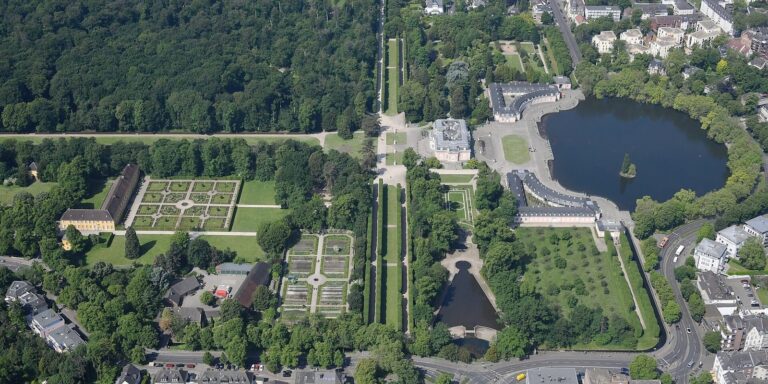
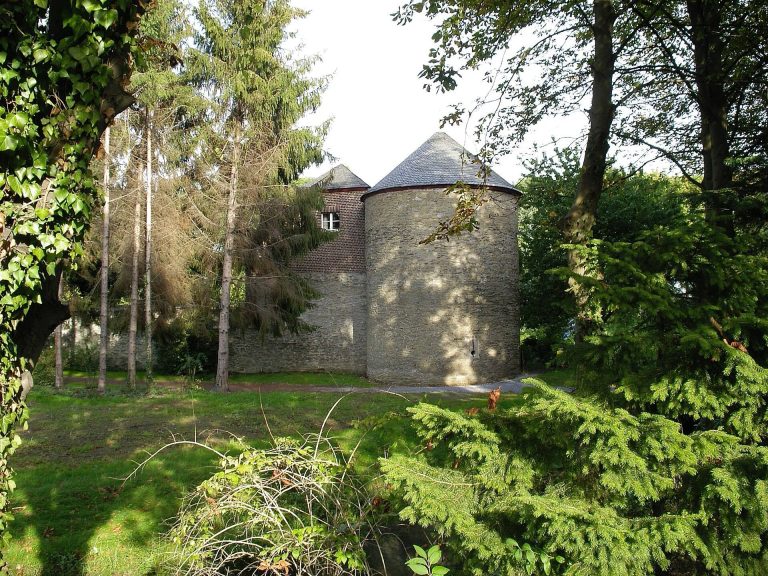
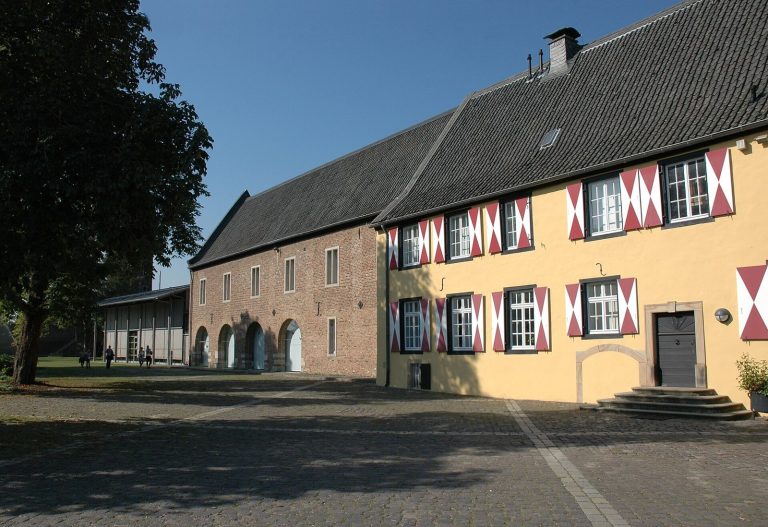
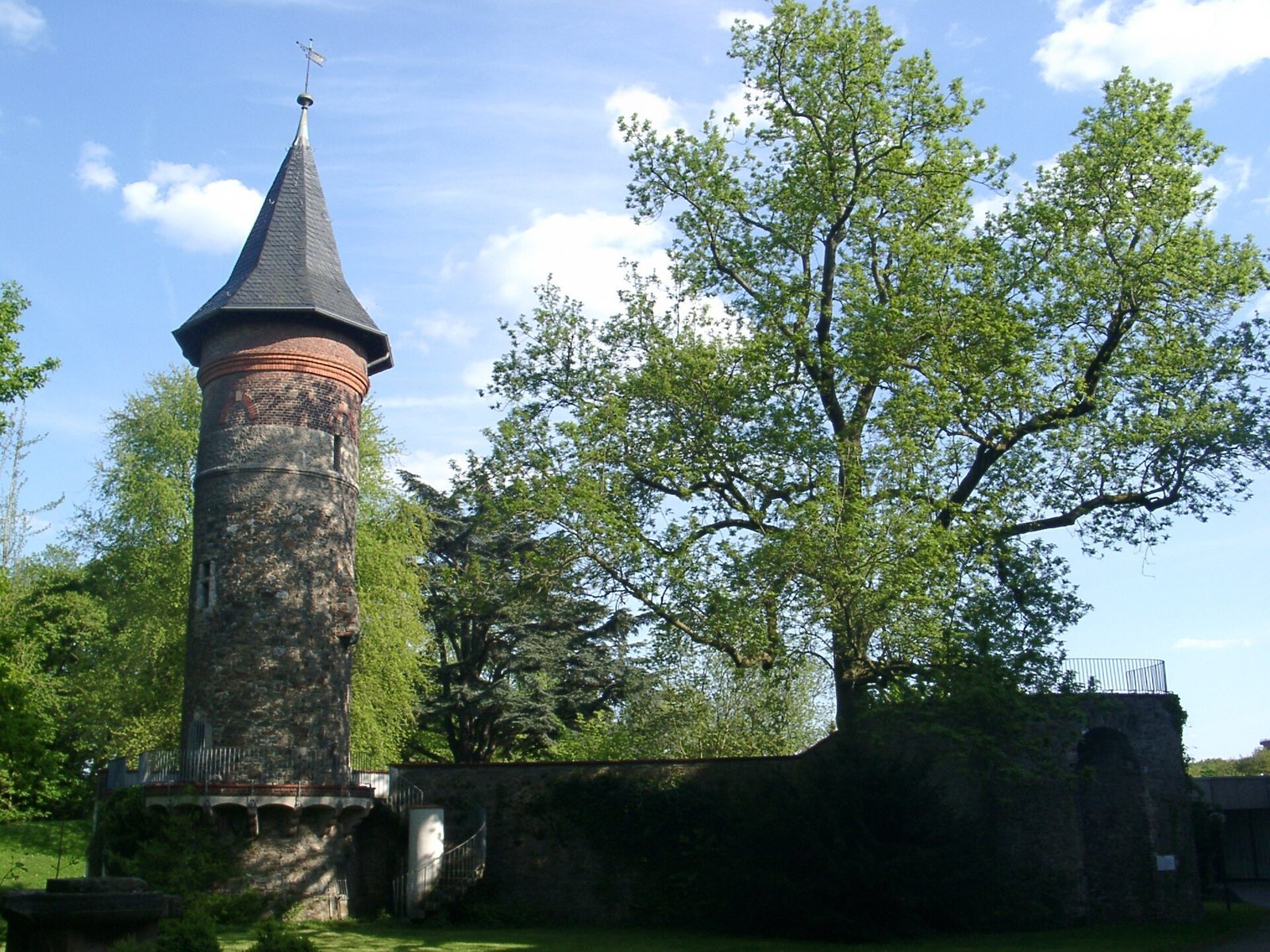
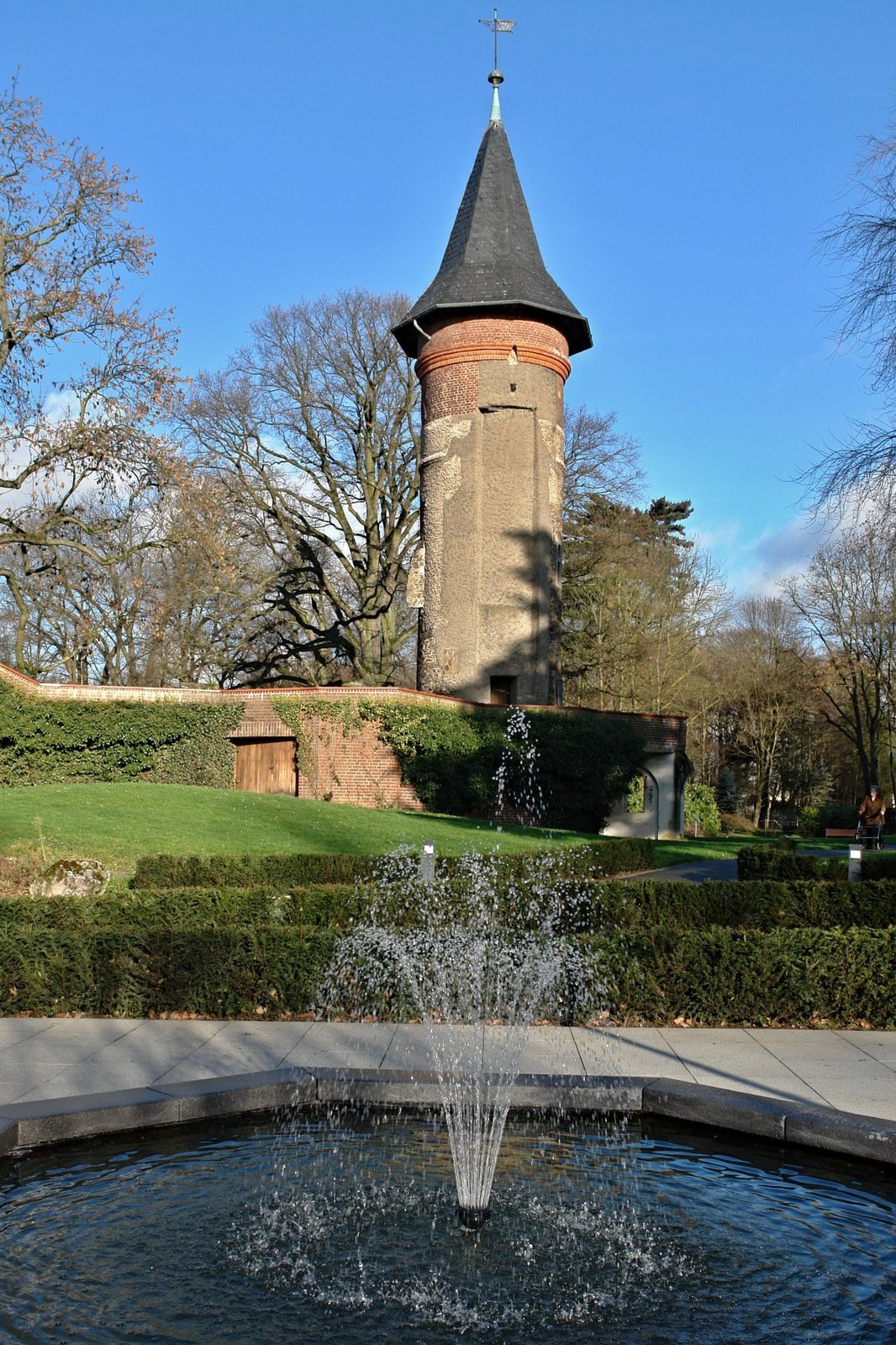
The original water castle stood west of Hilden in the Itter floodplain, surrounded by moats, with an estate farmyard nearby. The surviving fabric includes a tower and adjoining wall sections. The tower, repaired in 1892–93, has a crowning cornice and a cap. Later manor houses occupied the old castle foundations, and the mansion built for Gustav Klingelhöfer stood within a landscaped park.
Outlying estate holdings
Mill and tenant farm
North of the castle site, beside the Itter, Knight Wilhelm Quade built the Horster Mill, also called the Lower Mill, in 1540. The Steinhof was another tenant farm belonging to the Horst fief. Maps from 1822 show a restaurant called Zum Jägerhaus, also known as Manerts Penn, at its location. After that building was demolished, the corner of Düsseldorfer Straße and Niedenstraße was developed with single-family houses in 2015.
Manors and agricultural lands
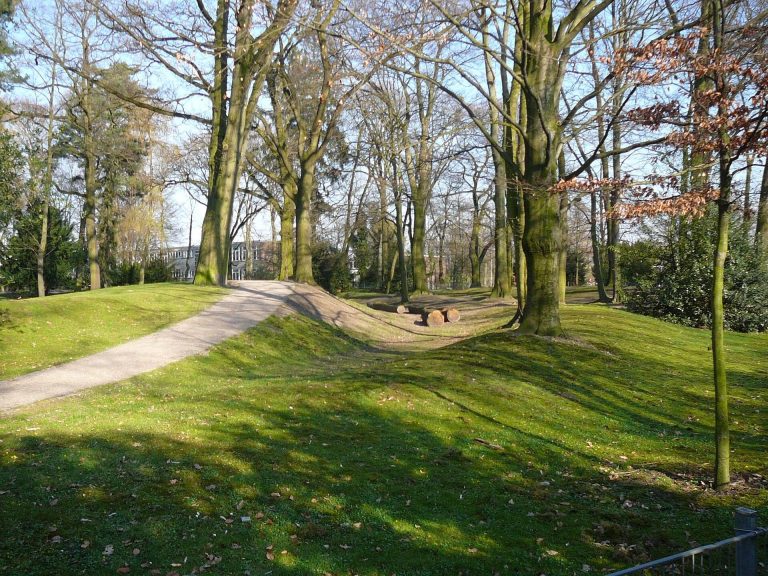
The Hilden-Haan holdings included a Fronhof, a manor serving as an estate center, in Hilden’s lower town around Mittelstraße and Benrather Straße, as well as Hof zum Hoeffe on Hofstraße. The Holterhöfchen ringwork, a fortified enclosure formed by an earth bank and ditch, was attached to the estate in 1056. The fief also encompassed the Hof zu Haan beside the church. Seven farmsteads together covered 613½ Morgen of farmland, 78 Morgen of meadow and pasture, and 28 Morgen occupied by homes, yards, orchards, and vegetable gardens.
Other holdings included the Sandhonschaft, Lehmhonschaft, and Haanhonschaft, local districts with 462, 487, and 166 Morgen respectively. The parish of Haan was divided into three Gewanden, or land subdivisions, covering 463 Morgen. The Horst fief also contained 1,178 Morgen of woodland northeast of Hilden, known as Lehnbusche and Junkerholz. The surviving woodland from these holdings later formed part of Hilden’s city woodland.
Present-day development
Senior-housing grounds
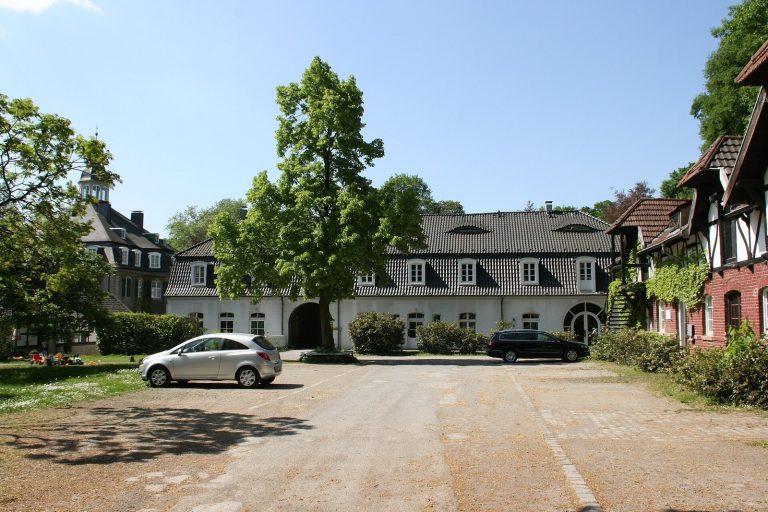
The current senior-housing development occupies a landscaped park with lawns and walking paths. Its 300 apartments, each with one, two, or three rooms, are arranged in two residential wings around an inner courtyard. A separate care building was completed in 2006.