Hauenštejn: A Medieval Castle and Chateau in Czechia
Site at a Glance
- Rating
- 4.3
- Popularity
- Medium
- Country
- Czechia
- Primary era
- Medieval
- External website
- Open
- Eras represented
- Medieval, Early Modern, Modern
- Civilizations
- Holy Roman Empire, Kingdom of Bohemia
- Site type
- Domestic
- Remains
- Castle
On this page12 sections
History
Hauenštejn, also known as Horní hrad or Hauenstein, is a medieval castle later converted into a chateau in Czechia near Stráž nad Ohří. It originated in the second half of the thirteenth century as part of a border fortification system in the Ore Mountains, a Central European mountain range associated with mining districts including Jáchymov. The castle was intended to help protect royal routes and local mines, although its foundation has been attributed both to Mikuláš Winkler, the burgrave of Loket Castle, and to King Ottokar II of Bohemia or his son, Wenceslaus II.
Royal domain and noble ownership
Mikuláš Winkler soon transferred Hauenštejn to the monastery at Doksany. On 23 January 1336, the monastery exchanged the castle and its estate with King John of Bohemia for a farmstead at Velichov. Hauenštejn then remained part of the royal domain, though its keepers and owners changed repeatedly and the property was sometimes held as a pledge. During the reign of Charles IV, the fourteenth-century king of Bohemia and Holy Roman Emperor, the castle’s domain was enlarged. It later passed to an unidentified owner.
In the sixteenth century, Hauenštejn came into the possession of the Šlik family, whose wealth was connected with silver mining near Jáchymov. A fire around 1600 led to an extensive rebuilding in Renaissance form. During the Šlik period, the estate also acquired a brewery, an enlarged orchard, expanded agricultural facilities, and a wooden water-supply system.
The Šliks sold Hauenštejn in 1663 to Duke Julius Henry of Saxe-Lauenburg. The castle thereafter formed part of the Ostrov domain, and Julius Henry enlarged the chateau and made numerous structural alterations. In 1689, the property passed by inheritance to another noble family. When its male line ended in 1771, the estate and castle passed to the Habsburg-Lorraine dynasty, the ruling house of the Habsburg monarchy formed through the union of the Habsburg and Lorraine dynasties. From 1826, Hauenštejn belonged to the state estates.
Buquoy rebuilding
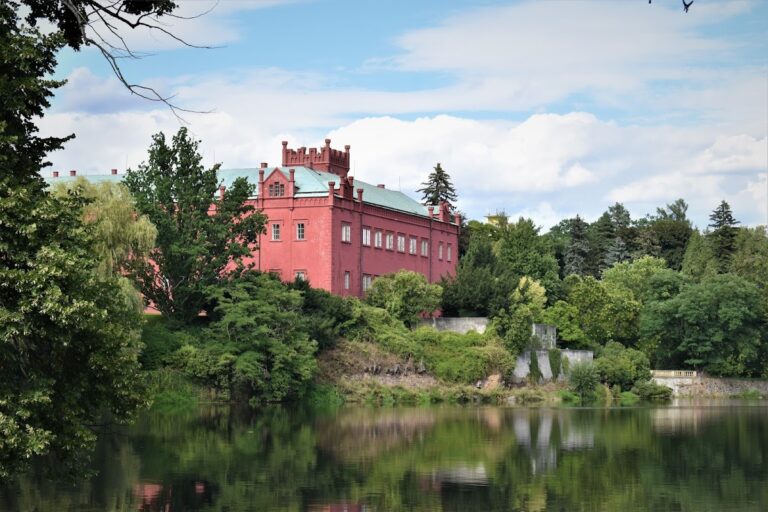
On 30 October 1837, Hauenštejn was sold to Countess Gabriele Buquoy during the sale of the state estates. The Buquoy family retained the property until 1945. Gabriele Buquoy began rebuilding it in the Romantic style, which favored picturesque historical forms. Ferdinand Buquoy continued the work under the influence of historicism, an approach that deliberately adapted or combined earlier architectural styles. The designs drew on English castles including Windsor, Arundel, Belvoir, Lancaster, and Oxford, as well as the Bavarian castles of Hohenschwangau and Lahneck.
War, state ownership, and decline
During the Second World War, Hauenštejn was used as a Hitler Youth center and for experiments involving snakes. A snake of the genus Coluber was reportedly placed there to combat the adder, and a serum was reportedly developed at the site and later used by Field Marshal Erwin Rommel in Africa.
After the war, the state confiscated the castle. Under the communist regime, it first provided accommodation for uranium miners from Jáchymov and was later used by a youth organization. Reconstruction in 1947 was followed by use as a recreation center for the Jáchymov mines, and the complex housed a children’s reception home until 1958. After that, Hauenštejn ceased to be used and deteriorated. District authorities made repeated attempts to secure reconstruction, but sufficient funding and support could not be found. After 1982, demolition was considered, with the tower proposed for retention, while heritage authorities maintained protection of the complex.
Protection and restoration
Hauenštejn has been protected as a cultural monument since 1964. After 1992, the castle and chateau came under the administration of the municipality of Krásný Les, which unsuccessfully sought a buyer. Pavel Palacký purchased Hauenštejn from the municipality in 1999–2000 and began restoration with an expanding group of collaborators. Palacký, a descendant of the historian and politician František Palacký, continues the private restoration and development of the property.
Remains
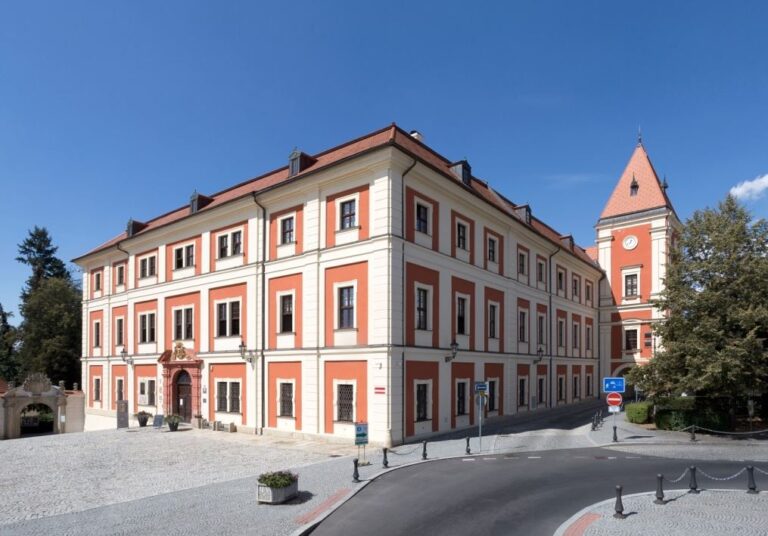
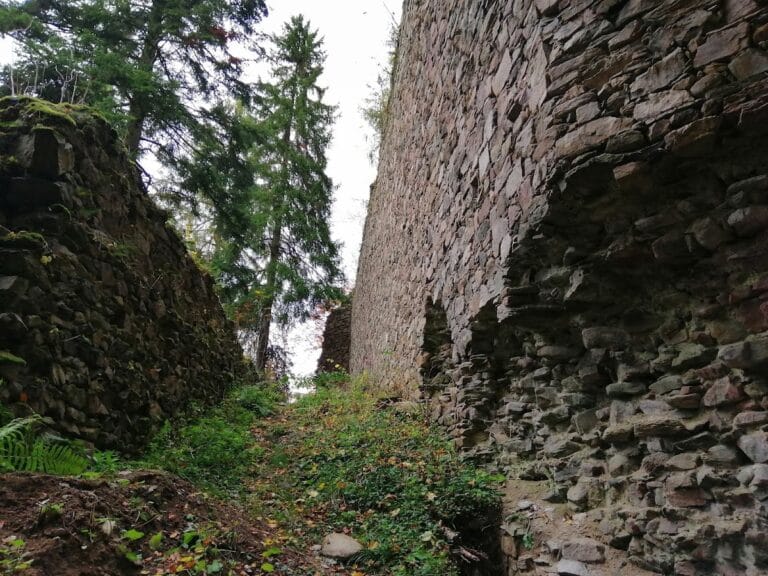
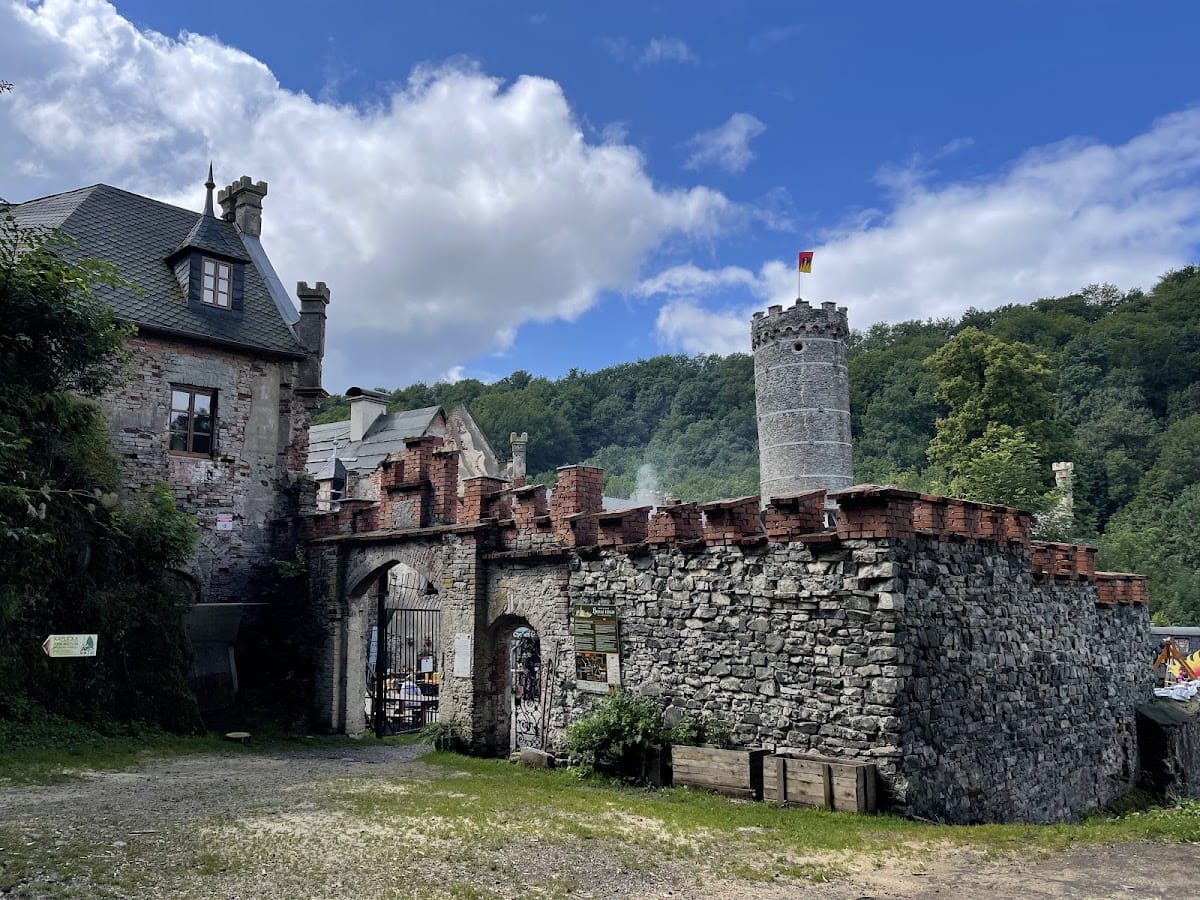
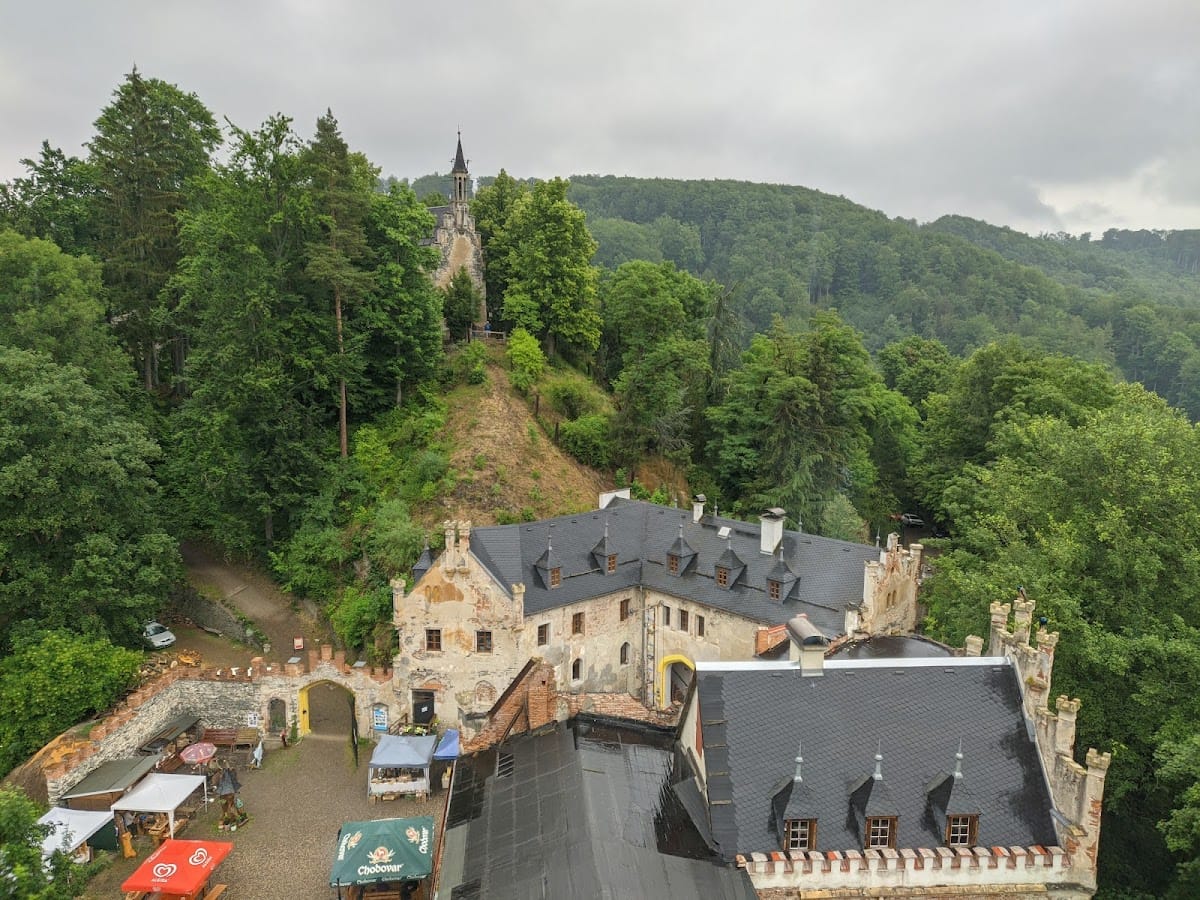
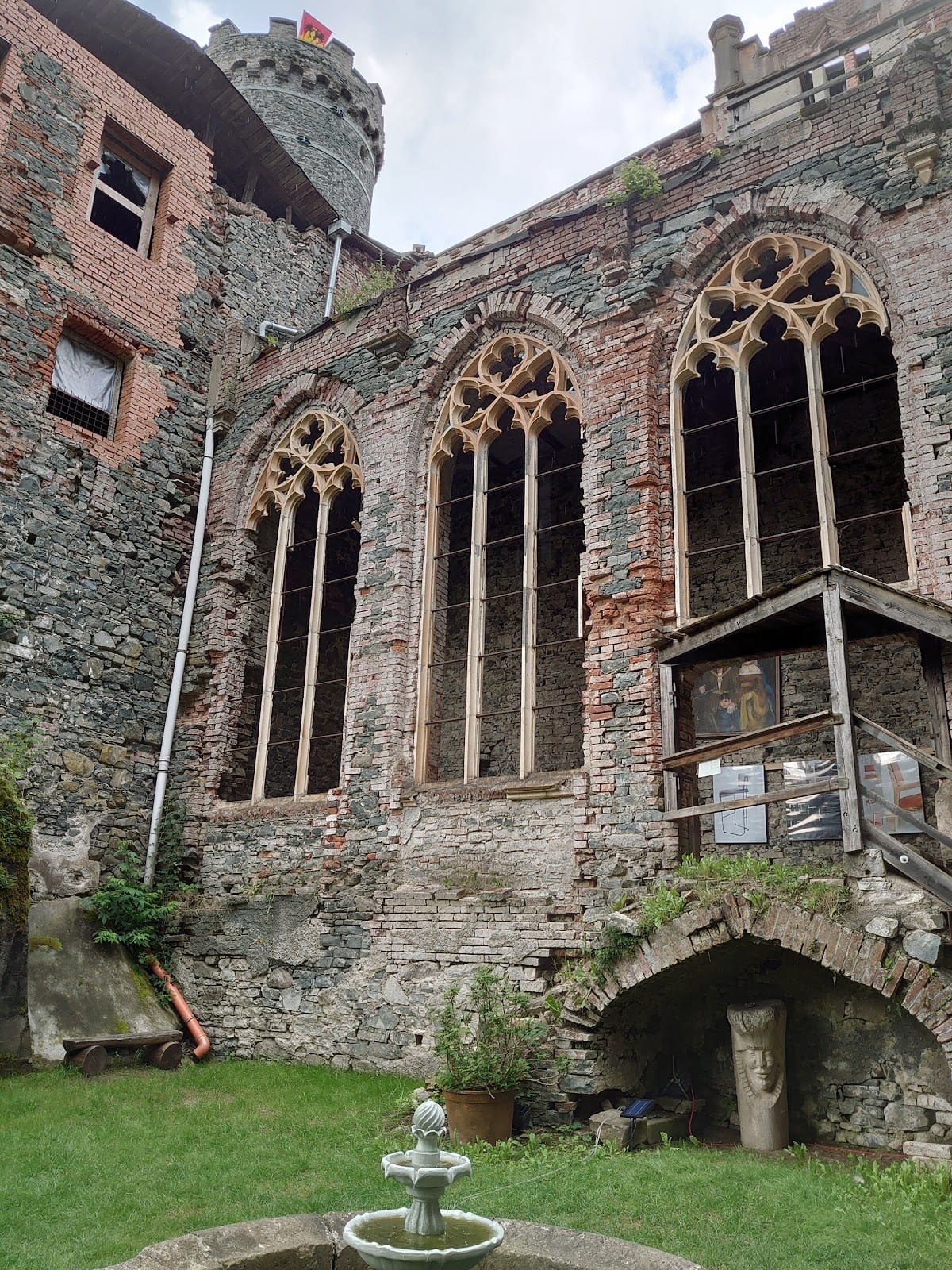
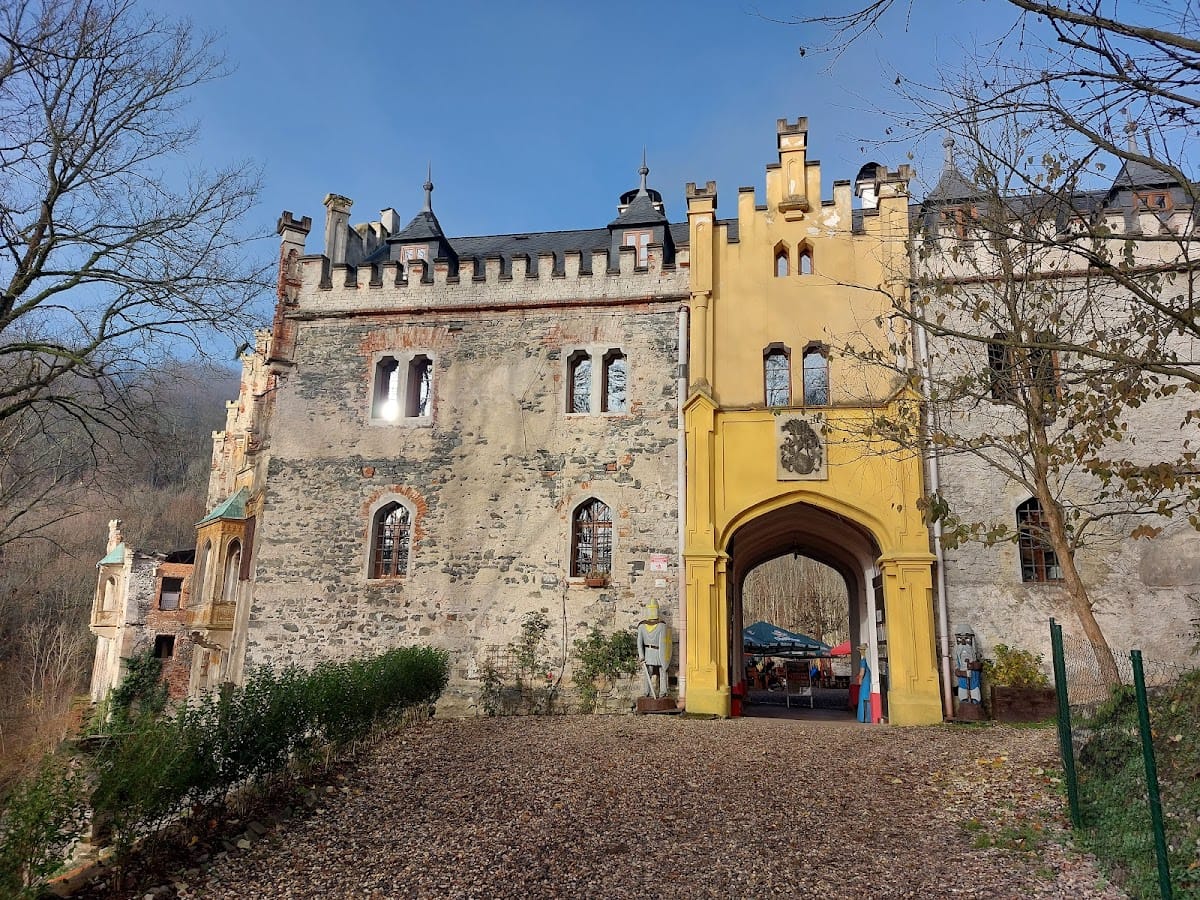
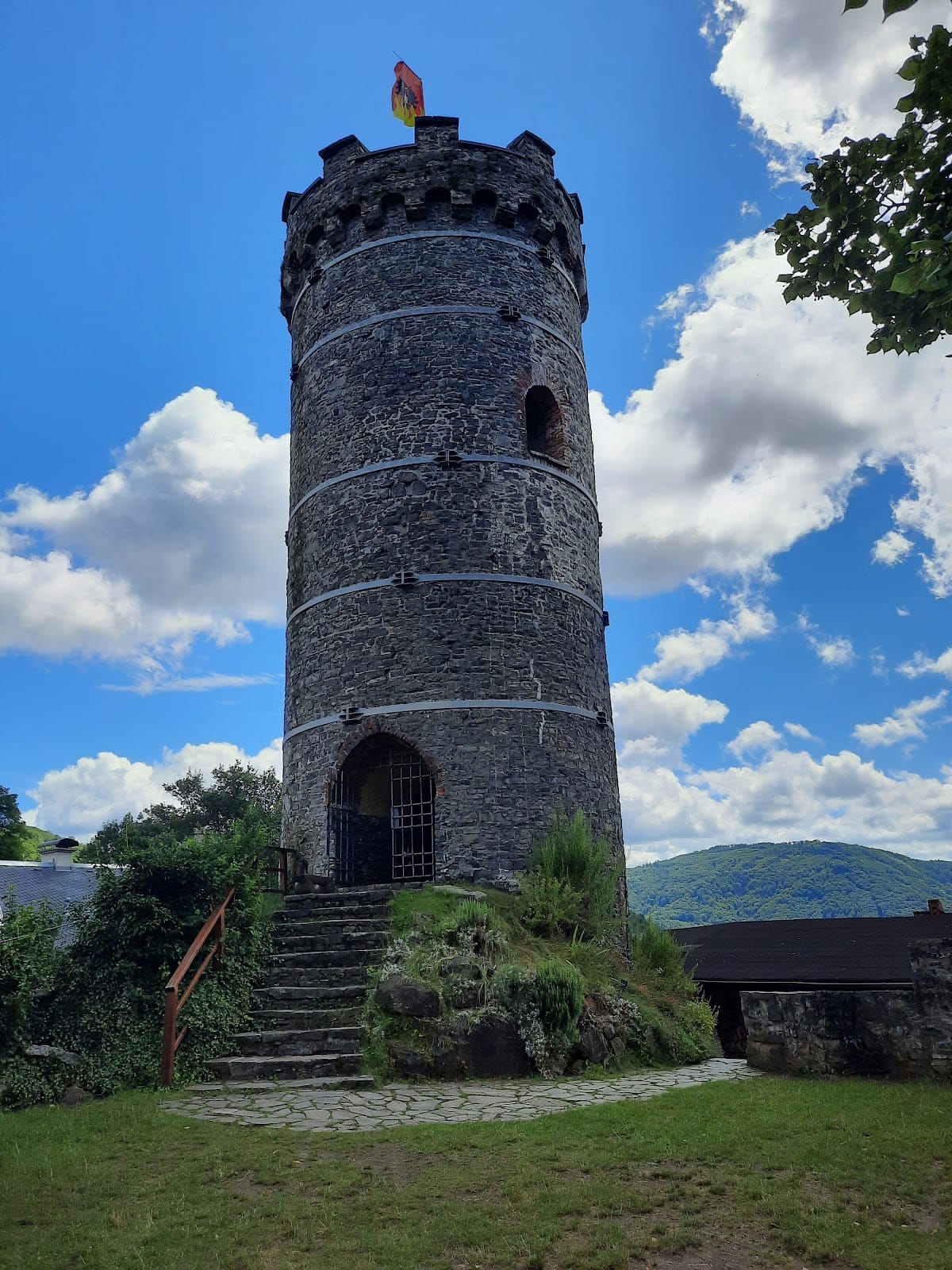
Hauenštejn combines the remains of a Gothic castle with later Renaissance, Romantic, and historicist rebuilding. The complex includes a tower, a courtyard, and chateau structures shaped by successive alterations. A shorter approach reaches a reconstructed chateau gate, while a second route leads to the castle courtyard and offers a view of the tower.
Castle complex
Gate and courtyard
The reconstructed chateau gate forms the destination of the shorter approach to the complex. Another route leads into the castle courtyard, where the later chateau buildings are arranged around the earlier fortified core. The courtyard belongs to the surviving castle complex and reflects the transformation of the medieval stronghold into a residence.
Tower
The castle tower remains a defining part of Hauenštejn’s medieval core. Its importance was also reflected in proposals made after 1982 to demolish the deteriorated complex while retaining the tower. The tower’s survival preserves a visible element of the original Gothic castle within the later Renaissance and historicist architectural setting.
Chapel and botanical grounds
Hornohrad Chapel
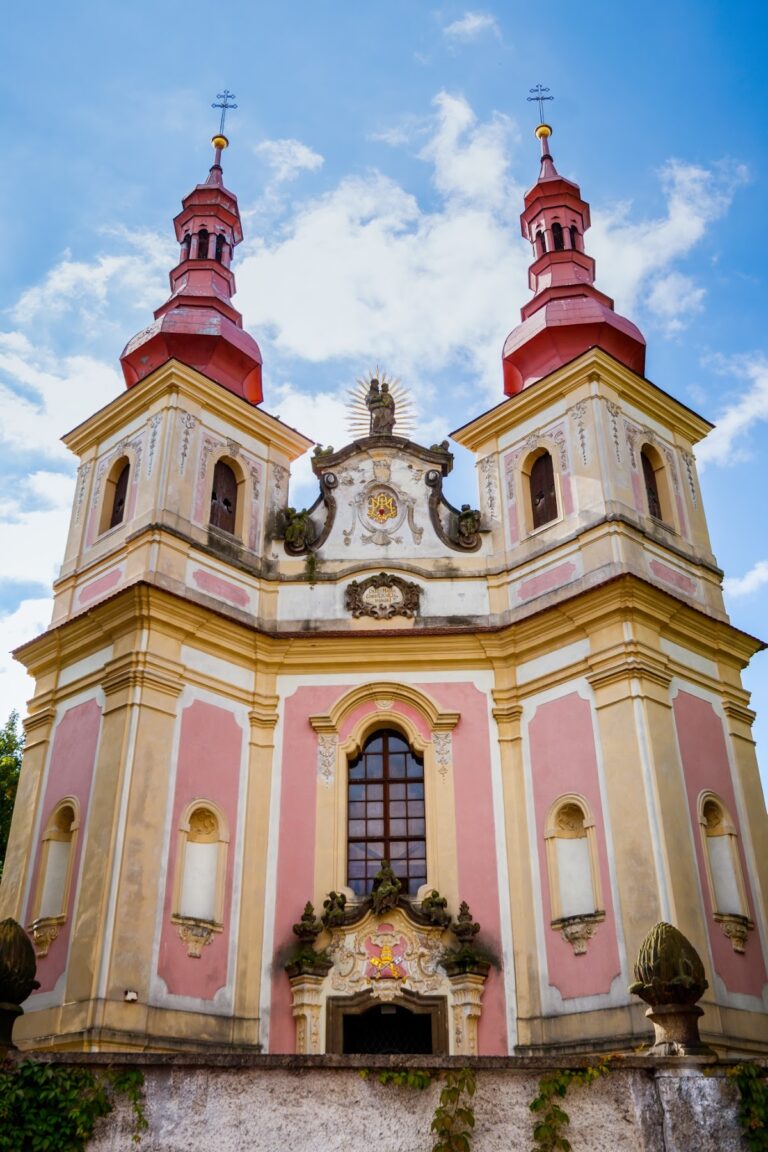
Hornohrad Chapel stands on a 465-meter hill above the chateau. Its interior includes a surviving wooden bench and new benches provided for continued use. The chapel also serves as an exhibition space. A wooden statue of Saint Wenceslaus is displayed inside. Saint Wenceslaus was a tenth-century duke of Bohemia who became the kingdom’s principal patron saint. Petr “Hroch” Binder made the statue for his pilgrimage to the Vatican in 2007, where the pope blessed it.
Botanical garden and arboretum
A botanical garden and arboretum beside the chapel was founded in 1971 by Jaroslav Hejtík and is now managed by his son, Jakub. An arboretum is a garden devoted primarily to cultivating and studying trees and other woody plants. The grounds contain deciduous and coniferous trees, including specimens from Japan, China, Korea, and North America, together with traditional and less familiar perennial plants, rock-garden plants, and medicinal plants.