Hatnub: An Ancient Egyptian Alabaster Quarry Complex
Site at a Glance
- Popularity
- Medium
- Country
- Egypt
- Primary era
- Bronze Age
- Eras represented
- Bronze Age
- Civilizations
- Egyptian
- Site type
- Economic
- Remains
- Quarry
On this page9 sections
History
Ancient quarrying and royal demand
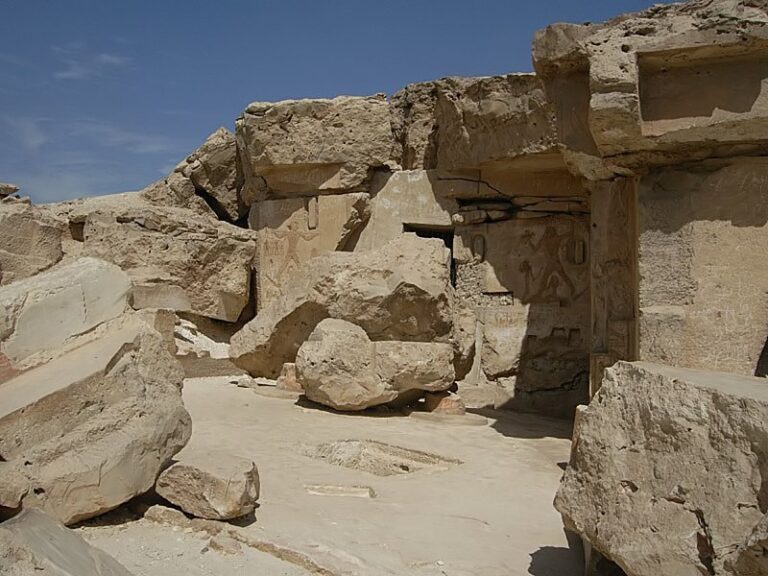
Hatnub is an ancient Egyptian alabaster quarry complex and seasonal workers’ settlement in Egypt’s Eastern Desert, about 65 km from el-Minya and southeast of el-Amarna. It was used intermittently from at least the reign of Khufu, a Fourth Dynasty king of the Old Kingdom associated with the Great Pyramid, through the Roman period, until about AD 300.
The stone was valued for its quality. Inscriptions used the phrase “alabaster of Hatnub” to identify that quality, and royal requests for shipments describe stone intended for temples and funerary buildings. The official Weni’s tomb at Abydos recounts expeditions he undertook under Merenre I, a Sixth Dynasty king of the Old Kingdom, including a journey to Hatnub to obtain material for the king’s pyramid.
New Kingdom pottery, from a period conventionally dated to about 1550 to 1070 BC, shows that quarry workers were active there during this era as well.
Modern investigation
Percy Newberry and Howard Carter first described Hatnub in modern times in 1891. Members of their expedition, George Willoughby Fraser and Marcus Worsley Blackden, also described the quarry’s rock inscriptions. Research then concentrated for decades on reading those inscriptions. Ian Shaw and his team later examined the physical remains, bringing material evidence together with the written record.
In 2018, researchers from the University of Liverpool and the French Institute of Oriental Archaeology announced the discovery of an ancient ramp. Its possible relevance to the construction of Khufu’s Great Pyramid has been proposed, but the connection is not established.
Remains
Quarries and settlement
Quarry workings
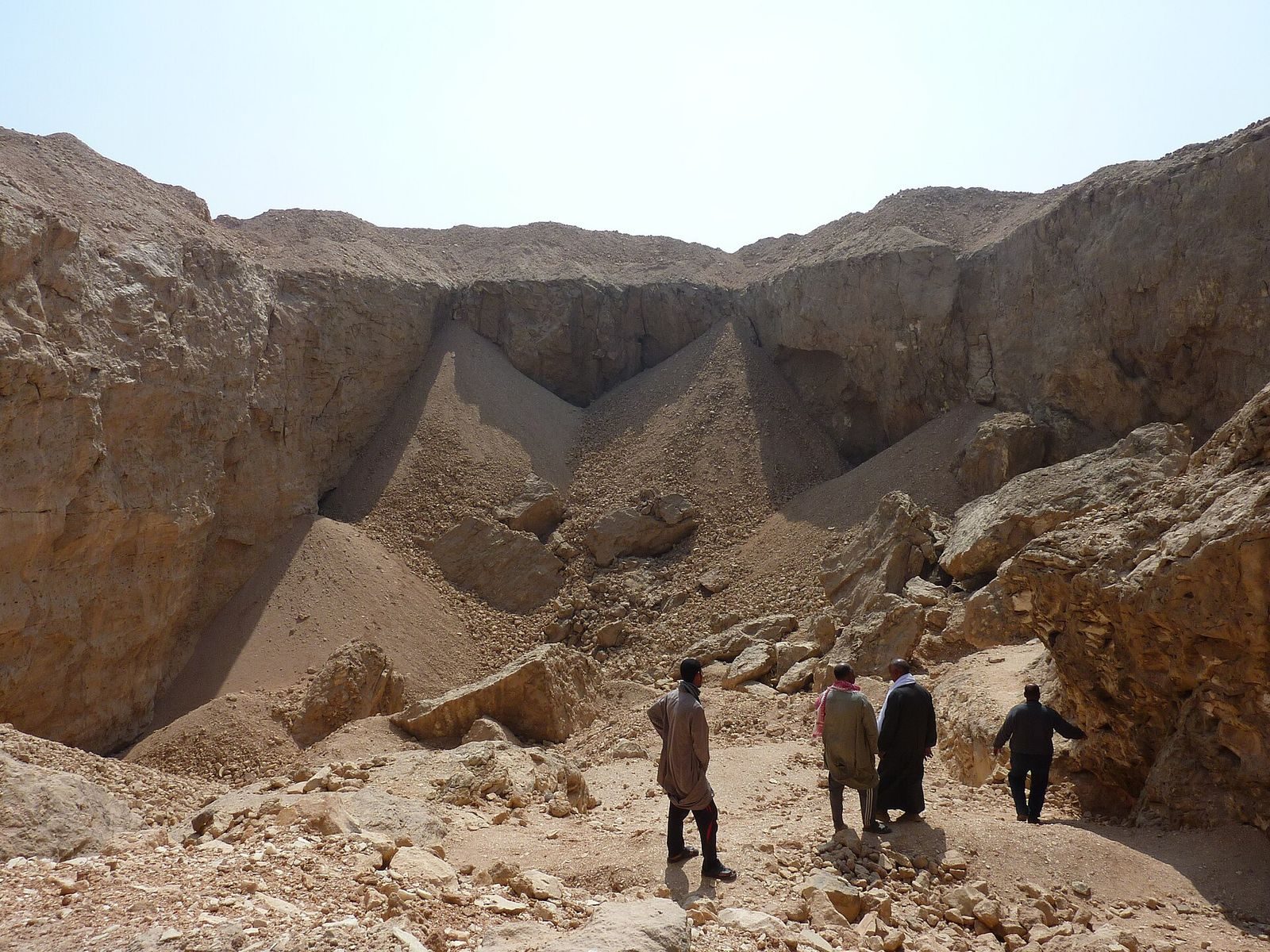
The complex was associated with three principal quarries, with Quarry P identified as the main one. Hatnub’s alabaster is calcite, a form of calcium carbonate, used widely to make vases.
Workers’ settlement
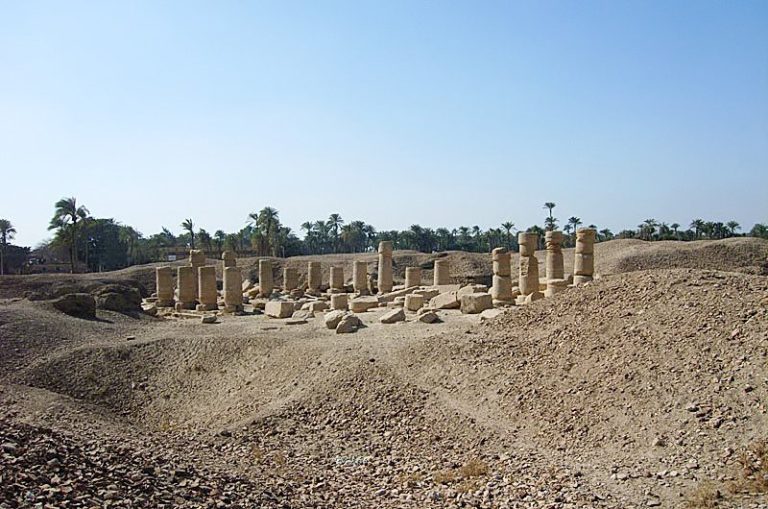
Surviving features of the seasonal settlement include windbreaks built by laying stones without mortar, along with roads and causeways. Stone mounds, known as cairns, and stone alignments also formed part of the settlement remains.
Ramp
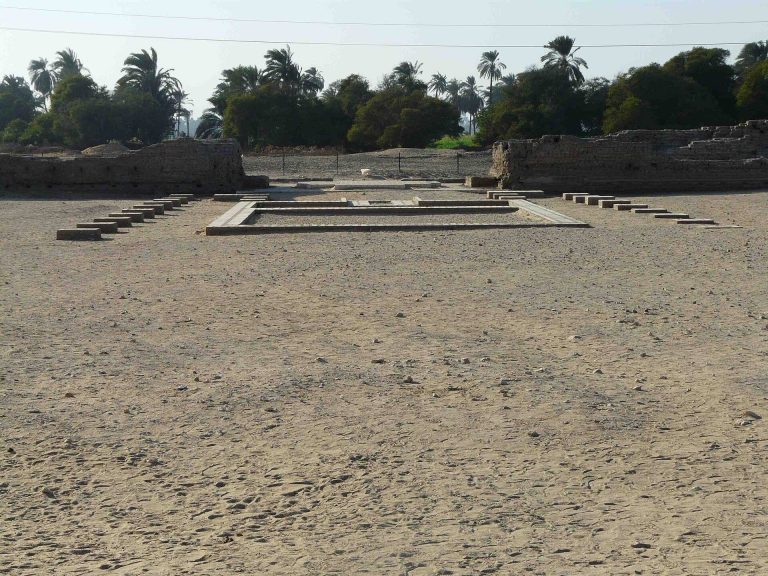
The well-preserved ramp dates to Khufu’s reign. A central sloping track runs between two stairways, with numerous holes for wooden posts. Ropes attached to posts could secure a sled carrying a stone block, allowing it to be hauled up slopes of 20 percent or steeper.
Stone vessels
Stone vessels from the Step Pyramid complex bear Hatnub’s name, identifying the quarry as the source of their stone.