Gumyō-ji Temple: Yokohama’s Historic Buddhist Temple


Site at a Glance
- Rating
- 4.2
- Popularity
- Medium
- Country
- Japan
- Primary era
- Medieval
- External website
- Open
- Eras represented
- Medieval, Early Modern
- Civilizations
- Ashikaga shogunate, Tokugawa
- Site type
- Religious
- Remains
- Temple
On this page15 sections
History
Gumyō-ji Temple is a Buddhist temple in Yokohama, Japan, regarded as the city’s oldest temple and generally associated with the late Heian period. Formally named Zuio-zan Renge-in Gumyō-ji, it belongs to the Kōyasan branch of Shingon, an esoteric Buddhist tradition founded in Japan by the monk Kūkai. The temple’s principal image is an eleven-faced Kannon, a Buddhist bodhisattva associated with compassion, and the site is also popularly called Gumyō Kannon. Gumyō-ji is traditionally identified as the fourteenth temple on the Bandō Sanjūsankasho, a pilgrimage circuit of thirty-three Buddhist temples in the Kantō region.
Early foundation traditions
Temple tradition places the earliest activity at Gumyō-ji in 721, when the Indian monk Śubhakarasiṃha is said to have established a ritual boundary. In 737, Gyōki, a Japanese Buddhist priest known for religious and public works, is traditionally believed to have carved the Kannon image and founded a temple building at the site. These foundation accounts belong to the temple’s religious tradition rather than to securely documented history.
Another tradition connects the temple with Kūkai during the Kōnin era in the early ninth century. He is said to have carved and enshrined a statue of Kangiten, also known in Japan as Shōten, a Buddhist deity associated with paired elephant-headed forms. Kūkai is also traditionally said to have performed the goma, a ritual fire ceremony in esoteric Buddhist practice, at the site 1,000 times.
Late Heian establishment
A more securely placed phase in the temple’s development came in 1044, when a priest established a main hall with a tiled roof. The date corresponds approximately to the estimated period of the principal Kannon image, and this phase is therefore regarded as the likely historical establishment of Gumyō-ji. The temple is consequently generally dated to the late Heian period, the era of Japanese court culture from 794 to 1185.
Medieval patronage and changing identity
During the Kamakura period, the era of Japan’s first warrior government, Gumyō-ji served as a prayer temple for successive members of the Minamoto clan. Minamoto no Yoritomo, founder of the Kamakura shogunate, is described as a major patron. The temple’s name was written with different characters during this period. It was later changed from a character meaning “seek” to one meaning “broad” or “vast,” reportedly adopting the latter character from a Buddhist verse associated with Kannon and pronounced in the same way.
During the Sengoku period, an age of widespread civil warfare before 1600, the warlord Hōjō Sōun granted Gumyō-ji estates for its support. Under the Tokugawa shogunate in the Edo period, which lasted from 1603 to 1868, successive shoguns granted the temple lands under red-seal documents, official grants marked with the shogunate’s red seal. Gumyō-ji also attracted devotion as the fourteenth temple on the Bandō pilgrimage route.
Meiji disruption and revival
The early Meiji period brought severe institutional losses. During the Haibutsu kishaku movement, an anti-Buddhist campaign associated with the early Meiji state, the temple’s estates and its red-seal lands were confiscated. By the middle of the Meiji period, Gumyō-ji had lost its resident priest, temple traditions, treasures, and records, including the succession genealogy of its head priests.
Watanabe Kankyoku became head priest in 1901. A Gumyō-ji preservation association was then established, supporting the temple’s revival and work connected with the surrounding community. The railway brought a major change to the precinct in 1930, when the Keikyū line was built through the temple grounds. Most of the former northern estate was transferred to Yokohama and became Gumyō Park, while Gumyōji Station opened on the northern side. Later privatization of land around the station reduced the temple estate to approximately one-fifth of its former size.
Gumyō-ji remains affiliated with the Kōyasan branch of Shingon Buddhism. In 2004, it served as the office of a voluntary Shingon Buddhist group that explored the application of Buddhist ideas to psychological support in terminal medical care. The eleven-faced Kannon, the temple’s principal object of worship, is designated a National Important Cultural Property.
Remains
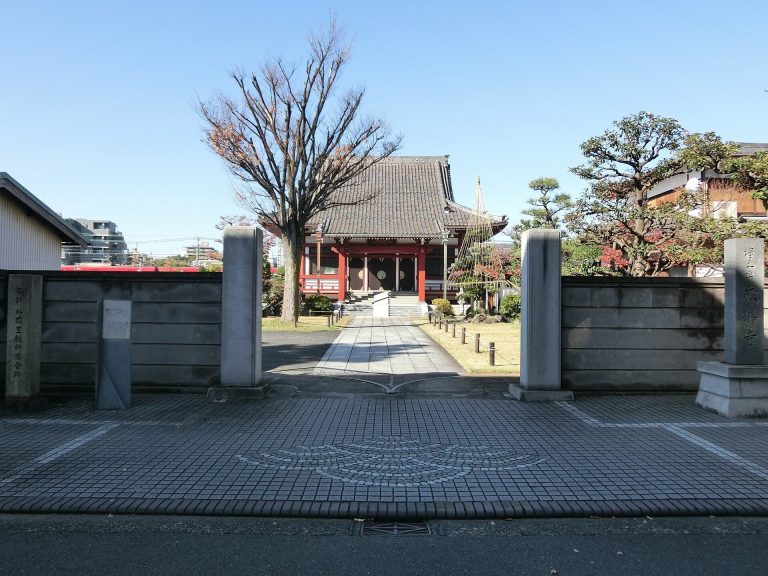
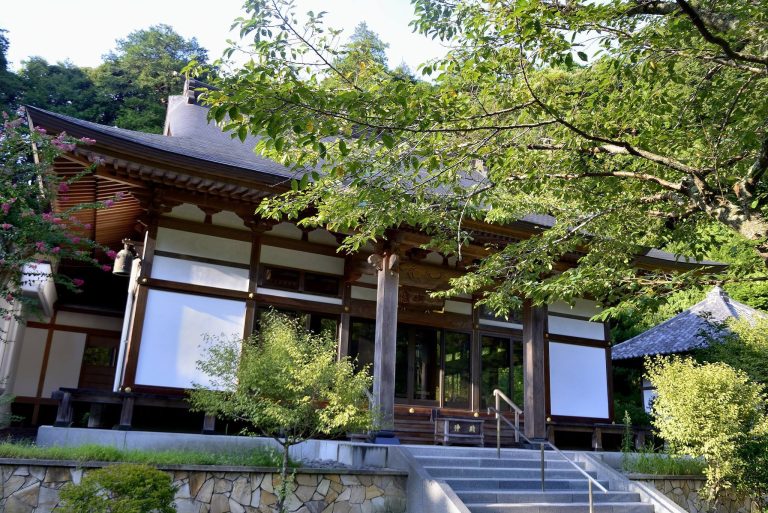
The surviving temple complex occupies the area reached from the southeast through the Niō Gate. Stairs rise to the main temple level, where the main hall stands directly ahead. A bell tower and the Fūseki Gate are positioned on the right, while the Daishidō, a hall dedicated to the temple’s founder, stands on the left. The Fūseki Gate leads toward the abbot’s and monks’ quarters, giving the precinct a layout organized around the approach to the sanctuary and its adjoining religious buildings.
Main sanctuary and sacred images
Main hall
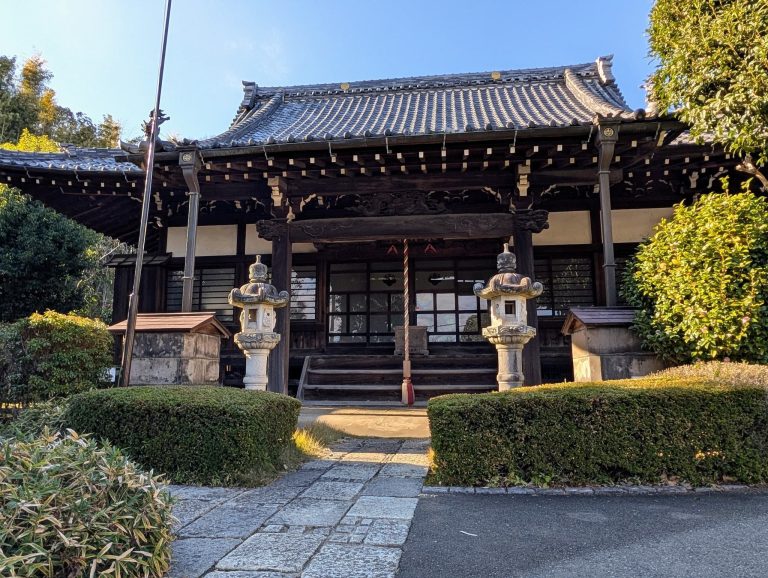
The present main hall is associated with the 1044 rebuilding phase and has a pyramidal roof. Timber from that construction was reused in the existing structure, including beams, rafters, and floorboards. The surviving fabric therefore preserves material connected with the period regarded as the temple’s historical establishment.
Eleven-faced Kannon
The principal image is a standing eleven-faced Kannon measuring 181.7 centimeters in height. It was carved from a single piece of zelkova and is regarded as a representative example of hatchet carving, a technique using broad cuts made with an axe or similar edged tool. Work with a round chisel also supports an attribution to the middle or later Heian period.
The image is traditionally treated as a hidden Buddhist image, yet it can be viewed from within the sanctuary. Its popular name, Gumyō Kannon, links the sculpture directly with the identity of the temple and its pilgrimage tradition.
Daishidō and sacred stones
The Daishidō stands on the left side of the complex and is dedicated to the temple’s founder. The grounds also contain the Seven Stones, seven large stones traditionally said to have been buried by Śubhakarasiṃha when he established the ritual boundary. They continue to be venerated as sacred stones.
Gates and associated structures
Niō Gate
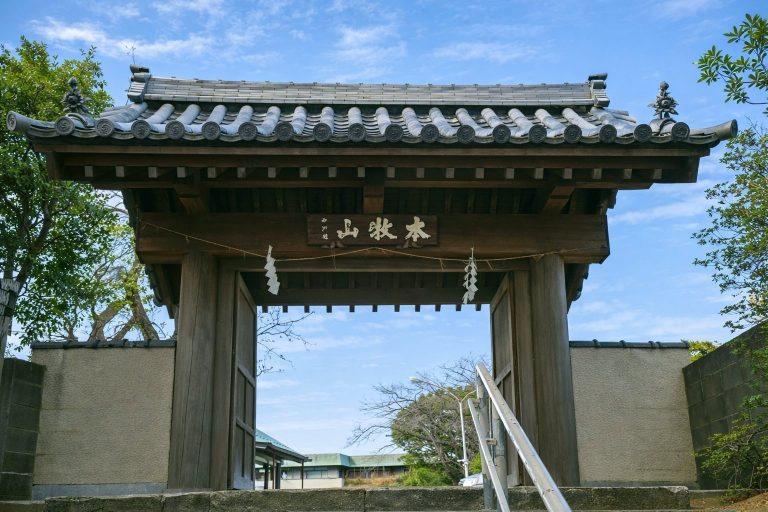
The Niō Gate forms the main entrance to the temple complex. Traditionally dated to the Edo period, it contains the Niō, paired Buddhist guardian figures, on either side of the passage. Its position at the southeast entrance establishes the principal approach to the stairway and the main temple level.
Fūseki Gate
The Four-Legged Gate, also called the Fūseki Gate, was built in 1411 and is described as the oldest gate in Yokohama. Standing on the right side of the complex, it provides access toward the abbot’s and monks’ quarters. Its survival adds a medieval structure to a precinct otherwise shaped by several later periods.
Bell tower and temple objects
A bell tower stands near the Fūseki Gate. The temple’s cultural-property holdings also include a pair of black-lacquered wooden vases, each 70 centimeters tall. Made from zelkova, they bear an inscription recording repairs in 1590. A temple bell dated 1798 is also associated with the site.
Former grounds and surrounding landscape
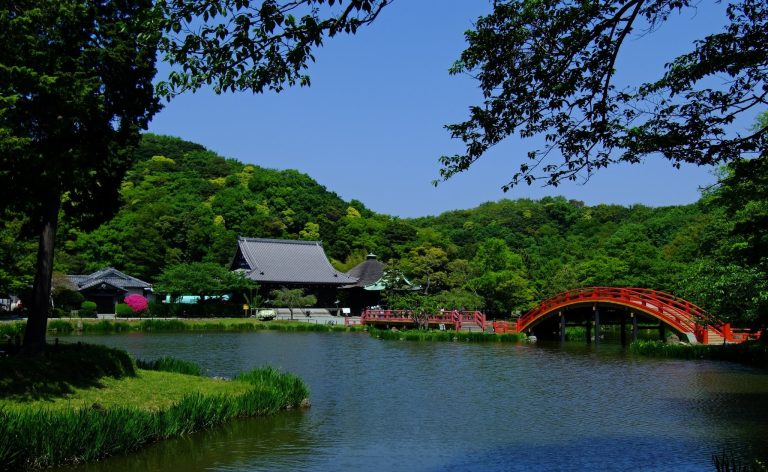
The former temple grounds now include Gumyō Park, which occupies elevated land west of the railway line. Part of the former cemetery area was retained there. The Ōoka River passes through the center of Gumyōji Shopping Street, and its banks are noted for cherry trees, linking the surviving temple precinct with the wider landscape shaped by the reduction of the historic estate.
A statue known as the Substitute Jizō was donated by Keikyū Railway in 2001. Jizō is a bodhisattva traditionally associated with protecting travelers, children, and other vulnerable people. The statue forms part of the later material history of the temple grounds and their relationship with the railway that crossed the former estate.