Gudsberga: The Last Cistercian Abbey Founded in Medieval Sweden
Site at a Glance
- Popularity
- Medium
- Country
- Sweden
- Primary era
- Medieval
- Eras represented
- Medieval
- Civilizations
- Swedish
- Site type
- Religious
- Remains
- Monastery
On this page6 sections
History
Foundation and affiliations
Gudsberga was a Cistercian abbey, belonging to a Catholic monastic order, founded in 1477 in Husby parish, Sweden. It was the last Cistercian abbey established in medieval Sweden and was also known by its Latin name, Mons Domini, meaning “Mountain of the Lord.” The knight Ingel Jönsson and his wife Birgitta Sonedotter were its founders.
In 1486, Gudsberga became a daughter house of Alvastra Abbey, meaning it was institutionally linked to that immediate parent monastery. Alvastra belonged to the wider lineage of Clairvaux, the principal abbey in that line. Gudsberga was part of the Diocese of Västerås and established no daughter abbeys of its own.
A 15th-century psalter probably associated with the abbey includes Bridget of Sweden, Helena of Skövde, and Sunniva of Selje among the saints commemorated in the Liturgy of the Hours, the cycle of daily Christian prayers. This regional choice differed from the Cistercian preference for uniform observance. A precedent had been set in 1237, when the Cistercian General Chapter approved Scandinavian abbots’ request to celebrate Saint Olaf, a Norwegian king venerated as a Christian saint.
Mining, confiscation, and dissolution
Gudsberga prospered through local mining, ownership of ironworks, and shares in mines. This economic activity continued at least until 1527, when the Protestant Reformation brought difficulties and the Crown confiscated the abbey. The institution was dissolved in 1538.
The ironworks
An ironworks was established on the site in the 17th century. It was ironically known as “the monastery.”
Remains
Church and convent buildings
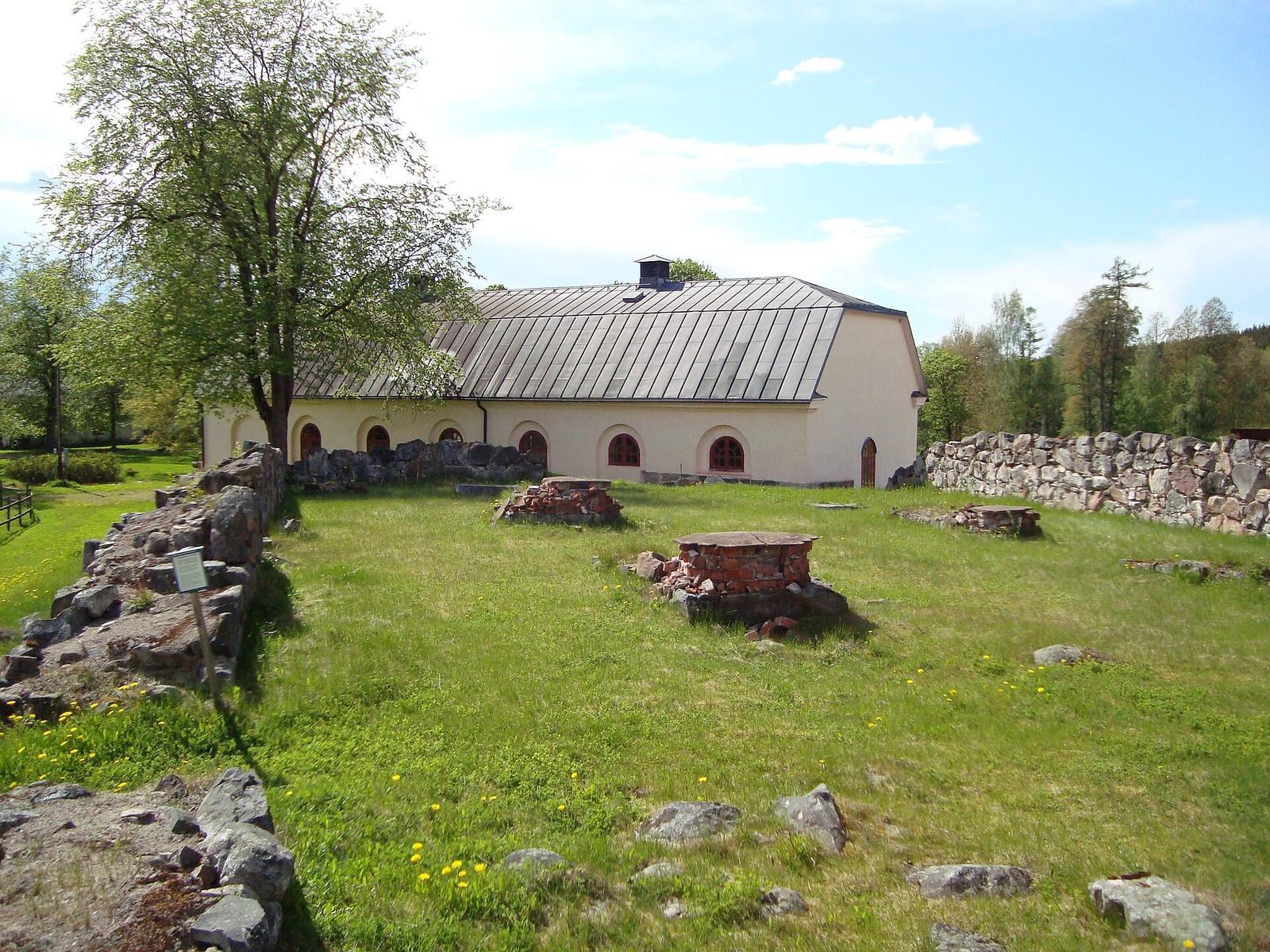
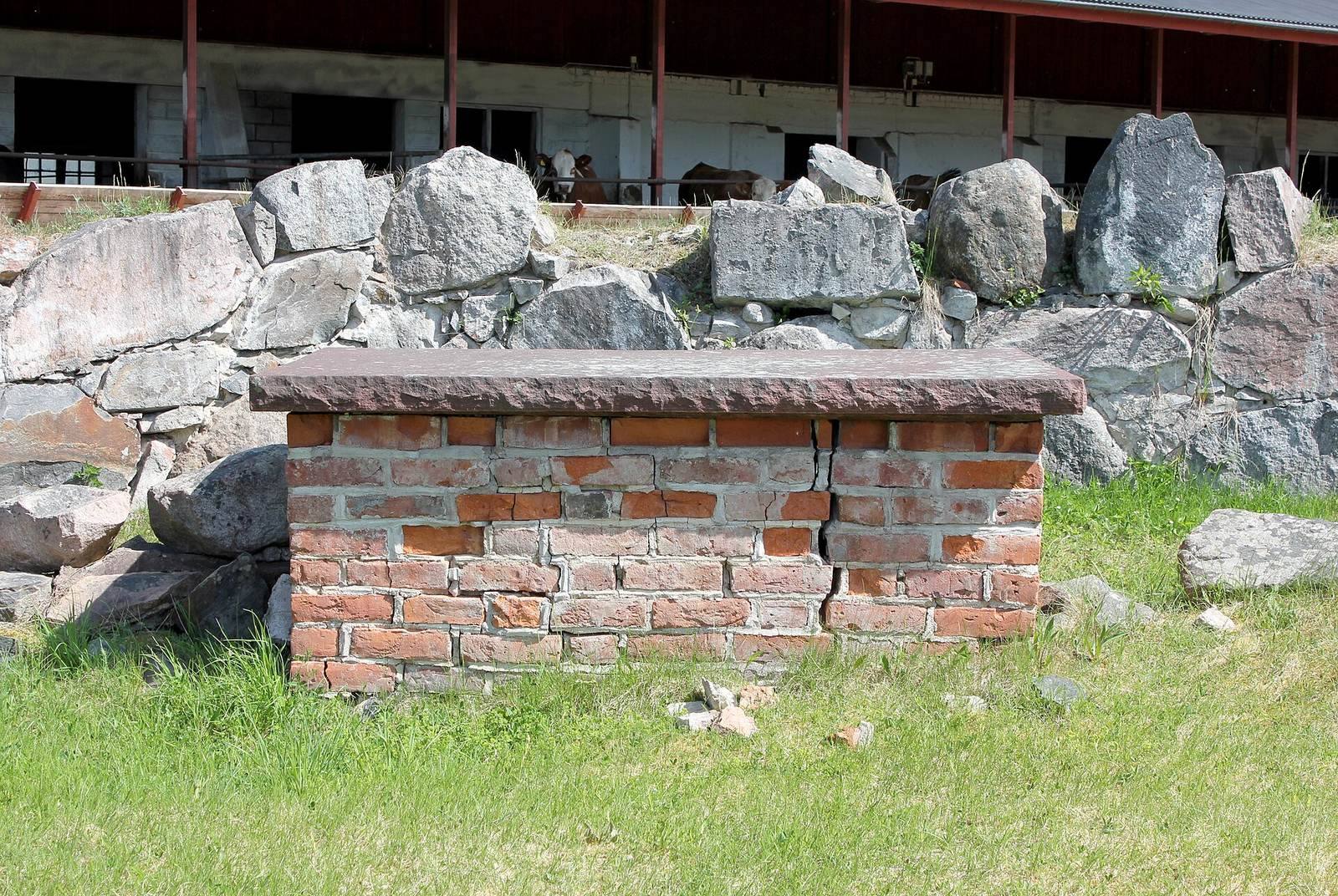
Gudsberga survives as a partly excavated ruin in Ecomuseum Kloster. Its stone church measured 21 by 24 metres and had three aisles and a polygonal choir, the altar-end area with several angled sides. Limestone and lime from the Garpenberg quarry were used in the monastery’s construction. The convent buildings were probably not built of stone.