Greyfriars in Canterbury: England’s First Franciscan Friary
Site at a Glance
- Popularity
- Medium
- Country
- United Kingdom
- Primary era
- Medieval
- Eras represented
- Medieval, Early Modern
- Civilizations
- English
- Site type
- Religious
- Remains
- Monastery
On this page12 sections
History
Arrival and Medieval Friary
Greyfriars in Canterbury is a former Franciscan friary in the United Kingdom, founded in 1224 as England’s first Franciscan house. The Franciscans, also known as the Order of Friars Minor, are a religious order founded by Francis of Assisi.
On 10 September 1224, nine Franciscans led by Agnellus of Pisa arrived at Dover and continued to Canterbury, where Benedictine monks received them. Four friars went on to London, while the other five stayed with the Poor Priests. Alexander of Gloucester, head of Canterbury’s Eastbridge Hospital and a supporter of the order, gave Agnellus and his companions permission to build dwellings in part of the hospital garden.
In 1267, Canterbury alderman and former bailiff John Digge donated further land, and work began on a permanent stone friary able to house about 35 brothers. Archbishop Walter Reynolds consecrated its church in 1325. The friars drew large crowds to their sermons, and Canterbury residents were buried in the cemetery used by the lay brothers, members of the order who were not ordained priests. The friary also held an extensive library.
Observant Reform and Royal Supremacy
In 1498, Canterbury’s house was established as a province of the Observant Franciscans, a reform movement that called for stricter adherence to the order’s rules. Henry VII gave the friary his patronage.
Under Henry VIII, the friars opposed Royal Supremacy, the Crown’s claimed authority over the Church of England. Several were imprisoned in 1534. Two friars and Richard Risby, the head of Canterbury’s Observant friary, were executed for rejecting the Act of Supremacy and supporting Elizabeth Barton. Barton, an English nun and visionary known as the “Holy Maid of Kent,” denounced Henry’s divorce from Catherine of Aragon and his marriage to Anne Boleyn.
Dissolution and Private Ownership
In December 1538, Richard Yngworth, Bishop of Dover and an agent of Thomas Cromwell, accepted the surrender of Canterbury’s friaries, lands and property on the king’s behalf. The Dissolution was Henry VIII’s suppression of England’s monasteries and other religious houses. Greyfriars’ remaining friars agreed not to follow the “superstitious traditions” of a foreign ruler or peer. Each received five shillings, and they dispersed.
The Crown sold the former friary property for £100 to Thomas Spylman, an officer of the Court of Augmentations, which administered property taken from religious houses. Spylman turned it into a private home. The next owner, Thomas Rolfe, substantially changed the grounds and left his estate to his executors, William Lovelace and John Dudley. After Rolfe’s widow disputed the will, the probate courts upheld it, and the estate had passed to the Lovelace family by 1566. The property remained in private hands for centuries.
Later Uses and Modern Stewardship
In the late eighteenth century, a room in the former guesthouse is thought to have served as a temporary prison for people awaiting transportation. The grounds became a tea garden in the nineteenth century. From 1914 to 1994, they operated as a publicly accessible market garden and an important Canterbury business run by the Smith family. The last Smith family member to work in the business had been born in Assisi Cottage, within the gardens.
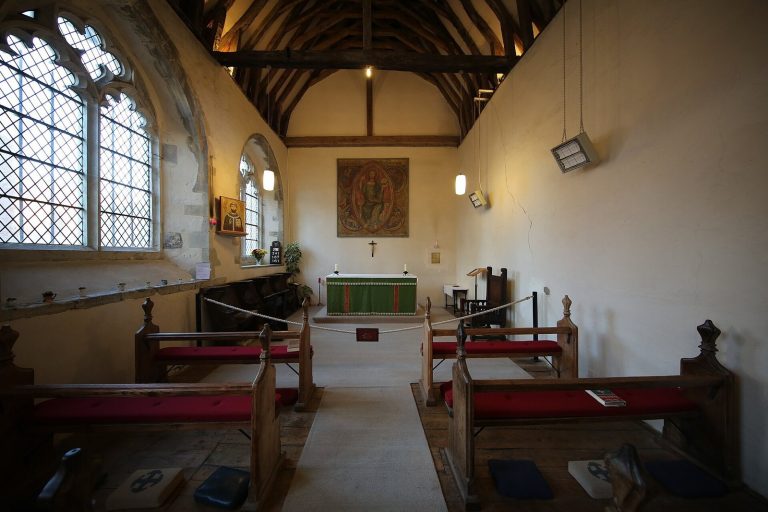
Excavations to find the friary buildings and establish their layout continued through the twentieth century. In 1919, estate owner Major H. G. James commissioned excavations and sought to restore the surviving guesthouse to its original form. In the mid-twentieth century, Dr John Burgon Bickersteth and Harry Jackman modernised the building, adapting its upper rooms as a vestry and chapel in memory of Julian Bickersteth, Archdeacon of Maidstone from 1942 to 1958.
The Dean and Chapter of Canterbury Cathedral, its clerical leadership and governing body, purchased the estate and Franciscan Gardens in 1958. In 2000, the Greyfriars Chapel and gardens were sold to Eastbridge Hospital of St Thomas the Martyr, a historic Canterbury charitable institution associated with hospitality for pilgrims. Anglican Franciscans have prayed in the chapel since 2003, and the hospital oversees the building’s maintenance and weekly services.
Remains
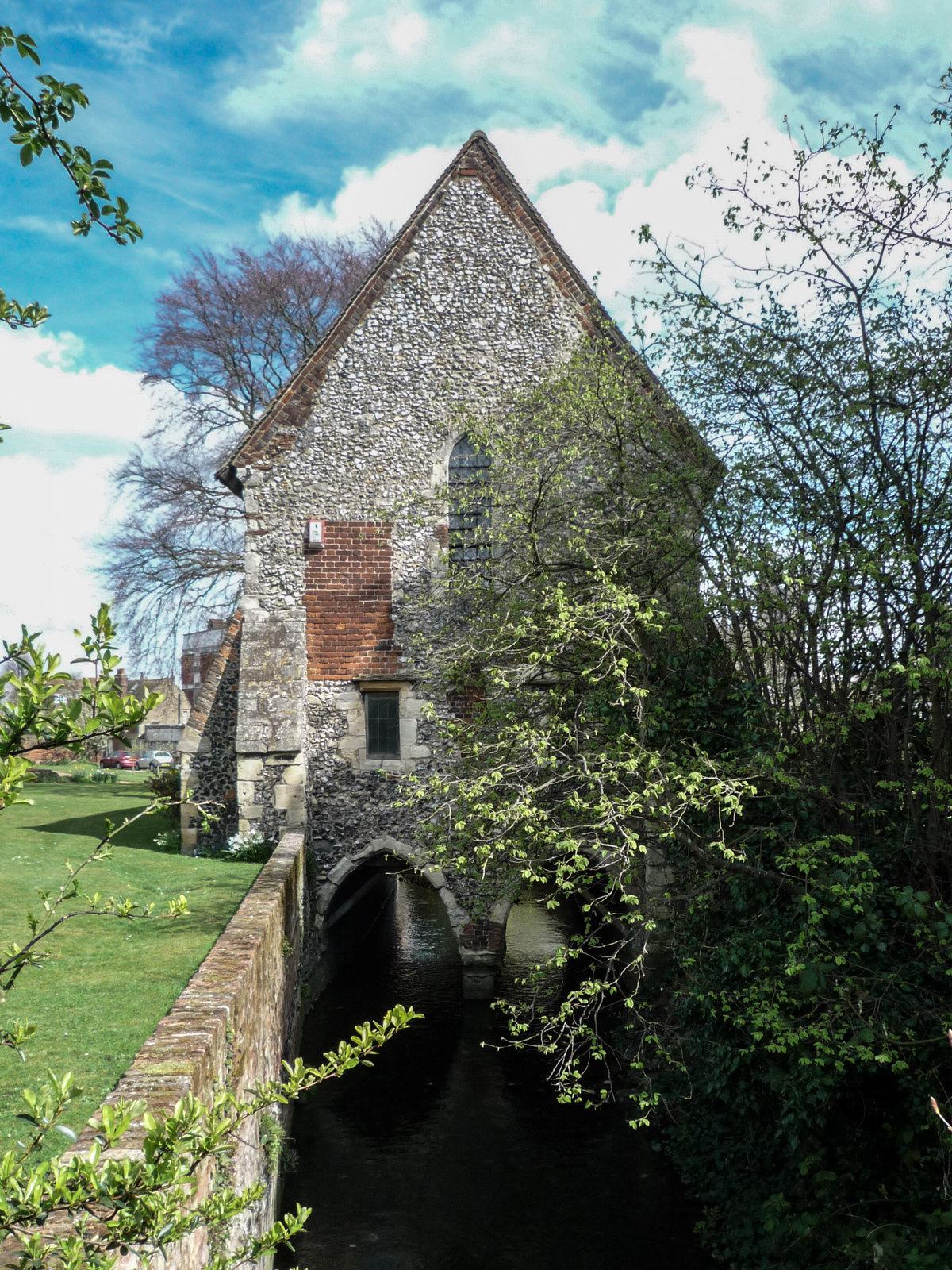
The surviving remains mark several parts of a stone friary begun in 1267. They include church foundations along the eastern edge of the Franciscan Gardens, a thirteenth-century building spanning the river, fragments of bridges and traces of the later estate.
Church and Cemetery
Remnants of the friary church form part of the eastern boundary of the gardens. Excavations have revealed the foundations of the chancel, the area around the main altar. An attached structure to its north is thought to have been a Lady Chapel, a chapel dedicated to the Virgin Mary, while foundations of a separate building have been interpreted as a bell tower. The friary’s cemetery served its lay brothers.
River-Spanning Building
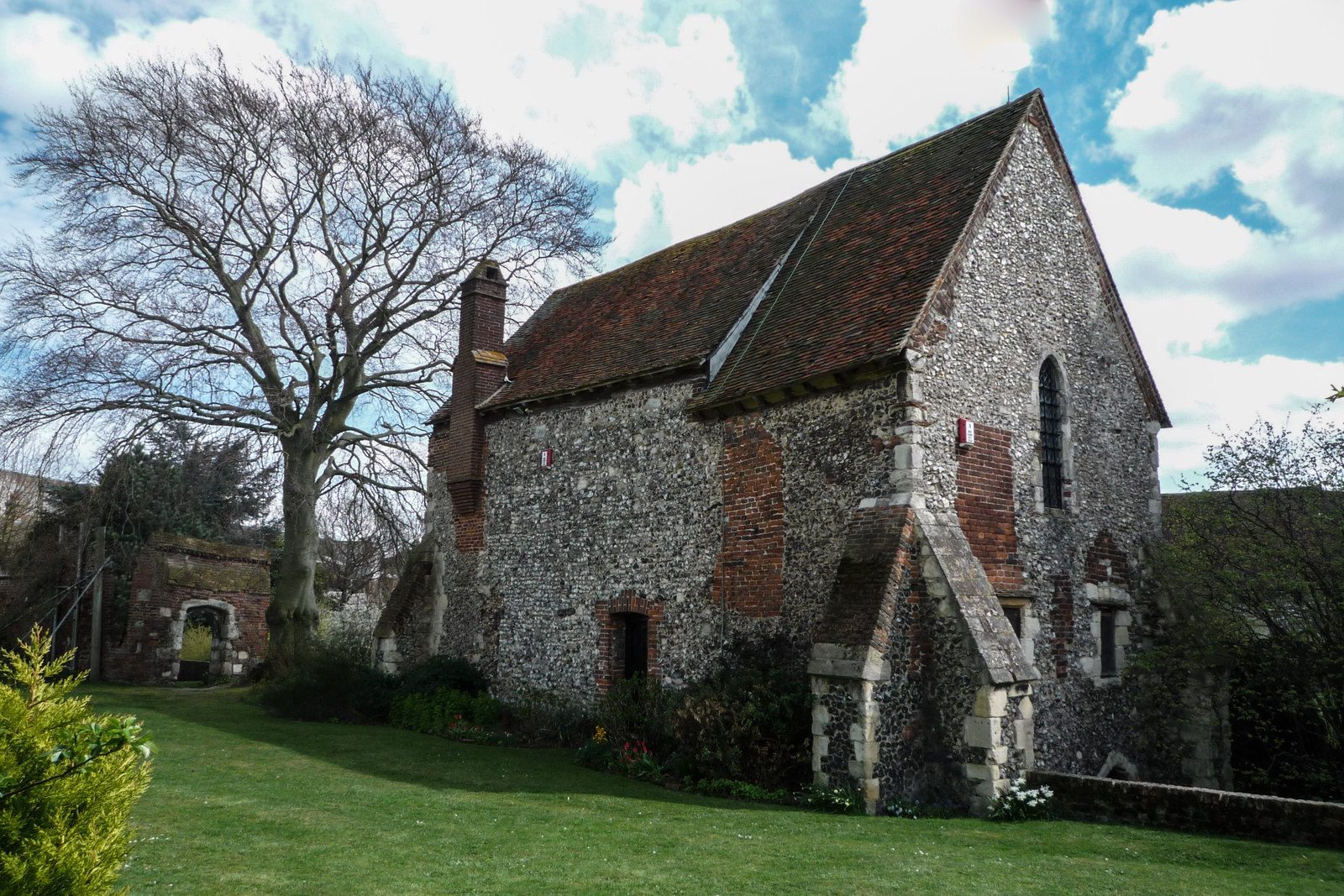
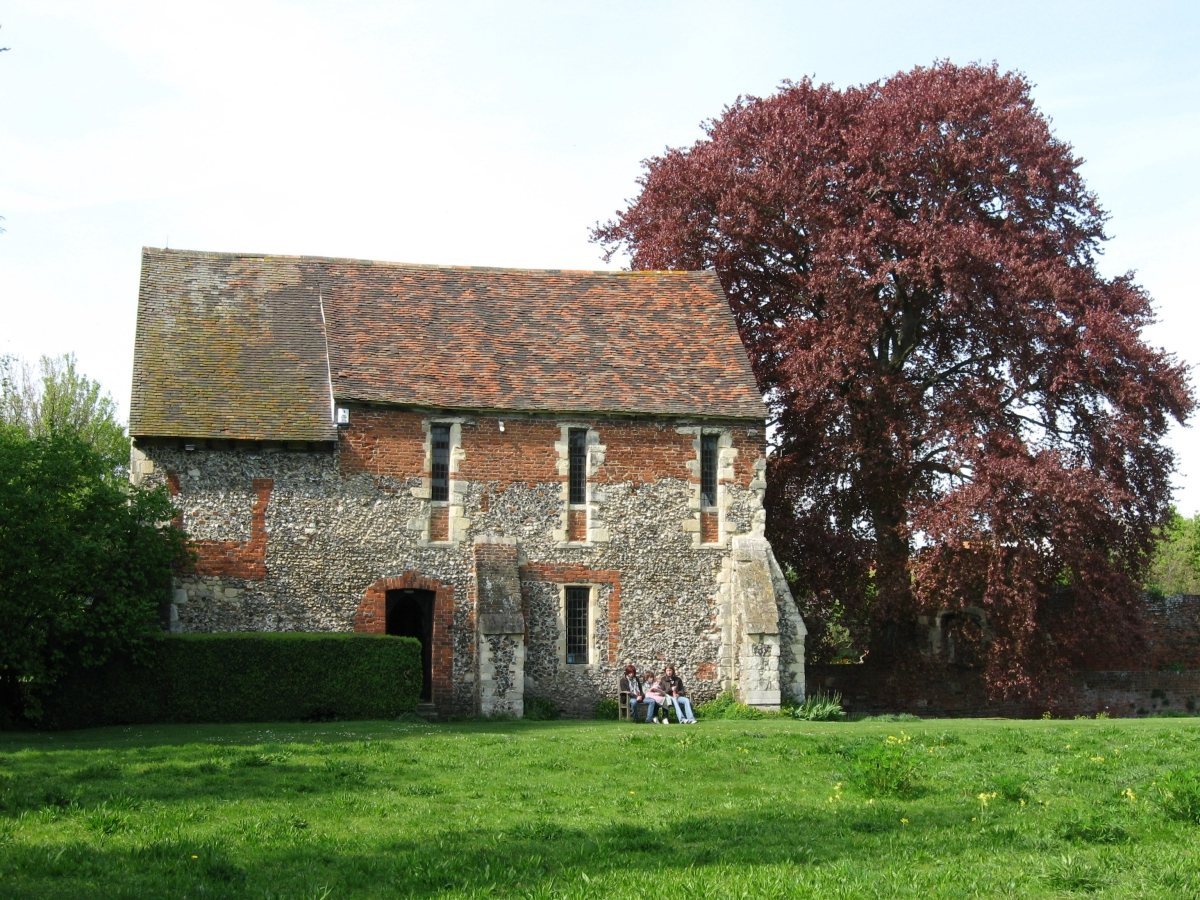
A surviving thirteenth-century building crosses the river. It has been interpreted either as a guesthouse or as accommodation for the friary’s warden, its appointed head. The building is now known as Greyfriars Chapel.
Bridges
Part of a stone bridge crosses the main river channel, with stone bank facings upstream to support and protect the bank. The position of a second bridge has also been established.
Later Estate and Garden
A single wall remains from the buildings that stood under the Lovelace family; it lies across the river from the restored guesthouse. Assisi Cottage, a small residence, also stands within the Franciscan Gardens.
Guesthouse Inscriptions
Names and dates carved into the former guesthouse’s wooden walls survive in the room thought to have been used as a prison. One inscription reads, “T Woollett, November 1819, for 14 days for running.”
Surviving Library Volumes
Some volumes from the friary’s library survive in the British Library and the Bodleian Library at Oxford.