Great Mosque of Amadiya: An Abbasid-Era Mosque in Iraq
Site at a Glance
- Rating
- 4.5
- Popularity
- Medium
- Country
- Iraq
- Primary era
- Medieval
- Eras represented
- Medieval
- Civilizations
- Abbasid
- Site type
- Religious
- Remains
- Mosque
On this page8 sections
History
The Great Mosque of Amadiya is an active mosque in Iraq, founded in 1177 during the Abbasid era, the period of caliphal rule conventionally dated from 750 to 1258. Its architecture is Islamic and Abbasid in style. The mosque has undergone several rounds of rebuilding and renovation.
Fifteenth-century development
In the fifteenth century, Hussein al-Wali, a Muslim sovereign known by the title sultan, oversaw major work at the complex. The minaret was erected during his rule, and the upper section of the prayer hall was built. He also refurbished the historic madrasa, a school for religious learning. It was once the town’s largest educational institution, teaching religious subjects, including Islamic jurisprudence, as well as Arabic.
Damage and repair
A raid in the eighteenth century damaged the minaret’s dome, which was later repaired. In 1961, Iraqi government airstrikes struck the mosque and damaged the minaret’s upper section. That part was subsequently reconstructed using its original stones.
Remains
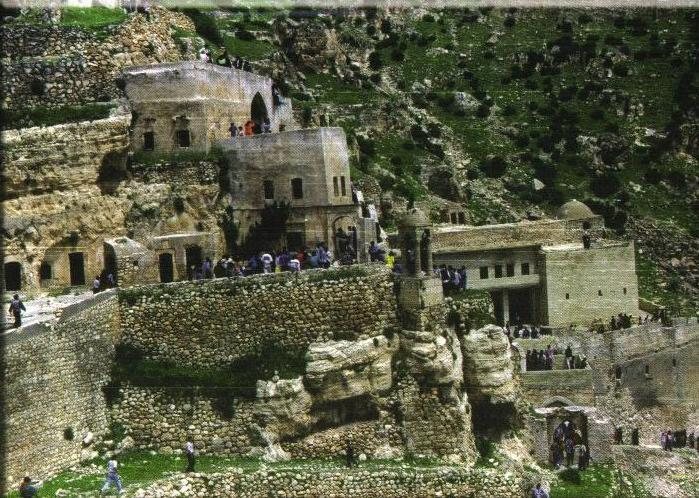
The complex covers 2,000 square metres and can accommodate up to 300 worshippers. It includes the mosque and a historic madrasa, with the mosque to the south of the school. The prayer hall’s arches and domes are built of stone, gypsum plaster and mud.
Mosque structures
Minaret
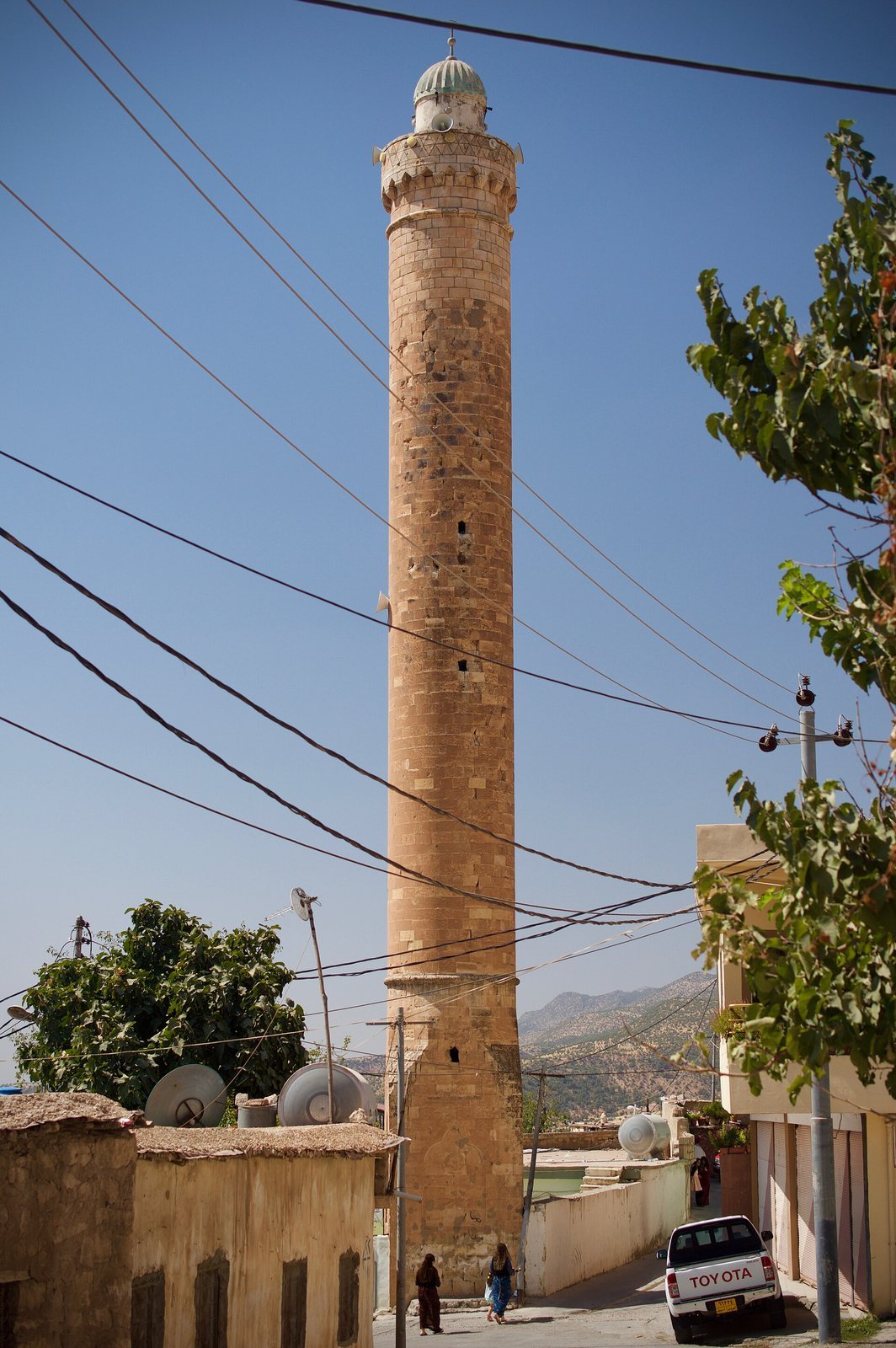
The single minaret rises 30 metres from a square base measuring 3 metres across, then continues as a cylindrical shaft. Its doorway is 1.5 metres wide, and small windows punctuate the structure. A spiral staircase of 103 steps runs within the minaret wall to the top. Its construction date and features are often compared with those of the Great Mosque of al-Nuri, a historic mosque in Mosul.
Prayer hall
The hall has upper and lower sections, with a prayer area for women in the lower section. Its arches and domes use stone, gypsum plaster and mud.
Madrasa
The madrasa includes five rooms for student lodging and two rooms for teachers, as well as a library holding works on Islamic jurisprudence. It retained its architectural form for nearly 615 years.