Gorsium/Herculia: A Roman Provincial City in Hungary
Site at a Glance
- Popularity
- High
- Country
- Hungary
- Primary era
- Classical
- Eras represented
- Classical
- Civilizations
- Celtic, Roman
- Site type
- Settlement
- Remains
- City
On this page17 sections
History
From Eravisci territory to Roman city
Gorsium/Herculia is the site of a Roman city in Hungary whose construction began in AD 103 on the site of a first-century military camp. Before Roman occupation, the area belonged to the Eravisci, a Celtic people of Pannonia. The camp stood at a crossing of the Sárvíz and roads linking Sopianae with Aquincum and Brigetio. Its cavalry unit, the Ala Scubulorum, had about 500 men and guarded the river crossing and nearby routes. After Rome completed its Danube frontier defenses, the unit was transferred elsewhere.
In the early second century, Emperor Trajan chose Gorsium as the seat of the assembly of Pannonia Inferior, a Roman province in the Danube region. The city also became a center for ceremonies honoring the emperor and deified rulers. Its formal recognition as a municipium, a town with standing in the Roman civic system, has no known date; historian István Tóth proposed AD 124, during Hadrian’s tour of Pannonia. Trajan, Septimius Severus, and Caracalla visited Gorsium. At its height, the city covered about 400 hectares, and its inhabitants held Roman citizenship. Before its first major destruction, they included Eravisci, Italian merchants, and veteran soldiers.
Destruction and recovery under the Severans
Around AD 178, the Sarmatians burned Gorsium during the Marcomannic Wars, conflicts between Rome and peoples north of the Danube. The city recovered under Septimius Severus, whose dynasty ruled during the Severan period. As reconstruction proceeded, settlers from Thrace and the eastern provinces gradually replaced much of the earlier local population.
Gorsium prospered during the Severan period. The city’s growth was linked in part to increased military pay: Severus raised soldiers’ wages by a third, and later increases further boosted demand. Historian Jenő Fitz called AD 193–284 the “Century of the Pannonians.”
Third-century crisis and rebuilding
In AD 258, amid the threat of civil war, the city’s treasury was buried for safekeeping. Around AD 260, the Roxolani, a Sarmatian people, devastated Gorsium. A wider political, economic, and military crisis delayed reconstruction for about three decades. Archaeologist László Barkóczi proposed that stone from the ruined sacred precinct was reused to make urgent repairs to forts on the Danube frontier.
In the late third century, Emperor Diocletian ordered the city rebuilt. It took the official name Herculia in honor of his co-ruler Maximian, who used the title Herculius. The older name remained in use alongside it: a Roman route guide from the period gives the forms Gorsium and “Gorsio sive Hercule.” Fitz proposed that the governor of the later province of Valeria moved his residence from Aquincum to Herculia in the 290s.
Late Roman decline
The city continued to develop during the fourth century, but its decline began in its final third. Deteriorating security beyond the walls pushed more people into the town. Overcrowding was followed by poorer-quality construction, and cemeteries spread onto sites of abandoned houses. Gorsium was probably also a bishop’s seat.
In AD 430, Rome ceded Valeria to the Huns. By then, the settlement had contracted to a fraction of its earlier size, although people continued to live there into the fifth century.
Medieval settlement and later use
Hungarian settlers encountered a population in the area that was partly or wholly Christian, while only a small number of the newcomers settled there. Árpád and Stephen I established their royal center several miles north, away from the busy roads. Four or five smaller villages later occupied the former city, with habitation continuing into the sixteenth century.
The principal later village, Föveny, appears in records from the eleventh century. Stephen I, Hungary’s first king, granted the estate to the cathedral chapter of Székesfehérvár. Stone from the Roman ruins went into royal and church buildings, and the marsh-protected area hosted several assemblies of the kingdom. Föveny was eventually destroyed under Ottoman rule. The abandoned land later formed part of the Zichy family estates, whose owners also quarried stone there. Agriculture, including vineyard cultivation, followed.
Rediscovery and excavation
The area appeared on an eighteenth-century map associated with Habsburg ruler Joseph II. Roman antiquities began to surface in the eighteenth century, and nineteenth-century surveys confirmed the ruins. In 1866, Flóris Rómer identified the site as an archaeological location. Arnold Marosi led excavations in 1934 and further work followed in 1939 and 1954, when Aladár Radnóti directed the campaign. Jenő Fitz began systematic excavation in 1958. Architects Imre Papp, Gyula Hajnóczi, and Gyula Istvánfi prepared restoration plans, while excavation, analysis, restoration, and development of the archaeological park have continued.
Remains
Military site and urban layout
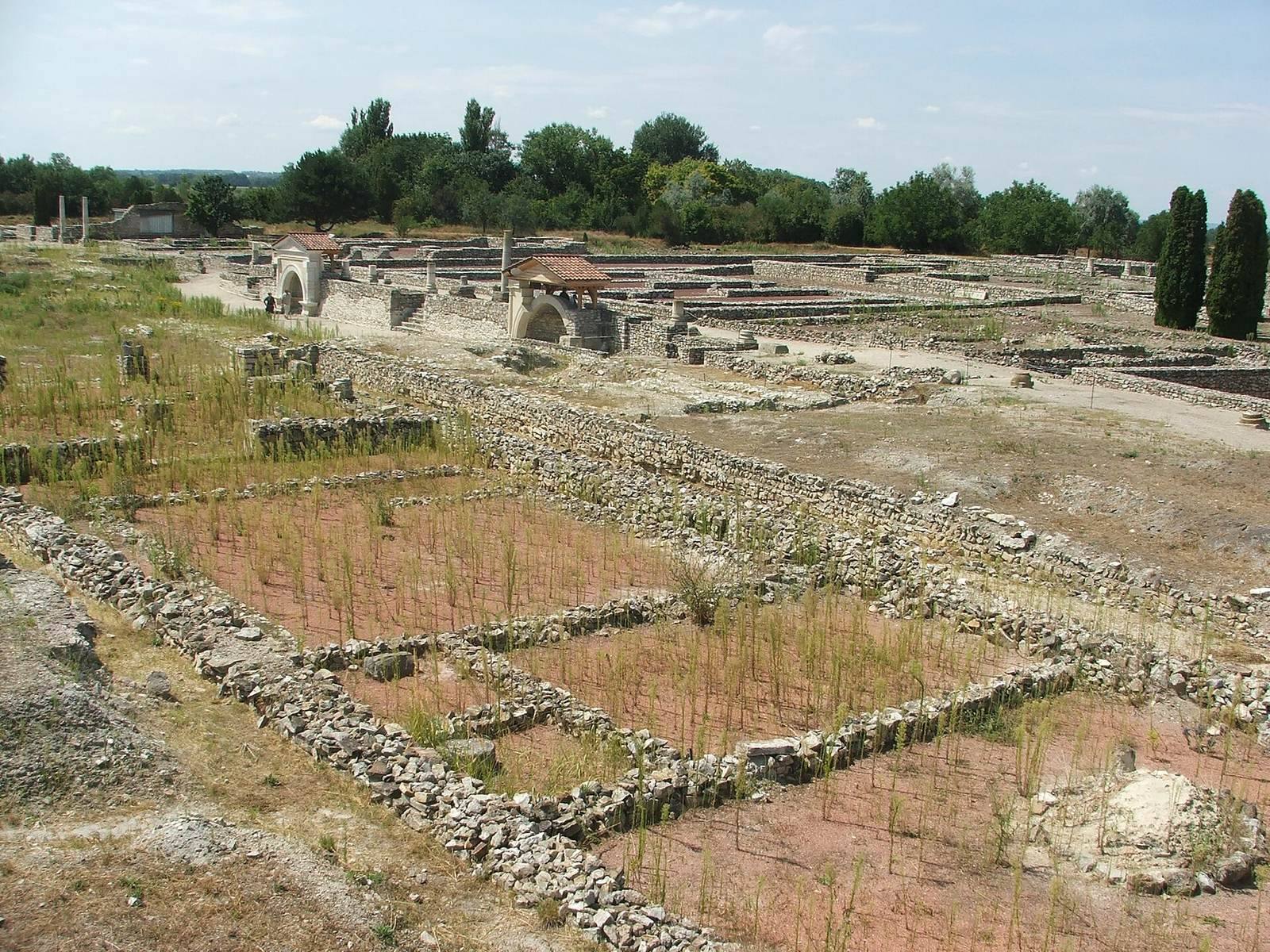
The archaeological landscape follows the Sárvíz, with the ancient settlement on both sides of the river. The Roman camp occupied the crossing of routes from Sopianae to Aquincum and Brigetio; a ditch and palisade enclosed it. The later city had walls. During its late-third-century rebuilding, some structures were moved to new positions, while others were built over earlier ruins.
Provincial and civic structures
Assembly halls and forum
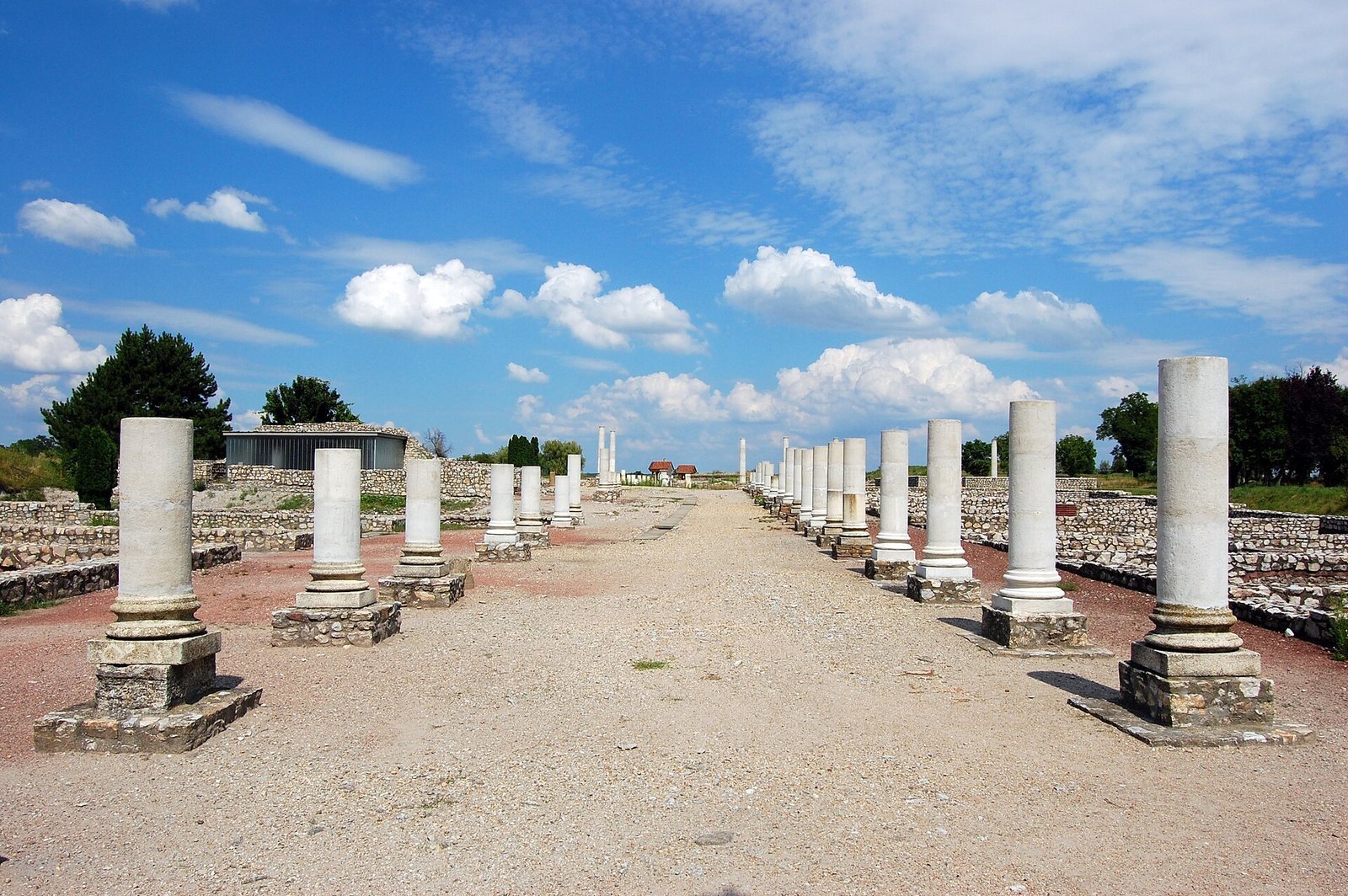
Gorsium’s sacred precinct included large halls used for provincial assemblies and ceremonies of the imperial cult. The city’s forum measured about 90 by 45 metres.
Temples
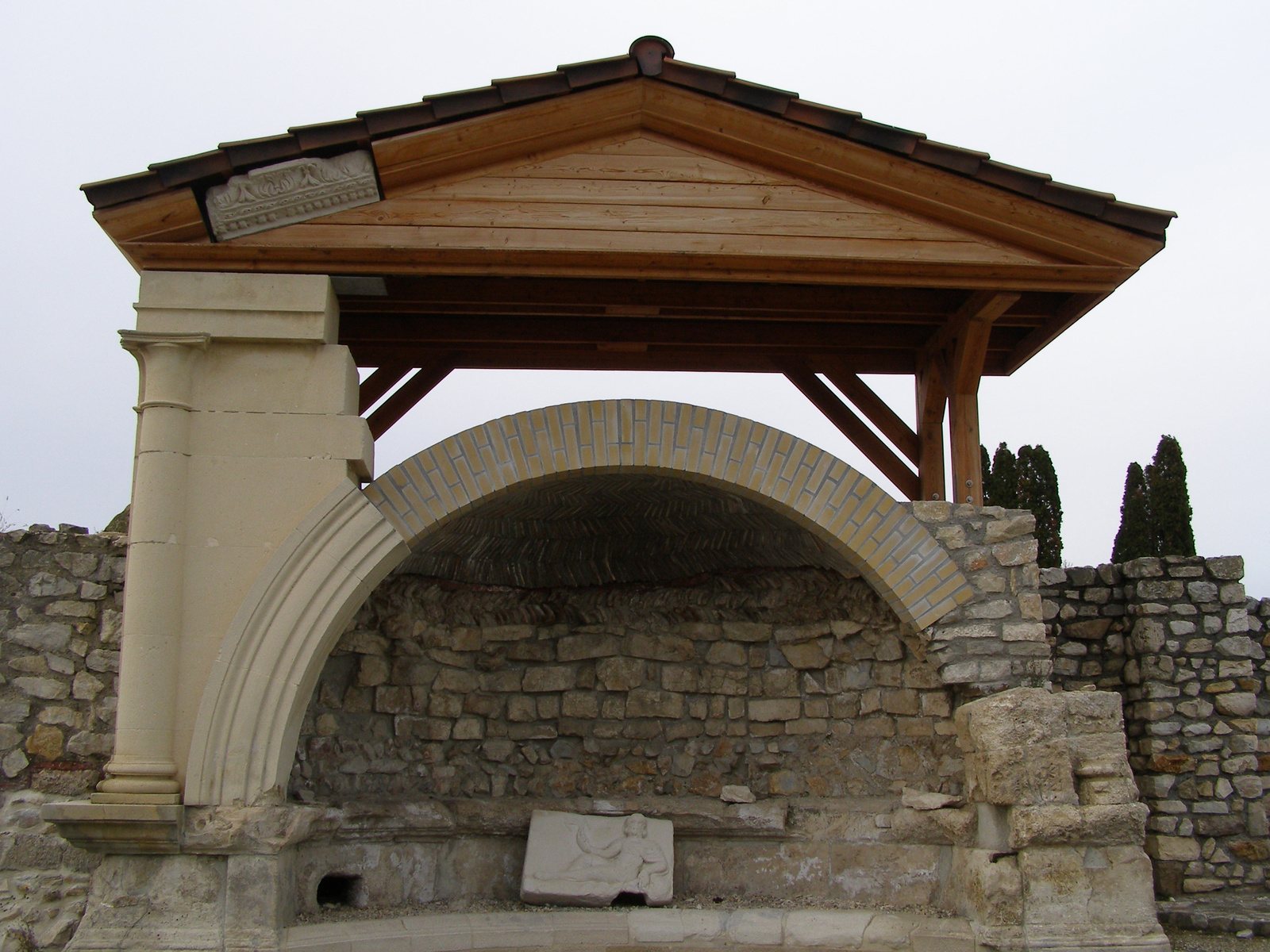
The city had a temple of Augustus and a temple honoring deified emperors. The latter was restored after the destruction around AD 178, with Septimius Severus financing its rebuilding during his visit in AD 202.
Amphitheater
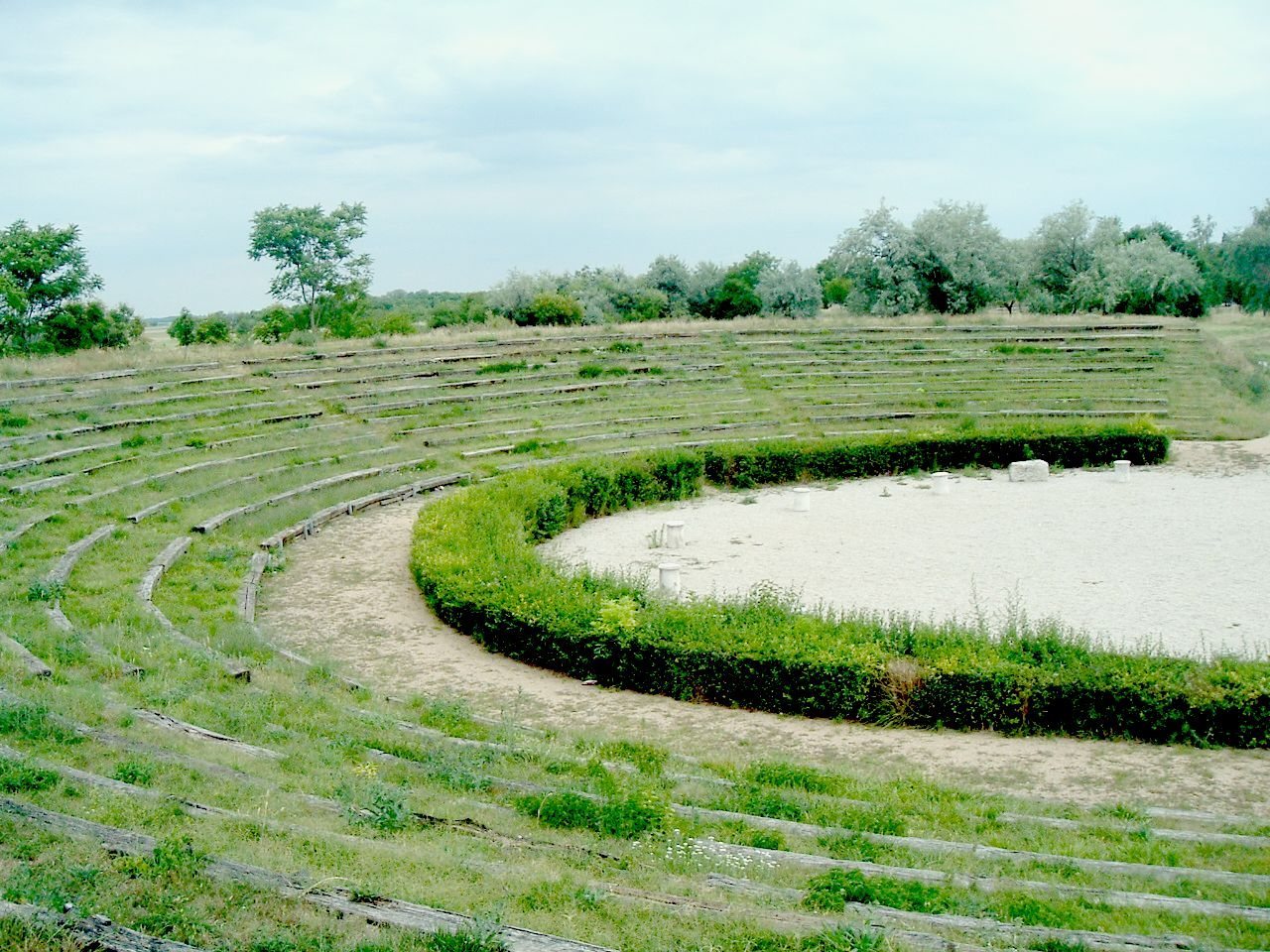
An amphitheater at Gorsium could accommodate 20,000 people.
Buildings of the fourth-century city
Governor’s residence and barracks
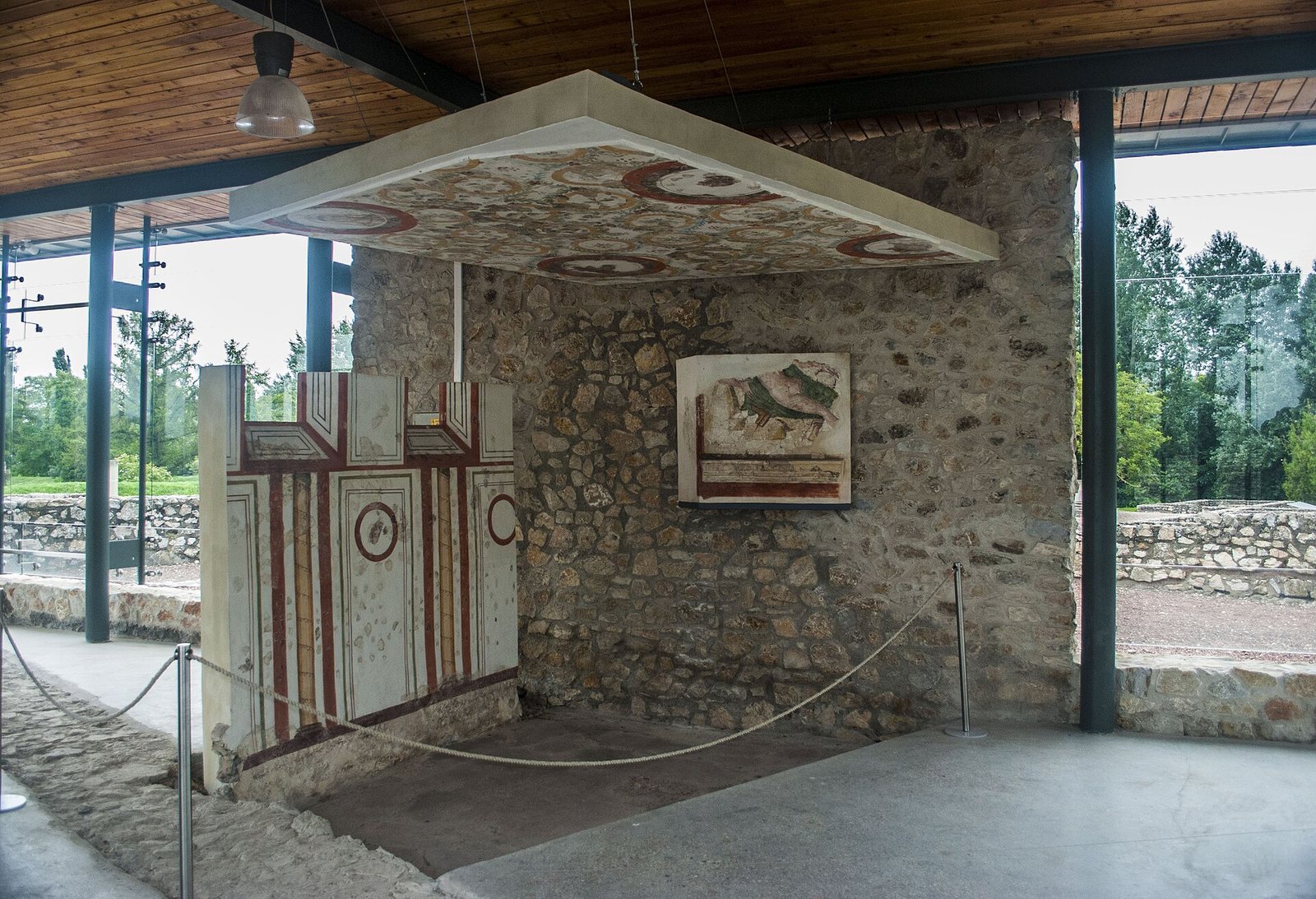
A palace suited to the residence of a provincial governor stood in the fourth-century city. Bodyguard barracks stood opposite it.
Early Christian basilicas
The city also had two early Christian basilicas, large public buildings adapted for worship.
Archaeological landscape and finds
The archaeological area covers about 200 hectares and is unbuilt. Excavations have examined about seven percent of the ancient city, and the archaeological park is Hungary’s largest. Excavations recovered a treasury of 3,134 double denarii, a Roman coin denomination, in 1983.