Glassworks at the Emsbach Gorge: A Fifteenth-Century Production Site in Germany
Site at a Glance
- Popularity
- Low
- Country
- Germany
- Primary era
- Medieval
- Eras represented
- Medieval
- Civilizations
- Holy Roman Empire
- Site type
- Economic
- Remains
- Production Complex
On this page10 sections
History
The Glassworks at the Emsbach Gorge in Germany produced glass around 1450. Its history also includes earlier ironworking and contributes to understanding medieval production in the Taunus.
Medieval activity and production
Iron-ore smelting took place in the area during the 13th century. More than 300 kilograms of iron ore and iron slag found there point to this earlier activity. Glass and ceramic finds date the glassworks’ production to around 1450, in the 15th century.
Its wares circulated as mass-produced goods from the 1450s to the 1480s. The works operated at roughly the same time as glassworks below Dornsweg and at Buchholzweg, each about a kilometre away. Those sites were also investigated between 2001 and 2005.
Identification and modern investigation
The site had long been known, and around 1900 it was considered a possible Roman glassworks associated with the Upper Germanic-Raetian Limes. The Limes was part of Rome’s frontier system in Central Europe and lies north of the glassworks. It has been a UNESCO World Heritage Site since 2005, a designation for places judged to have outstanding universal value.
In 1999, investigators mapped the site and conducted a geophysical survey without disturbing the ground. Volunteers excavated about 300 m² in 2000 at the initiative of Kulturkreis Glashütten, a local cultural association, under archaeologist Peter Steppuhn. The remains were conserved in 2001; frost damage was repaired in 2010, and further restoration followed in 2014. Work at the site broadened understanding of glassmaking in the Taunus, a region that played a relatively minor part in European glass history.
Remains
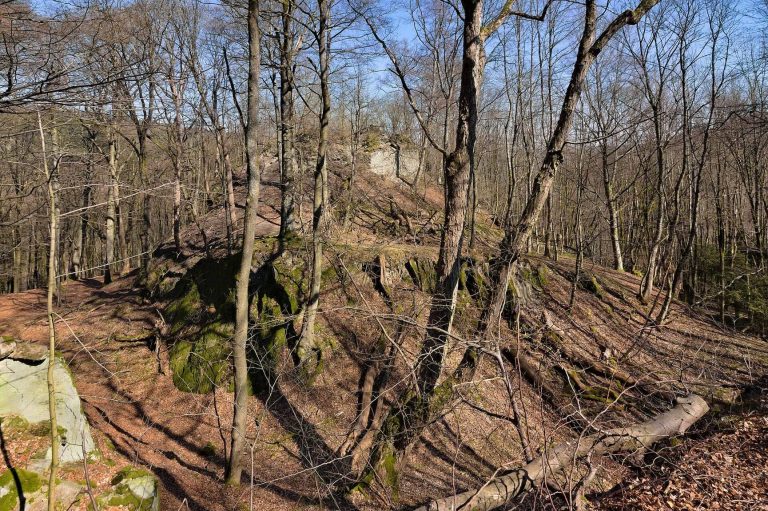
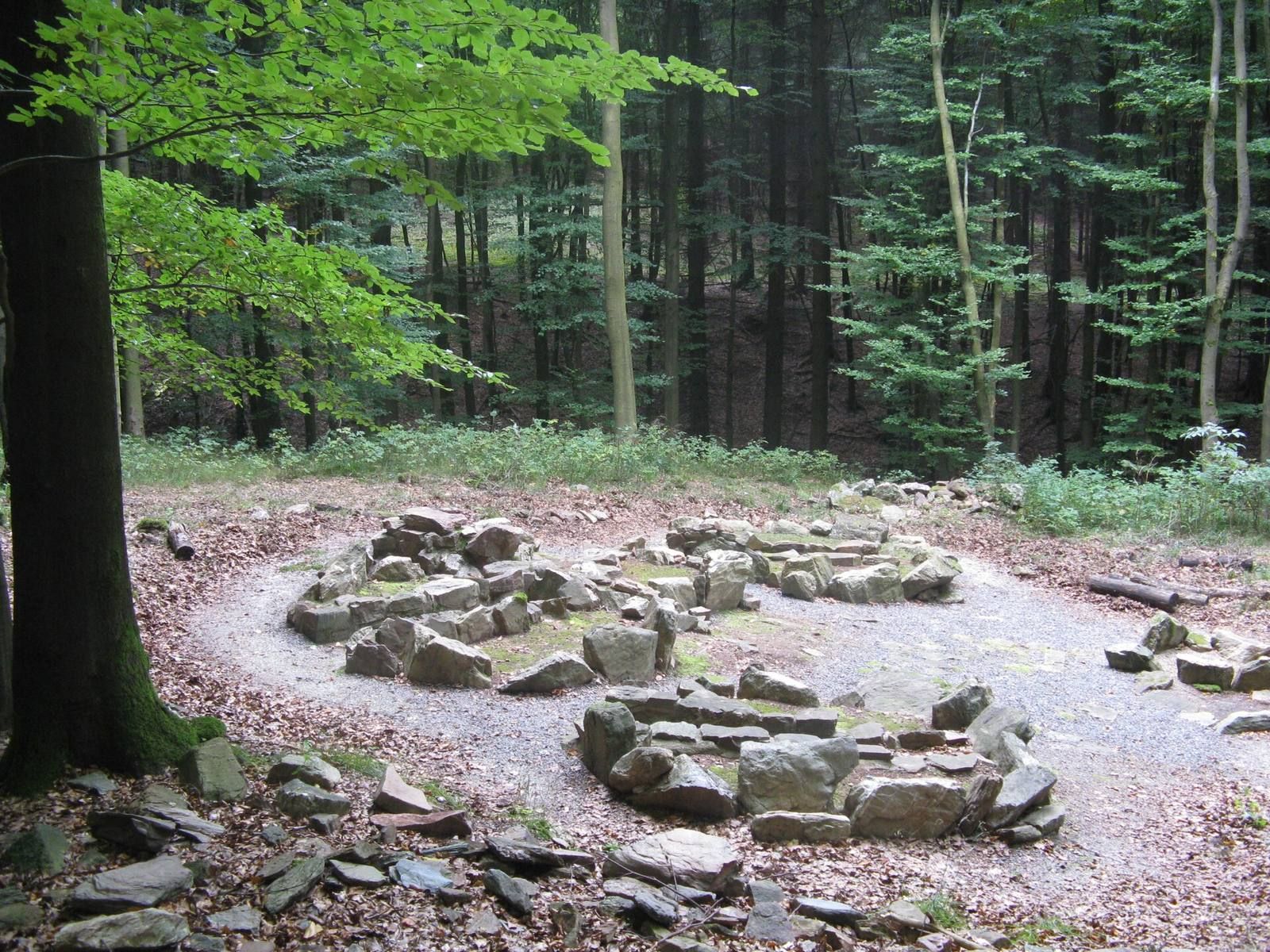
The complex lies at about 518 metres above sea level in the forested Unterer Seelborn area, beside the Emsbach on the floor of its gorge-like valley. It is about 1.5 kilometres east of Glashütten, on the northeastern slope of Glaskopf. The layout included a large working furnace in the northern part of the complex and four smaller furnaces associated with small mounds.
Furnace layout
Main working furnace
The main furnace measured about 7 by 4 metres and had several window-like openings. Inside, benches for glass pots measured about 1.7 by 0.6 metres and held as many as four clay pots of molten glass. Glassblowers drew glass through working openings. Beech logs supplied the fuel, and the main furnace could reach temperatures of up to 1,200°C.
Smaller furnaces
The four smaller furnaces served different stages of production. The two outer furnaces gradually cooled vessels or dried raw materials. The two middle furnaces were used both to stretch and cool glass for making flat panes. These cooler furnaces operated at about 600°C.
Products and finds
Glass production
The glassworks made green forest glass, meaning glass produced in woodland furnaces, for both vessels and flat panes. Flat glass was made by the cylinder method, in which glass was formed into cylinders to produce panes. Nearly all the vessel output consisted of thick-walled beakers made in large quantities.
Recovered material
About 4,000 finds were recovered, most of them glass fragments. Selected informative pieces are included in the permanent exhibition Forest Glassworks in the Taunus at the Hessenpark open-air museum in Neu-Anspach. The remaining material is sorted and documented in a storage facility of the State Office for Monument Preservation of Hesse.