Glanfeuil Abbey: A Benedictine Monastery in France
Site at a Glance
- Popularity
- Medium
- Country
- France
- Primary era
- Medieval
- Eras represented
- Medieval
- Civilizations
- Merovingian
- Site type
- Religious
- Remains
- Monastery
On this page10 sections
History
Glanfeuil Abbey, also called the Abbey of St Maurus, was a Benedictine monastery in Saint-Maur-sur-Loire, Maine-et-Loire, France. Its traditional foundation dates to the second half of the sixth century, and its founding story presents it as an early Benedictine house in Gaul. Benedictines follow the monastic rule associated with Saint Benedict, a foundational figure in Western Christian monasticism.
Traditional Foundation and Early Account
The foundation story appears in a devotional life of Saint Maurus, a disciple of Benedict, attributed to Faustus of Cassino and said to have been completed around 604. It relates that Maurus established the monastery on land given by a local lord named Florus. Florus’s son Bertulf and then Florianus succeeded him. The same account says Bishop Bertrand of Mans sent Harderadus and a companion to ask Benedict for monks, and that Maurus was among twelve dispatched to Gaul.
The text’s history is uncertain. Abbot Odo of Glanfeuil said he found the life badly damaged and difficult to read, then prepared an edited version, completed by 863, which he presented as faithful to the earlier work. The authenticity of the account, the reliability of Odo’s edition, and the existence of an original have all been questioned. The foundation story therefore remains a tradition rather than a settled account.
Eighth-century Crisis and Carolingian Restoration
In the mid-eighth century, Pepin the Short, king of the Franks, granted the abbey to Gaidulf of Ravenna. Gaidulf depleted its property and imposed harsh conditions on the monks. Most departed; fourteen who remained gave up their monastic vows and became canons, clerics living under a shared religious rule, before Gaidulf expelled them. He left five clergy to conduct the liturgy. His status is unclear: he may have been a cleric and abbot, or a lay holder in commendam, a grant of an abbey’s authority or revenues without necessarily serving as its monastic abbot. Odo’s narrative says Gaidulf died by suicide after a vision of Saint Maurus. The Count of Anjou then took the abbey’s remaining property. Odo attributed the loss of its earlier history to Gaidulf’s plundering and later Viking attacks.
By 787 at the latest, conditions at Glanfeuil had prompted Theodemar, abbot of Monte Cassino, to appeal to Charlemagne and Pope Adrian I. The pope issued a diploma placing Glanfeuil under the protection of its mother house, Monte Cassino.
By about 830, the ruined and abandoned monastery had passed to Rorgon I, Count of Maine, through a grant from Emperor Louis the Pious. Rorgon’s wife, Bilichilde, may also have helped secure it. They began repairs with assistance from Lambert, a monk of Saint Martin’s Abbey at Tours, and Ebbo, a relative. Work paused amid secular difficulties, then resumed after Jacobus, abbot of Cormery, urged them on following reported visions of Saint Maurus.
Ingelbert, abbot of Saint-Pierre-des-Fossés, sent monks to Glanfeuil, among them Gauzbert, Rorgon’s brother. By imperial order, Rorgon placed the monastery under Fossés’s authority, though the document was later stolen and burned. After Louis the Pious assigned Anjou to his son Pepin, Pepin granted Glanfeuil to Ebroin, a relative of Rorgon. Ebroin became bishop of Poitiers in 839 and obtained control of Saint Maurus’s shrine from Louis. During Rorgon’s lifetime, Ebroin kept Glanfeuil under Fossés; after Rorgon died, he separated it from that abbey and gained renewed confirmation of his possession from Charles the Bald, ruler of West Francia.
At Ebroin’s request, Gauzlin became abbot in the mid-840s. He is described as Gauzbert’s son, although it has also been argued that he was Gauzbert’s nephew and that “son” referred to a spiritual relationship. A miracle tradition associated with Saint Maurus grew after the restoration. It portrayed the punishment of raiders as divine retribution, especially in the story of Frederick and his accomplices. Frederick was later captured by the Normans and died a shameful death; his companions were exiled, killed, or otherwise punished.
Norman Attacks and Medieval Damage
Norman attacks devastated the abbey during the ninth century. By 862, Odo and the monks had left with the relics of Saint Maurus. They first secured them at Merula, near Séez; from 863 the relics were kept on an estate by the Saône belonging to Count Audo, and in 868 they were transferred to Fossés. Odo became abbot there, and Glanfeuil thereafter functioned as a priory, a monastery governed by a prior and generally subordinate to an abbey. A further restoration is placed in the ninth century, under Louis the Stammerer, after the Norman destruction.
The monastery suffered additional damage during the Hundred Years’ War, a series of conflicts between England and France in the later Middle Ages, and the Wars of Religion, conflicts in France involving Catholics and Protestants. During the reign of Charles V, English forces driven from Maine by the French commander Bertrand du Guesclin withdrew from Pontvallain to the abbey.
Maurist Rebuilding and Revolutionary Suppression
The Maurists, a Benedictine reform congregation, rebuilt the monastery between 1680 and 1685. During the French Revolution, which began in 1789, the Congregation of Saint Maur was dissolved and the abbey was confiscated amid anti-Catholic repression. Its suppression is dated to 1790.
Refoundation and Dispersal
In 1890, Louis-Charles Couturier, abbot of Solesmes, refounded the monastery in surviving abbey buildings as part of the renewal of monastic life in post-revolutionary France. The community joined the Solesmes Congregation, a Benedictine monastic congregation. Anti-clerical legislation under the French Third Republic, established in 1870, forced the monks to leave France in 1901, and the abbey was suppressed in 1903. They took refuge at Baronville in Belgium and later settled at Clervaux in Luxembourg. In 1908, the community’s chapter voted to dissolve Glanfeuil and establish a new abbey at Clervaux, dedicated to Saints Maurice and Maurus. Dom Edouard du Coëtlosquet, formerly head of the Glanfeuil community, became its first abbot.
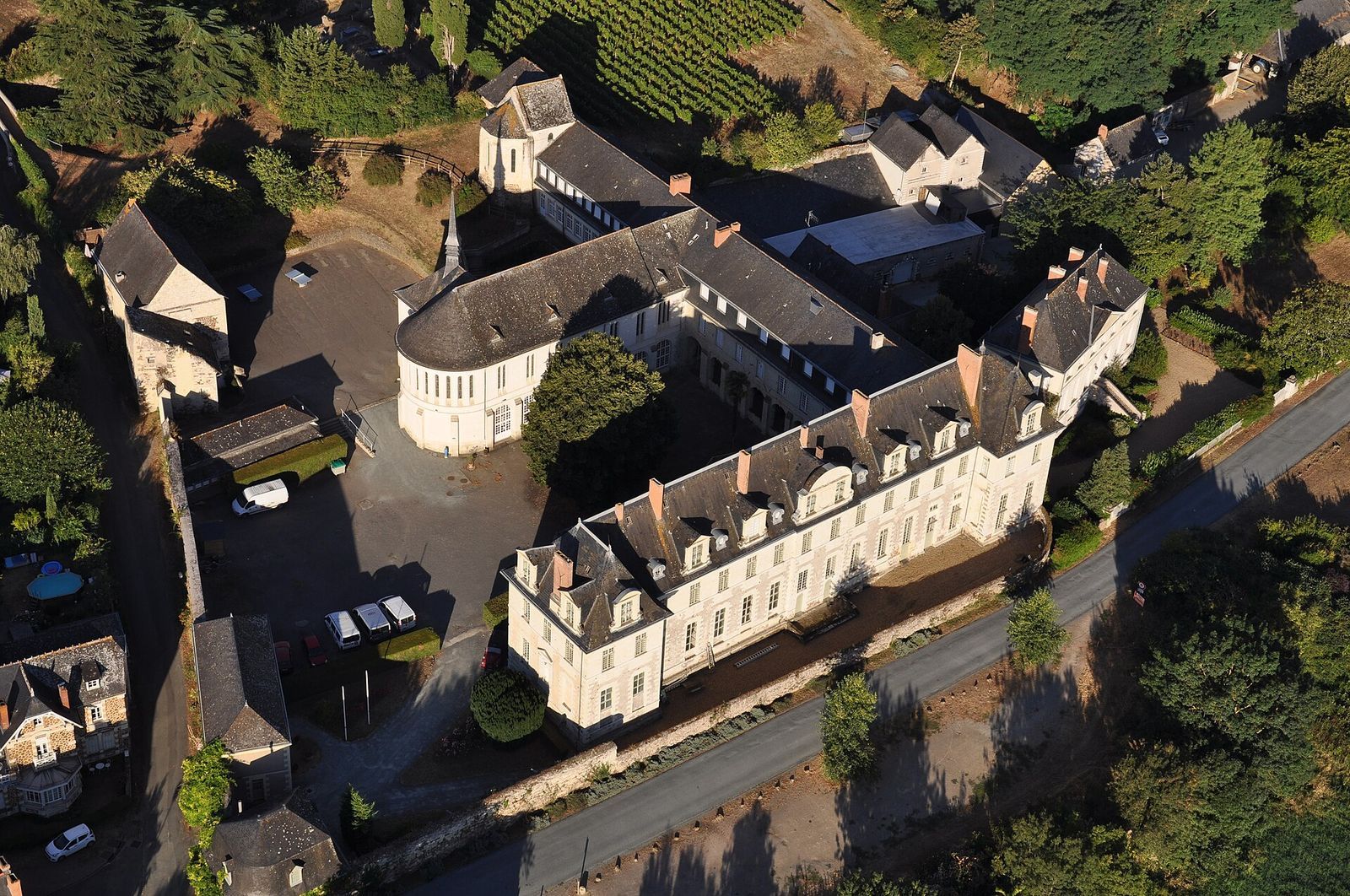
The Assumptionists, a Catholic religious congregation, later used the premises as a reception centre until the 1980s. They sold the property to Apprentis d’Auteuil, which then sold it to the Maine-et-Loire departmental council because it could not build workshops on the site. The O.V.A.L. association subsequently used the former abbey for residential school courses and as a holiday centre. The abbey was recorded as a historic monument in 1958, classified in 1979, and listed in 1996.
Remains
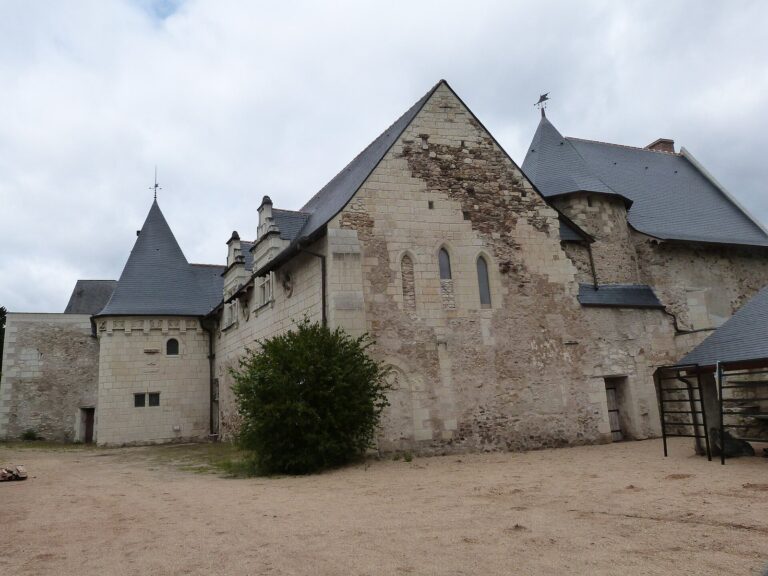
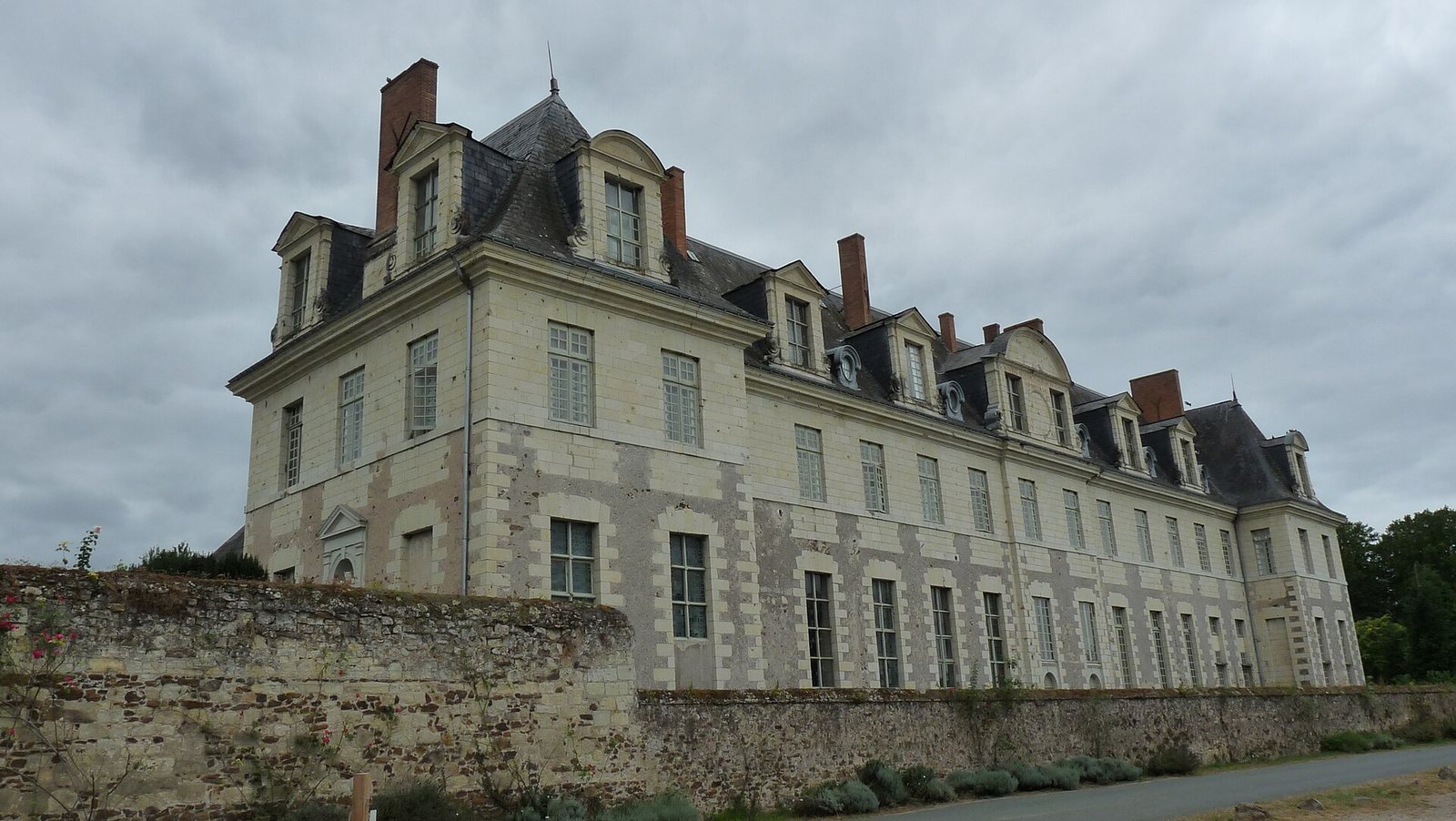
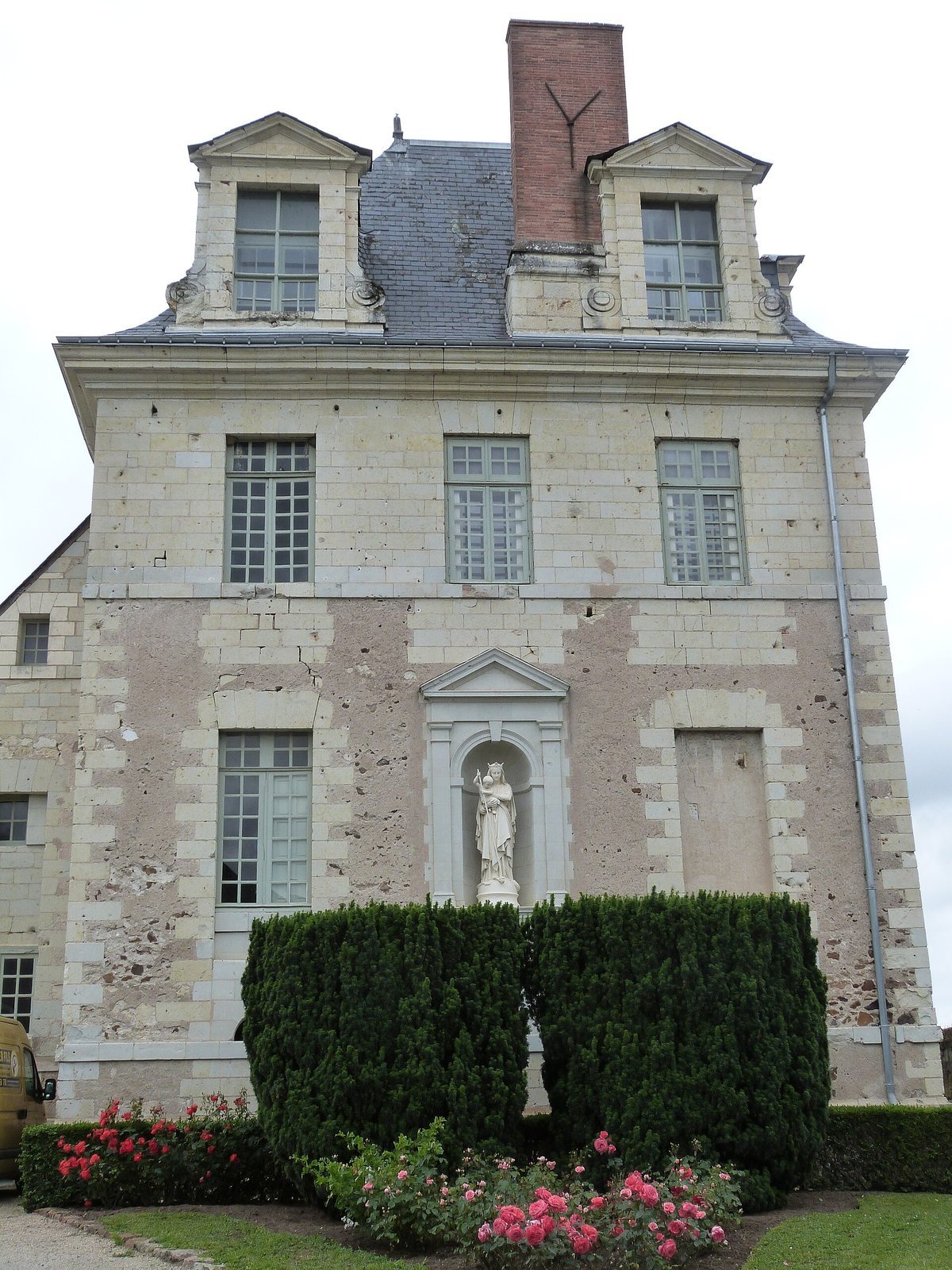
The physical evidence at Glanfeuil includes excavated remains of an early building, later monastery fabric, and a record of the community’s venerated relics. The monastery was described after its ninth-century restoration as a fortified military stronghold, while surviving abbey structures were used in the 1890 refoundation.
Early Building
Late-nineteenth-century excavations uncovered evidence of a structure from the Merovingian period, the early Frankish dynasty that preceded the Carolingians, on the site of a Gallo-Roman villa, a Roman-style rural residence or estate in Gaul. The building’s plan broadly corresponds to descriptions in the life of Saint Maurus, making its identification as a monastery possible.
Fortified Monastery and Reused Buildings
After its ninth-century restoration, Glanfeuil was described as having been built and fortified as a military stronghold. The surviving abbey structures later served as the setting for the monastery’s refoundation in 1890.
Relics of Saint Maurus
On 12 March 845, during a ceremonial movement of relics, Gauzlin found a piece of parchment said to confirm that the bones were those of Maurus. The identification concerned the remains venerated at Glanfeuil before they were carried away during the ninth-century attacks.