Giżycko Castle: A Teutonic and Renaissance Stronghold in Poland


Site at a Glance
- Rating
- 4.7
- Popularity
- Medium
- Country
- Poland
- Primary era
- Early Modern
- External website
- Open
- Eras represented
- Medieval, Early Modern
- Civilizations
- Duchy of Prussia, Kingdom of Poland, Teutonic Order
- Site type
- Military
- Remains
- Castle
On this page6 sections
History
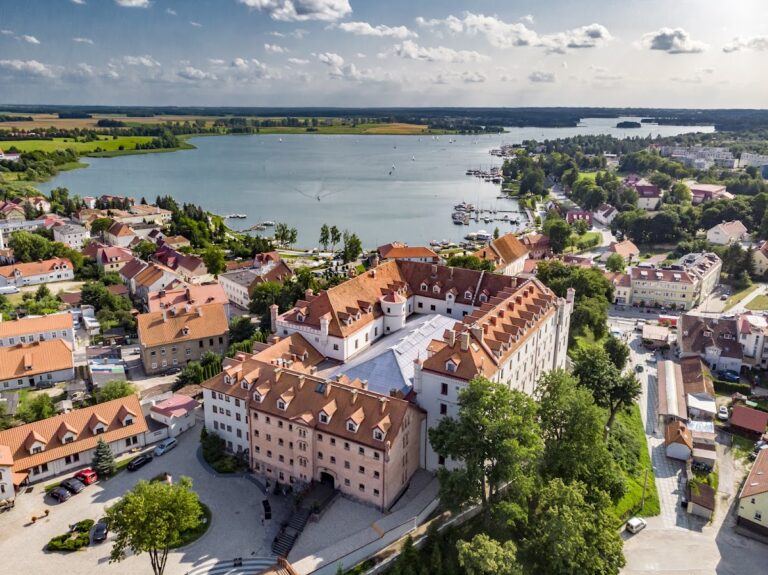
Giżycko Castle is a former Teutonic stronghold in Giżycko, Poland, positioned on the isthmus between Lakes Niegocin and Kisajno beside the Giżycko Canal. Its location controlled movement across the Masurian lake region. The Teutonic Order, a medieval religious-military institution that established fortified settlements in Prussia and the eastern Baltic, maintained a fortification at Giżycko by 1340.
Teutonic Administration and Conflict
In 1340, a Teutonic procurator was recorded at Giżycko. This local official held judicial, military-command, and administrative responsibilities and governed the northern territories of Galindia, a historical region in the southern and eastern Baltic lands. The position of the earlier wooden fortification remains uncertain. It may have stood on the present castle site or on Piękna Góra, which later became associated with the names Stary Lec, Stari Zamek, and Alt-Lötzischen Schanze.
Lithuanian forces led by Kiejstut, a fourteenth-century ruler of Lithuania and military opponent of the Teutonic Order, destroyed a Teutonic fortification at Giżycko in 1361. Its exact location is not known. A small Gothic building stood on the present castle site by 1400. It belonged to the Teutonic commandery headquartered at Pokarmin, an administrative district of the Order governed from a central residence, and offered limited defensive value.
The castle was burned by the local population in 1455 during the Thirteen Years’ War, a conflict between the Kingdom of Poland and the Teutonic Order. The destruction was extensive, and another Teutonic procurator is not recorded at Giżycko until 1497. A settlement stood beside the castle, and its village privilege was renewed in 1475 under the name Nowa Wieś Leczen. In 1507 and 1508, the garrison comprised 15 brothers and servants.
Rebuilding and Secular Use
From 1513, secular officials administered the castle. During the Polish-Teutonic War in 1520, the Teutonic garrison set the building on fire and abandoned it. In 1560, the castle was rebuilt on the orders of Lehndorff, the local starosta, or territorial official, under the direction of Christoph Römer of Königsberg. The surviving Renaissance gable is probably associated with this rebuilding.
In 1614, the castle became a princely hunting residence. An inscription plaque bearing the date was placed above the entrance to mark this use. Two small Baroque wings were later added, but they burned in 1749 and were subsequently demolished. The army purchased the castle in 1852. After adaptation, it housed commanders of nearby Boyen Fortress, a nineteenth-century military fortress near Giżycko.
Archaeology and Modern Restoration
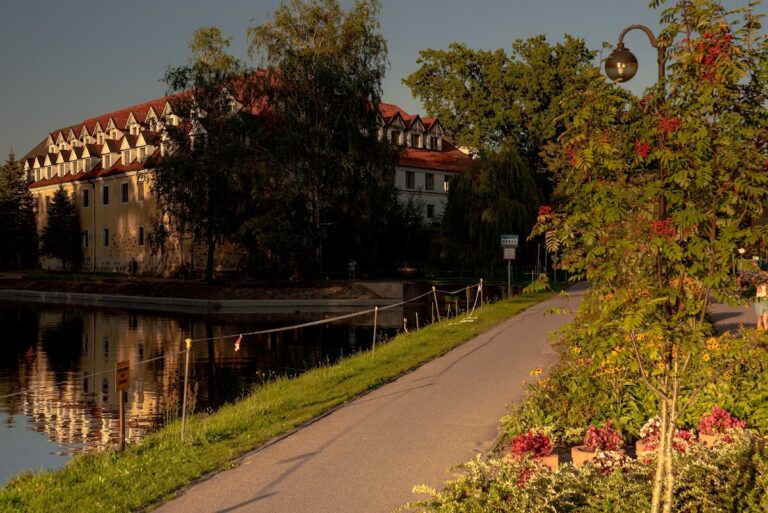
The castle stood abandoned after 1945. Archaeological investigations took place in 1969 and again in 2000 under the direction of Dr Marek Gula. Following renovation in the 1960s, the building was used as a hotel. Damage to one wall in 2007 led to further rebuilding and renovation between 2009 and 2011, supported by European Union grants for hotel use. The castle is now one of the buildings belonging to the St. Bruno hotel. It was entered in Poland’s register of historic monuments on 24 May 1979.
Remains
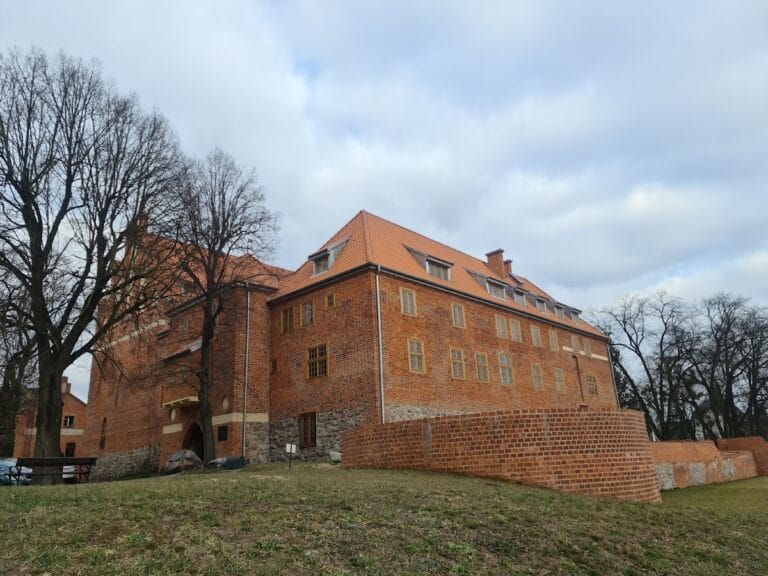
The surviving historic building is a two-storey structure measuring approximately 14.5 by 22 metres. Its late-Renaissance gables date from the sixteenth century, with the existing gable probably belonging to the rebuilding directed by Christoph Römer in 1560. The building’s corners are strengthened by buttresses, while three cellars remain beneath it. Two of these cellars have barrel-vaulted ceilings, preserving elements of the castle’s earlier construction.
Castle Grounds and Later Buildings
An outer ward formerly occupied the side of the castle facing Lake Niegocin. The surrounding brick buildings are modern, stylized additions completed in 2011. They include new hotel wings, a stylized corner tower, and a hotel building constructed on the former castle grounds.