Gastria Castle: A Medieval Templar Fortress in Cyprus
Site at a Glance
- Popularity
- Medium
- Country
- Cyprus
- Primary era
- Medieval
- External website
- Open
- Eras represented
- Medieval
- Civilizations
- Crusader, Kingdom of Cyprus, Knights Templar
- Site type
- Military
- Remains
- Fort
On this page9 sections
History
Gastria Castle is a ruined medieval fortress near Kalecik, on the northern side of Famagusta Bay in Cyprus. Its earliest known mention, in 1210, identifies it as a stronghold of the Knights Templar, a medieval Catholic religious and military order. Its harbor and fortress were involved in episodes of political conflict on the island.
Templar rule and the Lusignans
Richard I of England conquered Cyprus in 1191 during his campaign against Isaac Komnenos, the island’s ruler. Richard sold Cyprus to the Templars, whose rule ended after a major revolt in Nicosia. The island was then sold to Guy of Lusignan, a member of the royal house that ruled Cyprus.
In 1210, royal regent Walter of Montbéliard took refuge at Gastria with Templar allies. He had refused to account to the newly crowned Hugh I for his management of the royal treasury. Walter later escaped to the Kingdom of Jerusalem.
The regency conflict
Hugh I’s death in 1218 ended a period of peace. A struggle over who would govern Cyprus set the House of Ibelin, a prominent noble family, against local supporters of Frederick II, Holy Roman Emperor. Frederick’s arrival at Limassol in 1228 brought the dispute into open warfare.
In 1229, John of Ibelin, known as the Old Lord of Beirut, returned to Cyprus through Gastria’s harbor. In 1232, after the Ibelin side won the Battle of Agridi in the continuing regency conflict, Frederick’s remaining supporters asked to take shelter at the castle. The Templars refused, having fought Frederick at Acre in 1229. Those who tried to hide in the ditch were arrested.
Dismantling and later use
In 1279, Hugh III dismantled the castle and expelled the Templars after they declared support for Charles I of Naples. The site passed to the Knights Hospitaller, another medieval Catholic religious and military order, in 1308. In 1310, Henry II, king of Cyprus and Jerusalem, passed through Gastria while travelling into exile in Armenia. Afterward, the site was no longer referred to as a castle.
Remains
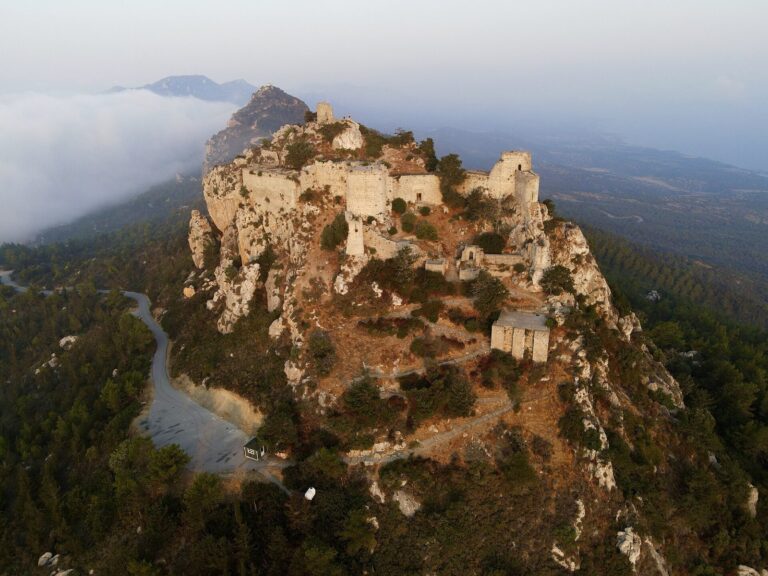
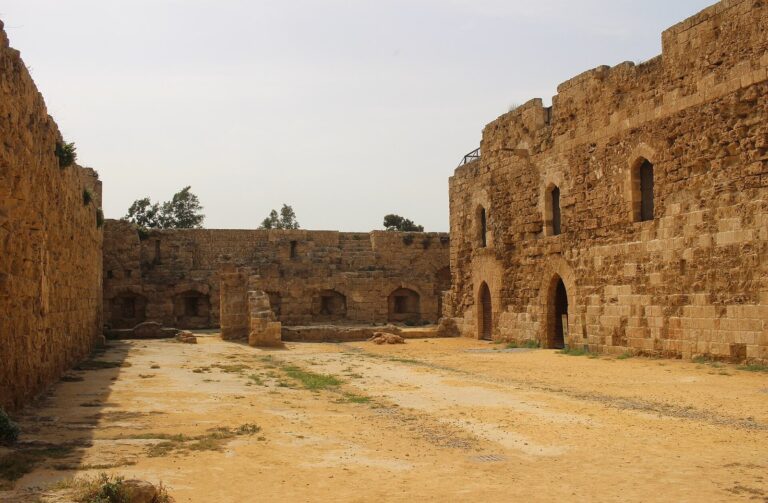
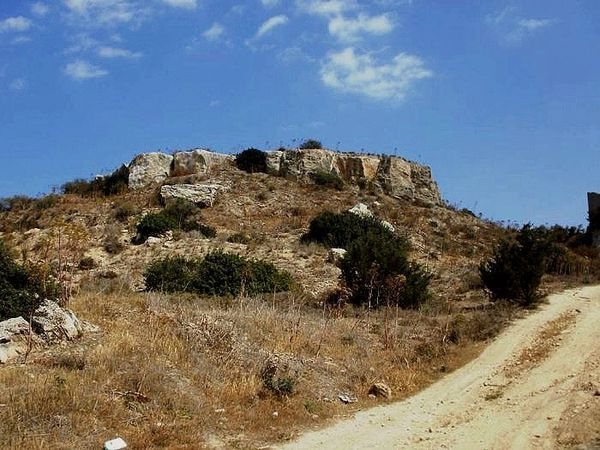
The ruins occupy the end of a long, narrow ridge and include a small rectangular fort, a central cistern, and a natural rocky spur to the east. A watercourse lies north of the fort and its surrounding landforms.
Fort and associated features
Fort and defensive ditch
A rock-cut ditch separated the fort from the ridge. It measures 4.5 to 7.9 metres across and 2 to 2.6 metres deep. A drawbridge or a wooden bridge once crossed it.
Central cistern
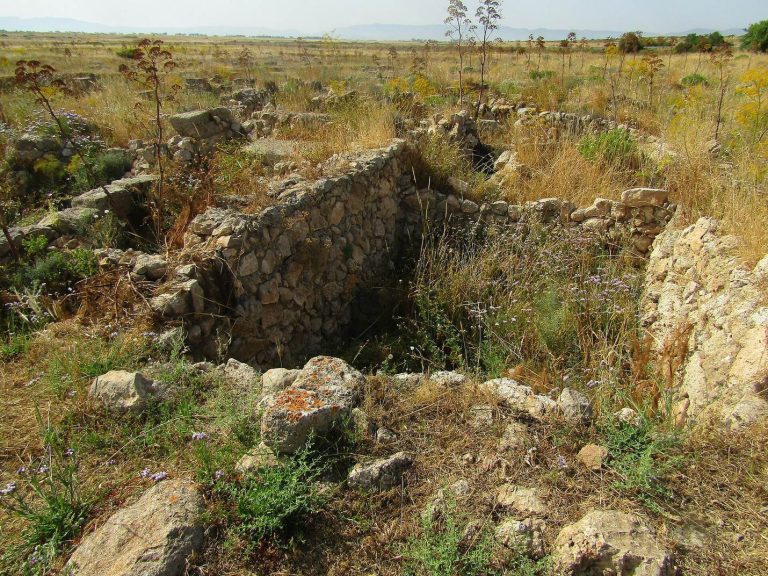
A circular cistern stood at the center of the fort.
Eastern spur and harbor
The natural rocky spur east of the fort served as a lookout over the sea and the fort itself, and it was once occupied. A canal formerly divided the spur from the fort, but it is now filled in. The watercourse north of the fort, spur, and isthmus served as a harbor.