Galeriegrab Etteln: A Neolithic Gallery Grave in Germany
Site at a Glance
- Popularity
- Very Low
- Country
- Germany
- Primary era
- Stone Age
- Eras represented
- Stone Age
- Civilizations
- Unclassified
- Site type
- Burial
- Remains
- Tomb
On this page8 sections
History
Neolithic construction and use
Galeriegrab Etteln is a Neolithic gallery grave, a long chamber used for collective burial, on Lechtenberg northwest of Etteln in Germany. Associated with the Wartberg culture, a Neolithic culture centered in what is now central Germany, the tomb originated between 3500 and 2800 BC. Radiocarbon dating places its use at 2333 ± 135 calibrated BC.
Investigations
Bishop Salentin von Isenburg investigated the tomb in 1575. Later excavations took place in 1862, 1865, 1871, and 1969.
Remains
Tomb layout
Setting and outer form
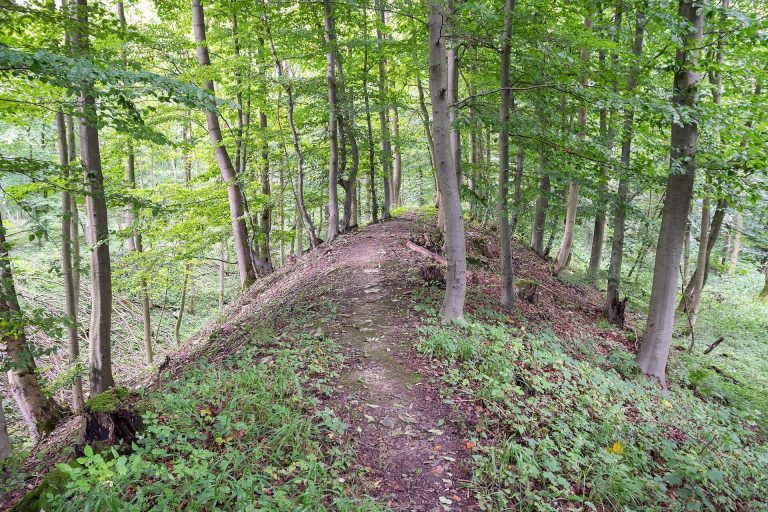
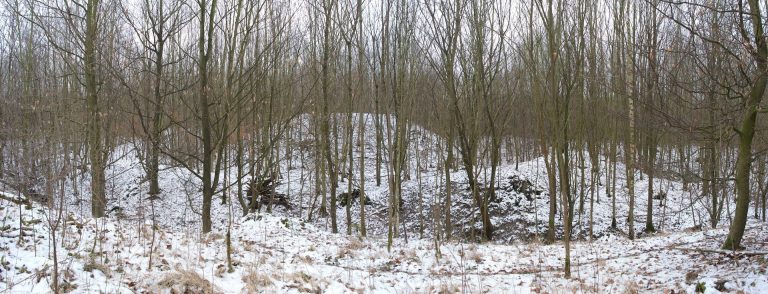
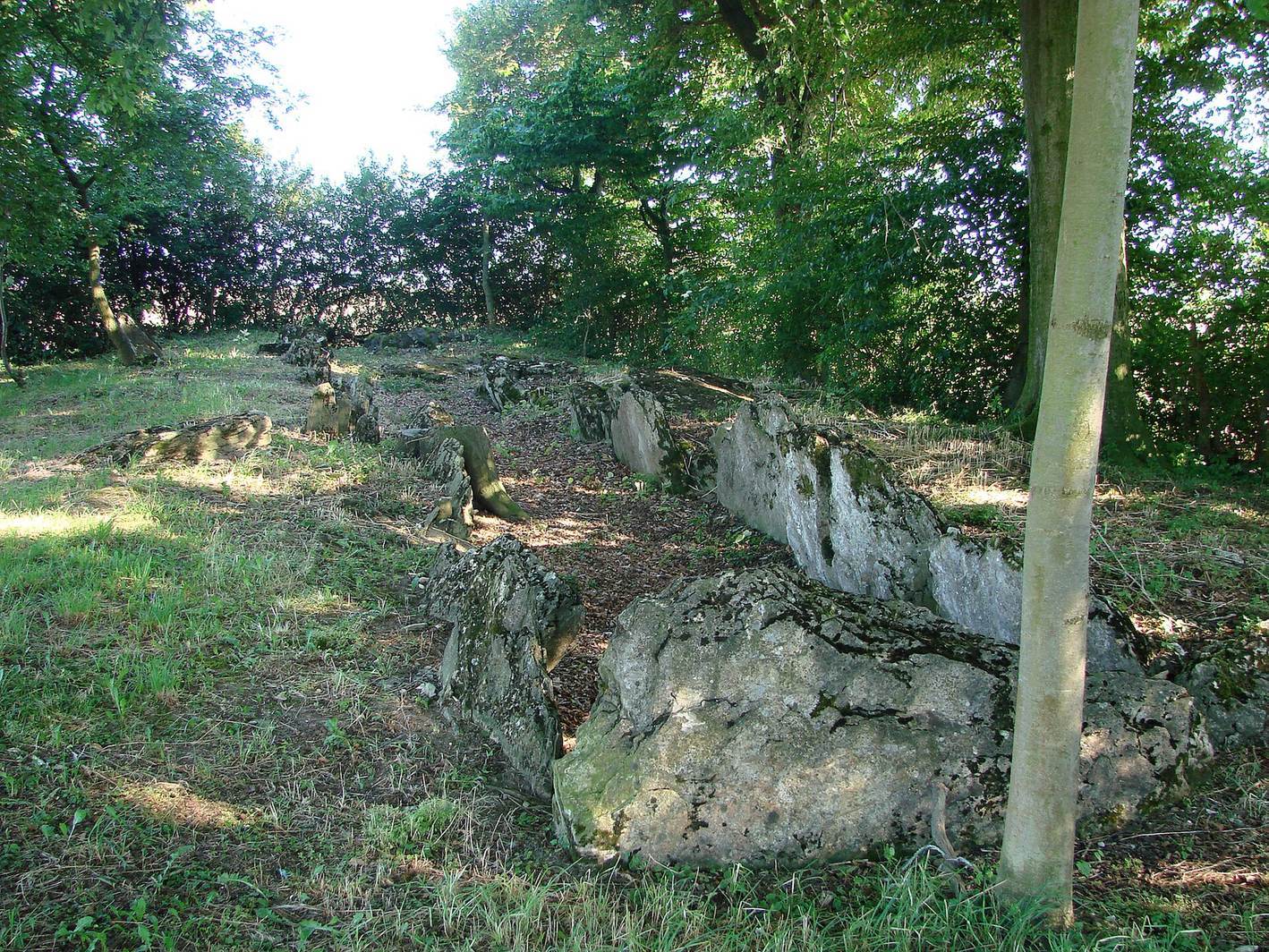
The tomb stands among trees between two fields. Other gallery graves lie near Kirchborchen, 2.7 km to the northwest, and near Henglarn, 3.2 km to the south-southeast. The structure is aligned northwest to southeast and measures 22 m long by 2.6 m wide. Remains of a mound and three stones from its perimeter survive.
Burial chamber
The chamber measures 21.5 m long and 2 m wide. Its original height was 1.2 m at the entrance and 1.8 m at the center; its reconstructed ceiling height is 0.9 m and 1.5 m at those points. The floor lies 1 m below the present ground surface, and about a quarter of the chamber’s height was buried when it was built. Limestone slabs, quarried on site, form its walls. They reach 2 m in height, 0.5–2.15 m in width, and 0.3 m in thickness; the northwest end slab is 2.41 m wide. Two roof-slab remains lie in and beside the tomb. Each measures 2.15 m long, 0.7–0.8 m wide, and 0.3 m thick. The estimated stone requirement was about 105.8 tonnes. At the southeast end, a two-part entrance stone frames a doorway.
Excavated finds
Excavations in 1862, 1865, and 1871 recovered a large quantity of human bones, described as enough to fill a box. A smaller number of bones was found beside the chamber in 1969. The excavations also yielded two pottery sherds, several perforated animal teeth, possibly including unperforated teeth, and a pig’s lower jaw. The bones and other finds have since been lost.