Frauenkirche in Wasserburg am Inn: A Roman Catholic Church
Site at a Glance
- Rating
- 4.8
- Popularity
- Medium
- Country
- Germany
- Primary era
- Medieval
- Eras represented
- Medieval, Early Modern
- Civilizations
- Duchy of Bavaria, Electorate of Bavaria, Holy Roman Empire
- Site type
- Religious
- Remains
- Church
On this page12 sections
History
Medieval construction
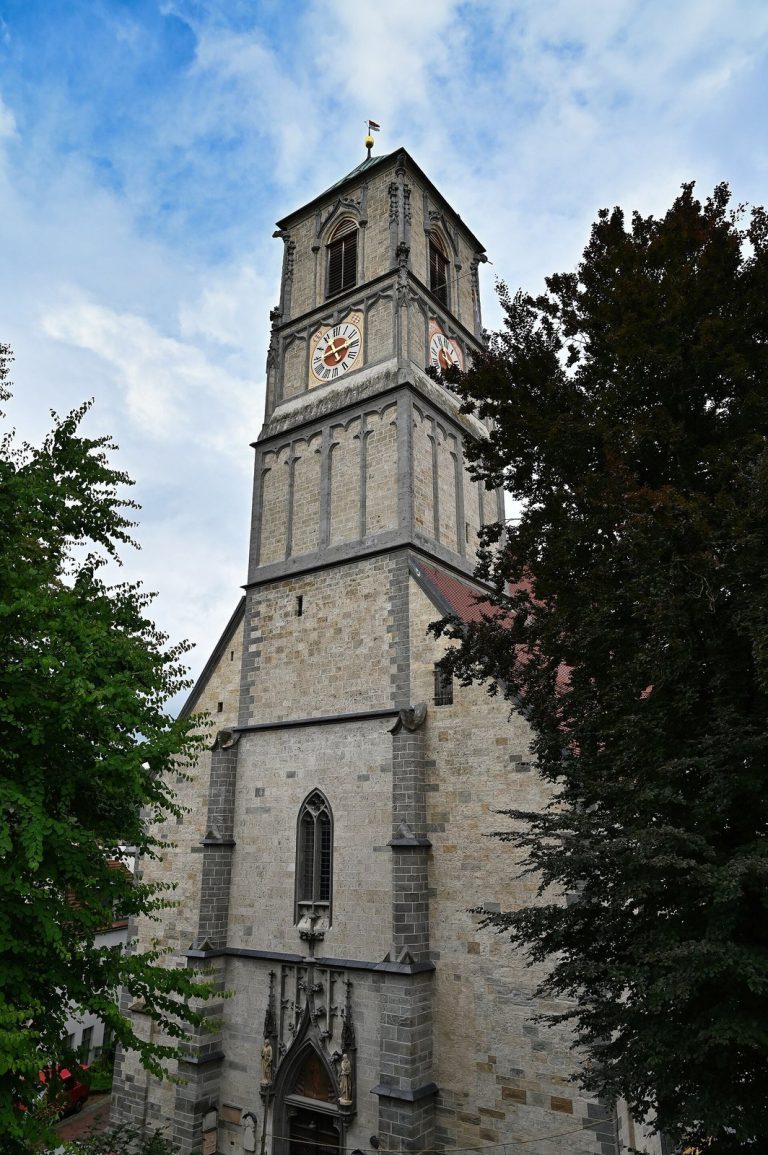
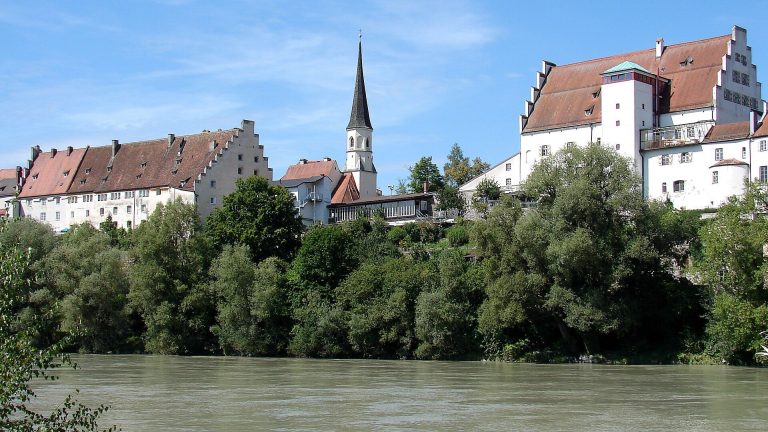
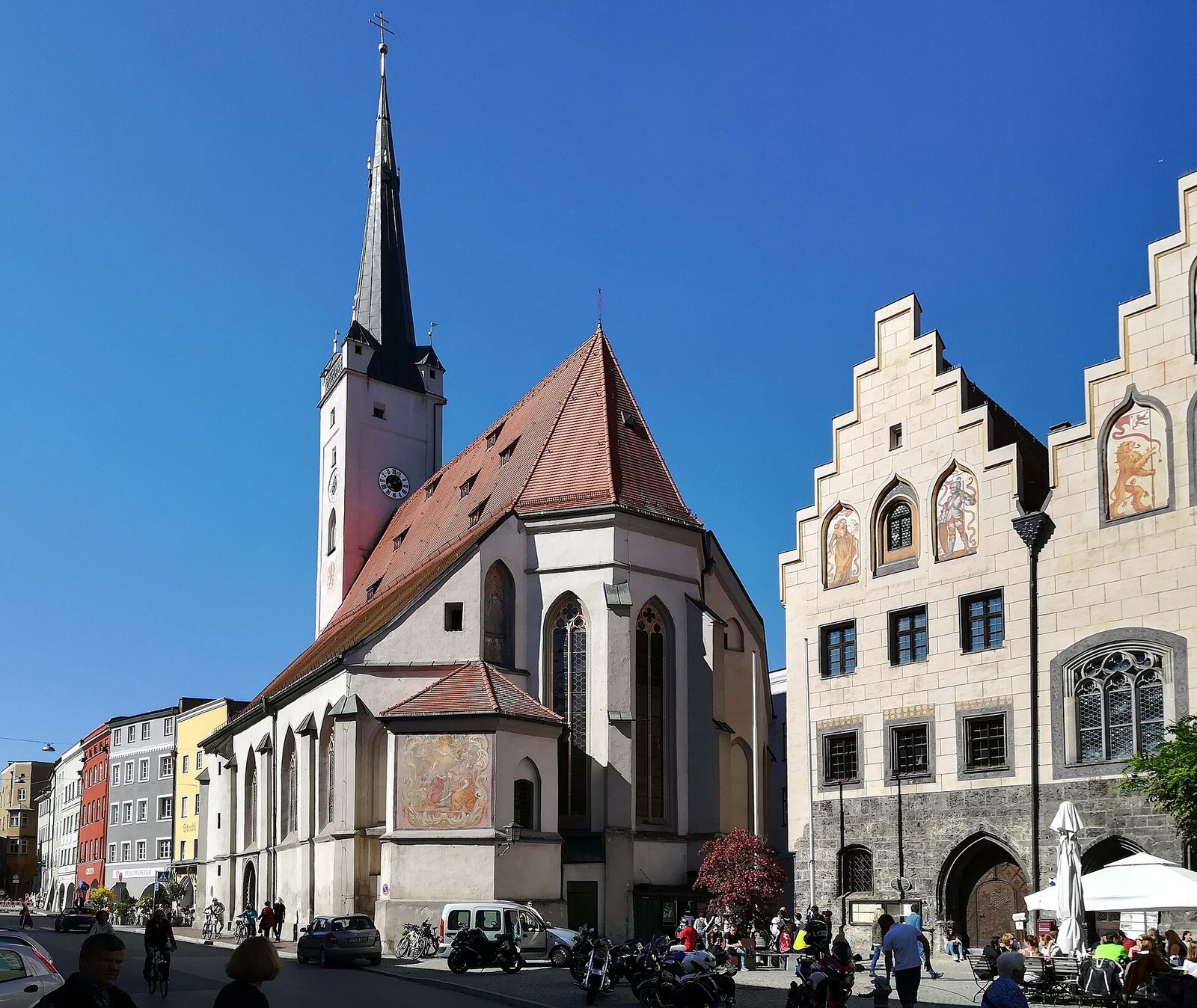
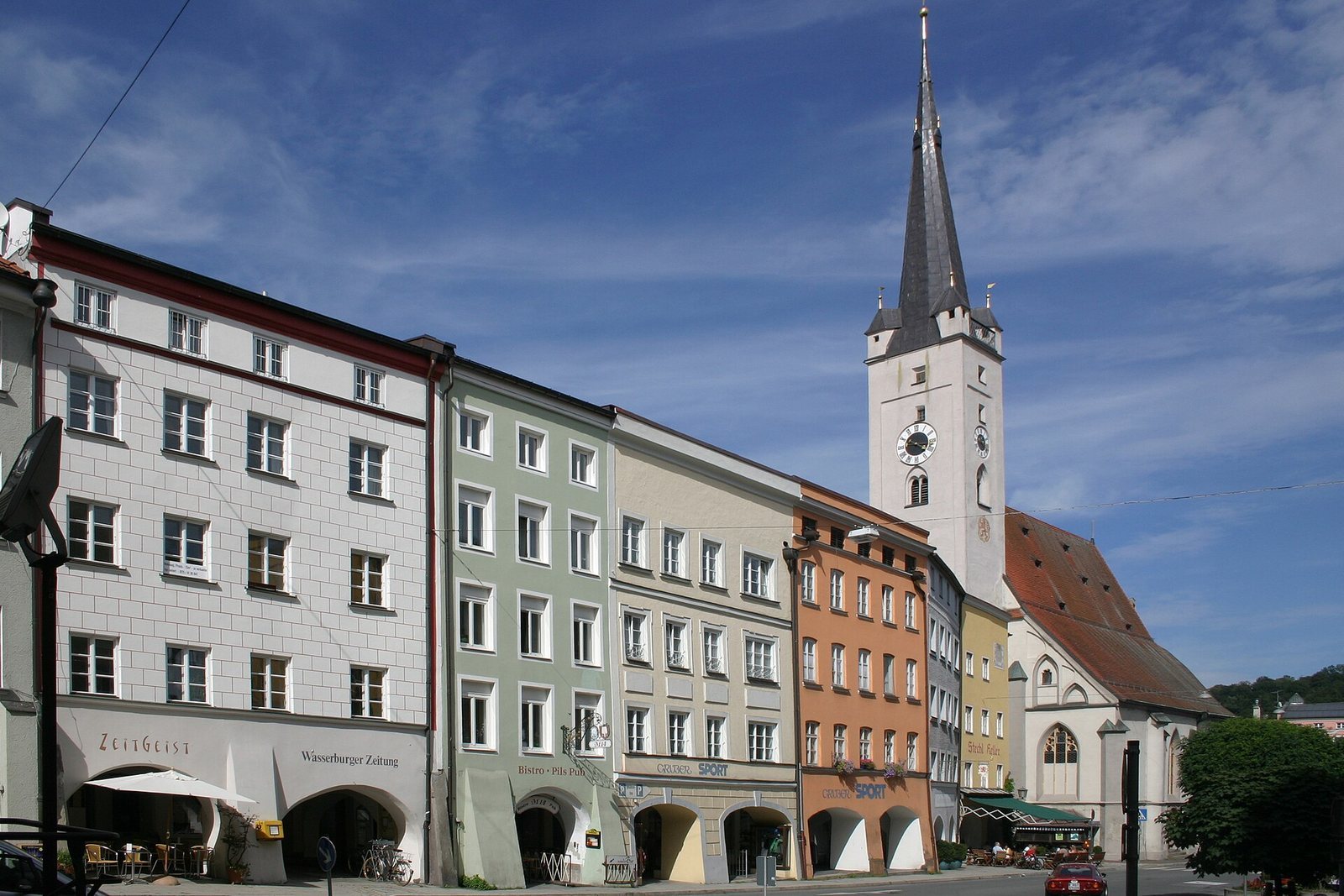
The Frauenkirche, or Church of Our Lady, is a Roman Catholic church in Wasserburg am Inn, Germany, built in the early 14th century. It was first mentioned in 1324 and belongs to the parish of St James, within the Wasserburg deanery and the Archdiocese of Munich and Freising. The church adjoins a city tower probably built around 1300. Its vaulting was completed in 1339, and the church was consecrated in 1386.
Later changes
Wolfgang Wiser completed the church tower’s spire in 1501–1502; it was renewed in 1730. The interior was redesigned in 1753, and the building underwent renovation in 1974–1975.
Remains
Plan and structure
The church is built of plastered brick and has a three-aisled, four-bay plan. It is a pseudobasilica, meaning that the central nave rises above the side aisles but has no clerestory windows. A short choir ends in three sides of an octagon. The nave has a barrel vault, a curved ceiling, with lunettes, curved recesses formed where the vault meets a wall. The vault rests on piers with attached vertical shafts, while the side aisles have ribbed vaults.
West tower
The tower stands at the west end of the church, with a passage through its ground floor. Its pointed spire rises above four turrets at the corners.
Exterior paintings
On the outside wall of the projecting southeast sacristy, an 18th-century painting depicts the Annunciation. Beside it is a representation of Saint Christopher dated 1593.
Painted interior
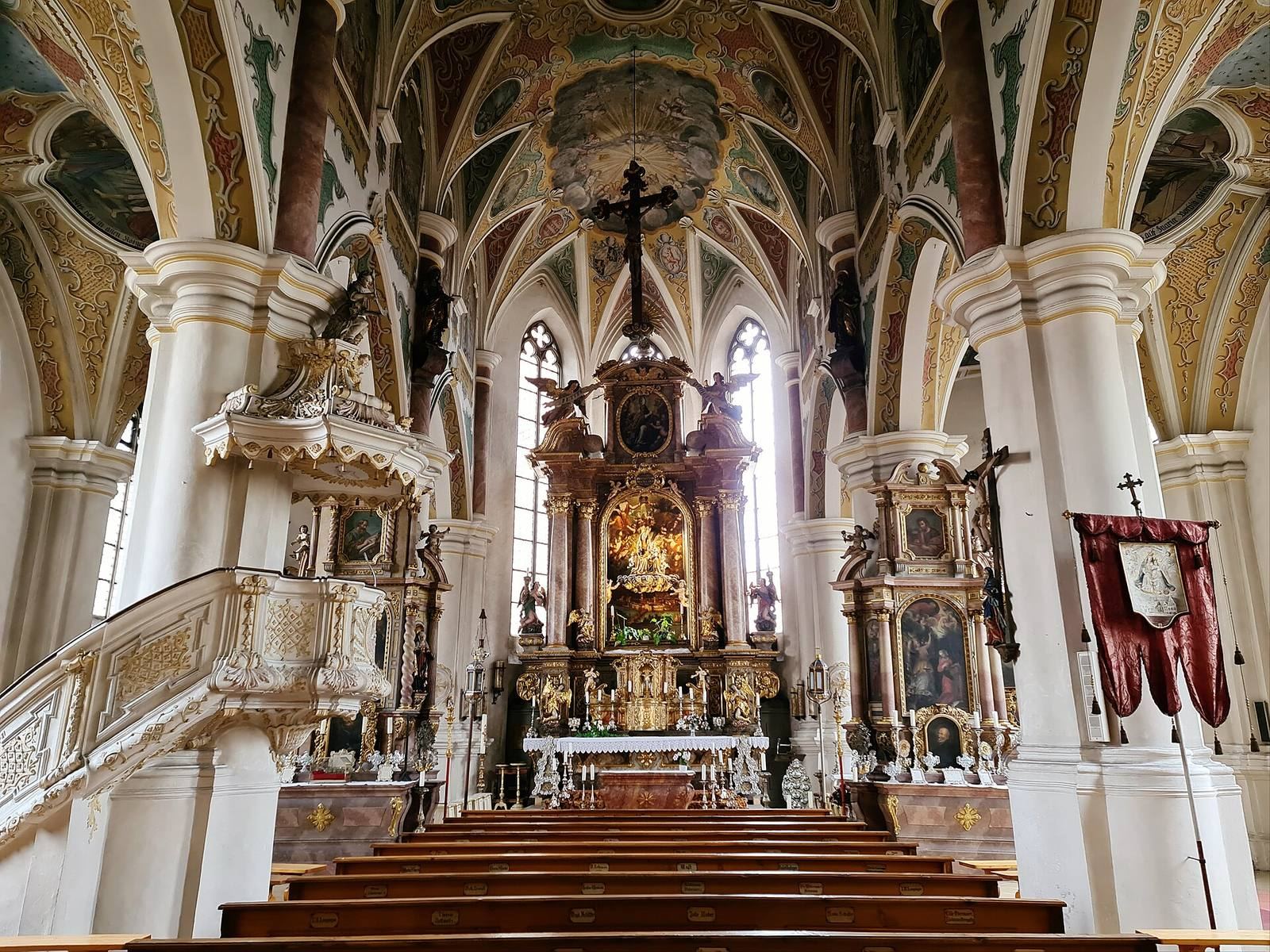
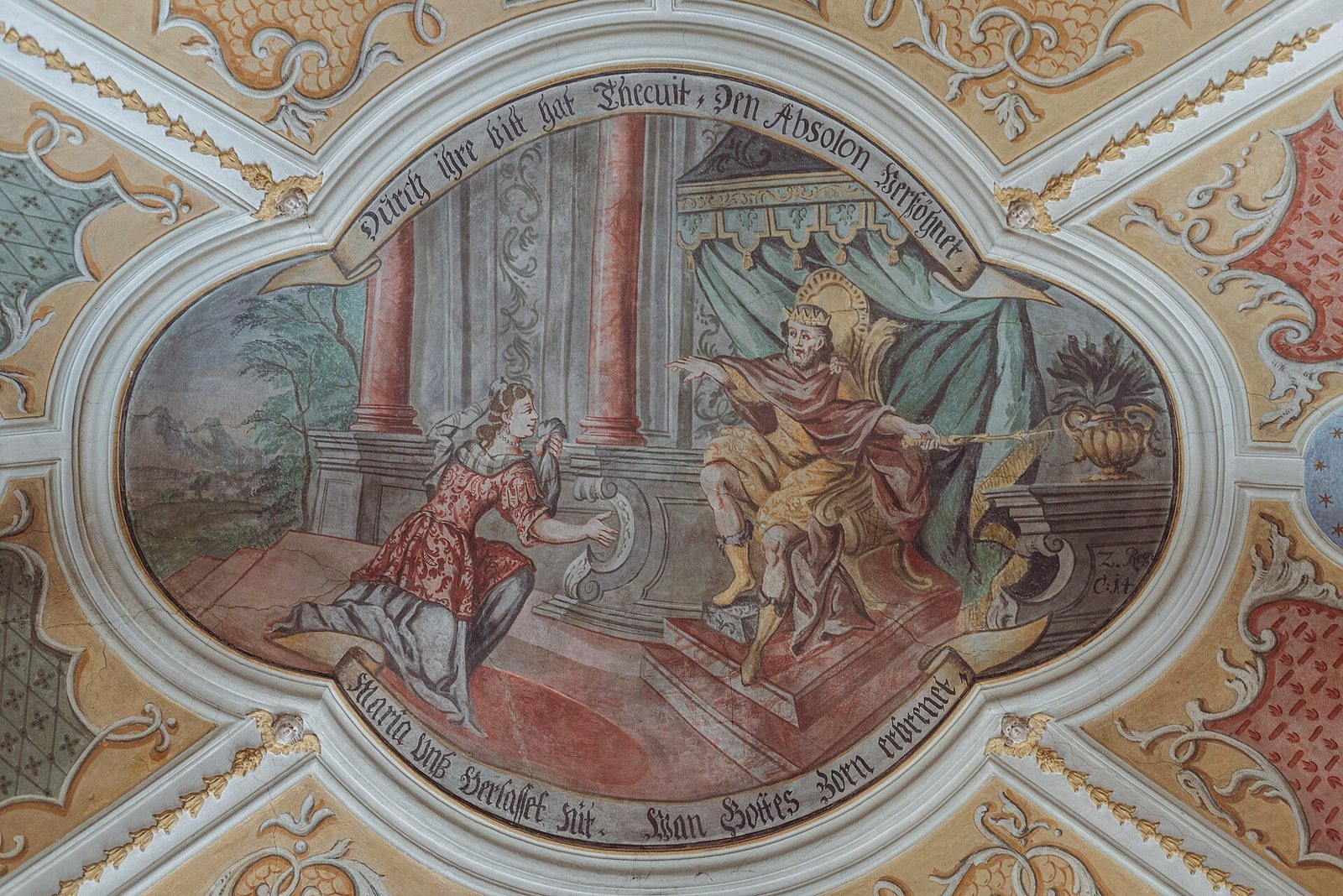
An inscription above the gallery identifies painter Johann Paul Kurz as the creator of the interior decoration in 1750. The paintings include scenes from the Litany of Loreto, a Catholic prayer invoking titles of Mary, as well as images of the Holy Trinity and Marian devotion. Fourteen scenes of Marian feasts cover the upper nave walls, and each side aisle contains four female figures from the Old Testament.
Altars
High altar
The high altar dates from the final quarter of the 17th century. Its central image, venerated for its association with miracles, shows the Virgin Mary enthroned. Created around 1430, it is attributed to the Master of Seeon, a conventional name for an unidentified artist. In front of the image is an altarpiece, probably from the 18th century, depicting Wasserburg am Inn.
Side altars
Four side altars date from around 1700. The left pillar altar combines an oil painting of Saint Joseph with figures of Saints Joachim and Anne. The right pillar altar has a painting of the Annunciation and panels showing Saints Elizabeth and Thomas. Two angled altars stand in the side aisles. The northern one depicts the death of Saint Francis Xavier and includes late-Gothic figures of Bishop Blaise and Saint Barbara. The southern altar shows Blessed Michelina before Calvary, with Saint Anthony of Padua represented below.
Other furnishings
The pulpit, dated 1753, is decorated with foliage and bandwork. A masonry gallery with a stuccoed parapet dates from the second half of the 16th century; figures of Saints Francis of Paola, Charles Borromeo, John of Nepomuk, and Peter of Alcantara, made around 1760, adorn its supporting columns. A devotional image dated 1640 depicts Saint Mary Magdalene. Eighteenth-century votive panels show Saints Roch and Sebastian, invoked as plague patrons, and Wasserburg citizens in a panel dated 1772. The red-marble holy-water font is octagonal and dates from around 1520. The organ, built by Anton Staller in 1979, has 16 stops, two hand-operated keyboards, and a foot-operated pedal keyboard.