Franciscan Monastery in Würzburg: A Convent of the Minorites
Site at a Glance
- Rating
- 4.7
- Popularity
- Medium
- Country
- Germany
- Primary era
- Medieval
- Eras represented
- Medieval, Early Modern, Modern
- Civilizations
- German, Holy Roman Empire
- Site type
- Religious
- Remains
- Monastery
On this page9 sections
History
The Franciscan Monastery in Würzburg is a religious house of the Franciscan Order, founded in 1221 by Cäsar von Speyer with the support of Otto I of Lobdeburg, prince-bishop of Würzburg. It was among the earliest Franciscan foundations north of the Alps, alongside those at Augsburg, Regensburg, and Strasbourg. Dedicated to the Finding of the True Cross, the discovery of the cross on which Jesus was crucified, traditionally attributed to Helena, the convent’s friars preached and provided social assistance to the city’s inhabitants.
Medieval foundation and growth
The community first belonged to the Franciscan province of Teutonia, then to the Rhine Province from 1230, and from 1239 to the Upper German, or Strasbourg, Province, also known within the order as Argentina. After the Franciscans divided in 1517 into Observants, who emphasized strict observance of the order’s rule, and Conventuals, the Würzburg community joined the latter branch, also called the Minorites. Franciscan friars have remained in Würzburg since the convent’s foundation, a continuous presence longer than at any other place in Germany.
The convent church was completed in 1280. In the fourteenth century, the friars also provided pastoral care to the nuns of St. Ulrich’s convent.
Reform, closure, and revival
Prince-Bishop Julius Echter of Mespelbrunn had the church remodeled in Renaissance style between 1611 and 1616. During the secularization of 1803, when religious institutions and property were transferred to secular control, Bavarian religious houses were confiscated in connection with Bavaria’s military support for the French Empire. The Würzburg convent was not closed at once, but it could no longer admit novices and shut in 1804. Like other male religious houses in the city, it was judged unable to provide an adequate income.
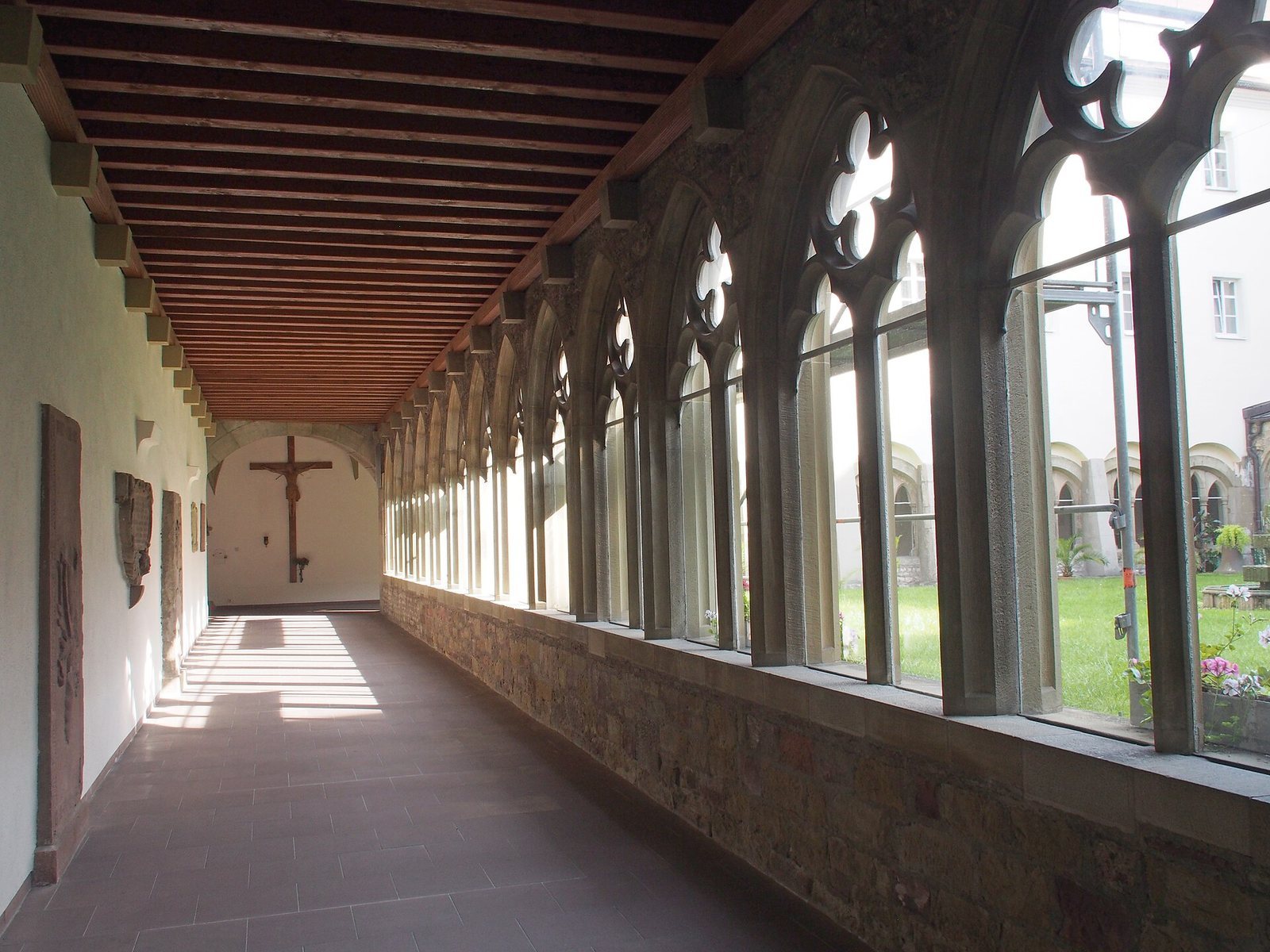
King Ludwig I of Bavaria permitted the admission of novices to resume in 1839. The convent received permission to continue in 1840 and reopened in 1841, first with friars from Italy and South Tyrol and later with local members. A group of the Franciscan Third Order, a branch for people following the order’s tradition outside the friars’ community, was active there in the mid-nineteenth century. The refectory hosted the first German Bishops’ Conference from 13 to 16 November 1848, and in 1857 the convent became the governing headquarters of the German Minorite province.
Destruction and rebuilding
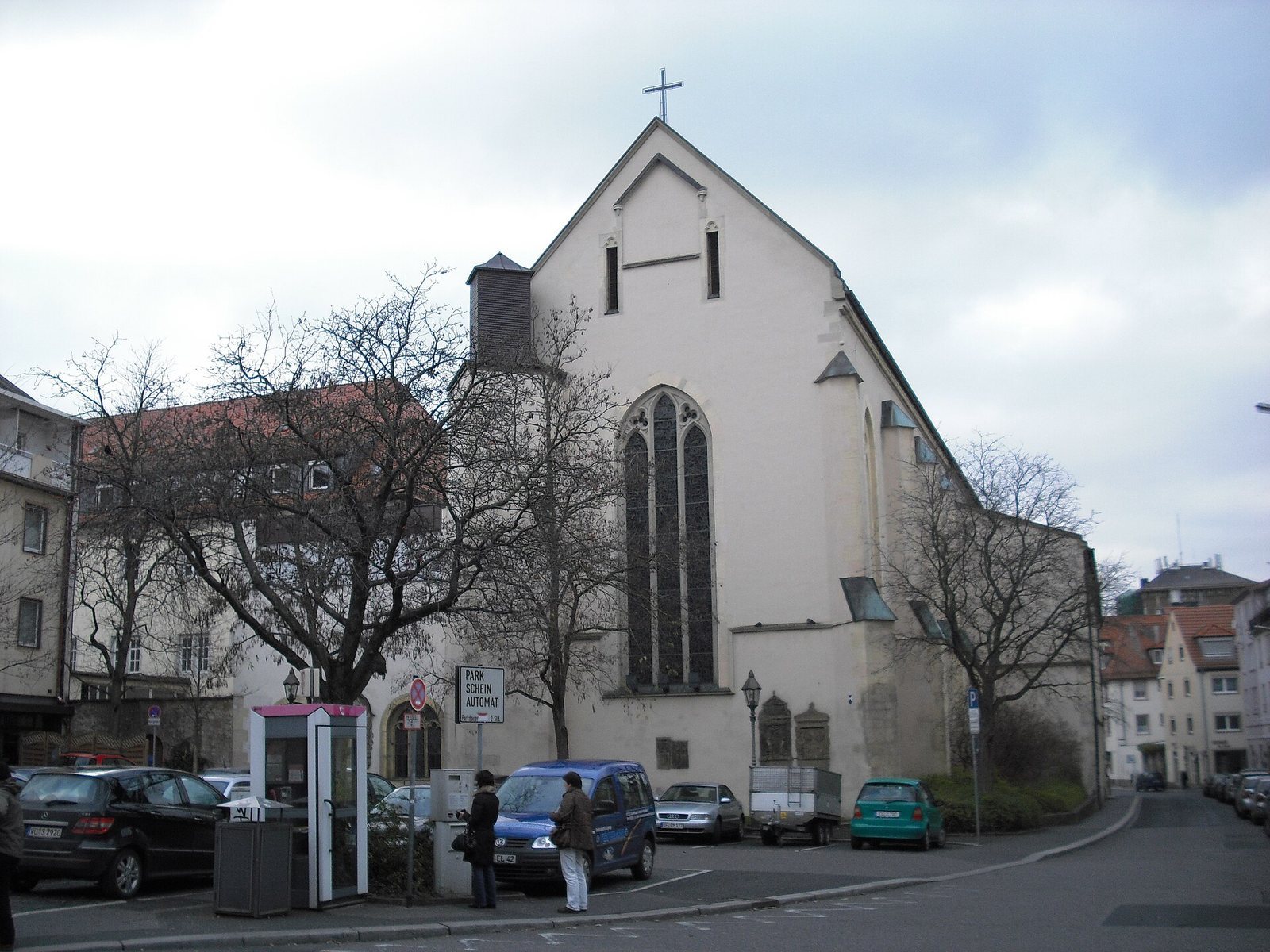
An air raid on 3 March 1945 destroyed the convent and its church. Both were rebuilt using more modern principles while retaining Franciscan simplicity. A fire in 1986 led to another rebuilding of the church, this time in a style inspired by the thirteenth century.
Remains
Church and convent features
Rebuilt church
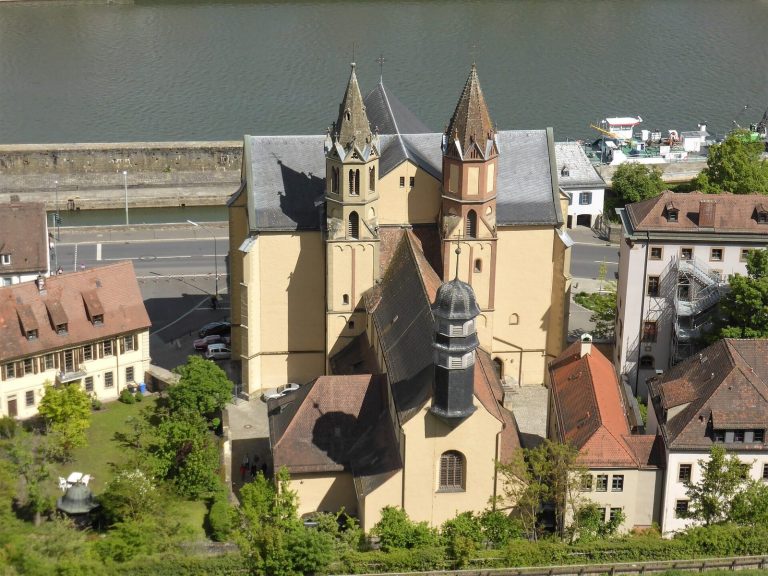
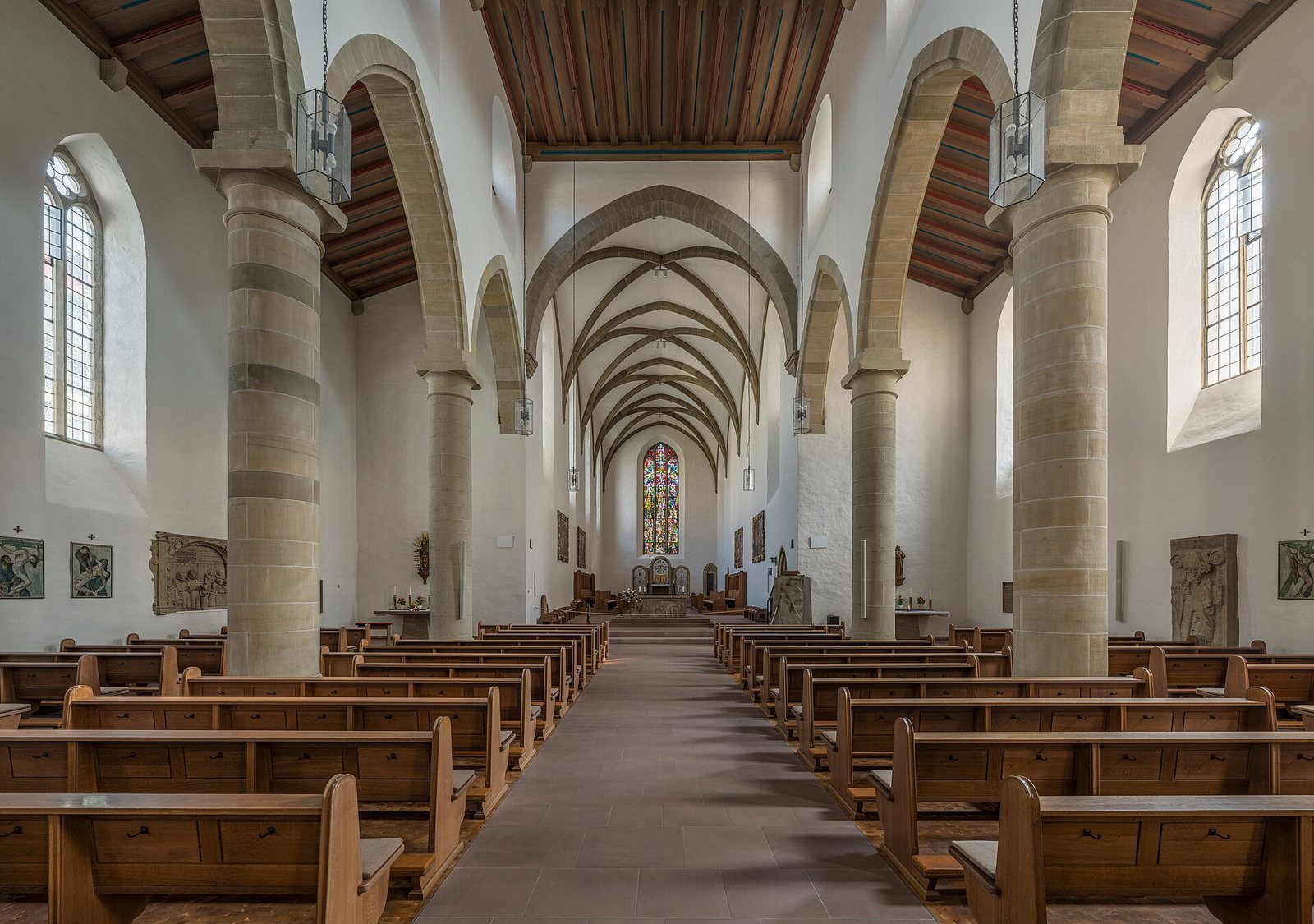
The rebuilt church includes a nave, choir, façade, and organ. Its reconstruction after the 1986 fire follows a thirteenth-century style, while the postwar rebuilding of the convent and church used more modern principles and preserved a simple Franciscan character.
Portal and sculpture
A Renaissance portal made in 1613 by sculptor Michael Kern bears a relief of the stigmatisation of Francis of Assisi, the appearance of wounds associated with Christ’s crucifixion. On the church’s south wall is a Pietà, a sculpture of Mary mourning Christ, made around 1510 in the workshop of Tilman Riemenschneider.
Funerary monuments
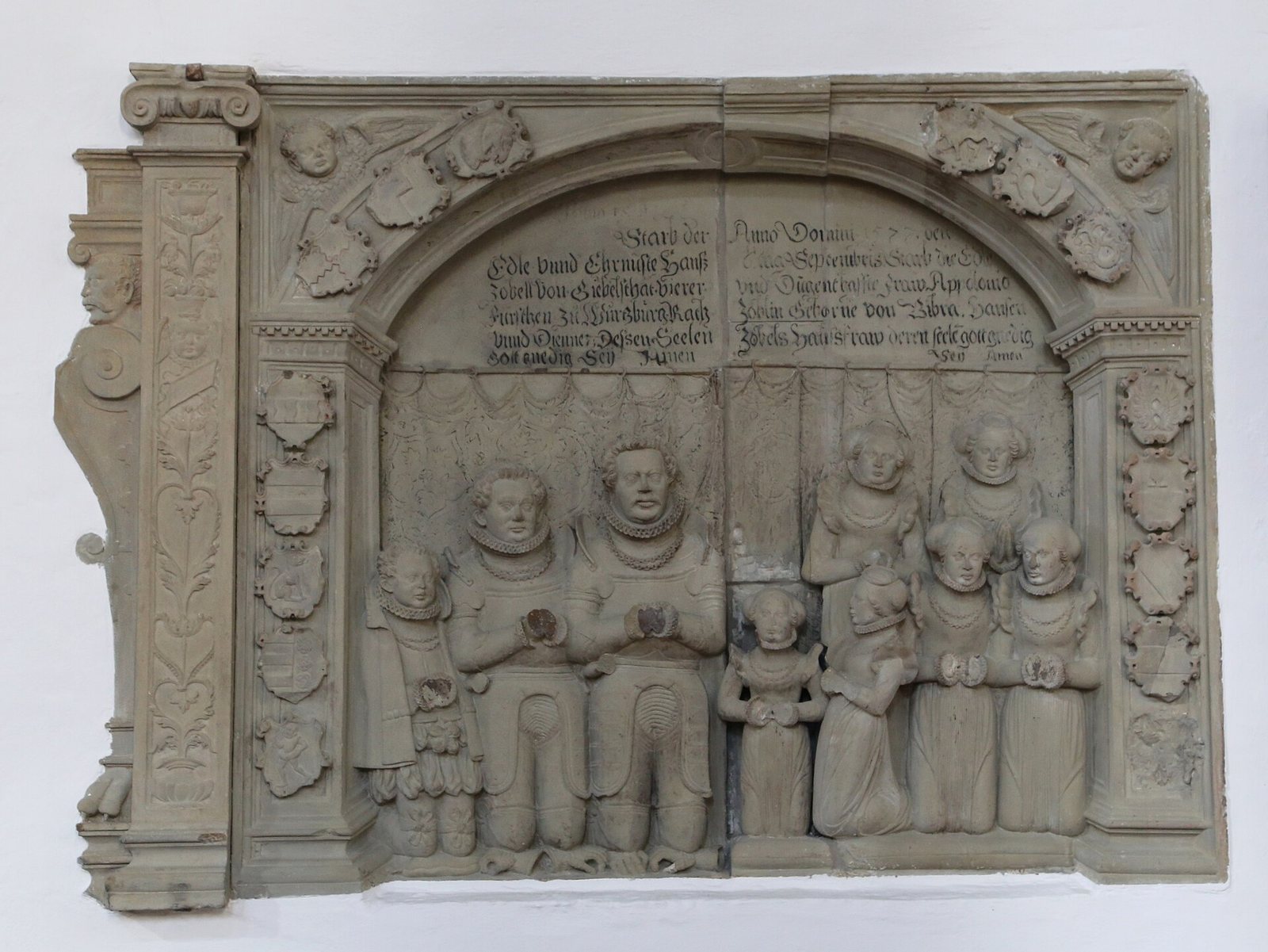
The church’s monuments reflect its long use as a burial place for prominent residents of Würzburg. They include memorials to Anna Zingel, who died in 1407, and the knight Balthasar von Zindel, who died in 1496, as well as to Michael Truchsess von Wetzhausen and Hans von Grumbach-Estenfeld, both of whom died in 1513. Jörg, the son of Tilman Riemenschneider, is credited with Hans’s monument. Some of the memorials came from Riemenschneider’s workshop; Riemenschneider himself carved the face on the monument to Michael Truchsess von Wetzhausen.
A further monument commemorates Anna Maria von Hutten, who died in 1698. Above it is an epitaph for Daniel Echter of Mespelbrunn, who died in 1582.