Fortress of Nossa Senhora da Conceição do Ilhéu: Funchal’s Port Defense
Site at a Glance
- Popularity
- Low
- Country
- Portugal
- Primary era
- Early Modern
- Eras represented
- Early Modern
- Civilizations
- Portuguese
- Site type
- Military
- Remains
- Fort
On this page11 sections
History
Proposals and construction
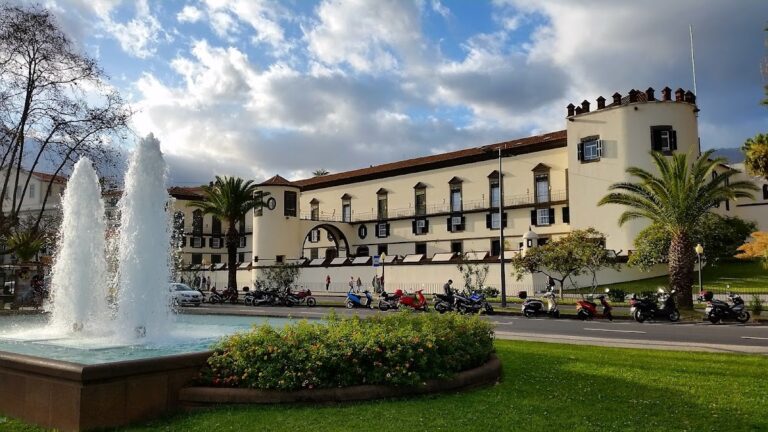
The Fortress of Nossa Senhora da Conceição do Ilhéu is a seventeenth-century coastal fortification in Funchal, Portugal, built to defend the port from repeated corsair attacks, or raids by armed sea raiders. In 1553, Diogo Cabral urged King João III to fortify Ilhéu Grande, identifying the harbor’s defense as a pressing need.
As shipping through Funchal increased in the mid-seventeenth century, officials considered another fort necessary to improve port security and surveillance, complementing the Customs Redoubt, a small defensive fortification. Preliminary activity may have taken place between 1634 and 1636 under Governor João de Menezes. It appears to have involved surveying the site and collecting stone and lime. More substantial building proceeded during the Portuguese Restoration War (1640–1668), the conflict that ended Habsburg rule and restored an independent Portuguese monarchy. A governor’s order referred to the fort in 1642.
In 1651, residents asked the newly arrived governor, Bartolomeu Vasconcelos da Cunha, to undertake construction. He and treasury official Francisco de Andrada told Lisbon that local levies for fortification repairs and upkeep could cover the work without drawing on the Royal Treasury. On 10 February 1652, the monarch authorized construction with local labor and materials. The first soldiers were to come from the Fortress of São Lourenço, avoiding the cost of adding troops.
Hard rock made construction difficult. The fort was considered close to completion by 1664, although a letter in 1670 placed the start of building roughly fourteen years earlier. It had been garrisoned since 1658.
Garrison, worship, and port duties
The soldiers formed a religious brotherhood devoted to Our Lady of the Conception, a Catholic title for the Virgin Mary, and maintained an oratory at the fort. In 1670 they asked Prince Regent Pedro, later King Pedro II, for permission to build a chapel. They said the oratory lacked suitable furnishings and offered to pay for the chapel’s images, altar decoration, and ornaments. Pedro approved the request on 9 November 1672 and directed that the site be measured and the work kept inexpensive. His order reached Funchal in 1682 and was registered there on 28 January 1683. Manuel de Andrade served as chaplain, and the fort had its own chaplain, José de Andrada, by 1692.
As the fort’s duties expanded, it operated independently of São Lourenço in the last quarter of the seventeenth century. It registered ships entering the port, saluted arrivals, and signaled their place of origin to the city. Spending in 1673 went mainly toward boats carrying soldiers, while rising port traffic increased gunpowder costs between 1675 and 1689.
By 1698, the fort had a garrison of twelve artillerymen and its first constable, Simão Fernandes Forte, an officer responsible for the guns. Fishermen had to carry provisions to the islet without pay. When rough seas prevented them from reaching it, supplies were passed to the isolated garrison by rope.
Changes to the harbor and later use
In 1771, Sergeant-major Luís de Alincourt proposed joining the two islets. They were connected roughly a century later. After World War I, Funchal’s port was enlarged. The fort received the Portuguese classification of Property of Public Interest in 1940, a heritage-protection category.
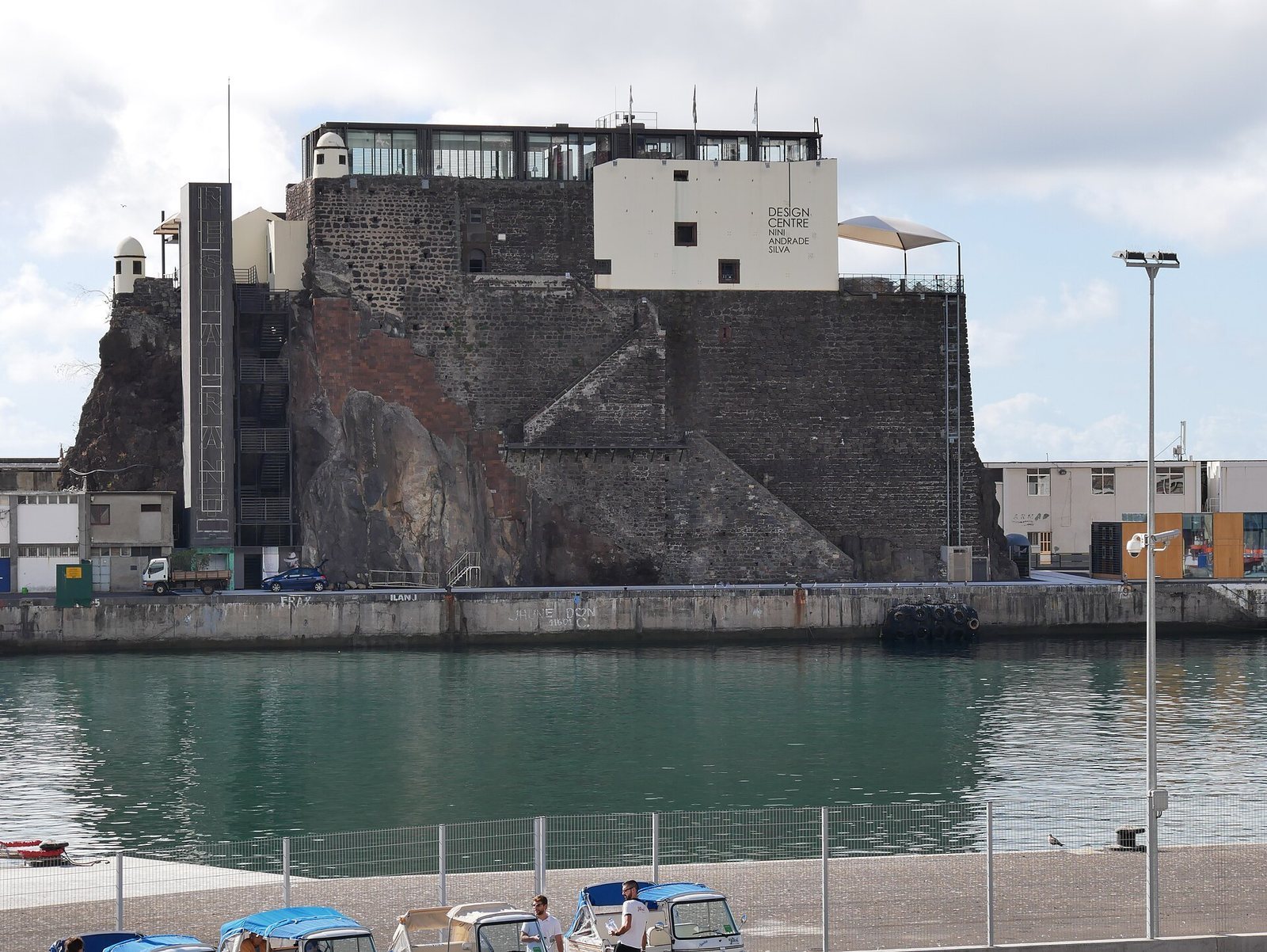
A nightclub and bar occupied the fort from 2007 until 2013. Since 2015, it has housed the Design Centre Nini Andrade Silva.
Remains
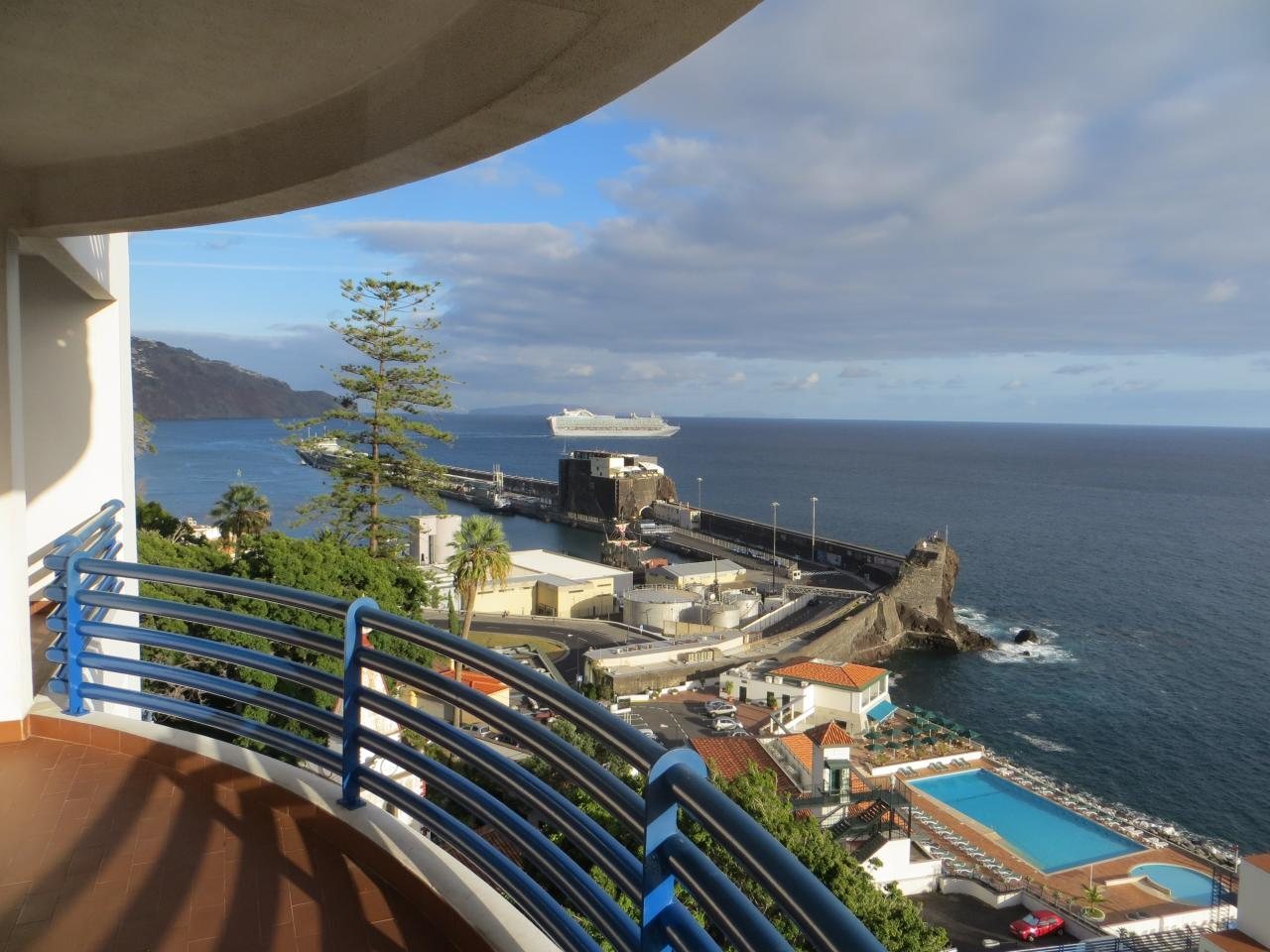
The fort stands on the former islet of Nossa Senhora da Conceição, now incorporated into Funchal’s port breakwater. A 1654 drawing depicts a circular fortified platform with a separate circular guardhouse at its center. Building required cutting back the hard rock so that stone-and-lime masonry could be laid.
Fortification and entrance
Gun platform
The 1654 drawing shows six guns mounted on carriages. The fort was considered capable of holding twelve artillery pieces, and six were described as three bronze and three iron guns. A flagpole stood at the center of the fortification; its banner signaled to the city the direction from which ships were approaching.
Gate and sea approach
The drawing also depicts a broad dressed-stone entrance with a semicircular arch and a niche above it. A balcony projected in front of the gate, while a long staircase of three flights descended toward the sea. An inscription was placed above the entrance.
Religious and communications features
Oratory, chapel, and cistern
The soldiers’ oratory preceded a chapel. An inscription identifies a church and cistern as having been built in 1687 by Governor and Captain-General Pedro de Lima, whose office combined senior military and governing authority.
Semaphore and beacon
In 1921, the fort contained a semaphore station, which sent information through visual signals, and a beacon.