Baimiweng Fort: A Coastal Artillery Fort Defending Keelung Harbor
Site at a Glance
- Country
- Taiwan
- Primary era
- Modern
- Eras represented
- Modern
- Civilizations
- Japanese
- Site type
- Military
- Remains
- Fort
On this page14 sections
History
Baimiweng Fort is a coastal artillery fort in Taiwan that guarded the entrance to Keelung Harbor from high ground on the harbor’s southwestern side. The Japanese Army rebuilt it between 1900 and 1902 as part of the Keelung Fortress, its coastal-defense system for the harbor. The fort formed the outer harbor’s first line of defense and operated in coordination with Wanrentou Fort and Sheliao Island, now called Heping Island.
Early associations and coastal defense
Tradition connects an earlier fort at the site with Spanish or Dutch activity in Taiwan during the seventeenth century. A proposed fortress called Milaen has not been conclusively verified. The local nickname Holland City has a separate possible explanation: Qing soldiers and later residents from Hunan may have been mistaken for people from Holland because of their speech.
The site began serving as a coastal-artillery battery, a group of artillery positions, during the Sino-French War of 1883–1885, fought between France and Qing China. French troops also occupied it during the conflict.
Japanese rebuilding and military use
As Japan prepared for the possibility of war with Russia, the army incorporated the fort into a permanent coastal-defense plan drawn up in 1899. In July 1900, the fortification department, the army’s military-engineering branch, submitted a design and budget. Construction began on 12 December that year. The guns were installed in November 1901, making Baimiweng the first battery in the Keelung Fortress to receive its armament. The fort was completed on 30 July 1902.
Its principal weapons were four Armstrong guns with 8-inch bores and a range of about 8,800 metres, aimed north toward the sea. An artillery firing command post was added in 1904, during the Russo-Japanese War of 1904–1905, a conflict between Russia and Japan. Officers’ quarters, barracks, and a food storehouse followed in 1907. In 1927, a damaged gun was replaced with an Armstrong 8-inch cannon from Bachimen Fort, and a practice battery was added in 1931. The fort is also associated with the Second World War.
Postwar changes and restoration
After the Second World War, the Republic of China armed forces took control of the Keelung Fortress and its installations. Under a 1947 downsizing plan, Baimiweng came under the fortress administration. When the fortress was abolished in 1957, its garrison left and its breech-loading guns, loaded through the rear of the barrel, were scrapped.
In 1977, the toilets, guardhouse, and storehouse passed to the National Property Bureau, the Taiwanese government office responsible for state-owned property. One toilet served the Taibai Village community, and the gun-emplacement area was repaired in 1980. Taiwan’s Ministry of the Interior designated the fort a third-grade historic monument on 19 August 1985; it became a Keelung City-designated historic site in 2009. Three associated remains, including the guardhouse, were registered as historic buildings in 2004, but that status was later withdrawn after the property was sold.
Restoration and reuse work began in 2020. The main fort restoration was completed in 2021, and the storehouse conversion was completed in 2022.
Remains
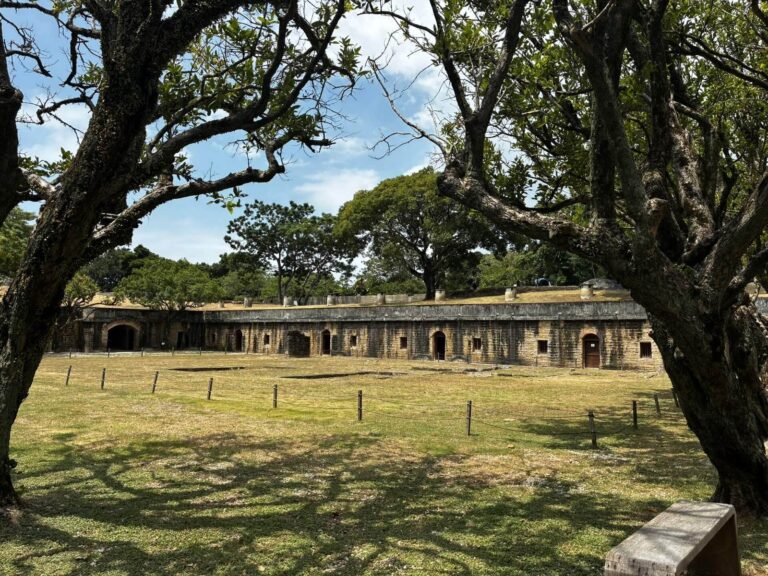
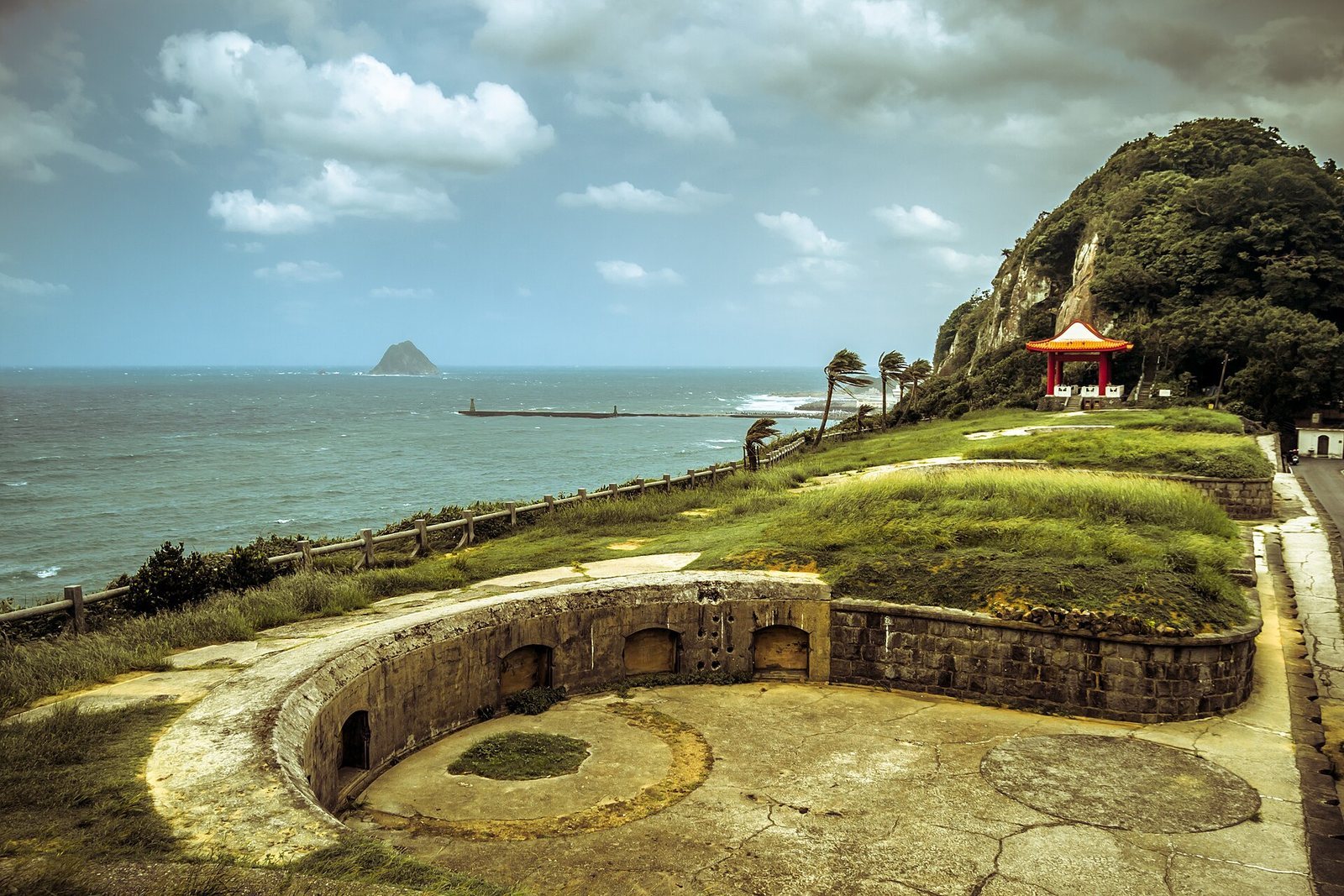
The fort is arranged in four functional areas: gun emplacements, observation facilities, barracks, and storage. Its gun positions form a south-to-north line facing the bay, while observation and command structures occupy high ground on either side. Concrete and stone are prominent in the surviving works. Keelung Lighthouse and remains of Wanrentou Fort lie to the east, while the Hsieh-ho thermal power plant is to the west.
Gun positions and ammunition stores
Gun emplacements
Four large gun platforms were built of concrete and stone. Each is about 12.6 metres wide, with a forward protective wall 1.72 metres high and 1.7 metres thick. The outer face slopes and is about three metres wide. Recesses in the walls held ammunition, while ramps behind the positions linked them to the side magazines. Parts of the concrete fabric remain.
Side magazines
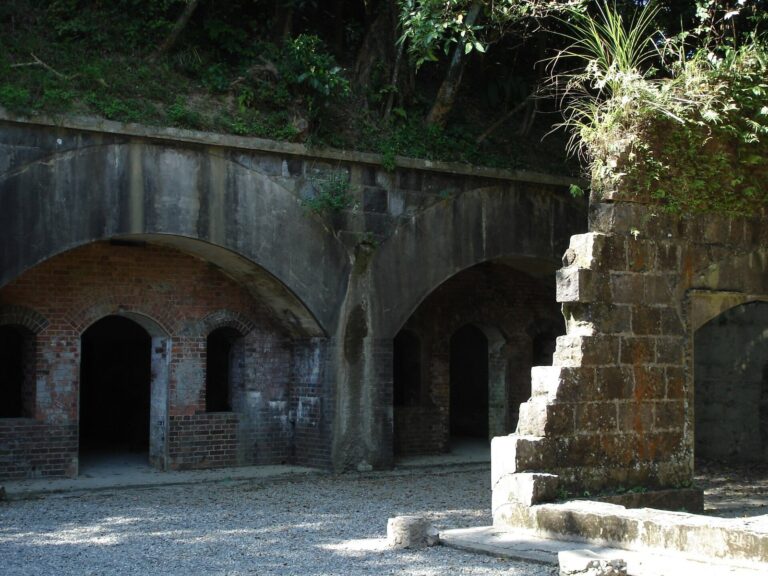
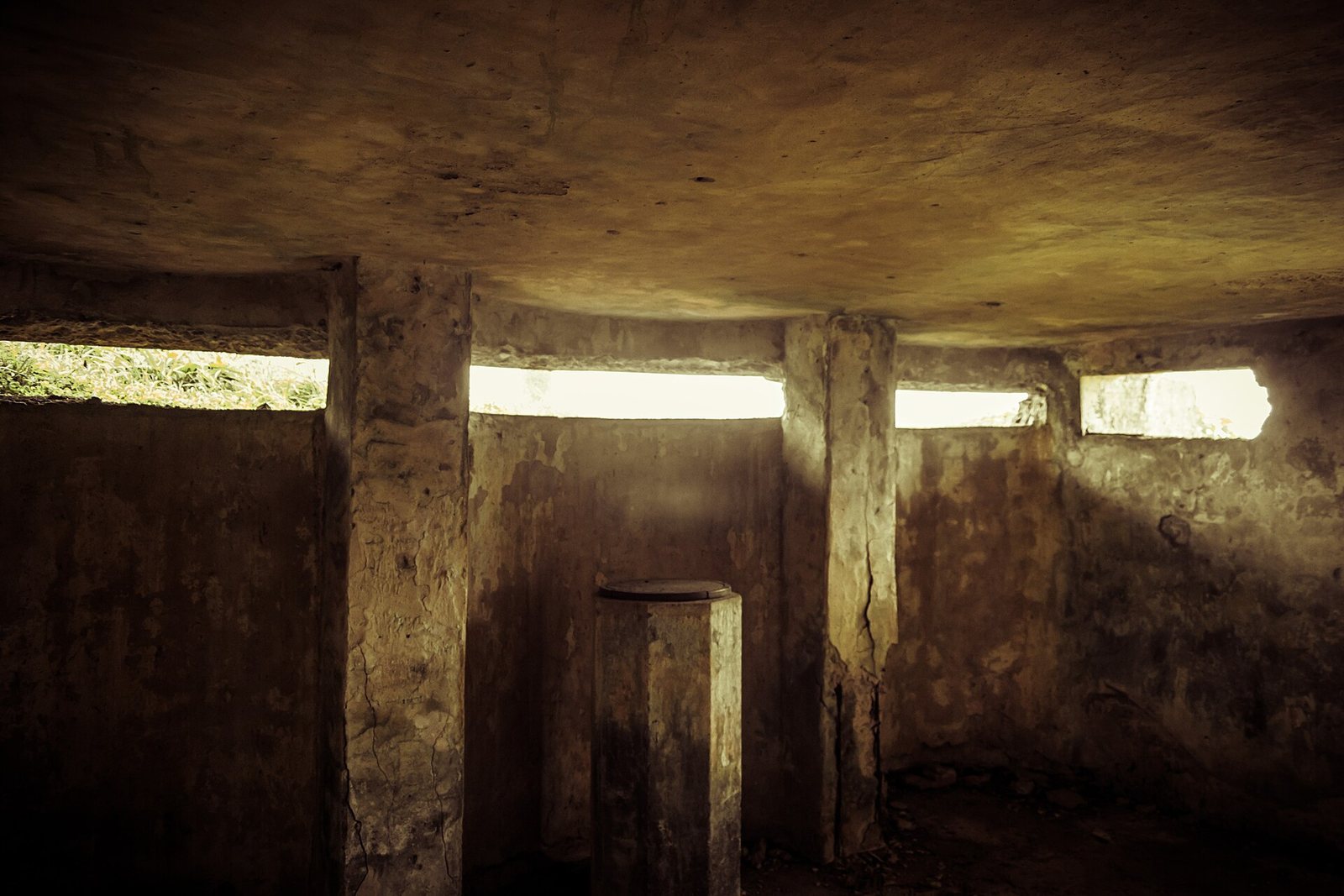
Two vaulted ammunition stores are built into the fort. Each entrance is about 1.05 metres wide and 1.75 metres high. Inside, a half-metre-thick partition has a small square opening above it; the concrete walls and vaults are about 1.1 metres thick. These spaces stored ammunition and provided temporary waiting areas for artillery crews.
Observation and command facilities
Western hill
The western observation post is a semicircular concrete structure. An iron observation structure originally stood there and was recreated during restoration. A reinforced-concrete shelter and subsidiary observation post sit beneath the main structure.
Eastern hill
At about 103 metres elevation, the eastern hill held a firing command post and an observation post. Some concrete structures remain. The observation system tracked ships offshore, supported communication and air defense, and helped crews monitor where shells landed.
Support buildings and services
Storehouse and slope facilities
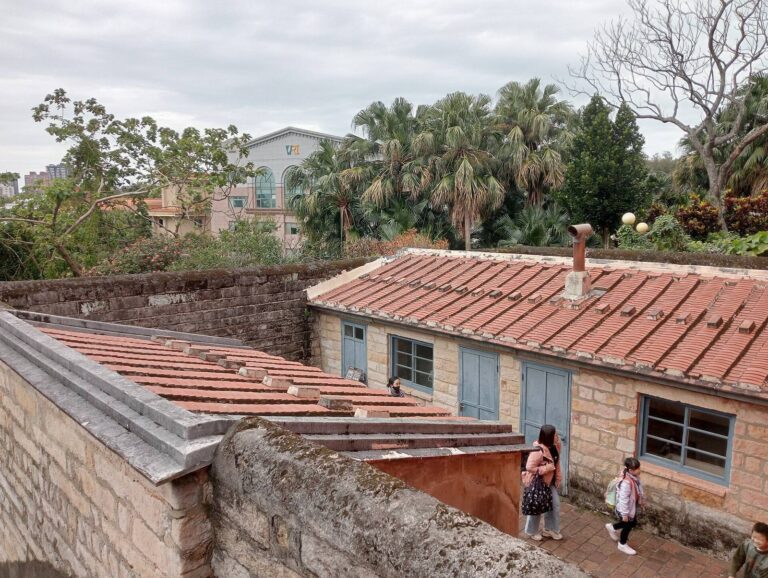
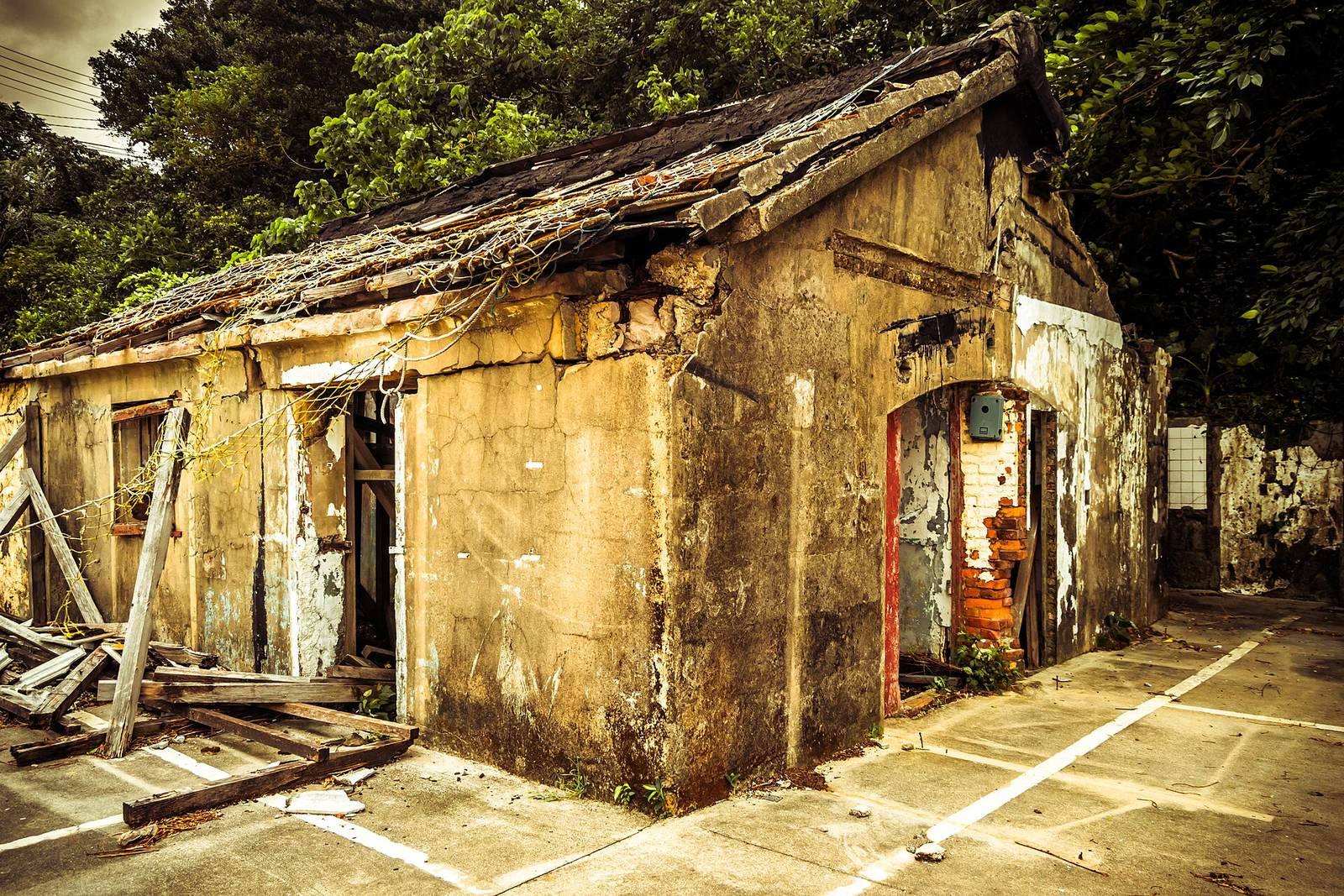
Facilities once spread along the slope behind the gun line included barracks, a food store, a gun-equipment store, a kitchen, a stable, and a small weapons-repair shop. Surviving ancillary structures include the storehouse, two toilet blocks, and a cistern. The storehouse was damaged before its original Fink-truss steel framework, a triangulated structural frame, was restored. The building was adapted for visitor information and guided services. Restoration also repaired a pavilion and recreated Japanese-style railings along the sloping approach. A nearby Mushan electric-lighting engine house supplied both Baimiweng Fort and Mushan Fort.
Ammunition depot and guardhouse
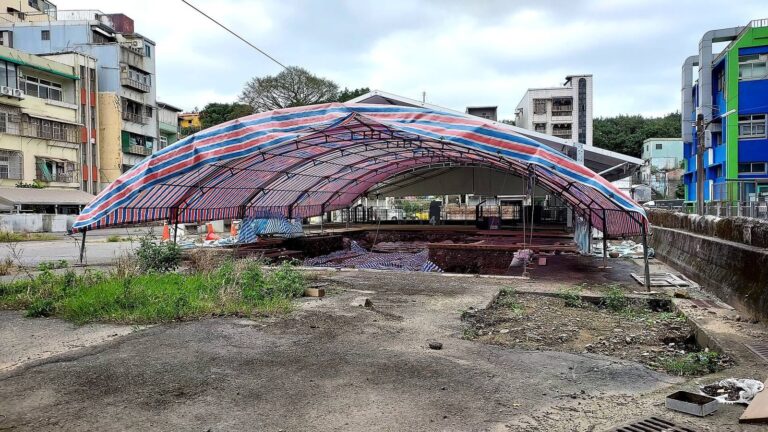
The ammunition depot, a powder store west of the storage area, has a U-shaped plan and a concrete vault. The guardhouse was demolished in 2005, and partial traces of it remain.