Fort San Diego: A Spanish Maritime Fortification in Acapulco
Site at a Glance
- Rating
- 4.6
- Popularity
- Medium
- Country
- Mexico
- Primary era
- Early Modern
- External website
- Open
- Eras represented
- Early Modern
- Civilizations
- Spanish
- Site type
- Military
- Remains
- Fort
On this page11 sections
History
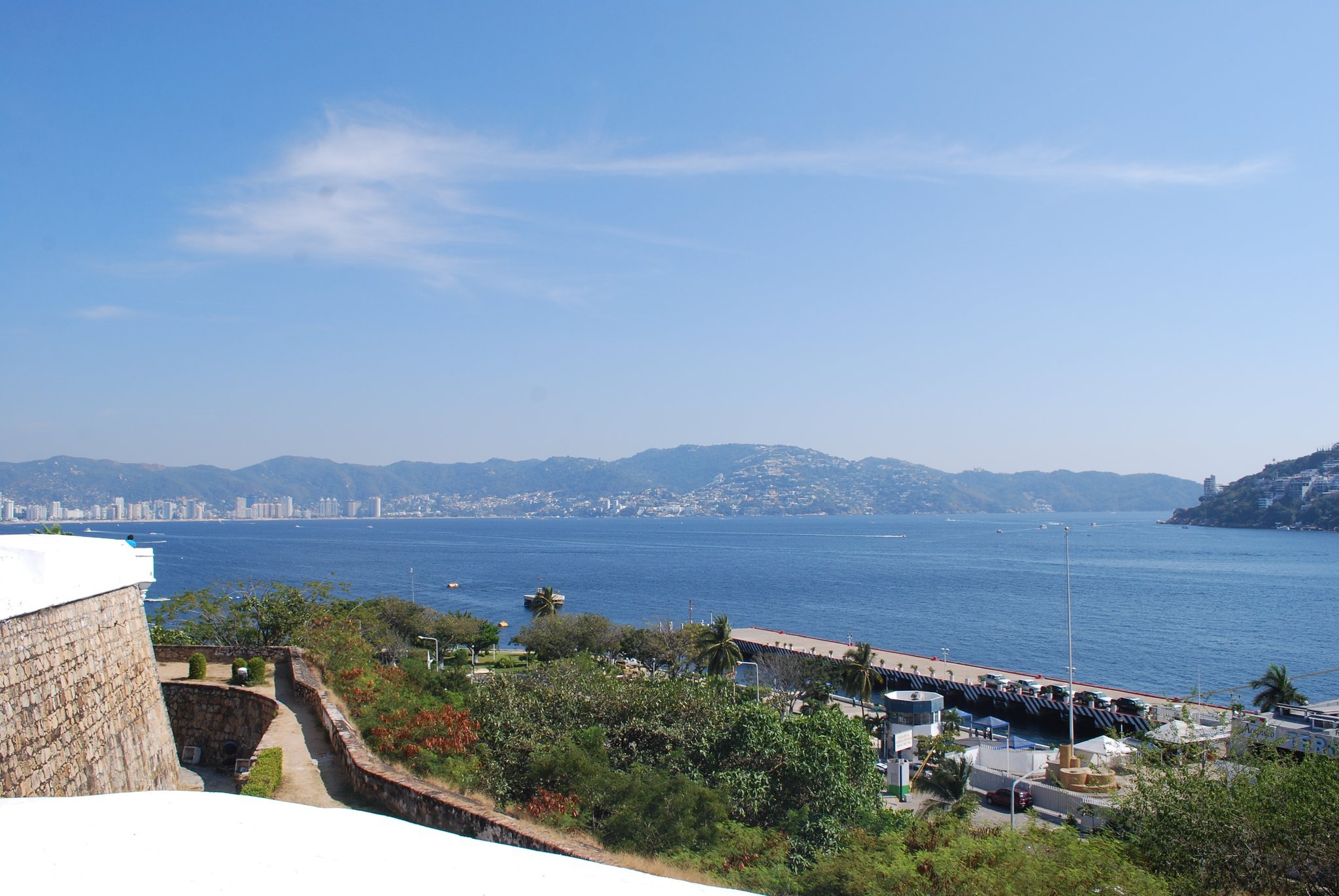
Fort San Diego is a Spanish maritime fortification in Acapulco, Mexico, built to protect the port, its supplies, and returning Manila galleons from piracy and raids. Construction of the first fort was ordered in 1615 by Diego Fernández de Córdoba, Marquis of Guadalcázar, viceroy of New Spain, and the work was completed in 1617 to designs by Adrián Boot, a Dutch military engineer in Spanish service. The fort became one of the most important Spanish maritime defenses on the Pacific coast.
The first fort, 1615–1617
The original fort was built between 1616 and 1617. An earthquake damaged the work before completion, requiring repairs to the entrance and drawbridge. The first construction phase had already produced the King’s, Prince’s, and Duke’s bastions and their landward curtain walls, while the Marquis’ and Guadalcázar bastions and the earthworks were still being built when the damage occurred.
During the late seventeenth century, the fort held 42 bronze cannons and a garrison of 60 men. Its defenses protected Acapulco and the Pacific terminus of the Manila galleon trade. These Spanish trading ships crossed the Pacific between the Philippines and New Spain, returning to Acapulco with valuable cargoes that made the port a target for pirates.
Reconstruction and changing use
Earthquake damage in the eighteenth century prompted plans to strengthen the defenses. Miguel Constanzó proposed improvements in 1776, and Ramón Panón designed a new defensive pentagon. Construction began in 1778 and ended in 1783. The rebuilt fort was named Fort San Carlos in honor of King Carlos III of Spain, although Fort San Diego remained the popular name and eventually prevailed.
The reconstructed fortress could accommodate 2,000 people and held provisions and potable water for a year. Beyond its military role, it was later used successively as a convent, hospital, and prison. Fortín Álvarez, built on the heights of Acapulco, served the fort as a powder magazine and ammunition store.
War and Mexican military service
During the Mexican War of Independence, an insurgent movement that sought to end Spanish rule, Acapulco was besieged and the Spanish garrison took refuge inside the fort. Commanded by Pedro Antonio Vélez, the garrison resisted until surrendering to José María Morelos in August 1813. Morelos, a leading insurgent commander, and Vélez signed a treaty of surrender. The fort also sheltered many families and the army officers defending it.
Spanish forces retook the fort in April 1814. On October 15, 1821, it became part of the First Mexican Empire. The building continued as an active Mexican military installation and was later associated with the French intervention in Mexico and the Mexican Revolution. In the late nineteenth century, it served the Secretariat of War and Navy.
From military installation to museum
In 1949, the fort was transferred for conversion into a military museum. Its administration subsequently passed among Mexico’s National Institute of Anthropology and History, the Secretariat of Public Education, the National Institute of Fine Arts and Literature, and Acapulco’s Junta de Mejoras Materiales. It returned to the National Institute of Anthropology and History in 1980 and opened as a public museum in 1986.
The Museo Histórico de Acapulco Fuerte de San Diego presents the history of Acapulco, the fort, piracy, the Manila galleons, the Mexican War of Independence, and the building’s later military history. Its collections include archaeological remains of the Mezcala culture and artifacts connected with the Manila galleons. The fort is administered by the National Institute of Anthropology and History, remains in good condition, and is recognized as a historic monument.
Remains
Fortification and associated structures
The pentagonal fort
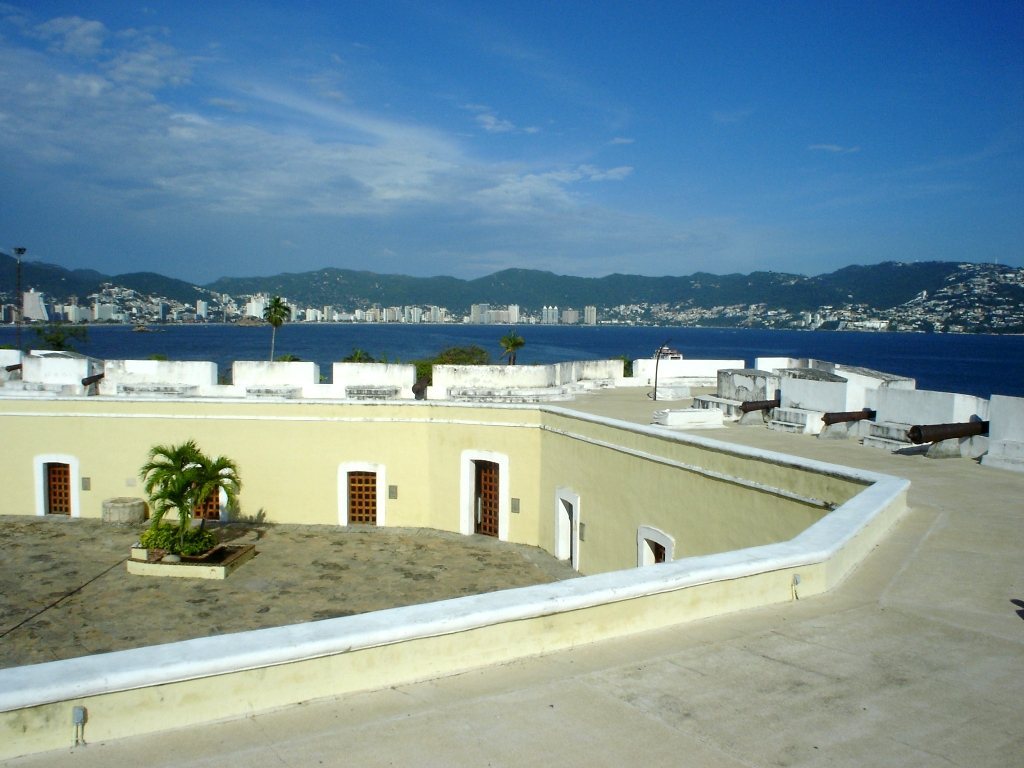
Fort San Diego is a stone star fort, a polygonal artillery fortress whose projecting bastions allowed defenders to cover the walls with overlapping fire. Its rebuilt form follows a regular five-pointed pentagon. The five bastions are named Saint Joseph, Saint Anthony, Saint Louis, Saint Barbara, and the Conception. Each originally carried a small sentry structure called a guerite on its projecting point, but these were demolished during the 1970s.
The fort retains its main entrance, principal plaza, cannon emplacements, defensive walls, and the pentagonal arrangement established during the eighteenth-century reconstruction. The first fort had an irregular pentagonal plan with five differently named bastions: the King’s, Prince’s, Duke’s, Marquis’, and Guadalcázar bastions. It also contained a gate, drawbridge, barracks, residences for the castellan and constable, and an arms room. Artillery tests showed that its cannonballs could reach Grifo Point and close access to the bay.
Fortín Álvarez
Fortín Álvarez stood on the heights of Acapulco as a powder magazine and ammunition store serving Fort San Diego. Its purpose formed part of the wider defensive arrangement supporting the principal maritime fortification.
Museum spaces and collections
Exhibition rooms
The museum occupies the fort and contains thirteen exhibition rooms. Displays include archaeological remains associated with the Mezcala culture, artifacts connected with the Manila galleons, and material concerning piracy, Mexican independence, and the history of Fort San Diego.