Fort Joubert: A French Frontier Fortification at Saint-Vincent-les-Forts


Site at a Glance
- Rating
- 4.4
- Popularity
- Low
- Country
- France
- Primary era
- Early Modern
- Eras represented
- Early Modern, Modern
- Civilizations
- French
- Site type
- Military
- Remains
- Fort
On this page7 sections
History
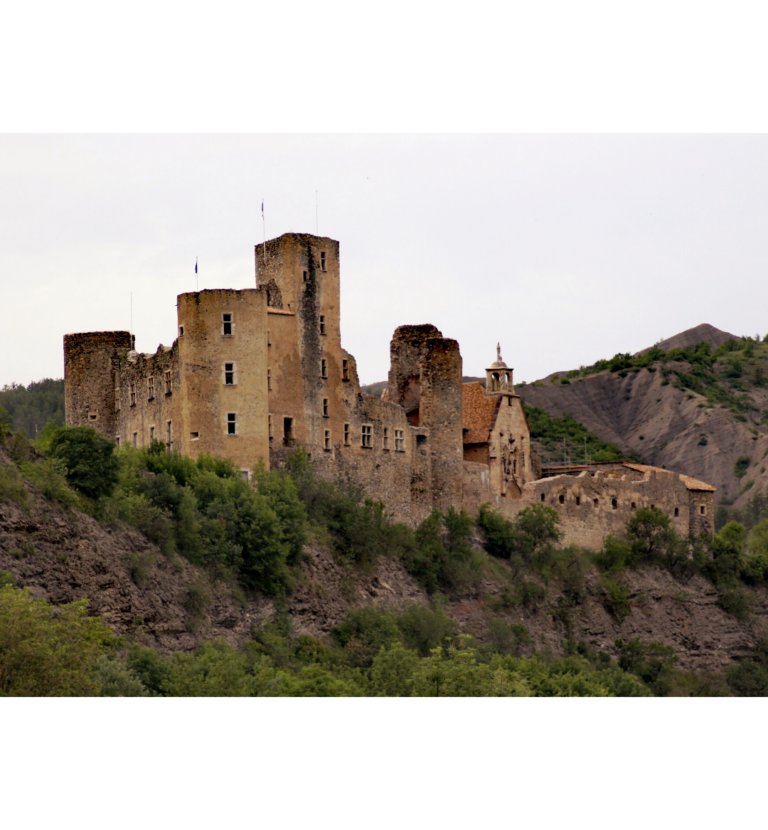
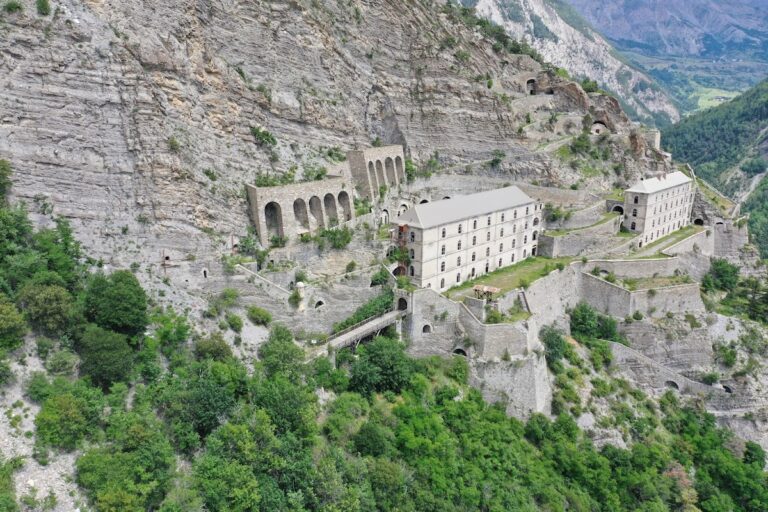
Fort Joubert is a late-seventeenth-century French fortification at Saint-Vincent-les-Forts, France, overlooking the lower Ubaye defile. It was built on the site of a castle destroyed by Savoyard forces under Duke Victor-Amédée during the War of the League of Augsburg, a European conflict fought from 1688 to 1697. On 25 December 1692, Vauban, the French military engineer and marshal whose designs shaped France’s frontier fortifications, proposed a redoubt and an enclosing bastioned fortification for the position.
Construction under Vauban and Richerand
The military engineer Richerand directed the works from 1693 and altered Vauban’s proposed enclosure. He also built a forward round tower with a projecting wooden fighting gallery, known as a hourd, in 1696. Connected to the main fort by a 300-metre wooden gallery, the tower watched the road from Lauzet to Seyne-les-Alpes, although its military value was limited.
The fort was completed in 1700. Vauban visited it that year, criticized the changes made to his design, and called for corrections to the escarpments and embrasures. He also revised plans for a defensive enclosure around the village and recommended new barracks. Limited funds reduced subsequent work to minor corrections, while the proposed village enclosure remained a plan rather than a completed work.
Changing military importance
After the Ubaye became French in 1713, Fort Saint-Vincent lost much of its strategic importance and was abandoned during the eighteenth century. Its military role returned during the French Revolution. Between 1825 and 1843, several schemes were prepared for a second modern fort, including a design with Haxo casemates, fortified chambers associated with General François-Nicolas-Benoît Haxo. In practice, only maintenance work followed.
From 1873, Saint-Vincent was selected as a rear position for the fortified barrier of Tournoux within the Séré de Rivières system, a late-nineteenth-century French program of frontier defenses named after General Raymond Adolphe Séré de Rivières. Between 1879 and 1887, the area gained the Courtigis defensive barracks and the Chaudon redoubt. The Ravin de la Tour fortified post and the Châtelard and Colbas batteries at Dormillouse were also built on the surrounding heights. In 1887, the older Vauban fort received the name Fort Joubert and became part of the Defensive Organization of the Ubaye, a network of fortified works distributed among several Ubaye communes.
Damage, protection, and restoration
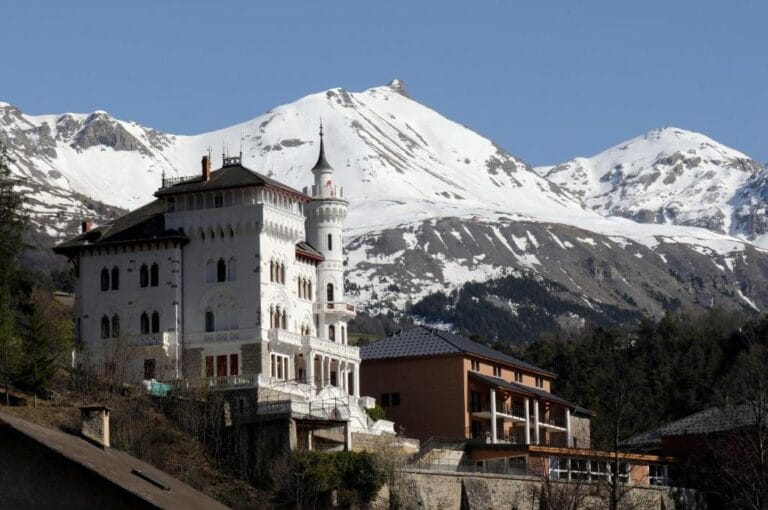
Lightning destroyed the roof framework of the Tour Vauban in 1945, and the tower continued to deteriorate afterward. Fort Joubert, then in ruins, was purchased by private owners in 1997. The Association of the Friends of Fort Saint-Vincent has since undertaken restoration, with renovation of the tower beginning in 2002. Fort Joubert was listed as a French historic monument in 1994.
Remains
The redoubt and bastioned enclosure
The central redoubt originally had a square plan, four levels, and machicolations, projecting openings or structures through which defenders could attack enemies below. Two small projecting sentry turrets, called échauguettes, flanked it diagonally. Around the redoubt stood a diamond-shaped bastioned enceinte, meaning an enclosing defensive fortification, with three échauguettes. Its south-eastern curtain, the section of wall between projecting defenses, contained an entrance between two demi-bastions, or half-bastions. A second gate with a hourd opened on the northern front.
Inside the fort were logistical installations, including a cistern and accommodation for officers. The later nineteenth-century alterations changed the surviving form of the redoubt. In 1882 and 1883, it was lowered by one level and half of a second. Two adjoining vaulted casemates, fortified chambers protected by substantial masonry, were added. The drawbridge was removed, and a tunnel cut through the rock became the present entrance.
The Tour Vauban
The Tour Vauban is a round tower positioned in front of the fort. Built in 1696, it had projecting hourds and served as a lookout over the road linking Lauzet and Seyne-les-Alpes. A 300-metre wooden gallery connected it to Fort Joubert. Lightning destroyed its roof framework in 1945, after which the tower deteriorated until renovation began in 2002.
Nearby sites