Fort Frederick, Maryland: A Colonial Frontier Fortification
Site at a Glance
- Country
- United States
- Primary era
- Early Modern
- Eras represented
- Early Modern
- Civilizations
- British
- Site type
- Military
- Remains
- Fort
On this page11 sections
History
Fort Frederick, in Maryland, United States, was built by the colony of Maryland in 1756–57 as a stone frontier stronghold with projecting corner defenses associated with French military engineer Vauban. Governor Horatio Sharpe requested its construction after Edward Braddock’s defeat heightened fears of attacks on the frontier. The fort was named for Frederick Calvert, the hereditary proprietor of Maryland.
Frontier refuge, 1756–1763
In 1756, the Maryland Legislature authorized £6,000 for the project, which was completed the following year. The fort’s main purpose was to shelter settlers. During raids on nearby settlements in 1757 and 1758, people fled east to safety; the fort could accommodate about 700. Soldiers of the 60th Regiment of Foot, an infantry regiment, served alongside locally organized militia, and patrols went out to discourage further raids.
Fort Frederick also provided refuge during Pontiac’s Rebellion, an Indigenous uprising against British rule in North America in 1763. The fort was never attacked directly.
Prisoners and abandonment
From 1777 to 1783, during the American Revolutionary War, Fort Frederick held British and German prisoners of war. As many as 1,000 soldiers captured after the Battles of Saratoga in 1777 and Yorktown in 1781 were confined there. The fort was sold at auction in 1791 and then stood abandoned until the Civil War.
Civil War service
At the start of the American Civil War, troops occupied the fort and used it as a gun emplacement to protect the Chesapeake and Ohio Canal and the parallel Baltimore and Ohio Railroad. The 1st Maryland Infantry (US) held the area from December 1861 through February 1862. On Christmas Day, 1861, Company H fought Confederate raiders in a skirmish at the fort. A picket from the 12th Illinois Cavalry briefly occupied the area in October 1862. The fort’s military usefulness had ended by that year.
Restoration and recognition
Maryland acquired the property in 1922 for a state park. Archaeological investigations and the discovery of the original plans made a full reconstruction possible, with much of the restoration work in the 1930s undertaken by the Civilian Conservation Corps, a public-work program active during the Great Depression. On November 7, 1973, Fort Frederick became a National Historic Landmark and was added to the National Register of Historic Places, the federal list of properties recognized for historical importance.
Remains
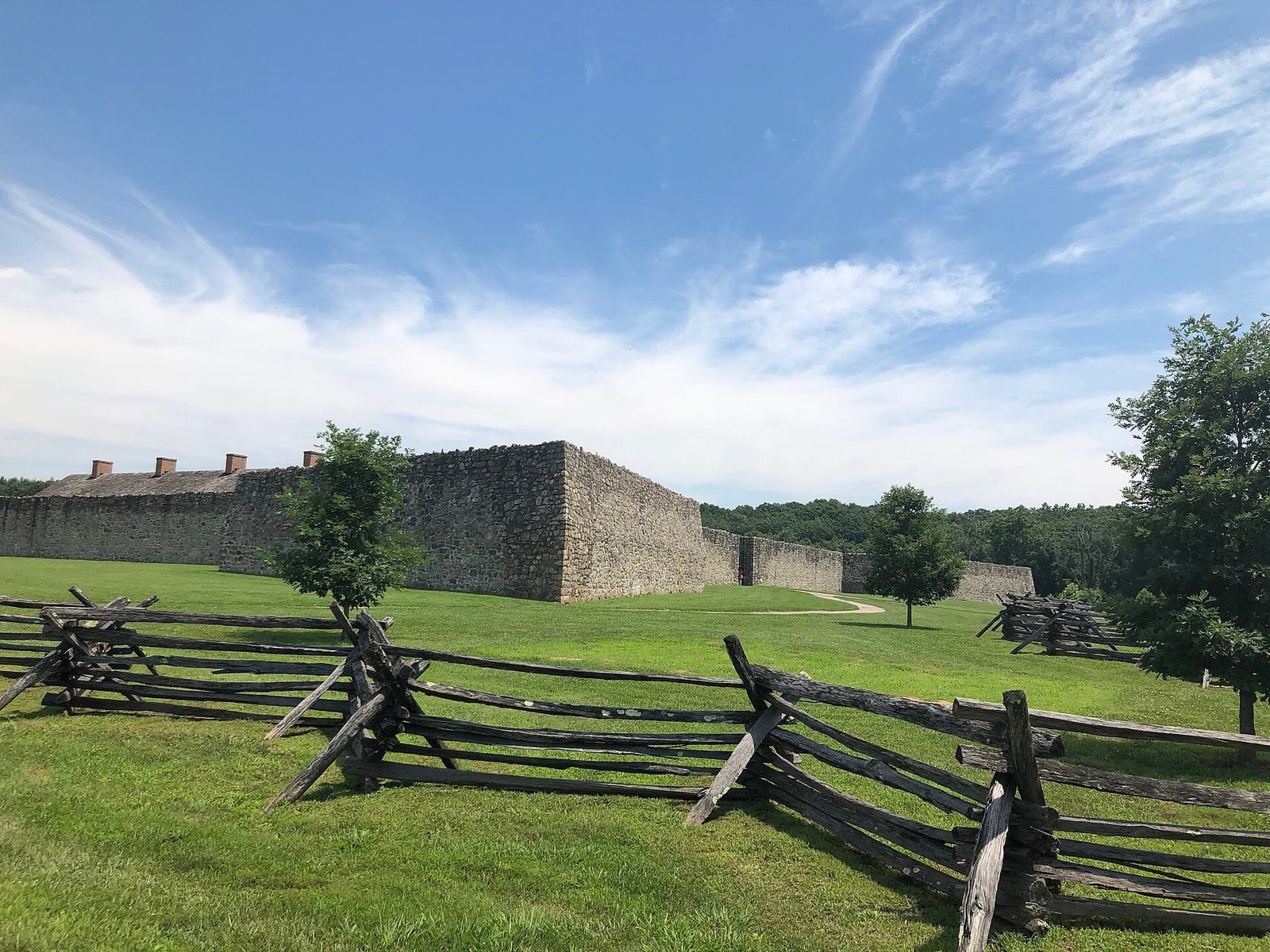
The fort has a quadrangular plan, with four corner defenses linked by stone walls. It stands within Fort Frederick State Park on the Potomac River, and the Chesapeake and Ohio Canal passes through the park grounds.
Walls and defenses
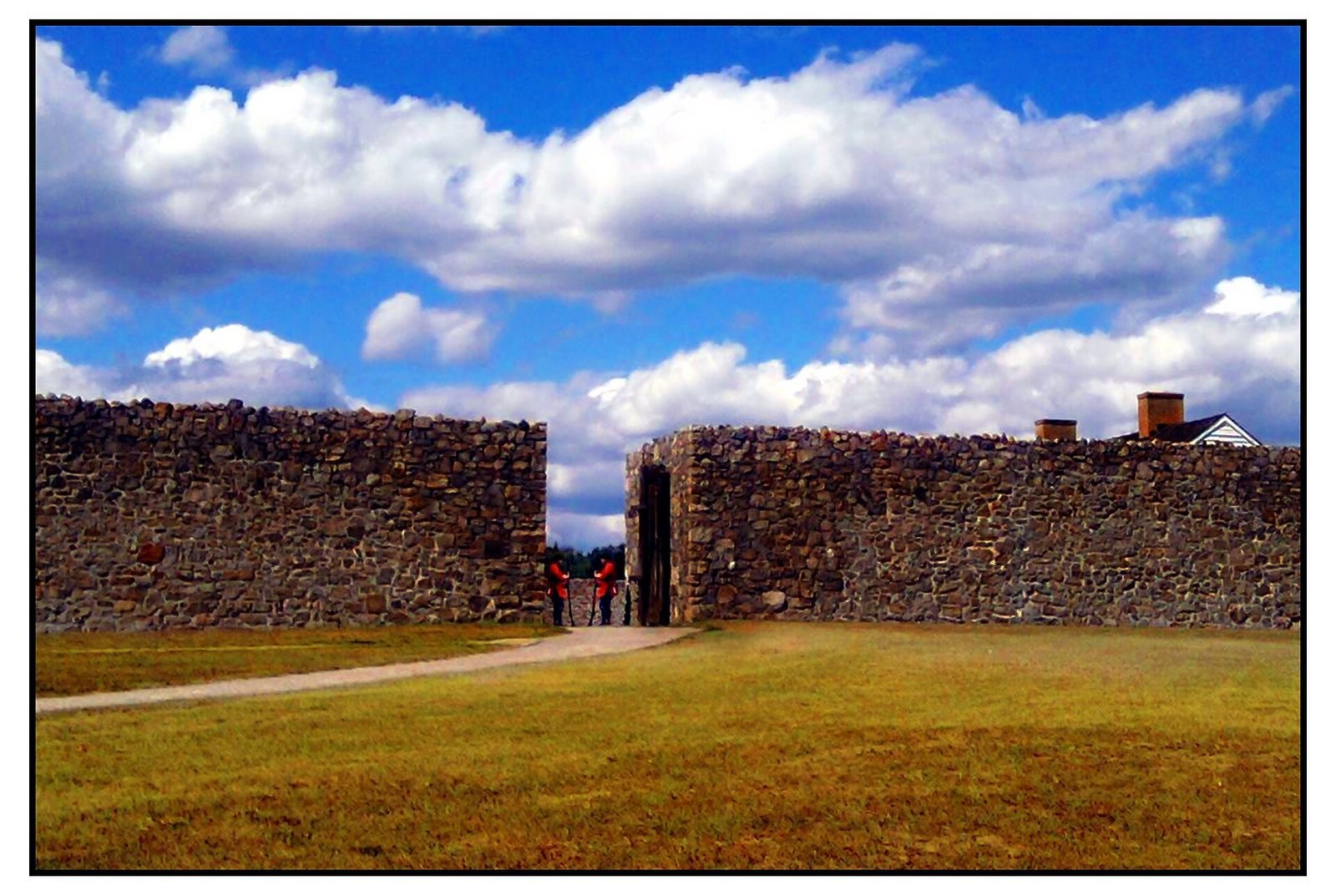
Each of the four curtain walls is about 179 feet long, 17.5 feet high, and 3 feet thick at its base. A bastion, a projecting defense that gives defenders a platform and a field of fire along the walls, occupies each corner. These structures project diagonally about 100 feet, measure 4.5 feet thick at the base, and are filled with earth to form platforms. The main gate is centered in the south wall. The design was intended to resist attempts to set the fort alight; artillery fire from the west was considered unlikely to reach its remote position.
Barracks
West barrack
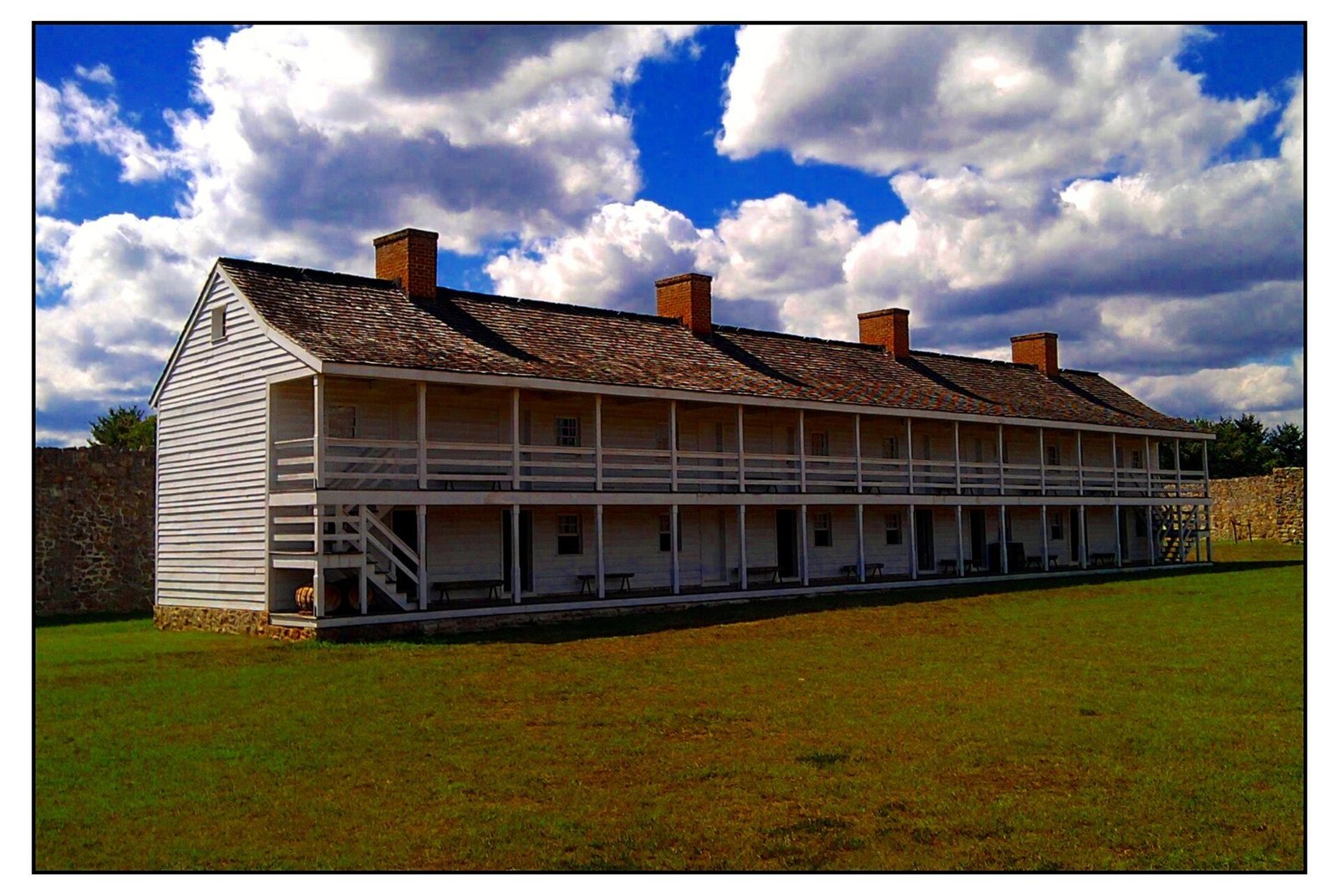
The west barrack has been reconstructed to show its appearance in 1758.
East barrack
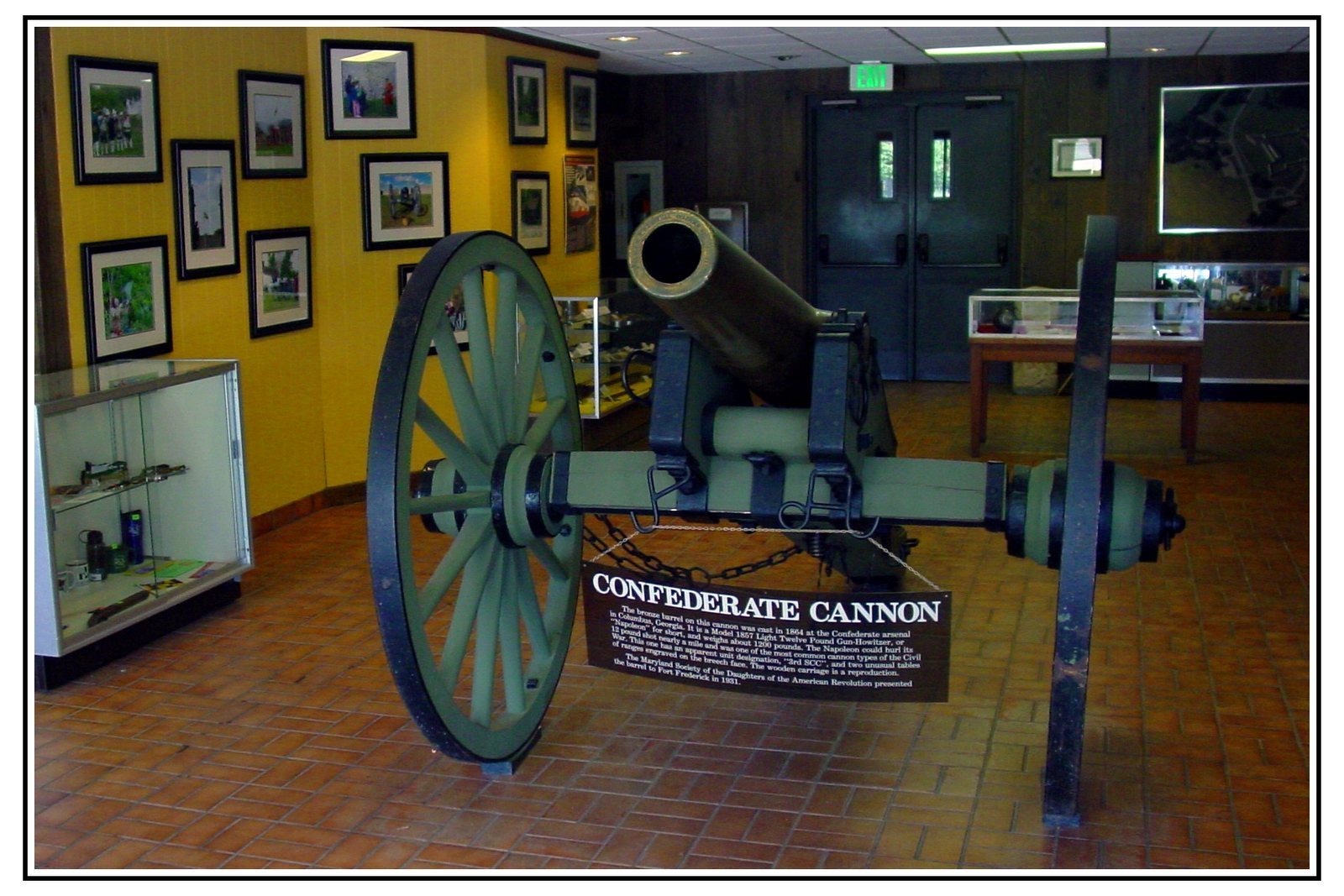
The east barrack contains displays about the fort’s history.
North barrack
The north barrack, also known as the Governor’s House, was the third of the fort’s three barracks.