Fort du Scex: A Swiss Artillery Fort in the Saint-Maurice Defenses
Site at a Glance
- Rating
- 5
- Popularity
- Very Low
- Country
- Switzerland
- Primary era
- Modern
- External website
- Open
- Eras represented
- Modern
- Civilizations
- Swiss
- Site type
- Military
- Remains
- Fort
On this page12 sections
History
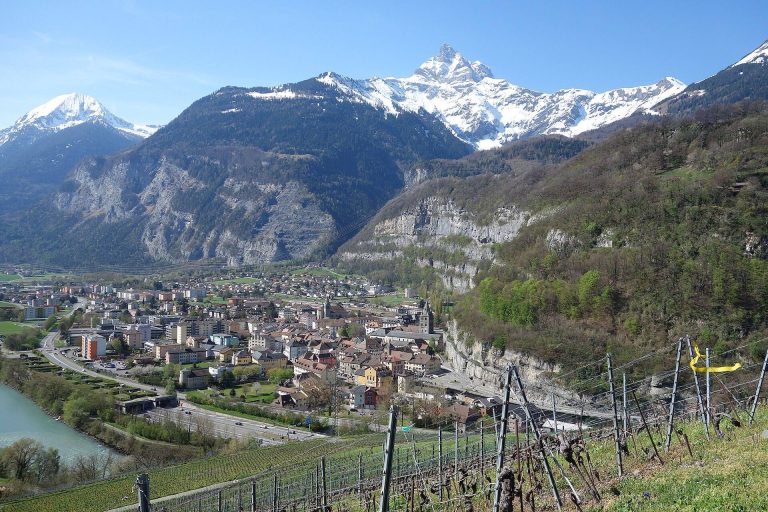
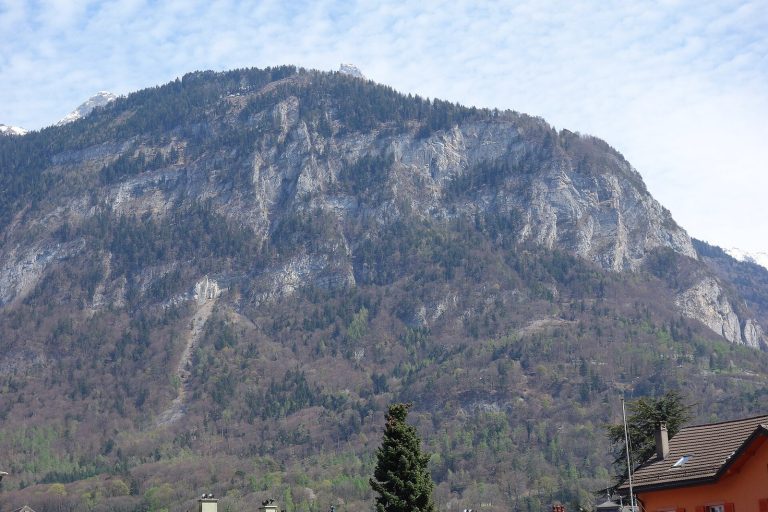
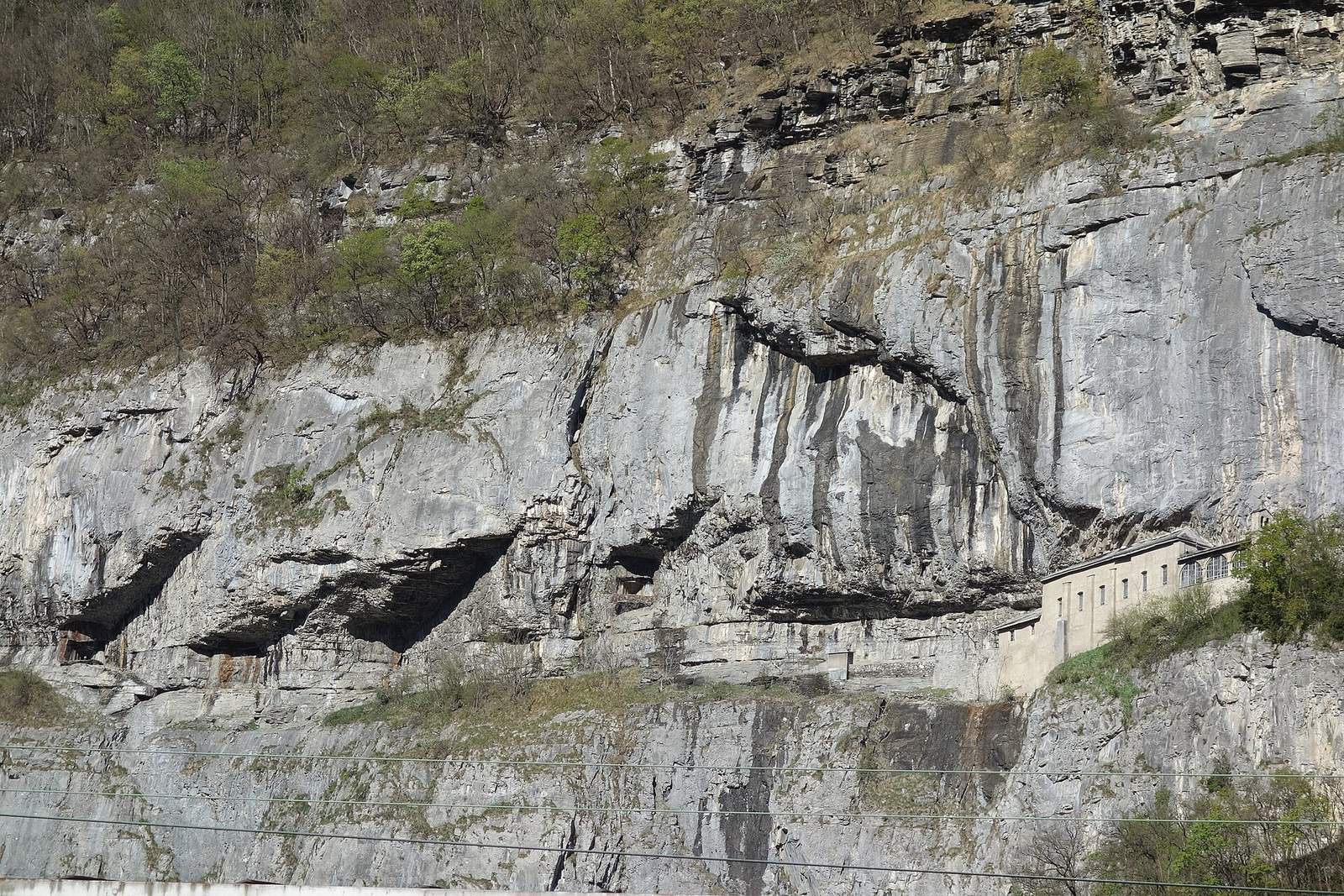
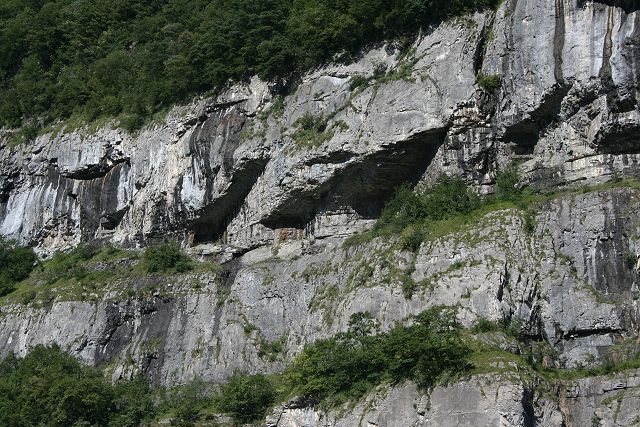
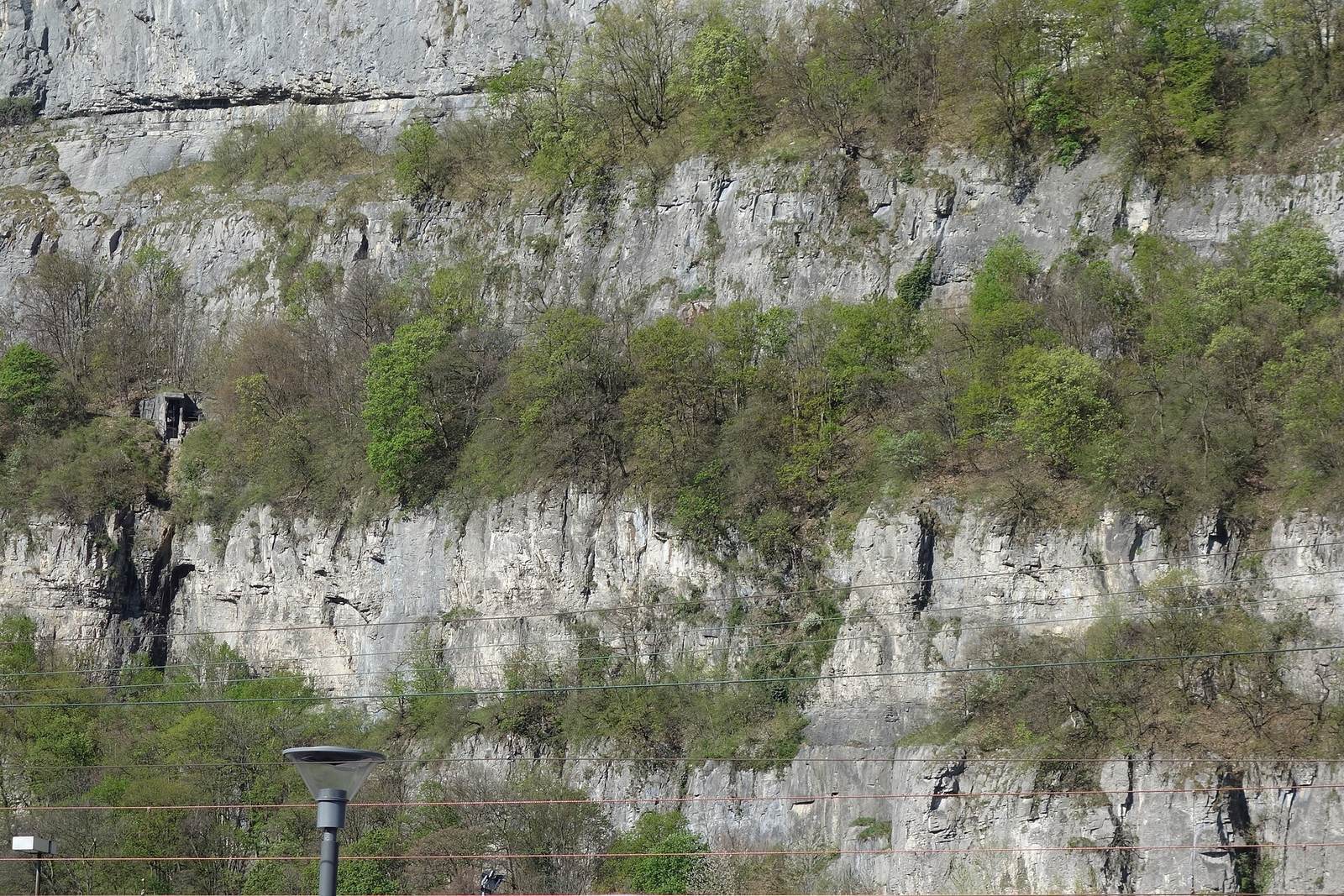
Fort du Scex is an artillery fort excavated into the Scex cliff above Saint-Maurice, in the canton of Valais, Switzerland. Construction began in 1911 with the Galerie du Scex, designed to provide supporting fire for the earlier forts Savatan and Dailly, built across the Rhône on its right bank in 1892. The fort formed part of the Fortress Saint-Maurice defensive region, one of three principal fortified zones in Switzerland’s National Redoubt, a defensive plan centered on Alpine positions to preserve a defensible core of the country. Fort du Scex was Switzerland’s first flanking battery built into a rock face, an artillery position arranged to fire along an approach, and became a model for similar works in Ticino and elsewhere in Switzerland.
Construction and expansion
Between 1915 and 1924, the fort gained a new entrance and a medical section. A cableway for supplies was built in 1922. A tunnel connection to Fort de Cindey and the natural caves of the Grotte aux Fées followed in 1935–36, and the Ermitage battery was added in 1938–39.
From 1940 to 1946, a new internal passage linked additional accommodation with the older gun chambers. Between 1948 and 1952, the fort acquired a new ammunition magazine and another medical section.
Military service and deactivation
Before its artillery was disarmed, the fort’s nominal garrison numbered 173, comprising 8 officers, 28 non-commissioned officers, and 137 soldiers. Disarmament in 1984 reduced the garrison to 97, with 4 officers, 15 non-commissioned officers, and 78 soldiers. A command post took the place of the medical section that year. From 1985 to 1995, Fortress Company IV/1, a unit of 258 personnel, manned both Fort du Scex and Fort de Cindey. The fort was decommissioned and abandoned in 1995 as part of Army 95, a reform of Switzerland’s armed forces; by then, it had been entirely deactivated.
Remains
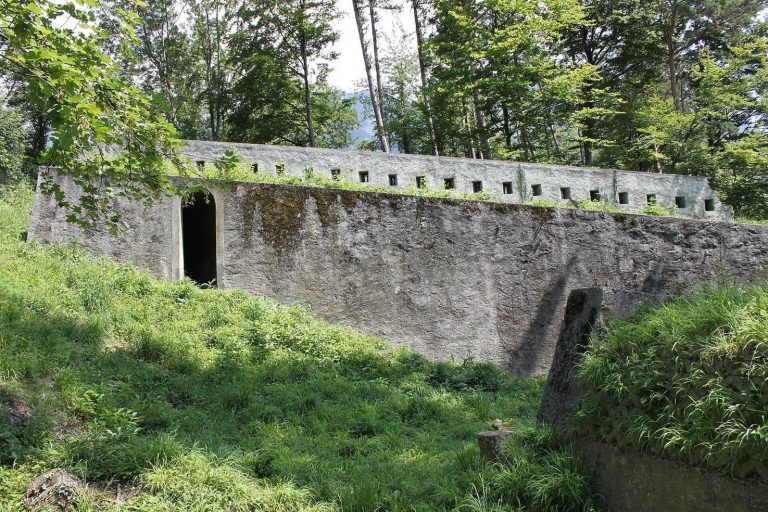
The preserved fort is a complex excavated into the Scex cliff, linked with Fort de Cindey high above the Saint-Maurice valley. Its principal gallery runs parallel to the cliff, about 10 metres from the rock. Side galleries reach the cliff for observation and artillery positions, while branches into the mountain lead to accommodation, command spaces, ammunition storage, and utilities. A second parallel gallery lies about 25 metres from the cliff face.
Galleries and artillery positions
Galerie du Scex
The Galerie du Scex held four 75 mm L30 1903/18 guns in paired protected chambers, or casemates, on Krupp-Giovanola gun supports. Directed east, they had a range of about 11 kilometres and could fire 12 to 15 rounds per minute. The guns were removed after the artillery was deactivated, and one was reconstructed for display in 2001.
Machine-gun caponier
Four machine-gun positions occupied a projecting fortification, or caponier, designed to cover nearby approaches. Two guns were arranged to cover each direction along the cliff face.
Ermitage battery
This battery had four 75 mm L30 1903/22 guns, each in an individual protected chamber and carried on a lever mount. Their positions allowed them to fire on the ground in front of forts Savatan and Dailly, as well as on nearby areas shielded from those forts’ fire.
Underground links and services
Tunnel to Fort de Cindey and the Grotte aux Fées
A cut tunnel about 800 metres long connects Fort du Scex with Fort de Cindey and leads to the natural caves of the Grotte aux Fées.
Command and utility spaces
The interior includes a large command post and a fire-control station. Fort de Cindey also used the fort’s engine room and telephone exchange. A reservoir holds 330,000 litres of water, while the fuel-pump station lies 90 metres below the fort at the cableway’s lower station.
Supply cableway
The camouflaged Z 103 Saint-Maurice–Fort du Scex cableway connected the fort with its lower station at the Saint-Maurice barracks.