Fort de Vaise: A Nineteenth-Century Defensive Fort in Lyon


Site at a Glance
- Rating
- 4.4
- Popularity
- Low
- Country
- France
- Primary era
- Modern
- External website
- Open
- Eras represented
- Modern
- Civilizations
- French
- Site type
- Military
- Remains
- Fort
On this page8 sections
History
Construction and military purpose
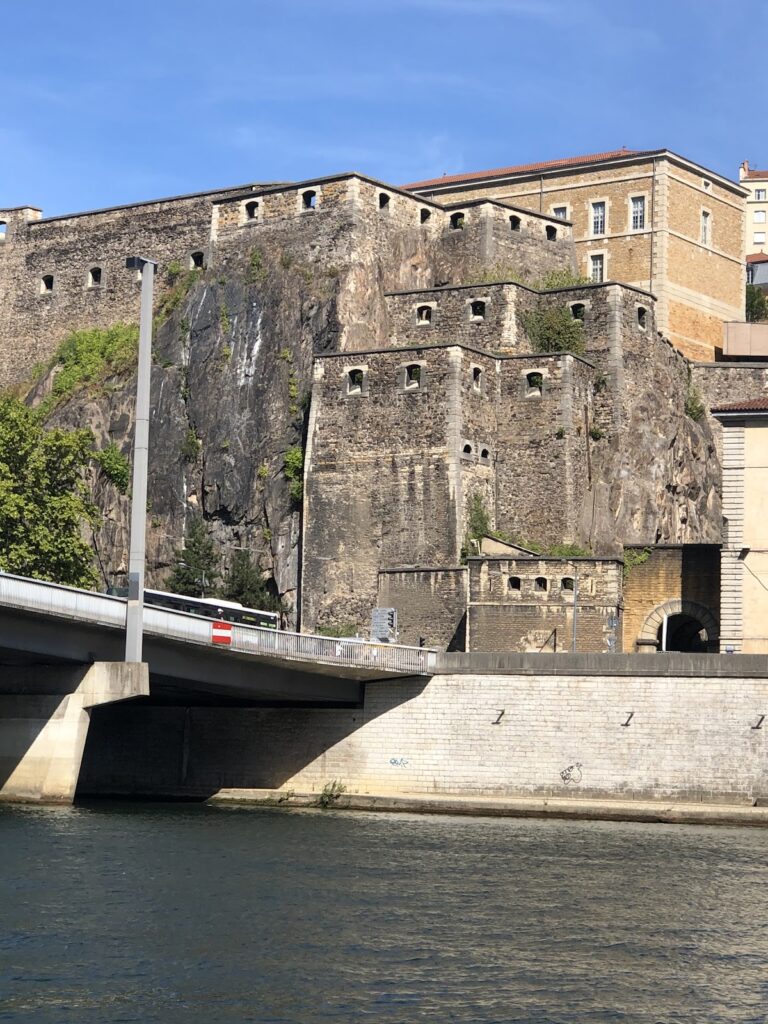
Fort de Vaise is a nineteenth-century French fortification in Lyon, France, built from 1834 as part of the city’s first belt of fortifications. This defensive system, constructed between 1834 and 1848, was intended to protect Lyon and control approaches along the Saône and surrounding heights. The work began under the direction of Hubert Rohault de Fleury, a French military officer commissioned to establish the belt and defend the city from enemy attack.
The fort protected Lyon’s northern entrance. Its capacity was limited to 60 men, but its position complemented Fort Saint-Jean and Fort Loyasse. Their alignment created a military barrier along the Saône, which was regarded as a possible route for an enemy approach into Lyon.
Threat of demolition and later use
Road construction ordered by Lyon mayor Louis Pradel in 1968 threatened the fort with destruction. The works included the creation of the present Boulevard Saint-Exupéry. In 1970, Serge and Jean-Jacques Renaud bought Fort de Vaise from the city with the aim of restoring it.
A modern extension was added to part of the old fort around 1982. It housed about twenty tenants, with the last leaving around 2014 or 2015. The first exhibition at the fort took place in 1990 in honour of the painter Joannès Veimberg, a friend of the Renaud family.
Serge and Jean-Jacques Renaud founded the Fondation Renaud in 1994. The nonprofit institution was recognized as serving the public good in 1995 and has remained based at Fort de Vaise. The foundation now owns the site, which functions as a cultural venue for exhibitions, guided visits, workshops, conferences, and concerts. Its exhibitions present family collections and works by artists from Lyon. Renovation continued over time, with the most recent renovation dated to 2019.
Remains
Layout and construction
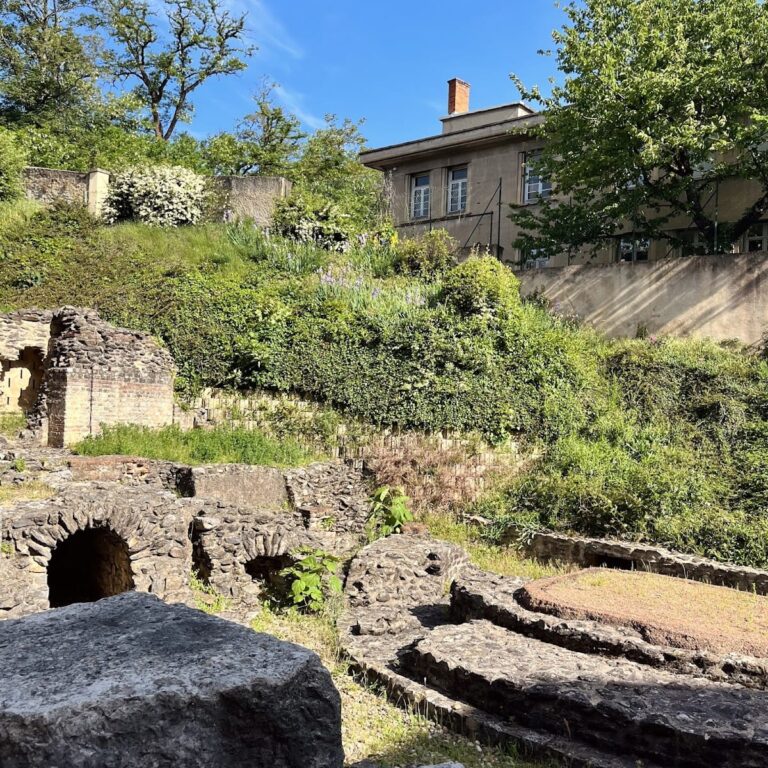
Fort de Vaise combines surviving historic sections with a modern extension attached to the older structure and an underground gallery. Its construction used stone from the Mont d’Or area, including Beaujolais and Couzon stone, together with dressed stone from Tournus. Parts of the historic fort have been demolished, while sections of the earlier structure remain within the present complex.
Entrance and defensive passage
The entrance was defended by loopholes, narrow openings in the fortified wall through which defenders could observe or fire from protection. It also concealed a long tunnel closed by two heavy oak doors, forming part of the fort’s controlled approach and internal circulation.
Underground gallery
An underground gallery survives within the fort. OCRA-Lyon, an organization devoted to understanding and restoring underground areas, organizes regular visits to this part of the complex.
The engraved number
The number “450” is engraved at the entrance. Its interpretation as an altitude indication remains uncertain. The method based on feet, used to interpret a similar inscription at Fort Saint-Irénée, does not apply here. Fort Saint-Irénée is recorded at about 280 metres, while Fort de Vaise is recorded at about 210 metres.
An analysis by the Association of the Sites of Loyasse instead argues that “450” indicates a negative altitude relative to a reference elevation of 660 metres. That reference may have corresponded to Fort Mont Verdun, whose elevation is given as 625 metres. Measurements from other Lyon fortifications bearing similar engraved numbers have produced totals of 660 metres when their engraved values were added to elevations established from data supplied by France’s national institute for geographic and cartographic information.
Nearby sites