Fort de l’Olive: A Frontier Fort Protecting Briançon
Site at a Glance
- Popularity
- Medium
- Country
- France
- Primary era
- Modern
- Eras represented
- Modern
- Civilizations
- French
- Site type
- Military
- Remains
- Fort
On this page9 sections
History
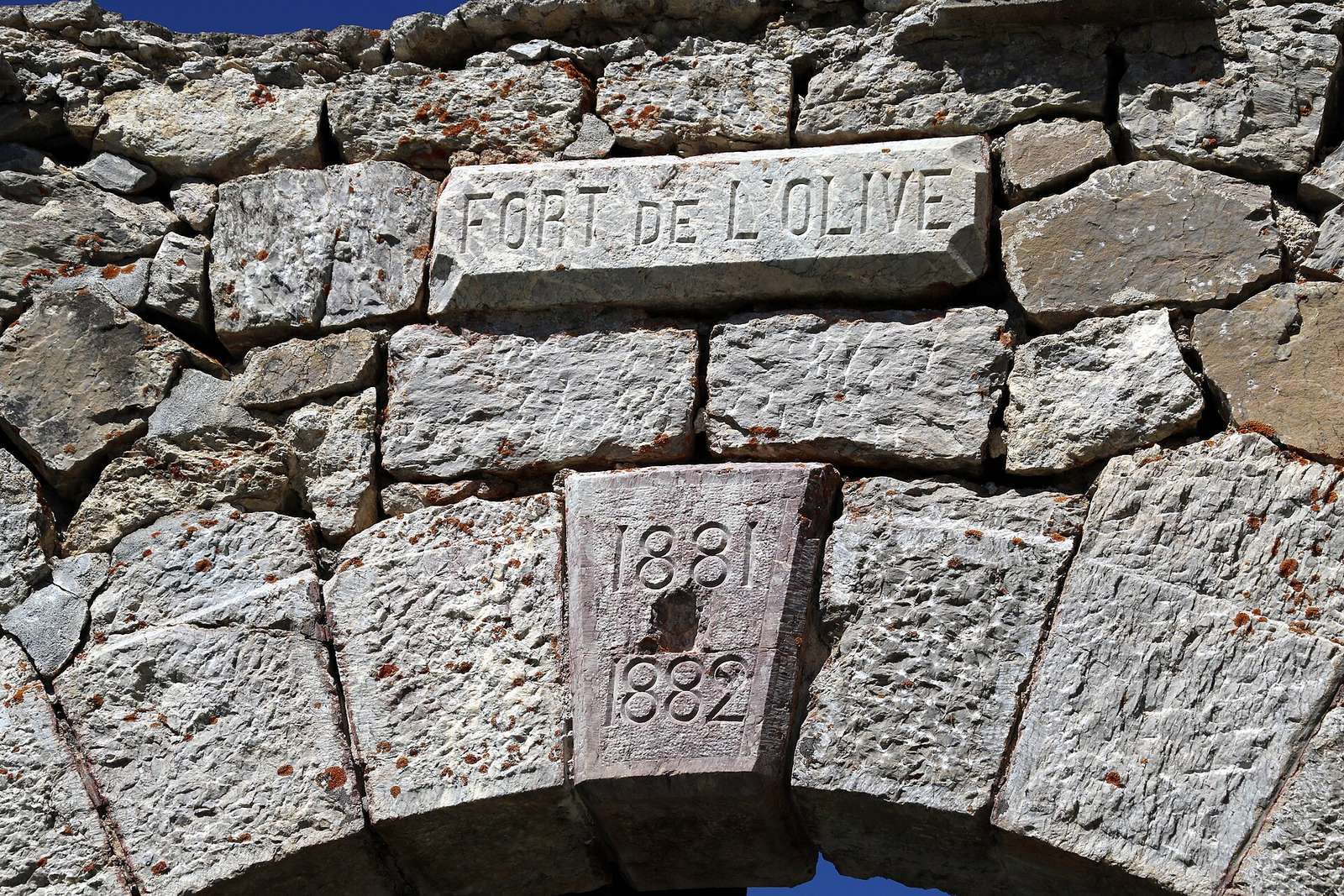
Fort de l’Olive is a French frontier fort above Plampinet in the Clarée valley, built in 1881–1882 as a forward defensive post for the Briançon stronghold. It was the last of three forts General Séré de Rivières planned in 1874 for his namesake network, a system of French fortifications developed in the late nineteenth century. First known as the Bois des Gasquets fortification, it was intended to guard approaches from the Italian frontier and prevent entry into the Clarée valley.
Construction and frontier role
The fort watched routes across the Thures plateau, the Échelle Pass and the Acles valley, where the frontier curved. Its planned garrison was 143 men. The original design called for fourteen 120 mm model L 1878 guns, but the fort’s artillery consisted of six guns, of 95 mm and 120 mm. This was fewer than the planned fourteen heavy guns.
The Meyer case, 1887–1889
On 10 August 1887, Lieutenant François-Eugène Meyer disappeared while leading a detachment of the 22nd Infantry Regiment assigned to occupy the fort. After he had been absent for more than three months, a Grenoble court-martial sentenced him on 6 January 1888 to six months’ imprisonment and dismissal. On 28 August, soldiers searching a ravine after a mule fell there discovered his body; his death was registered on 3 September. At the request of Justice Minister Edmond Guyot-Dessaigne, France’s Court of Cassation, the highest court reviewing whether lower courts applied the law correctly, annulled the conviction on 8 May 1889.
Modernization and wartime service
During construction of the Maginot Line, France’s later system of border defenses, military construction personnel partly modernized the fort. The work was completed in 1934. Its guns were assigned to the 10th Battery of the 154th Position Artillery Regiment. The fort belonged to the Peyrolles district, held by the 95th Alpine Chasseurs Battalion, French mountain infantry, within the Haute-Clarée–Guisane sub-sector of the Fortified Sector of the Dauphiné.
The much higher Italian Fort Chaberton, about 900 metres above Fort de l’Olive, could fire on it. During Italy’s invasion of France in June 1940, Chaberton shelled the fort, which returned fire against Fort Jaffereau at Bardonecchia. Fort de l’Olive formed part of the French defense of Briançon until 1940.
Postwar use and transfer
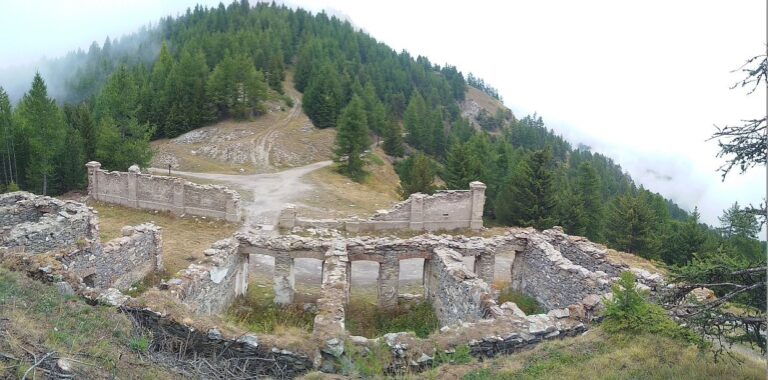
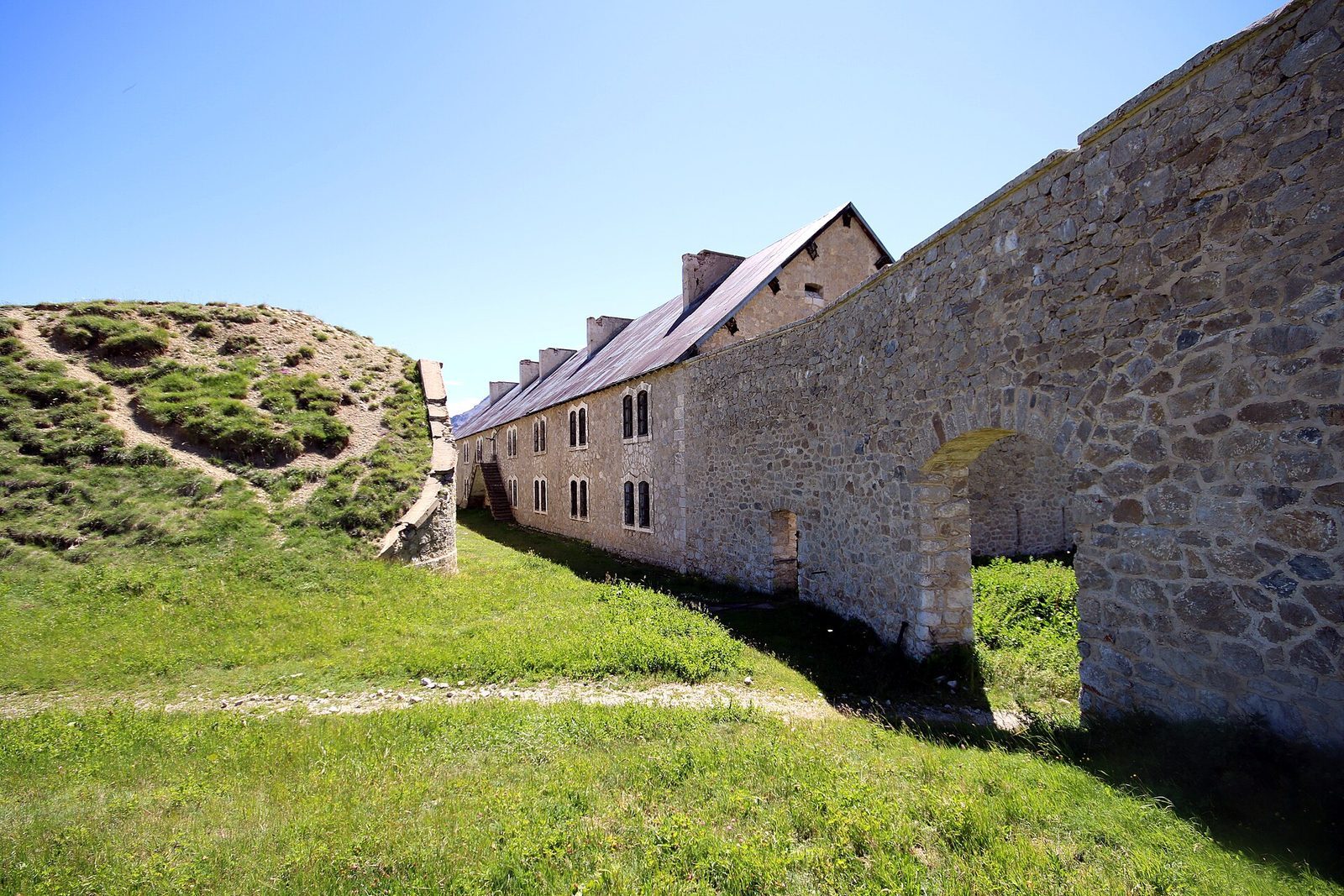
After the Second World War, the French Army used the fort for training by the 159th Alpine Infantry Regiment and the National Mountain Combat Training Center. A decree in 2011 transferred it to the commune of Névache for a symbolic euro, together with the Aiguille Noire and Rochilles fortified works, which the Defence Ministry had deemed unnecessary. The fort is now abandoned and is described as being in good condition.
Remains
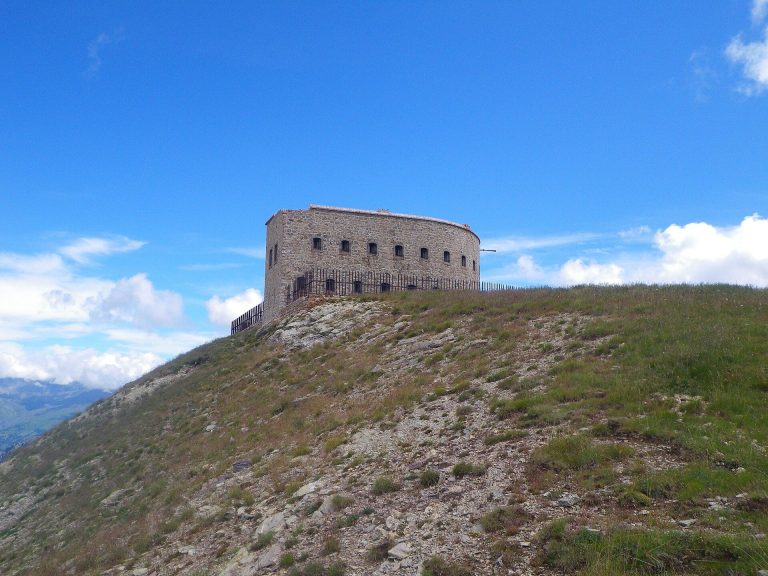
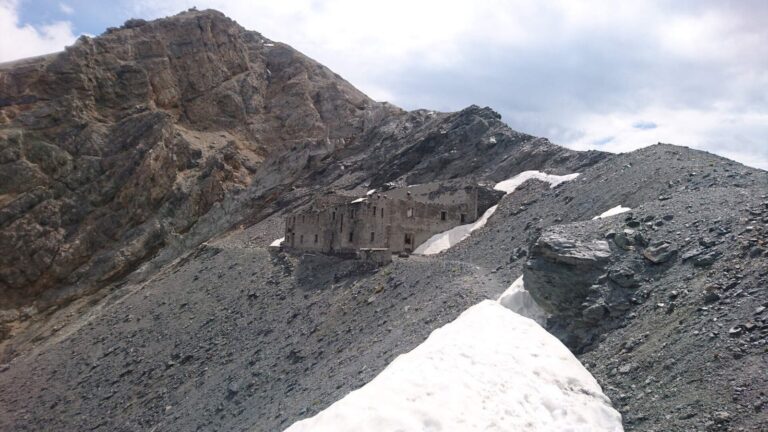
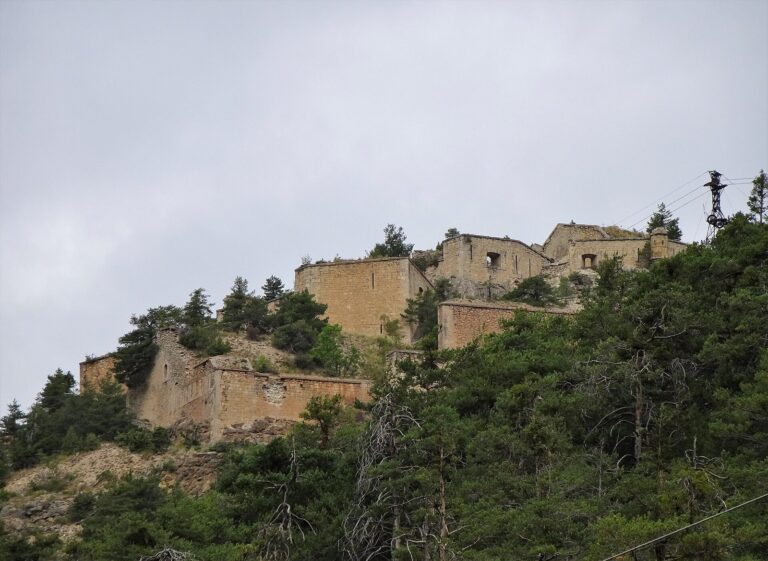
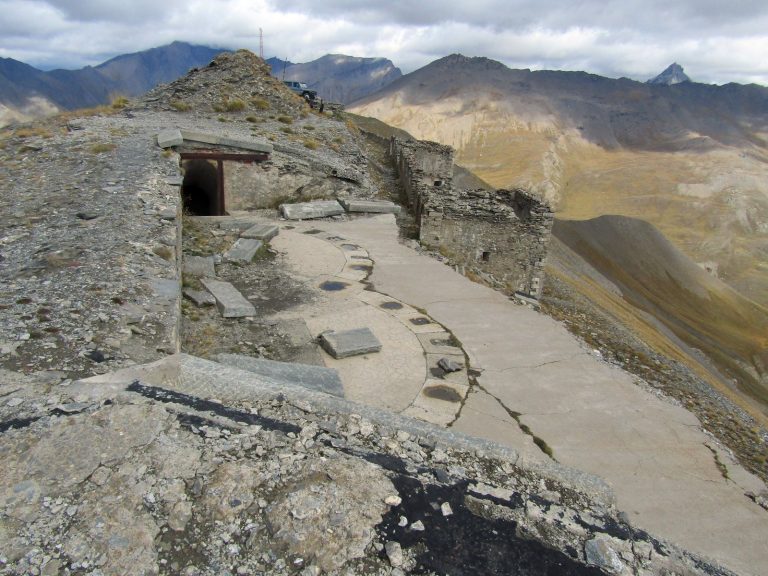
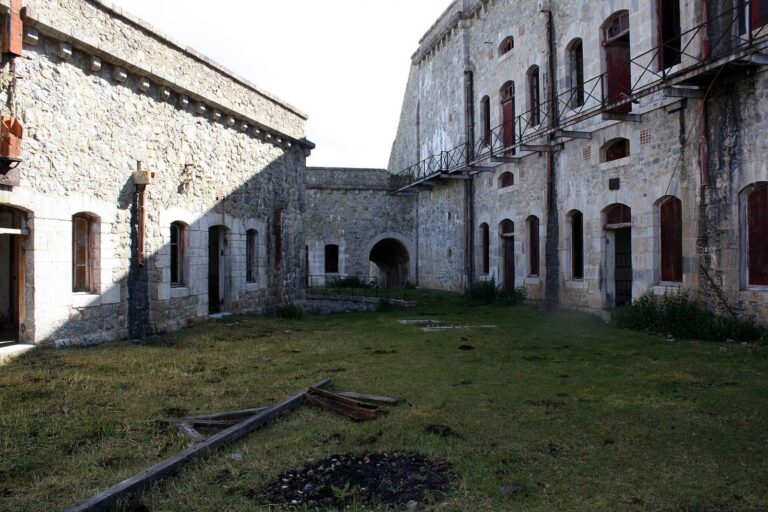
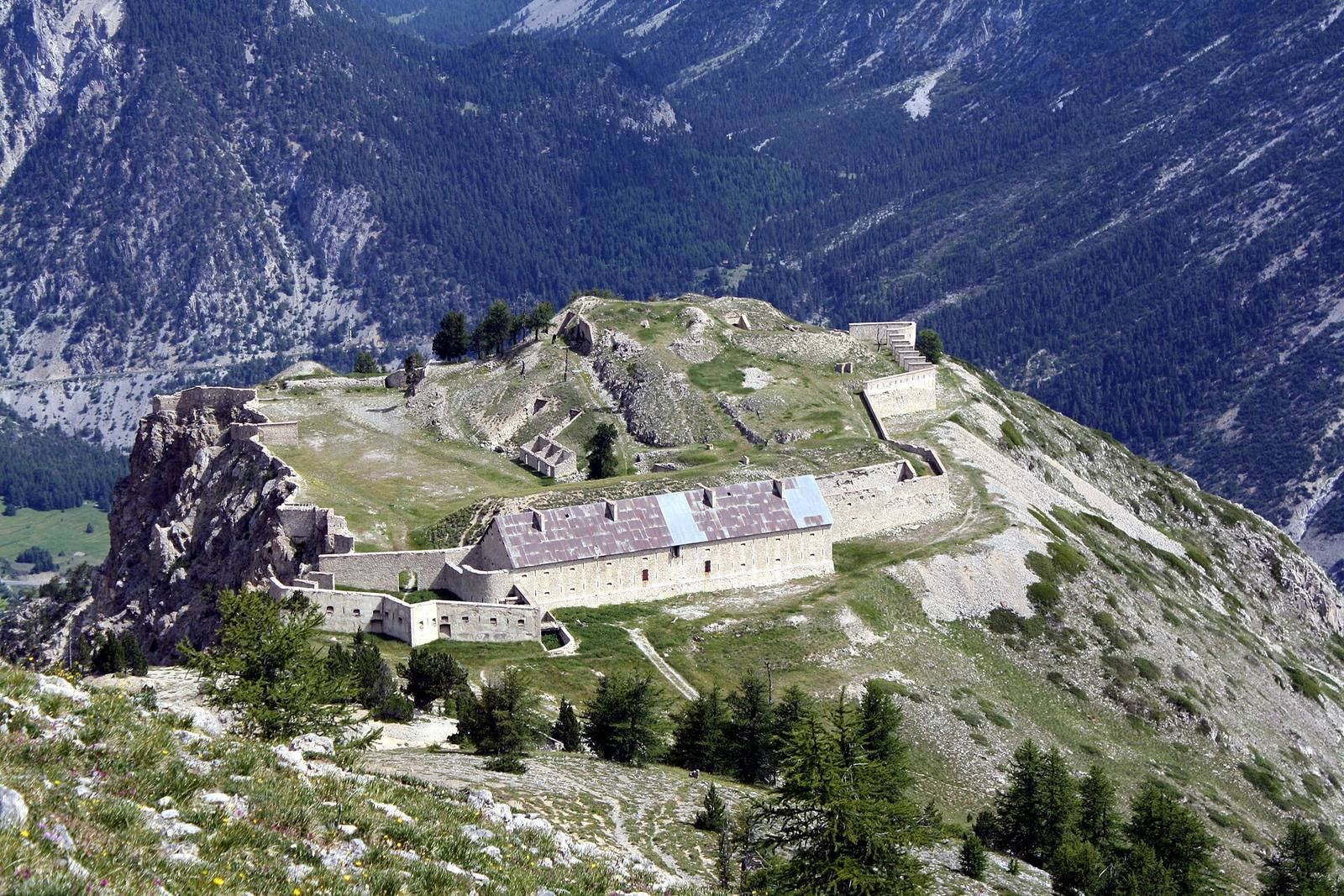
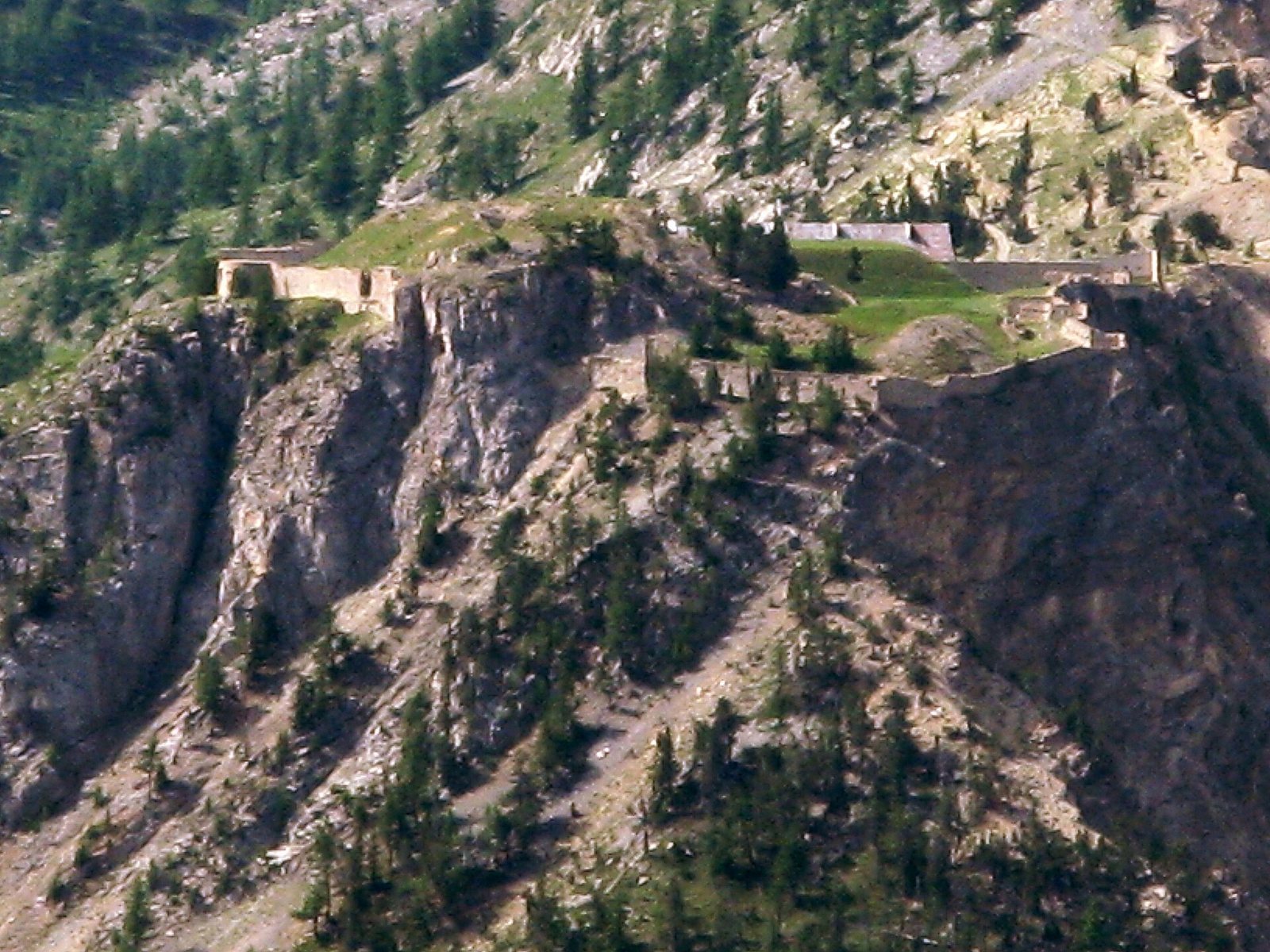
At an altitude of 2,239 metres, Fort de l’Olive stands on a rocky escarpment about 800 metres above the valley floor. Its rectangular, walled enclosure covers roughly 2.5 hectares. The position overlooks the Échelle Pass at 1,779 metres, the Thures Pass at 2,194 metres and the Acles Pass at 2,212 metres, as well as facing the Italian frontier.
Fort enclosure and installations
Gun positions and observatory
Two protected gun chambers were cut into the rock on the northern slope for 75 mm model 1897 guns. The guns were mounted on Arbel platforms, a system for supporting and positioning artillery. A sheet-metal shelter for infantry and an observatory were also added by military construction personnel. The observatory occupies one of the fort’s older projecting corners. Soldiers mockingly called the shelter the “Fort of the Clouds.”
Supply, communication and subsidiary positions
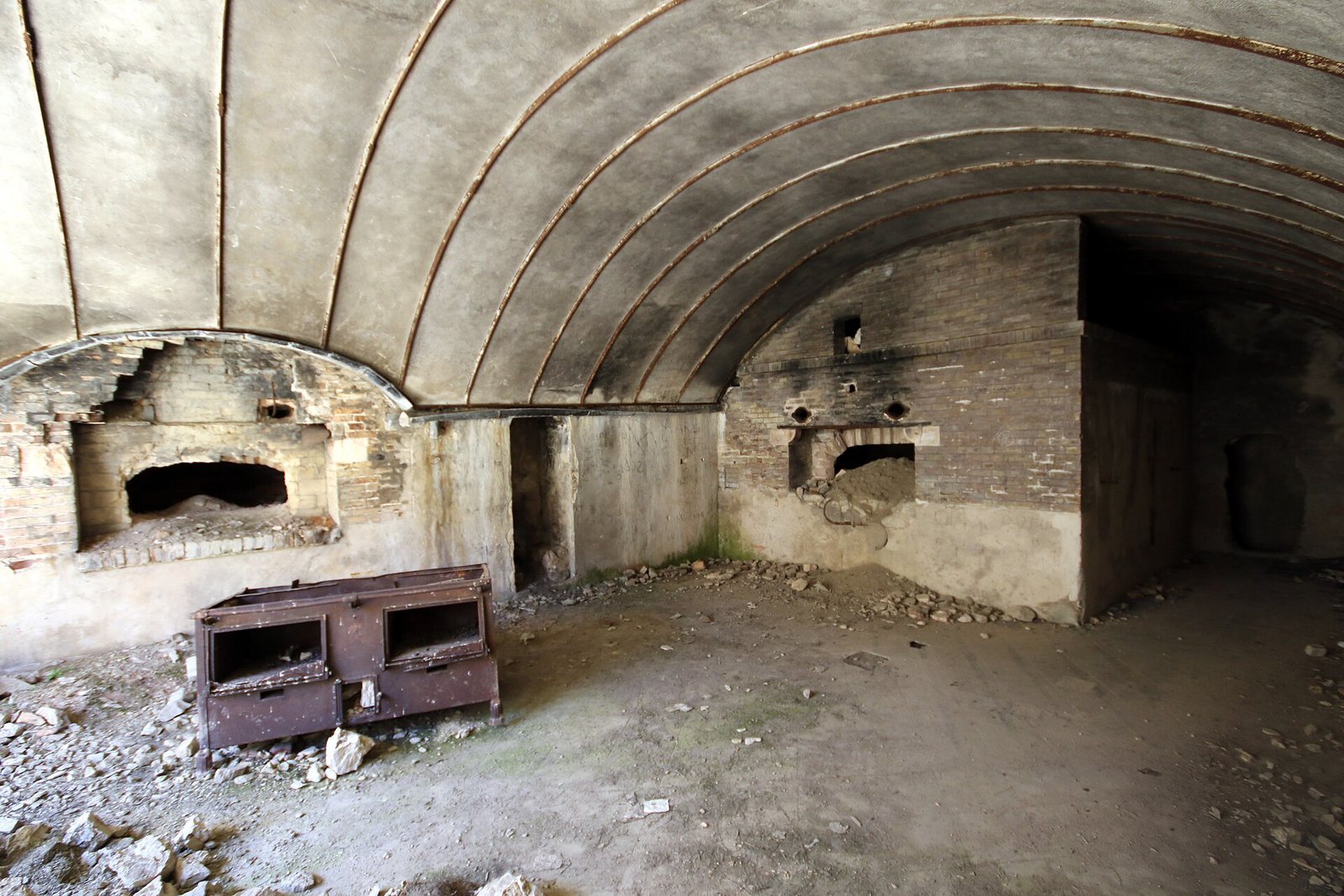
An animal-powered cableway linked the fort with Plampinet to carry supplies, particularly in winter when road access was difficult. An optical telegraph, which sent messages by visible signals, first connected the fort to Fort de l’Infernet; a telephone link came later. The Lenlon and Sapey batteries served as subsidiary artillery positions. The fort’s buildings also included a bread oven and a stove.