Fort Crown Point: A British Fortress on Lake Champlain
Site at a Glance
- Country
- United States
- Primary era
- Early Modern
- Eras represented
- Early Modern
- Civilizations
- British
- Site type
- Military
- Remains
- Fort
On this page7 sections
History
Fort Crown Point was a British earthen fortress built in 1759 at a narrows of Lake Champlain near Crown Point, New York, United States. British and colonial troops constructed it after Britain took the region from New France, France’s colonial territory in North America, during the French and Indian War, the North American theater of the wider conflict between Britain, France, and their allies. The fort was intended to protect the newly acquired territory from French attack.
French predecessor and British construction
The French built Fort Saint-Frédéric at Crown Point around 1730. British forces attacked it twice during the French and Indian War, and the French destroyed it in the summer of 1759. After capturing Fort Carillon to the south, which British commander Jeffery Amherst renamed Ticonderoga, the British began building Fort Crown Point beside the French fort’s site.
Amherst commanded the work, with colonial military officer Israel Putnam supervising much of it. Troops from New York and the New England colonies took part. Amherst also used the construction to keep his soldiers occupied through the winter of 1759, after driving French forces into Canada. The fort was completed after the danger of a French invasion had receded. It was never directly attacked and served chiefly as a staging base, storage depot, and workshop site.
Fire damage and Revolutionary occupation
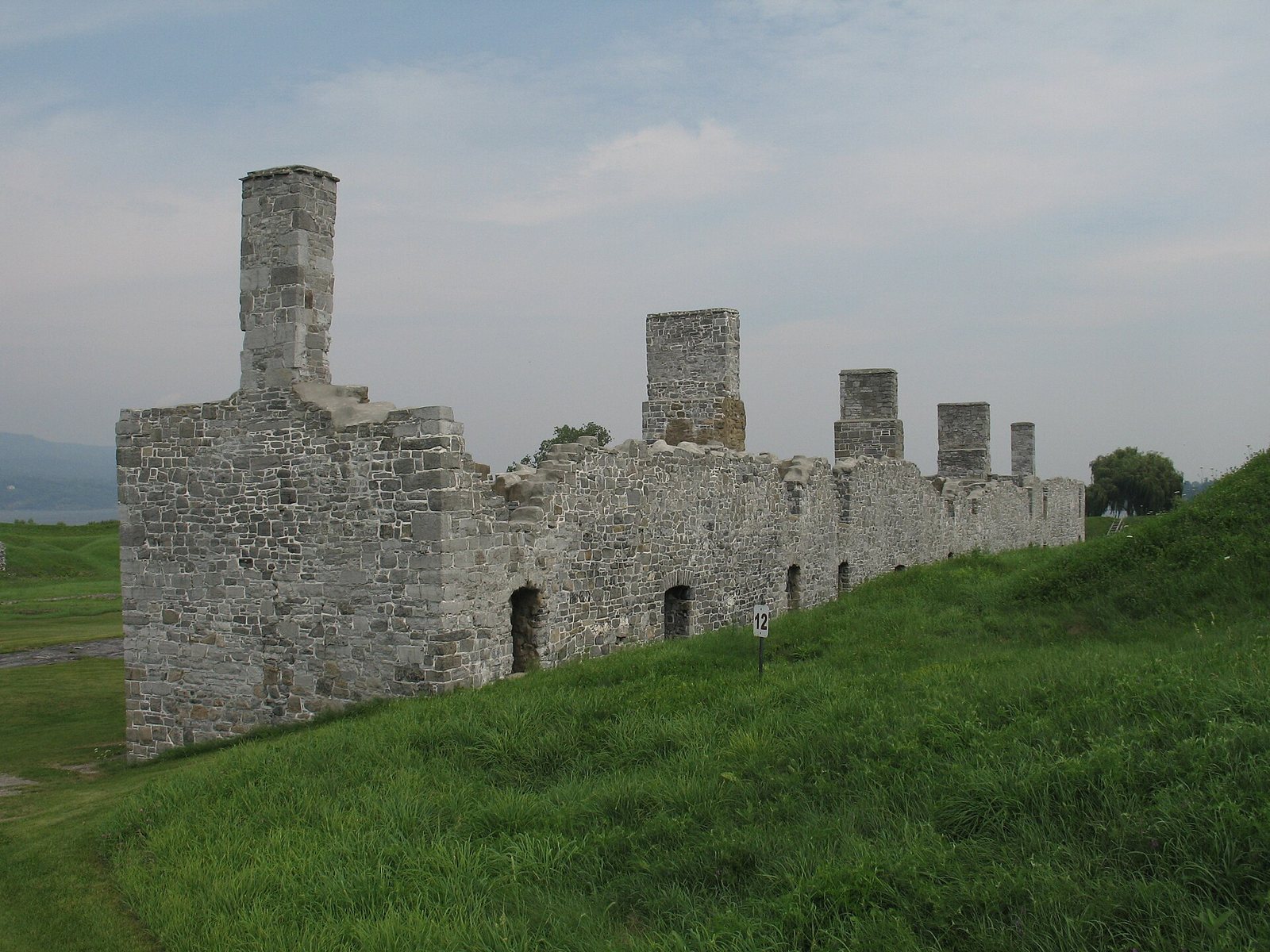
On April 21, 1773, a fire began in a soldiers’ barracks chimney and burned for several days, destroying the fort’s log-and-earth works. In May 1774, British military engineer John Montresor judged the damaged fort little more than a useless mass of earth. He recommended enlarging an outwork, a defensive structure beyond the main fort, rather than repairing the central works.
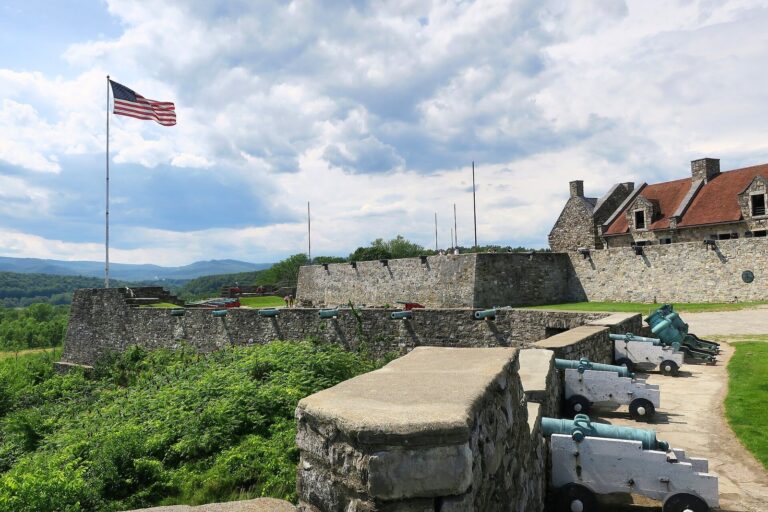
Britain retained only a small garrison at Crown Point after the French and Indian War. On May 12, 1775, it surrendered quickly to Captain Seth Warner and 100 Green Mountain Boys, a Patriot militia, early in the American Revolution. The Americans took 111 British cannons; 29 were transported to Boston to help defend the harbor.
During the Revolution, American commander Benedict Arnold used Crown Point as a base for his Lake Champlain fleet. The fleet was destroyed at the Battle of Valcour Island in 1776. After the Patriot invasion of Canada failed, the fort was left to the British in 1777. They abandoned it in 1780, and the United States, having no further use for the site, allowed it to deteriorate.
Later history
Benjamin Franklin stopped at the fort while traveling to Canada to seek an alliance against Britain. George Washington visited on July 21, 1783, the farthest north he ever traveled. Thomas Jefferson and James Madison visited in 1791, before becoming the third and fourth U.S. presidents.
The ruins became a National Historic Landmark, a designation for properties of exceptional national importance, and were added to the National Register of Historic Places, the federal inventory of historic properties, in 1968. The site entered the New York State Register of Historic Places in 1980 and is administered as part of Crown Point State Historic Site.
Remains
Earthworks and defenses
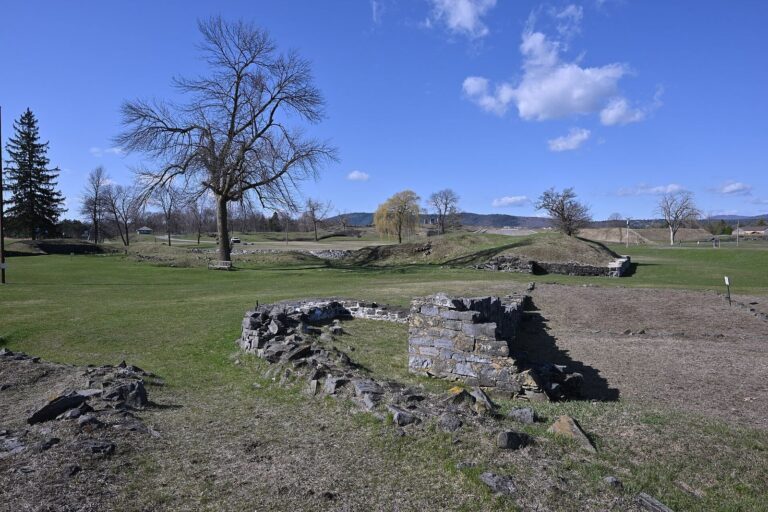
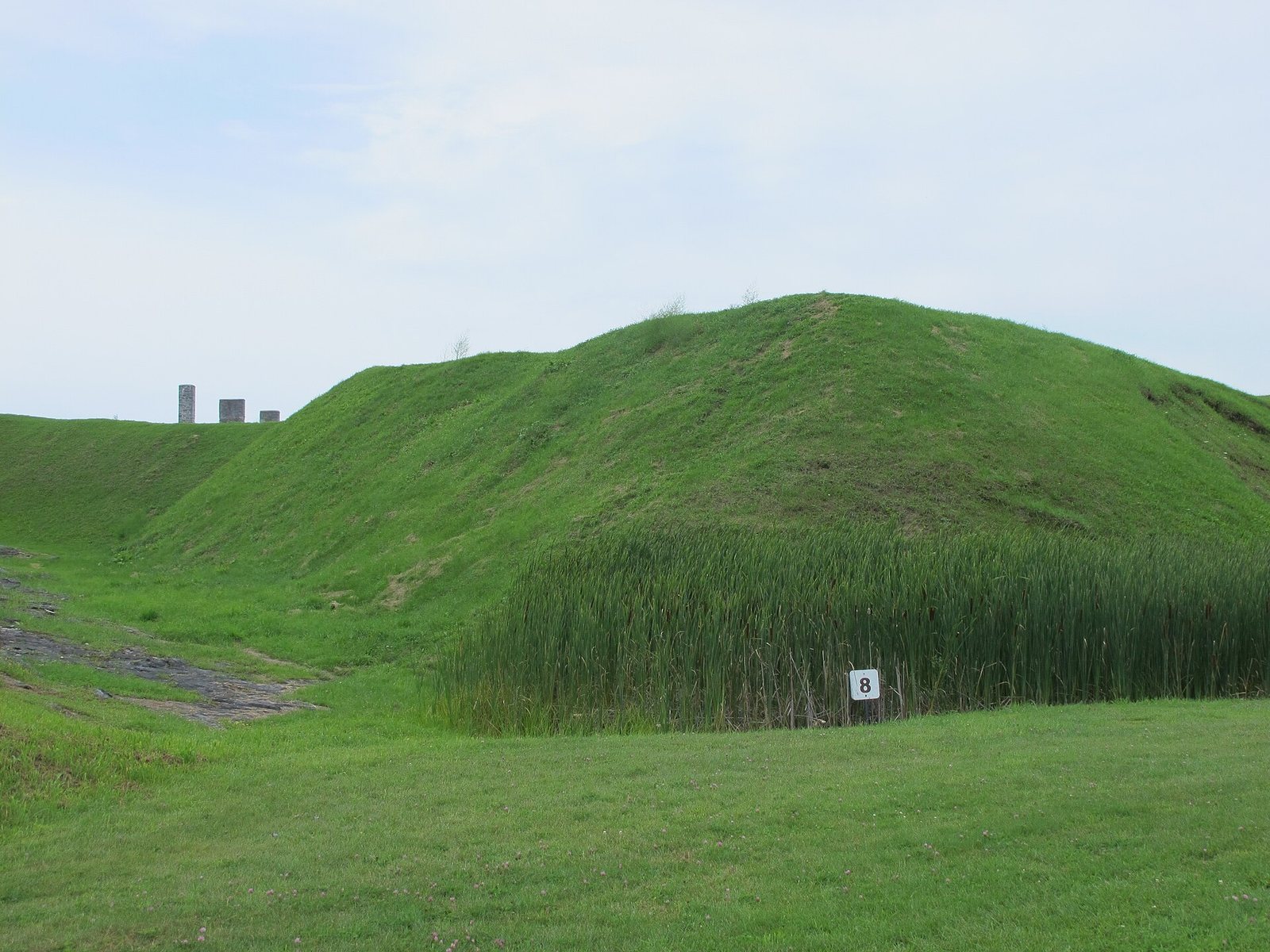
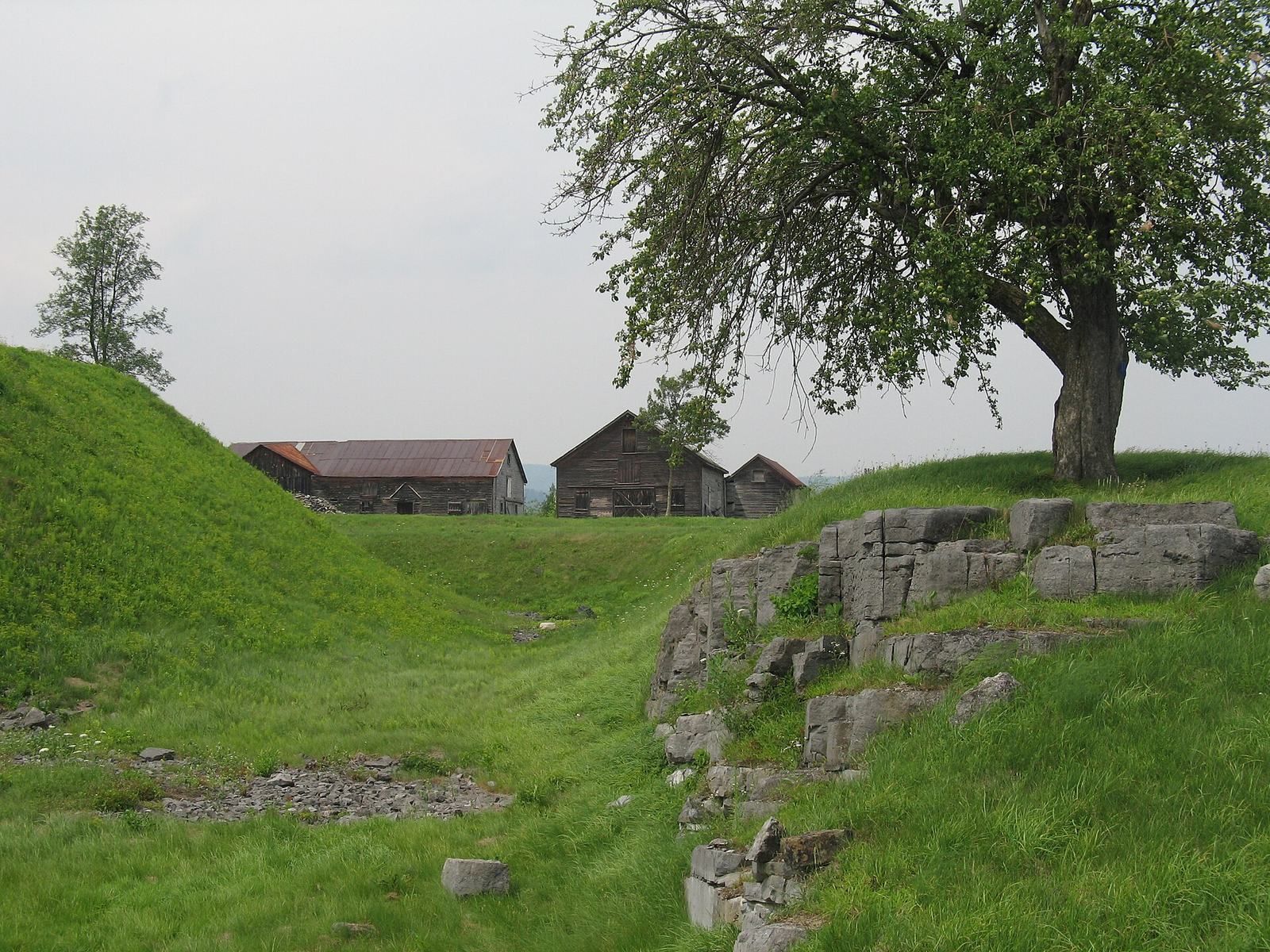
The fort occupied a narrows of Lake Champlain near the boundary between present-day New York and Vermont. Its listed area is 11,800 acres (4,800 hectares). Large earthen walls remain visible, and the defenses also included outworks beyond the main fort. The fortress has been described as the largest earthen fort built in the American colonies. Archaeologist David R. Starbuck characterized it as the greatest British military installation raised in North America.
Barracks and neighboring fort
Stone ruins of two barracks buildings survive at Fort Crown Point and are being preserved. Nearby, Fort Saint-Frédéric stood beside the British fort; its walls were 12 feet (3.7 metres) thick.