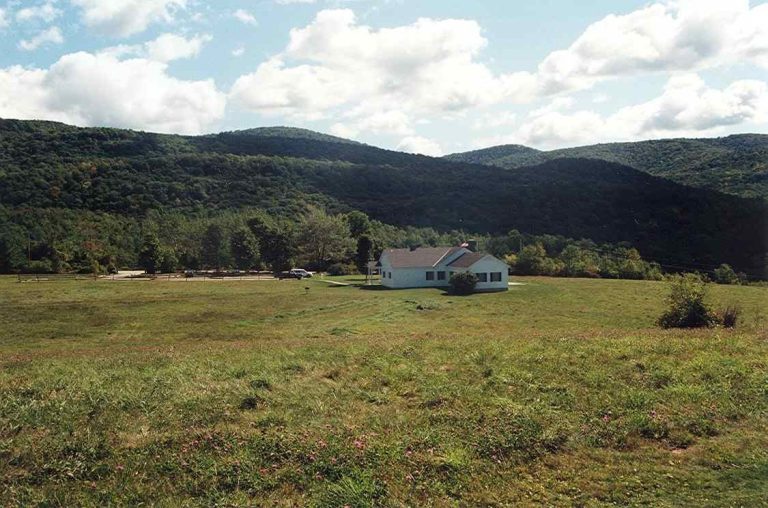
Fort Saint-Frédéric: A French Stronghold on Lake Champlain
Site at a Glance
- Country
- United States
- Primary era
- Early Modern
- Eras represented
- Early Modern
- Civilizations
- French
- Site type
- Military
- Remains
- Fort
On this page6 sections
History
Fort Saint-Frédéric was a French military stronghold at Crown Point, New York, United States, built in 1734 to defend New France, France’s colonial territory in North America, and control Lake Champlain. Its construction is attributed to the French military engineer Gaspard-Joseph Chaussegros de Léry. The fort was named for Jean Frédéric Phélypeaux de Maurepas, a French royal minister who served as Secretary of State for the Navy.
A French frontier stronghold
Hundreds of officers and troops garrisoned the fort, most of them French colonial soldiers serving to defend France’s North American possessions. It helped secure the frontier between New France and the British colonies, and French raids set out from the post. Before construction of Fort Carillon near Ticonderoga began in 1755, Fort Saint-Frédéric was the area’s only permanent French stronghold.
Pierre-Jacques Payen de Noyan was appointed commandant in 1734, but recurring illness led to his replacement by François Lefebvre Duplessis Fabert two years later. Paul Bécart de Granville and de Fonville commanded in 1743, and Noyan returned to the post in 1746. His good relations with the Iroquois, an Indigenous confederacy whose alliances influenced northeastern North America, strengthened French positions in the region. In 1749, Noyan became major of Montreal, and Paul-Louis Dazemard de Lusignan took command at the fort, serving until 1758.
War and destruction
In 1755, after the British defeat at the Battle of the Monongahela, the French seized documents revealing plans to attack Fort Saint-Frédéric and other French strongholds. Jean-Armand Dieskau, a French officer sent to command regular troops and Indigenous allies in Canada, arrived that summer and went to defend the Lake Champlain region as British colonial leader William Johnson prepared an assault. The ensuing Battle of Lake George ended Johnson’s plan to take the fort. This fighting formed part of the French and Indian War, the North American theater of the wider Seven Years’ War.
In 1759, a British force of more than 10,000 men under General Jeffery Amherst advanced on the fort. French forces in the region, commanded by Bourlamaque, withdrew to Île aux Noix after destroying the fortifications, seeking to stop the British advance. That autumn, the British Army and provincial militia began building the much larger Fort Crown Point just southwest of the French fort’s ruins. They also built a fleet to gain control of Lake Champlain and a 77-mile road across the Green Mountains toward the Connecticut River. Fort Crown Point’s small garrison was captured in 1775, early in the American Revolutionary War, and that fort later fell into ruin.
The ruins of Fort Saint-Frédéric and Fort Crown Point became part of Crown Point State Historic Site in 1910. Fort Saint-Frédéric was designated a National Historic Landmark in 1960 and added to the National Register of Historic Places in 1966.
Remains
Fortifications and lake position
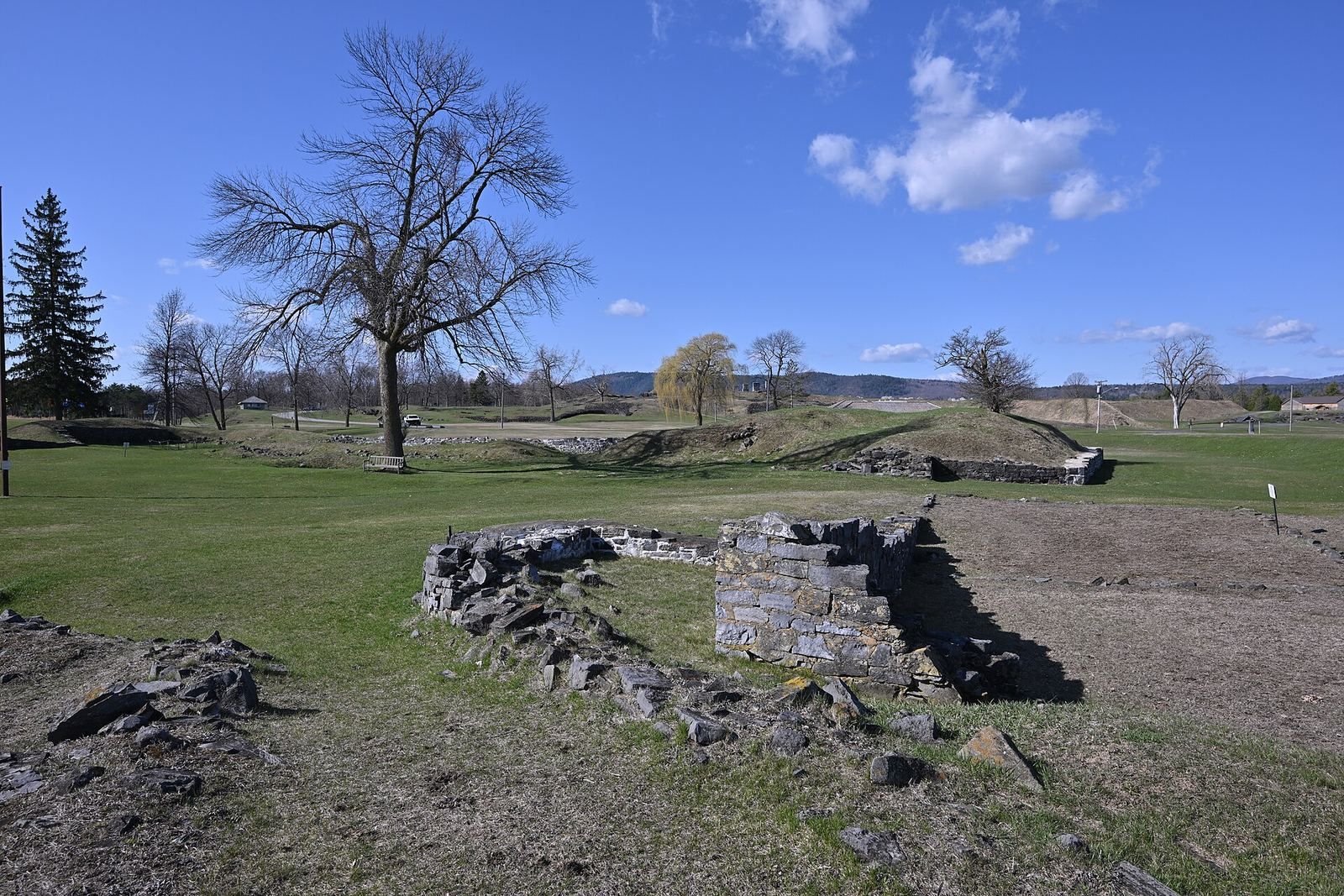
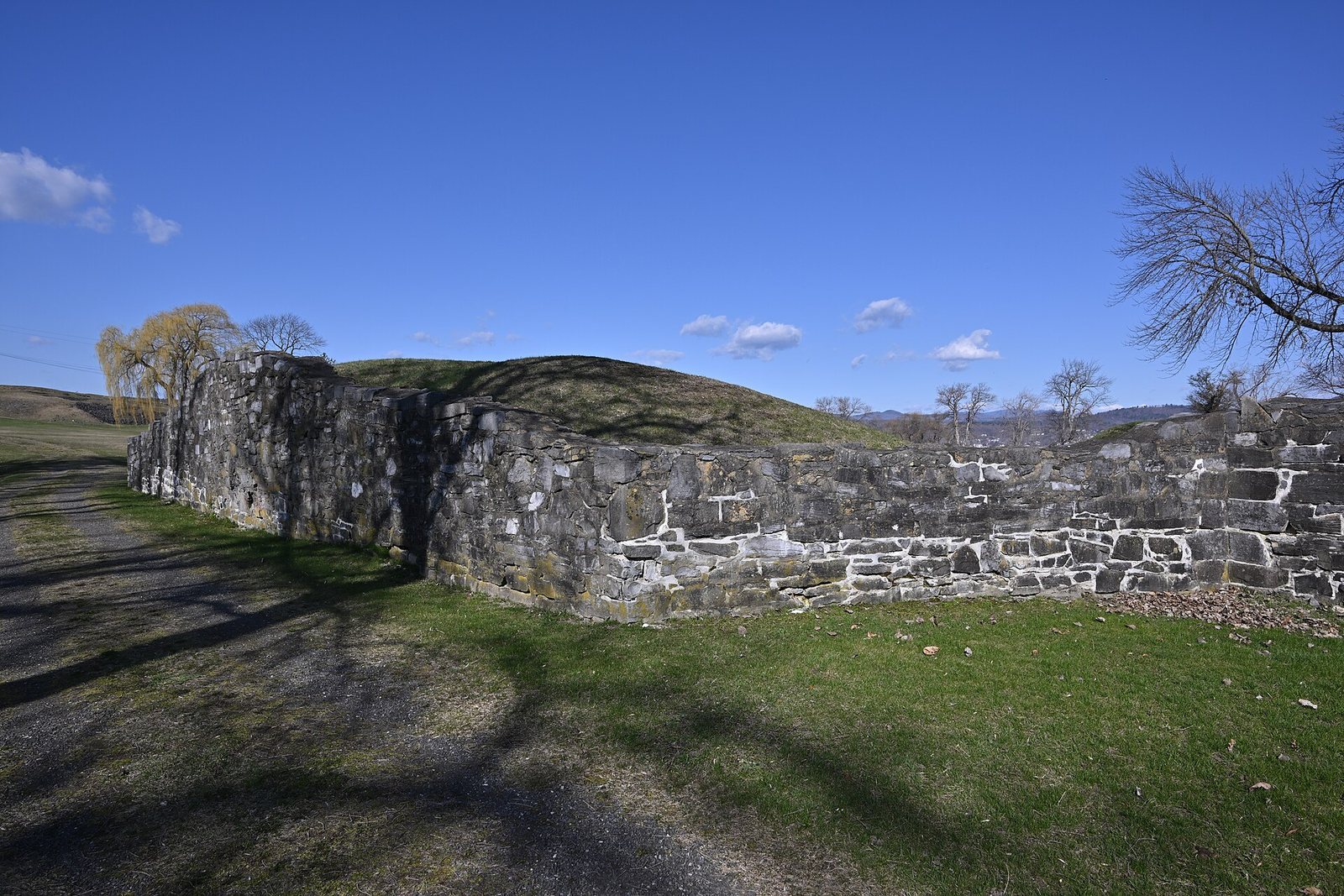
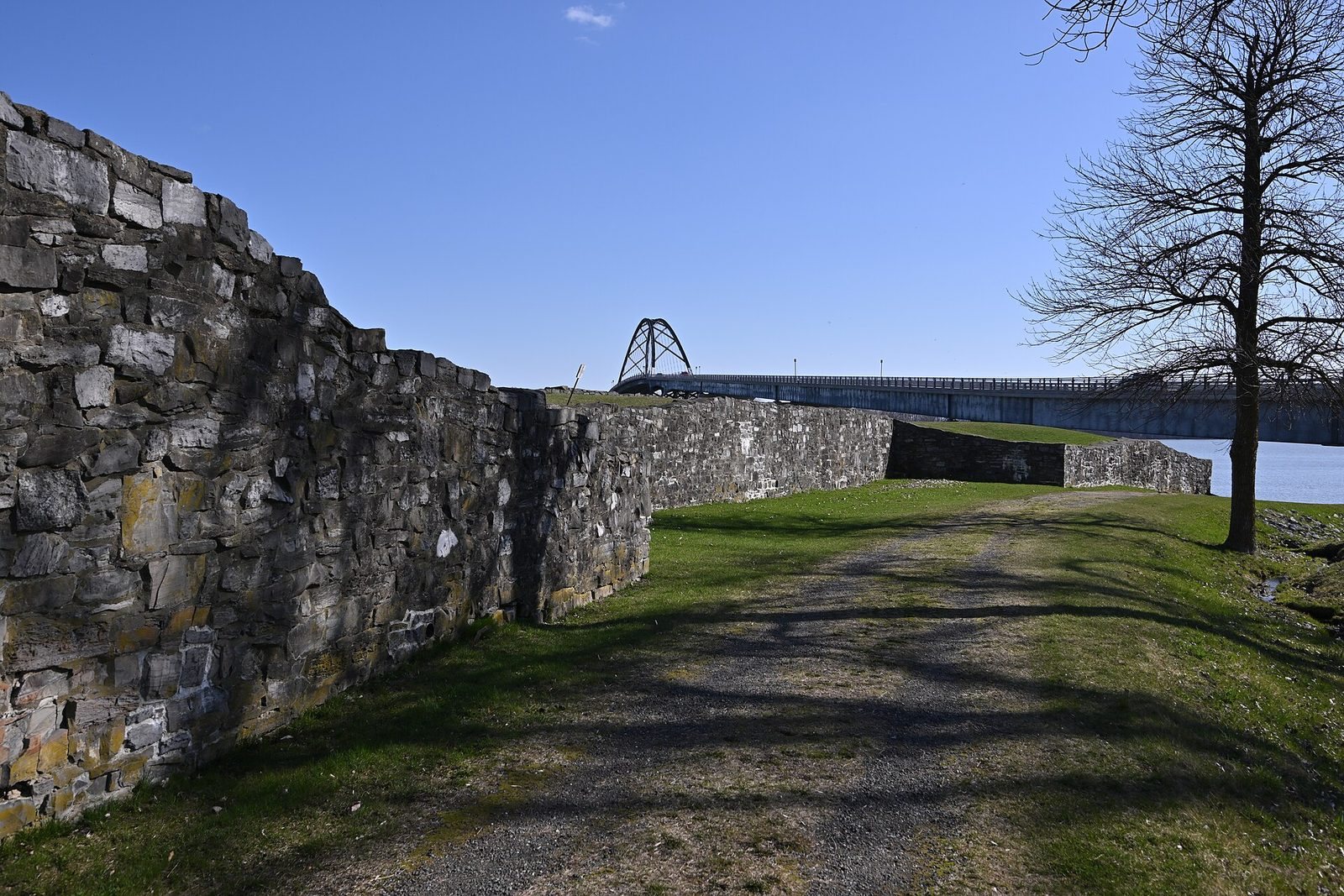
The fort stood at the tip of a strategic peninsula at a narrow passage of Lake Champlain, across the water from Vermont. It rose through four levels, and its walls were about four metres (12 feet) thick. Cannons were positioned around the fort and on each level, with a range that could reach the opposite shore. Together, the guns at Fort Saint-Frédéric and the later Fort Crown Point could impede north-to-south travel on the lake. The fort’s remains are ruins beside those of Fort Crown Point.
Burned buildings
After the French destroyed the fortifications, several houses they had burned remained at the site. Across the lake, a charred chimney from a building stood on the shore at the place now called Chimney Point.